
The Picture of Dorian Gray
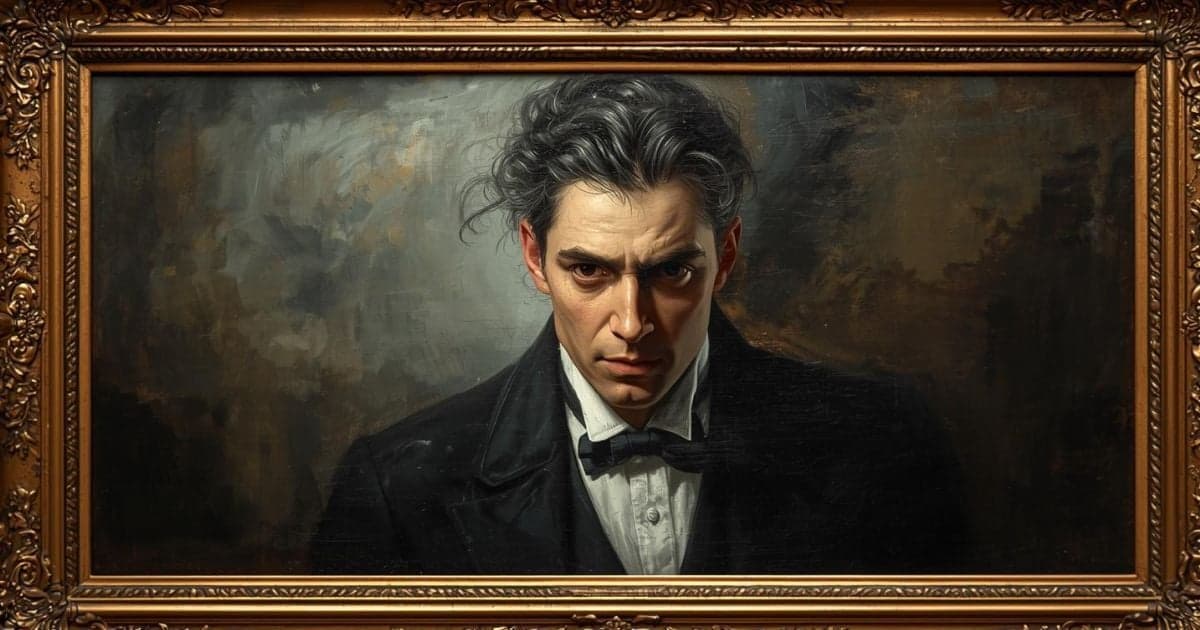
Oscar Wilde
0:00 / 0:00
Wet paint still drying, Dorian Gray stares at Basil Hallward's portrait and speaks a wish out loud: let the canvas bear age and sin while he keeps the face the world already loves. Lord Henry Wotton has not finished his first paradox when Dorian hears liberation in it, as if pleasure were a philosophy someone had been waiting to hand him. Wilde's 1890 novel grew from a magazine version reviewers called poison, but the real trap is simpler. London will keep complimenting the cheekbones while every cruelty collects somewhere out of sight.
Dorian is twenty, orphaned, wealthy, and so unused to being refused that Lord Henry's attention feels like destiny. Basil is the painter who loves him and tries to keep Henry away. Lord Henry never pays for the ideas he plants. He watches. Sibyl Vane is the East End actress Dorian calls genius until one bad night of Juliet ruins the performance he wanted. James Vane, her sailor brother, swears to kill Prince Charming if the girl is hurt. Alan Campbell is the chemist Dorian later blackmails into disposing of a body. London society keeps inviting the same beautiful young man to dinner, because nothing on his face ever changes.
The wish is granted before anyone has named a price. Dorian proposes to Sibyl, then walks out of the theatre when her acting fails, and she takes poison. The next morning a first wrinkle of cruelty sits on the canvas. He hides the painting in the old schoolroom, lives inside the yellow book Henry sends him, and spends years collecting sensations while the portrait grows monstrous. On the eve of his thirty-eighth birthday Basil waits in the fog to confront him. Dorian shows him the canvas and stabs him. He blackmails Campbell to destroy the body, plays the perfect guest at Lady Narborough's the same night, and later hunts opium in the East End until James Vane finds him. A shooting accident at Selby Royal kills the sailor. Dorian tells Henry he will be good, spares Hetty Merton, then looks at the portrait, sees no improvement, and drives a knife into the painted chest. Servants find an old, withered man they barely recognize, and the portrait returned to its first beauty.
Wilde is not writing a sermon against looking in the mirror. He is writing what happens when a culture worships surfaces so completely that a man can believe consequences belong to someone else. Aestheticism, scandal, and the later book revision all sit behind the plot, but the novel's hard fact is simpler. Lord Henry never pays. Basil pays for devotion without boundaries. Dorian pays for thinking a perfect public image was the same as a clean life. The portrait is not magic as decoration. It is a conscience you can lock in an attic until the attic is the only honest room left.
Henry's epigrams in the studio are the first seed: wit that feels like permission until the yellow book arrives and Sibyl Vane's suicide can be retold at dinner as an aesthetic curiosity. Recognizing Toxic Influence starts there, before Dorian has a name for what Henry planted. The wish beside the canvas and the first cruel line on the paint after Sibyl dies mark When Vanity Becomes Destructive, youth mistaken for a permanent verdict. He locks the portrait in the old schoolroom and wears innocence to Lady Narborough's the same night Basil's body is disposed of; The Cost of Living a Double Life is that split, a flawless public face laundering a private record. Facing Consequences means Campbell's blackmail, James Vane at the opium den window, and murder that cannot stay in the attic. Distinguishing Beauty from Goodness is London's mistake in miniature: the face unchanged for eighteen years while the hidden canvas swells with every deed. Listening to Your Conscience is the failed repair at the end, sparing Hetty Merton, then driving the knife into the painted chest because the record will not forgive what the mirror still hides.
Twenty chapters begin beside wet paint and end with a withered man on the floor while the canvas looks twenty again. Wide Reads offers summaries, quotes, and audio through every locked door, yellow-bound volume, and dinner where the host smiles as if nothing in the attic had happened.
Lessons from The Picture of Dorian Gray
Six lessons from this classic novel.
Lessons from The Picture of Dorian Gray
Six lessons from this classic novel.Deep dives
Chapter-by-chapter breakdowns
The Cost of Living a Double Life
Stay in the locked schoolroom, then at Lady Narborough's the night after murder: a perfect face is not a clean life.
He would be safe. That was everything.
Facing Consequences
Follow Basil's body, Campbell's blackmail, James Vane at the window, and the knife that finally reaches the painter.
You have killed my love.
Table of Contents
Lord Henry Wotton lounges in Basil Hallward's rose-scented studio w...
Basil and Lord Henry enter the studio to find Dorian Gray at the pi...
Lord Henry begins the morning at his uncle Lord Fermor's rooms in t...
A month after the luncheon, Dorian waits in Lord Henry's Mayfair li...
The scene shifts to Sibyl Vane's cramped Euston Road home, where sh...
Basil joins Lord Henry and Dorian for dinner at the Bristol, expect...
Dorian takes Basil and Lord Henry to the shabby theatre, confident ...
Common Questions About The Picture of Dorian Gray
Trending search questions mapped to the lessons in this novel—what readers actually ask Google about Lord Henry's influence, the portrait, vanity, double lives, and the price of a face that never ages.
What is the moral of The Picture of Dorian Gray?
Wilde refuses a tidy sermon. Lord Henry plants paradoxes in Basil's studio; Dorian wishes the portrait would age while he stays young; Sibyl Vane dies after one bad Juliet; the canvas records every cruelty while London keeps admiring the face. The moral is practical: when youth and beauty are treated as the only currency, a man can believe consequences belong to someone else until the schoolroom door opens and the knife reaches the painter, not the paint.
Explore When Vanity Becomes DestructiveWho is Lord Henry Wotton in The Picture of Dorian Gray?
The witty aristocrat who arrives in Basil's studio with epigrams about youth, sensation, and treating life as art. He never pays for the ideas he plants. Dorian hears him as destiny; Basil tries to keep Henry away and fails. Henry sends the yellow book, watches scandals like theatre, and stays charming while Sibyl's death becomes an aesthetic anecdote at dinner. He is the novel's case study in influence that feels like liberation and works like poison.
Explore Recognizing Toxic InfluenceWhy does Dorian Gray hide the painting?
After Sibyl's death the first cruel line appears on the canvas while his face stays smooth. He moves the portrait to the old schoolroom, locks the door, and keeps living as if the public mirror were the only record. The hiding is not superstition. It is the double life made literal: a flawless face at dinner, a monstrous truth in the attic, and a man who believes he can keep the two rooms separate forever.
Explore The Cost of Living a Double LifeWhy does Dorian Gray kill Basil Hallward?
On the eve of his thirty-eighth birthday Basil waits in the fog to confront him. Dorian shows him the hidden portrait, the face on the canvas grown monstrous while his own stays beautiful. Basil kneels and begs him to pray. Dorian stabs the painter instead of the record. The murder is the moment a double life can no longer be maintained by charm alone: the man who loved the face becomes the witness who must be silenced.
Explore Facing ConsequencesIs Dorian Gray evil in The Picture of Dorian Gray?
He is not born a villain. He is a beautiful young man who lets Lord Henry's wit feel like permission, trades a wish for a clean conscience, and keeps collecting sensations while the hidden canvas records every cruelty. London calls him charming because the face never changes. Wilde's point is not a simple evil label. It is that a culture which mistakes beauty for goodness will keep admiring the surface while the moral record rots out of sight.
Explore Distinguishing Beauty from GoodnessWhat life lessons does The Picture of Dorian Gray teach?
Six lessons run through the novel: recognize toxic influence before wit feels like wisdom; see when vanity becomes destructive; count the cost of living a double life; face consequences instead of outsourcing them to a locked room; distinguish beauty from goodness; and listen to conscience before the record and the man become the same wreck. Those skills—not a Gothic gimmick—are why the book still answers modern searches.
About Oscar Wilde
Published 1890
Oscar Wilde (1854-1900) was an Irish poet, playwright, and critic who became one of London's most celebrated wits in the early 1890s. Born in Dublin and educated at Trinity College and Oxford, he rose through the Aesthetic Movement's belief that art should exist for beauty's sake, not moral instruction. His plays, including The Importance of Being Earnest and An Ideal Husband, made him famous for epigrams that sounded light and cut deep.
The Picture of Dorian Gray, published in 1890 as his only novel, brought fame and scandal at once. Reviewers attacked its hints of hedonism and moral decay. Wilde revised the text for book publication, but the damage to his reputation had begun. In 1895 he sued the Marquess of Queensberry for libel over accusations about his private life, a disastrous legal gamble that led to his own prosecution for "gross indecency." He was imprisoned for two years, lost his family, his fortune, and his place in fashionable London, and died in exile in Paris at forty-six.
Wilde's life gives Dorian Gray an eerie second mirror. He understood performance, double lives, and the gap between public charm and private ruin better than almost any writer of his age. The novel's lasting power comes from that intimacy with masks: how society loves surfaces, punishes truth, and calls the person who sees both dangerous.
Why Oscar Wilde Matters Today
Oscar Wilde speaks to the moment when your public face and your private record stop matching: the profile that stays flattering while the damage collects somewhere unseen, the charm that buys you time you have not actually earned, the wit that excuses a choice before you have looked at its cost. The Picture of Dorian Gray names a bargain people still make without noticing they made it: keep the surface clean and assume the rest will sort itself out.
What makes him indispensable is that he wrote this warning before he lived it. Wilde was London's most quoted wit, adored for exactly the kind of surface brilliance Lord Henry sells in the novel. Within five years of publishing it, a libel suit he chose to bring exposed his own private life, and the same society that had toasted him convicted him of gross indecency, stripped his fortune, and sent him to prison for two years. He did not get Dorian's portrait. He paid in his own face and his own name.
Few writers have narrowed the gap between the artist's warning and the artist's fate this completely. Readers keep returning to Dorian Gray not for the Gothic furniture but for the accounting: a face can stay perfect while the ledger behind it does not. Wilde tested that bargain twice, once on paper and once in court, and lost the second time in a way the first book had already predicted.
Wide Reads is different.
Plot, characters, and themes — plus audio, source text, and patterns you can use after class
Two ways in
Read & listen to the summary
Chapter by chapter, with audio. The meaning arrives because you experienced it — not because someone listed bullet points.
Start with this.
Read the original text
The actual words the author wrote, alongside every summary. Use the guide, then step into the source.
Then step into the source.
Either way, the door opens inward.
— and most of all, Why does this matter?
Get the Full Book
Purchase the complete book to access all chapters and support classic literature

Available in paperback, hardcover, and e-book formats
You Might Also Like


Free to read • No account required