
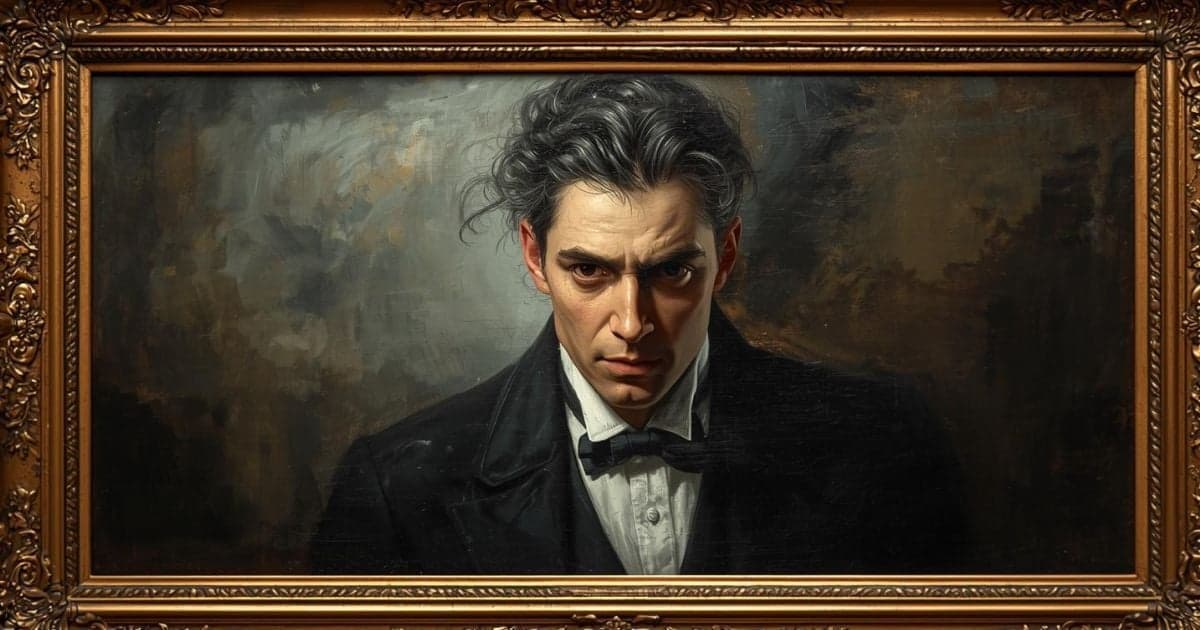
Dorian's face never ages, so he treats every injury as someone else's problem: Sibyl's, Basil's, Campbell's, James Vane's. The portrait is the warehouse where he stores what he will not claim. Wilde is not writing a ghost story about a magic painting. He is writing a bookkeeping story about a man who found a way to keep the credit and outsource the debit. A culture that worships surfaces will help him. It will keep inviting the face to dinner while the attic fills.
Watch the sequence, not the speeches. A cruelty that does not mark you still marks a room. A witness you silence still leaves a body. A chemist you blackmail still has to live with the work. A sailor you thought you had outrun can still find you in an opium den, and his accidental death is not your innocence. Delay is the novel's favourite trick. It lets Dorian believe he has escaped when he has only postponed. Fortune that kills a pursuer feels like a pardon. It is only a change of collector.
The modern version does not need a Gothic canvas. It needs a place to dump the cost: a quieter colleague, a later date, a locked folder, a story that makes the damage sound like someone else's oversensitivity. Wilde's last image is the bill arriving in the only name left. The servants cannot tell the withered man from a stranger because the public face had been doing the work of a clean life. Facing consequences is the skill of claiming the invoice before it has to find you in another room, wearing another body.
The Central Lesson
A perfect public face can make you believe consequences belong to someone else. Wilde will not let that belief survive the attic. Sibyl's poison, Basil's body, Campbell's blackmail, and the knife in the painted chest are the same lesson at different volumes: the bill arrives. Delay is not escape. Luck is not innocence. The only question is whose name is on the invoice when it finally has nowhere left to hide. Claim it while it is still yours to pay in the ordinary way.
Prestige deep dive
A Psychological Reading of The Picture of Dorian Gray
The Picture of Dorian Gray shows a man who keeps the face other people love by storing age, cruelty, and shame on a locked canvas, until the hidden record still judges and destroying the witness only gives the ideal image back to the paint.
Read the full psychological readingApplying This to Your Life
Ask Who Is Holding the Invoice
If your choices look costless, look one room over. Sibyl, Basil, and Campbell all paid before Dorian's face did. A decision that leaves you unmarked has often marked someone who cannot send the bill back. Name them before the attic does.
Do Not Confuse Delay with Escape
A locked schoolroom is not a pardon. It is a storage unit. The record is still writing while you go to dinner. Postponement can feel like cleverness for years. It is still the same debt, accruing in a room you refuse to enter.
Luck Is Not Acquittal
James Vane dies in a shooting accident and Dorian feels clean. Being uncaught is not the same as having paid. A pursuer who vanishes has not signed your pardon. Check whether the ledger is actually empty, or whether the collector merely changed.
Other lessons in this book
More life-skill deep dives from the same classic.
Recognizing Toxic Influence
Sit with Lord Henry's studio paradoxes, the yellow book, and the dinner where Sibyl's death becomes an aesthetic anecdote.
8 chapters·Explore AnalysisDistinguishing Beauty from Goodness
See the face that never ages while the canvas records every cruelty, until the servants cannot recognize the body.
8 chapters·Explore AnalysisListening to Your Conscience
Sit with Hetty, the portrait that will not improve, and the stab that kills the man instead of the record.
7 chapters·Explore AnalysisThe Cost of Living a Double Life
Stay in the locked schoolroom, then at Lady Narborough's the night after murder: a perfect face is not a clean life.
8 chapters·Explore AnalysisWhen Vanity Becomes Destructive
Watch the wish in front of the canvas, the first change after Sibyl, and the years of unchanged skin.
6 chapters·Explore Analysis
Continue exploring
Explore this theme
The same lessons in other books
See how other books teach the same life skills.

The Essays of Montaigne
Choosing Real FriendshipHear essay 27 answer La Boétie: because it was he, because it was I.
The Idiot
Maintaining Goodness Without NaivetySit with Myshkin on the train in chapter 1: honesty with no angle, and a city that can only call it idiocy.
Jude the Obscure
When Desire Becomes a TrapTrack the pig, the dimple, the false pregnancy, and the second marriage arranged over gin.
Where the lesson lives in the book
Walking Out on Sibyl
Dorian takes Basil and Lord Henry to see Sibyl's Juliet, then leaves when her acting fails him. He treats her collapse as an insult to his taste. By morning she is dead, and he has not yet paid anything he can see. The first invoice is held by someone else. That is how a man begins to believe consequences are optional.
Key Insight:
A consequence can be real before it is visible on you. Other people often hold the first invoice. If your choices look costless, look one room over.
“You have killed my love.”
The First Mark on the Canvas
The portrait shows a wrinkle of cruelty after Sibyl's suicide. Dorian feels a shock, then a relief: the painting will take what his face will not. He decides the hidden record is a solution, not a warning. He would be safe. That was everything. Safety, in this grammar, means the cost has been moved off his skin.
Key Insight:
The moment you find a place to dump the cost, you stop treating the cost as yours. That is how delay becomes a habit, and a habit becomes a philosophy.
“He would be safe. That was everything.”
Basil Sees the Record
On the eve of Dorian's thirty-eighth birthday, Basil waits in the fog to confront him. Dorian unlocks the schoolroom, shows him the canvas, and stabs the one person who loved him enough to look. A witness is a consequence. Killing the person who saw the truth does not cancel the truth. It only adds another body to the ledger.
Key Insight:
Silencing a witness is not the same as cancelling a fact. You have only added a name to the bill. The record is still writing while you wipe the knife.
“It is the face of my soul.”
Campbell in the Schoolroom
Dorian wakes, then remembers the corpse upstairs. He blackmails Alan Campbell into destroying Basil's body. Campbell does the work and later kills himself. Dorian keeps his dinner plans. Forcing someone else to clean up after you is still a consequence. You have only moved the damage into another life, and called the moving competence.
Key Insight:
Making another person hold your cost is not cleverness. It is how a private crime becomes a chain. Campbell's later death is still Dorian's invoice, whether Dorian files it or not.
“Alan, it was murder. I killed him.”
James Vane in the East End
Dorian hunts opium to quiet the soul by means of the senses. James Vane finds him, the sailor who swore to kill Prince Charming. The past has a face and a grip. It is not an abstraction in an attic. A woman in the den names the arrangement out loud: there goes the devil's bargain. The discarded chapter has walked back in.
Key Insight:
People you discarded do not stay in the chapter where you left them. A delayed cost often arrives as a person, not a mood. If you thought the past was furniture, it can still stand up.
“There goes the devil's bargain!”
The Face at the Conservatory Glass
At Selby Royal, Dorian performs wit at tea while Henry ranks beauty above goodness and the Duchess flirts through epigrams. Then Dorian walks for orchids, swoons, and revives asking Harry if he is safe. At dinner he plays wild gaiety while remembering what pressed against the conservatory glass like a white handkerchief: James Vane's face, watching.
Key Insight:
A perfect house party cannot cancel a person the past still owns. When terror arrives at the window, the bill is no longer in the attic. It is in the room where everyone is still applauding your face.
“Am I safe here, Harry?”
The Shooting at Selby Royal
Dorian hides in his room, seeing James in every tapestry. A hunting accident kills the sailor. Relief floods him as if fortune had cancelled the debt. He treats luck as acquittal. Someone else's death is not your innocence. Escaping one collector does not mean the bill is gone. It means the collector changed.
Key Insight:
Luck is not acquittal. Being uncaught is not the same as having paid. A pursuer who dies in a thicket has not signed your pardon. He has only left you alone with the rest of the ledger.
“A cry of joy broke from his lips. The man who had been shot in the thicket was James Vane.”
The Knife Reaches the Painter
Dorian tries to be good for Hetty, sees no improvement on the canvas, and stabs the painted chest. He wanted to murder the record and keep the life that produced it. Servants find a withered old man they barely recognize. The portrait is beautiful again. The last consequence is that the hidden cost and the public face finally trade places.
Key Insight:
You cannot murder the record and keep the life that produced it. The last consequence is a swap: the costume comes off, and the stored years arrive all at once.
“It would kill the past, and when that was dead, he would be free.”