Wide Reads
Literature MattersLife IndexEducators
Sign in
Where to Begin
The Picture of Dorian Gray - Chapter 20

Oscar Wilde

The Picture of Dorian Gray

Chapter 20

Home›Books›The Picture of Dorian Gray›Chapter 20
Previous
20 of 20

Summary

Chapter 20

The Picture of Dorian Gray by Oscar Wilde

0:000:00

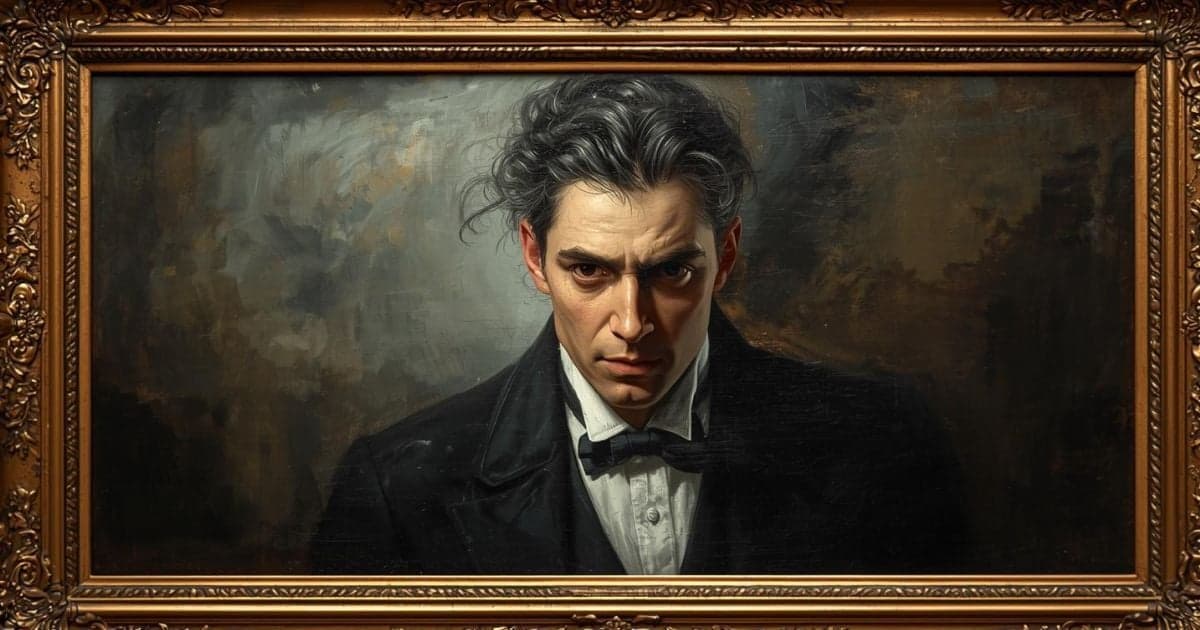
Dorian Gray finally confronts the horror he has become. Standing before his portrait - now a grotesque reflection of his corrupted soul while his physical body remains beautiful - he realizes he can no longer live with the weight of his sins. In a moment of desperate rage and self-loathing, he plunges a knife into the painting, the same blade he used to kill Basil Hallward. The act destroys both the portrait and himself in a final, shocking transformation. When his servants break down the door, they find the portrait restored to its original beauty, showing Dorian as the innocent young man he once was. On the floor lies a withered, hideously aged corpse - Dorian's true self finally revealed. This ending brings Wilde's moral tale full circle, showing that no one can escape the consequences of their choices forever. The novel suggests that beauty without conscience is ultimately hollow, and that trying to separate our actions from our souls leads only to destruction. Dorian's fate serves as a warning about the dangers of vanity, hedonism, and moral corruption. His death represents both justice and tragedy - justice because he finally faces consequences for his crimes, but tragedy because he might have chosen differently. The restored portrait symbolizes redemption and the possibility that beauty and goodness can be reunited, even if it comes too late for Dorian himself. Wilde leaves readers with a powerful message about the importance of living authentically and taking responsibility for our choices.

Share it with friends

Previous Chapter
GO ADS FREE — JOIN US
Original text
complete·1,922 words
I

t was a lovely night, so warm that he threw his coat over his arm and did not even put his silk scarf round his throat. As he strolled home, smoking his cigarette, two young men in evening dress passed him. He heard one of them whisper to the other, “That is Dorian Gray.” He remembered how pleased he used to be when he was pointed out, or stared at, or talked about. He was tired of hearing his own name now. Half the charm of the little village where he had been so often lately was that no one knew who he was. He had often told the girl whom he had lured to love him that he was poor, and she had believed him. He had told her once that he was wicked, and she had laughed at him and answered that wicked people were always very old and very ugly. What a laugh she had!—just like a thrush singing. And how pretty she had been in her cotton dresses and her large hats! She knew nothing, but she had everything that he had lost.

1 / 10

Master this chapter. Complete your experience

Purchase the complete book to access all chapters and support classic literature

Read Free on GutenbergBuy at Powell'sBuy on Amazon

As an Amazon Associate, we earn a small commission from qualifying purchases at no additional cost to you.

Available in paperback, hardcover, and e-book formats

GO ADS FREE — JOIN US

Why This Matters

Connect literature to life

Skill: Recognizing Self-Deception Patterns

This chapter teaches how to identify when you're spending more energy maintaining an image than living authentically.

Practice This Today

This week, notice when you feel exhausted after social interactions—that's often the cost of performing instead of being real.

GO ADS FREE — JOIN US

Now let's explore the literary elements.

Key Quotes & Analysis

"It was his beauty that had ruined him, his beauty and the youth that he had prayed for."

— Narrator

Context: As Dorian realizes how his wish for eternal youth led to his moral destruction

This shows how getting what we think we want can actually destroy us. Dorian's beauty became a curse because it allowed him to avoid consequences and lose his humanity.

In Today's Words:

His good looks were actually what destroyed him - he got everything he thought he wanted and it ruined his life.

"He would destroy this monstrous soul-life, and without its hideous warnings, he would be at peace."

— Narrator

Context: Dorian's thoughts before stabbing the portrait

Dorian believes he can destroy his conscience and guilt by destroying the portrait, but he's really destroying himself. You can't escape who you've become by destroying the evidence.

In Today's Words:

He thought if he could just get rid of the proof of what he'd become, he could finally have peace.

"When they entered, they found hanging upon the wall a splendid portrait of their master as they had last seen him, in all the wonder of his exquisite youth and beauty."

— Narrator

Context: The servants discover the restored portrait after Dorian's death

The portrait returns to its original beauty while Dorian's body shows his true, corrupted age. This suggests that redemption is possible, but only through accepting consequences.

In Today's Words:

The painting was beautiful again, showing him as the innocent young man he used to be.

Thematic Threads

Identity

In This Chapter

Dorian's true self is finally revealed when the portrait's magic breaks, showing the withered reality behind his beautiful facade

Development

Culmination of the identity split established in early chapters—the final merger of appearance and reality

In Your Life:

You might recognize this when you realize you've been performing a version of yourself for so long you've forgotten who you really are.

Consequences

In This Chapter

All of Dorian's sins finally catch up to him in one devastating moment, proving that no one escapes accountability forever

Development

Resolution of the consequence-free living that defined most of the novel

In Your Life:

You see this when years of small compromises suddenly add up to a major life crisis you can no longer ignore.

Redemption

In This Chapter

The portrait returns to its original innocent beauty, suggesting that goodness can be restored even after corruption

Development

Introduced here as the novel's final statement about human potential

In Your Life:

You might find hope in this when you're wondering if it's too late to change course in your own life.

Self-Knowledge

In This Chapter

Dorian finally sees himself clearly for the first time, leading to both horror and a kind of liberation

Development

Completion of his journey from self-ignorance through willful blindness to painful clarity

In Your Life:

You experience this in moments when you stop making excuses and honestly assess your own behavior and its impact.

Authenticity

In This Chapter

The destruction of the false beautiful image reveals the importance of living as your true self, however flawed

Development

Final commentary on the novel's central theme of appearance versus reality

In Your Life:

You might recognize this when you're exhausted from pretending to be someone you're not and crave the relief of just being real.

GO ADS FREE — JOIN US

You now have the context. Time to form your own thoughts.

Discussion Questions

  1. 1

    What finally forces Dorian to confront the truth about himself, and what does he do about it?

    analysis • surface
  2. 2

    Why does Dorian choose to destroy the portrait rather than try to change his behavior?

    analysis • medium
  3. 3

    Where do you see people today maintaining a fake version of themselves that requires constant energy to keep up?

    application • medium
  4. 4

    How can someone recognize when they're heading toward their own 'portrait moment' before it's too late?

    application • deep
  5. 5

    What does Dorian's ending teach us about the difference between facing our problems and trying to destroy the evidence of them?

    reflection • deep

Critical Thinking Exercise

10 minutes

Map Your Own Portrait

Think about areas in your life where there's a gap between how you appear and who you really are. Draw two columns: 'Public Me' and 'Private Truth.' List 3-4 areas where these don't match. Then identify which gap requires the most energy to maintain and consider what small step toward authenticity you could take this week.

Consider:

  • •Focus on patterns, not just individual incidents
  • •Consider both major life areas and small daily behaviors
  • •Think about which gaps drain your energy most

Journaling Prompt

Write about a time when you had to face a truth about yourself that you'd been avoiding. What forced the confrontation, and what did you learn about the cost of self-deception?

GO ADS FREE — JOIN US
Previous
Chapter 19
Contents

Continue Exploring

The Picture of Dorian Gray Study GuideTeaching ResourcesEssential Life IndexBrowse by ThemeAll Books
Moral Dilemmas & EthicsIdentity & Self-DiscoveryPower & Corruption

You Might Also Like

Jane Eyre cover

Jane Eyre

Charlotte Brontë

Explores personal growth

Great Expectations cover

Great Expectations

Charles Dickens

Explores personal growth

The Strange Case of Dr Jekyll and Mr Hyde cover

The Strange Case of Dr Jekyll and Mr Hyde

Robert Louis Stevenson

Explores personal growth

Don Quixote cover

Don Quixote

Miguel de Cervantes Saavedra

Explores personal growth

Browse all 47+ books

Share This Chapter

Know someone who'd enjoy this? Spread the wisdom!

TwitterFacebookLinkedInEmail

Read ad-free with Prestige

Get rid of ads, unlock study guides and downloads, and support free access for everyone.

Subscribe to PrestigeCreate free account
Intelligence Amplifier
Intelligence Amplifier™Powering Wide Reads

Exploring human-AI collaboration through books, essays, and philosophical dialogues. Classic literature transformed into navigational maps for modern life.

2025 Books

→ The Amplified Human Spirit→ The Alarming Rise of Stupidity Amplified→ San Francisco: The AI Capital of the World
Visit intelligenceamplifier.org
hello@widereads.com

WideReads Originals

→ You Are Not Lost→ The Last Chapter First→ The Lit of Love→ Wealth and Poverty→ 10 Paradoxes in the Classics · coming soon
Arvintech
arvintechAmplify your Mind
Visit at arvintech.com

Navigate

  • Home
  • Library
  • Essential Life Index
  • How It Works
  • Subscribe
  • Account
  • About
  • Contact
  • Authors
  • Suggest a Book
  • Landings

Made For You

  • Students
  • Educators
  • Families
  • Readers
  • Literary Analysis
  • Finding Purpose
  • Letting Go
  • Recovering from a Breakup
  • Corruption
  • Gaslighting in the Classics

Newsletter

Weekly insights from the classics. Amplify Your Mind.

Legal

  • Privacy Policy
  • Terms of Service
  • Cookie Policy
  • Accessibility

Why Public Domain?

We focus on public domain classics because these timeless works belong to everyone. No paywalls, no restrictions—just wisdom that has stood the test of centuries, freely accessible to all readers.

Public domain books have shaped humanity's understanding of love, justice, ambition, and the human condition. By amplifying these works, we help preserve and share literature that truly belongs to the world.

A Pilgrimage

Powell's City of Books

Portland, Oregon

If you ever find yourself in Portland, walk to the corner of Burnside and 10th. The building takes up an entire city block. Inside is over a million books, new and used on the same shelf, organized by color-coded rooms with names like the Rose Room and the Pearl Room. You can lose an afternoon. You can lose a weekend. You will find a book you have been looking for your whole life, and three you did not know existed.

It is a pilgrimage. We cannot find a bookstore like it anywhere on earth. If you read the classics, and you ever get the chance, go. It belongs on every reader's bucket list.

Visit powells.com

We are not in any way affiliated with Powell's. We are just a very big fan.

© 2026 Wide Reads™. All Rights Reserved.

Intelligence Amplifier™ and Wide Reads™ are proprietary trademarks of Arvin Lioanag.

Copyright Protection: All original content, analyses, discussion questions, pedagogical frameworks, and methodology are protected by U.S. and international copyright law. Unauthorized reproduction, distribution, web scraping, or use for AI training is strictly prohibited. See our Copyright Notice for details.

Disclaimer: The information provided on this website is for general informational and educational purposes only and does not constitute professional, legal, financial, or technical advice. While we strive to ensure accuracy and relevance, we make no warranties regarding completeness, reliability, or suitability. Any reliance on such information is at your own risk. We are not liable for any losses or damages arising from use of this site. By using this site, you agree to these terms.