
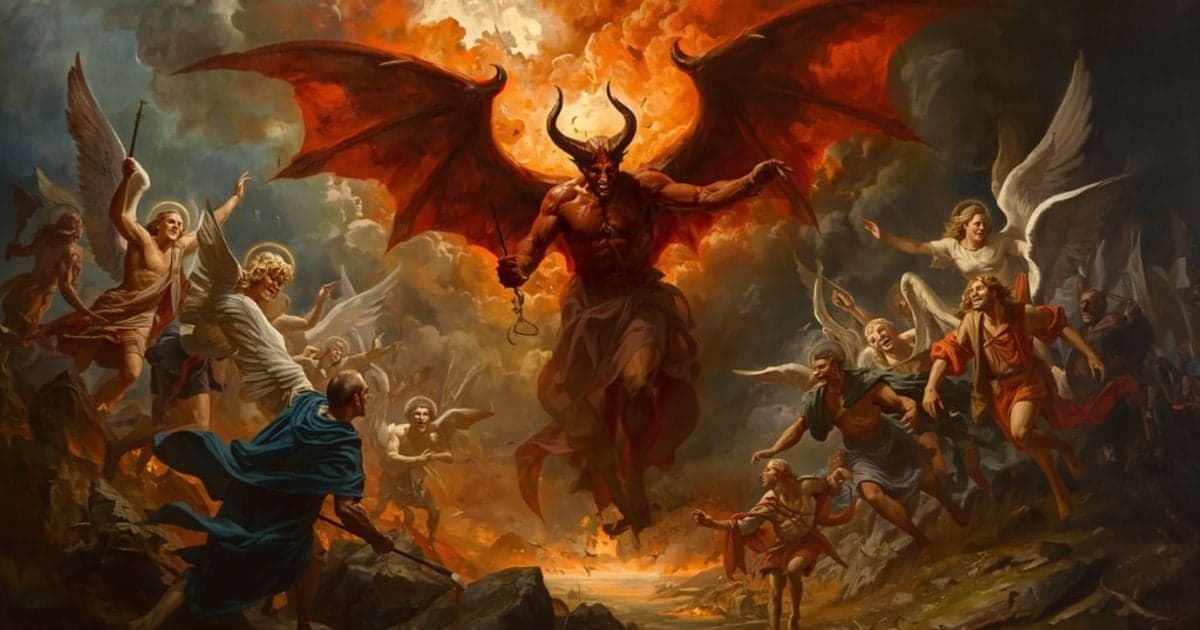
Milton will not let the Fall be an accident, a setup, or a trick so complete that nobody was home. Heaven sees it coming and will not cancel the will to keep the garden pretty. Raphael comes downstairs with history, a doctrine of mutability, and a meal. Eve dreams and is not yet guilty. Then they eat anyway. The poem's insistence is easy to resent and hard to replace. If they were compelled, the story is only spectacle. If they chose, the story is about us.
Temptation in this epic is never a single shove. It is a prepared hour, a flattering glossary, a love that cannot bear a separate fate, a pride that cannot bear a ceiling. None of those deletions of the person is allowed to count as deletion of the yes. The narrator is almost rude about Adam: not deceived. Eve has reasons that sound like reasons. Reasons can still be a chosen hunger. Book 3's mercy is upstream of all this. Saved who will. The later judgment is downstream of the same anthropology. You cannot have a meaningful pardon for a machine.
The modern alibi is usually subtler than Satan's. My past. My wiring. My incentives. My partner. Milton is not naive about pressure. He wrote a tempter who is better at argument than most of us will ever be. He still draws a line under the moment when a mind could have refused and did not. That line is what makes Raphael's visit more than décor, and what makes the last walk more than scenery. A compelled exile would only be sad. A chosen one can still learn, repent, and take a road that was not the first garden.
The Central Lesson
Free will in Paradise Lost is not a slogan against having been influenced. It is the claim that influence, foreknowledge, and even a superior intellect at your ear do not retire your yes. Heaven sees and will not cancel the will. Raphael warns because they can still stand. Eve's dream is not yet guilt. Adam eats not deceived. Temptation counts because refusal was still on the table. The modern alibi upgrades pressure into fate. Milton will not. If you were free enough to fail, you are free enough for a later turning to be real, and for a road out of the garden to be more than scenery.
Applying This to Your Life
Do Not Upgrade Influence into Fate
Flattery, love, fear, and a clever frame are all in Book 9. They explain the pressure. They do not retire the agent. If your story of a bad day has no remaining fork in it, you have already granted the tempter more than Milton will.
Treat Warnings as Evidence You Can Still Refuse
Raphael talks because the hour is not yet spent. A friend, a policy, a second thought: if someone is still bothering to warn you, the culture of excuses has not yet won. Perfect, not immutable, means the next hour is still yours.
Keep Pardon and Responsibility on the Same Ledger
Heaven's mercy in Book 3 does not require pretending the Fall was puppetry. A later turning only means something if the first act meant something. You can be forgiven without being recast as a device. That is the harder dignity.
Other lessons in this book
More life-skill deep dives from the same classic.
When Pride Sounds Like Principle
Hear Satan on the burning lake and at Eden's edge: wounded dignity reframed as liberty, and a no that is only a refusal to be second.
6 chapters·Explore AnalysisNavigating Irreversible Choice
Stay with the quarrel after the fruit, the walk with Michael, and the flaming sword that regret cannot unmake.
5 chapters·Explore AnalysisDistinguishing Love from Possession
Follow Adam from companionship under the stars to the tree, where he eats so he will not live without her.
5 chapters·Explore AnalysisRecognizing Persuasion Disguised as Wisdom
Watch Eve's dream, Raphael's warning, and the serpent that makes the prohibition sound like a cage.
6 chapters·Explore AnalysisReading Charisma Without Confusing It with Virtue
Sit in Pandemonium, then watch Abdiel walk out alone, and Satan return to a hissing court.
7 chapters·Explore AnalysisHearing Who Gets to Name Good and Evil
Track how liberty in Hell and insight in the garden both rename obedience as tyranny.
6 chapters·Explore Analysis
Continue exploring
The same lessons in other books
See how other books teach the same life skills.

Siddhartha
Living in the PresentStay at the ferry until past and future stop being places you can live.
The Blue Castle
Building a Life of Your OwnLeave Elm Street for Mistawis, lock a house that is yours, and keep the Blue Castle after the excuse to live is withdrawn.The Blue Castle
Seeing Past ReputationRevise Barney the jailbird, Cissy the disgrace, and the John Foster study Deerwood never bothered to check.
Where the lesson lives in the book
Seeing Without Forcing
Heaven's council knows the Fall is coming and will not unmake freedom to prevent it. Mercy is offered in advance. The Son will stand in the gap. Prediction is on the table. Puppetry is not. Milton's theology here is also a psychology: knowing a likely outcome is not the same as authoring it.
Key Insight:
You can see a crash coming in a person or an institution and still not have caused it. Treating prediction as permission, or as proof that choice was fake, is how responsibility gets laundered.
“Man shall not quite be lost, but sav'd who will;”
Perfect, Not Stuck
Raphael tells the war in Heaven so Adam and Eve will recognize the method. He also names the design: they were made perfect, not immutable. A dream of the tree can pass through the mind without guilt. Consent is still a later act. The warning exists because the will still exists.
Key Insight:
Temptation is most dangerous when you decide resistance was never possible. A warning is evidence of remaining choice, not of a fate already filed. God made thee perfect, not immutable, is the poem's anti-alibi.
“God made thee perfect, not immutable;”
A World Entrusted, Not Micromanaged
Creation is told as gift and office: light, land, creatures, and a human pair given rule in measure. Knowledge, Raphael says, is as food, and needs temperance. Freedom is built into the design, which means failure is also on the design. Dignity and exposure arrive together.
Key Insight:
A system that trusts people with real choices also exposes them to real falls. Responsibility is not a glitch in that design. It is the price of not being a puppet in a finished script.
“knowledge is as food, and needs no less Her temperance over appetite, to know In measure what the mind may well contain;”
Shaped, and Still a Yes
Eve is flattered and framed. Adam is not deceived; he is overcome by fondness. Milton insists on both pressures and both wills. Love, fear, and a clever glossary can shape a choice without deleting it. That is why the tragedy is moral instead of merely sad.
Key Insight:
Influence is real. Compulsion is a higher claim. If you cannot tell them apart, every later excuse will sound like a weather report. Responsibility begins where you could still have refused.
“he scrupled not to eat, Against his better knowledge; not deceived, But fondly overcome with female charm.”
Judgment That Treats Them as Agents
Consequences are spoken, and the poem still will not reduce the pair to machinery. They could have repulsed the foe. They did not. Justice follows a chosen act, which is also why repentance can mean something later. A puppet cannot repent. An agent can.
Key Insight:
A culture of excuses treats adults like devices moved by stimuli. Milton's harder line is that you were free enough to fail, which is the same freedom in which a later turning can still be sincere.
“Was she thy God, that her thou didst obey Before his voice?”