
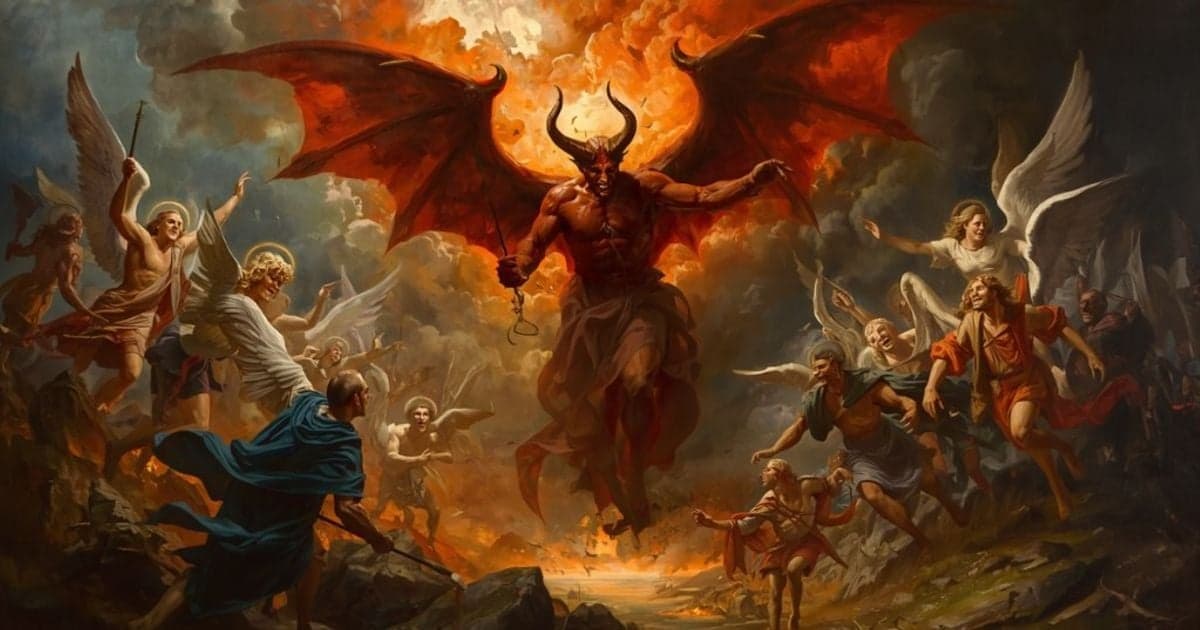
Before anyone eats, the war in this poem is already a war of names. Misery is called freedom. Service is called shame. A limit is called a slight. Milton had lived through a century that could baptize almost anything if the oratory was good enough. He puts the talent in Hell first, so you can watch the method without the garden's pathos. Then he lets the same method walk into a conversation about fruit. The serpent does not need a new metaphysics. He needs Eve to accept a new glossary.
The frank version is Book 4. Evil, be thou my good. Most of the poem's danger is the less frank versions. Pandemonium calls a raid on the unarmed an enterprise. The tree is renamed wisdom. Caution is renamed being kept small. Raphael had already said they were made perfect, not stuck, and that a command can protect a good. That sentence is easy to lose once a more exciting vocabulary arrives. Adam's last books are, among other things, a slow attempt to get the old words back without pretending the campaign never happened.
You will hear this in rooms that never mention Eden. A firing is a realignment. A cruelty is candor. A boundary is toxicity, or a hunger is authenticity. The skill is not a nostalgia for every inherited rule. It is noticing who benefits when the nouns move, and whether the new name mainly makes a desired act feel like growth. Milton's epic is a long demonstration that people will thank you for a dictionary that flatters their wound. Thanking is not the same as having named the good.
The Central Lesson
Paradise Lost treats moral language as territory. Whoever gets to name good and evil gets to recruit. Satan's frank line, evil be thou my good, is the method without makeup. The rest of the poem is makeup: liberty for misery, enterprise for harm, wisdom for a fruit, tyranny for a protective limit. Raphael's warning is that a boundary is not automatically an insult. Eve falls when the glossary flips and caution feels like a smaller mind. The skill is not worship of every old word. It is catching who benefits when the nouns move, and refusing to let a flattering dictionary do the choosing.
Applying This to Your Life
Write the Old Word Next to the New One
When a practice gets a prettier name, put the previous name beside it for a day. If you cannot bear the older word, you may be protecting an appetite, not discovering a truth. Satan's lake speech is that upgrade in public.
Ask Who Is Punished for Using the Unfashionable Noun
In Hell, calling the project what it is would cost standing. At the tree, calling the act disobedience is made to sound like an insult to Eve's mind. If only one glossary is socially safe, you are not in an inquiry. You are in a renaming campaign.
Test the Name Against the Next Deed
Freedom that requires a weaker target, wisdom that cannot survive a pause, love that cannot survive a no: the deeds unmask the nouns. Keep Satan's frank inversion as a template, then listen for its polite cousins in your own mouth.
Other lessons in this book
More life-skill deep dives from the same classic.
When Pride Sounds Like Principle
Hear Satan on the burning lake and at Eden's edge: wounded dignity reframed as liberty, and a no that is only a refusal to be second.
6 chapters·Explore AnalysisNavigating Irreversible Choice
Stay with the quarrel after the fruit, the walk with Michael, and the flaming sword that regret cannot unmake.
5 chapters·Explore AnalysisUnderstanding Free Will and Temptation
Foreknowledge is not a leash. Raphael warns because they can still refuse. The Fall counts because it was chosen.
5 chapters·Explore AnalysisDistinguishing Love from Possession
Follow Adam from companionship under the stars to the tree, where he eats so he will not live without her.
5 chapters·Explore AnalysisRecognizing Persuasion Disguised as Wisdom
Watch Eve's dream, Raphael's warning, and the serpent that makes the prohibition sound like a cage.
6 chapters·Explore AnalysisReading Charisma Without Confusing It with Virtue
Sit in Pandemonium, then watch Abdiel walk out alone, and Satan return to a hissing court.
7 chapters·Explore Analysis
Continue exploring
The same lessons in other books
See how other books teach the same life skills.

Siddhartha
Living in the PresentStay at the ferry until past and future stop being places you can live.
The Blue Castle
Building a Life of Your OwnLeave Elm Street for Mistawis, lock a house that is yours, and keep the Blue Castle after the excuse to live is withdrawn.The Blue Castle
Seeing Past ReputationRevise Barney the jailbird, Cissy the disgrace, and the John Foster study Deerwood never bothered to check.
Where the lesson lives in the book
Freedom as the Brand of a Fall
Satan's opening rhetoric does not argue facts about the war so much as it reissues the dictionary. Heaven's order becomes tyranny. Hell's misery becomes a preserved liberty. The host adopts the vocabulary because it flatters the wound. Political speech is born in injured rank.
Key Insight:
Freedom talk is not always freedom. Ask what the speaker now needs you to stop calling wrong, and whether the new name mainly protects their place in the story.
“Better to reign in Hell than serve in Heaven.”
Hope as a Word for Harm
Hell's council debates destruction in the grammar of enterprise and renewal. An easier target is framed as hope. Corrupting a world not yet at war is sold as strategy. Evil here is not inarticulate. It is fluent in the nouns of a better future.
Key Insight:
When ruin is packaged as a beginning, examine the nouns. Who is allowed to call a wound a mission, and who would be punished for using the older word.
“open war or covert guile, We now debate.”
The Dictionary Inverted on Purpose
At the garden's edge Satan stops bargaining with appearances. If good requires submission, then evil will be his good. The soliloquy is useful because it is frank. Most later persuaders will not give you this sentence. They will give you the same inversion with better manners.
Key Insight:
People who invert moral language openly are easier to read than those who do it a degree at a time. Keep the frank version as a template. Then listen for its polite cousins.
“Evil, be thou my good;”
A Limit That Is Not an Insult
Raphael teaches that they were made perfect, not immutable, and that a bound can protect a good rather than prove a jailer. Satan's later argument at the tree will depend on you forgetting this lesson: that not every named restriction is an attack on the mind.
Key Insight:
The fight over who names good and evil is often a fight over whether a boundary is care or contempt. Test the limit by what it keeps intact, not by how it feels to a pride that wants no ceiling.
“God made thee perfect, not immutable;”
Wisdom as the New Name for the Fruit
The serpent does not say, join my war. He says the prohibition forbids knowing, forbids being wise, forbids a good. Eve reaches when the act has been rebranded as maturity. Naming precedes appetite. The older word, disobedience, is made to sound like a slur against her intellect.
Key Insight:
If you feel suddenly ashamed of caution, check whether someone else renamed prudence as weakness in the last few minutes. Appetite often arrives after the dictionary has already been swapped.
“In plain then, what forbids he but to know, Forbids us good, forbids us to be wise?”
Obedience, After the Words Have Been Through a War
Adam's late learning is plain: to obey is best. That sentence is dangerous if you hear it as a slogan for every power. In this poem it is a correction after a campaign in which obedience was successfully renamed tyranny, and conquest successfully renamed freedom. Michael has shown how nations will keep doing the same swap.
Key Insight:
Moral language outlives speakers. The skill is testing names against deeds across time, not inheriting the last clever inversion because it sounded like growth.
“Henceforth I learn, that to obey is best, And love with fear the only God;”