Chapter 15
The Dinner Party Disaster
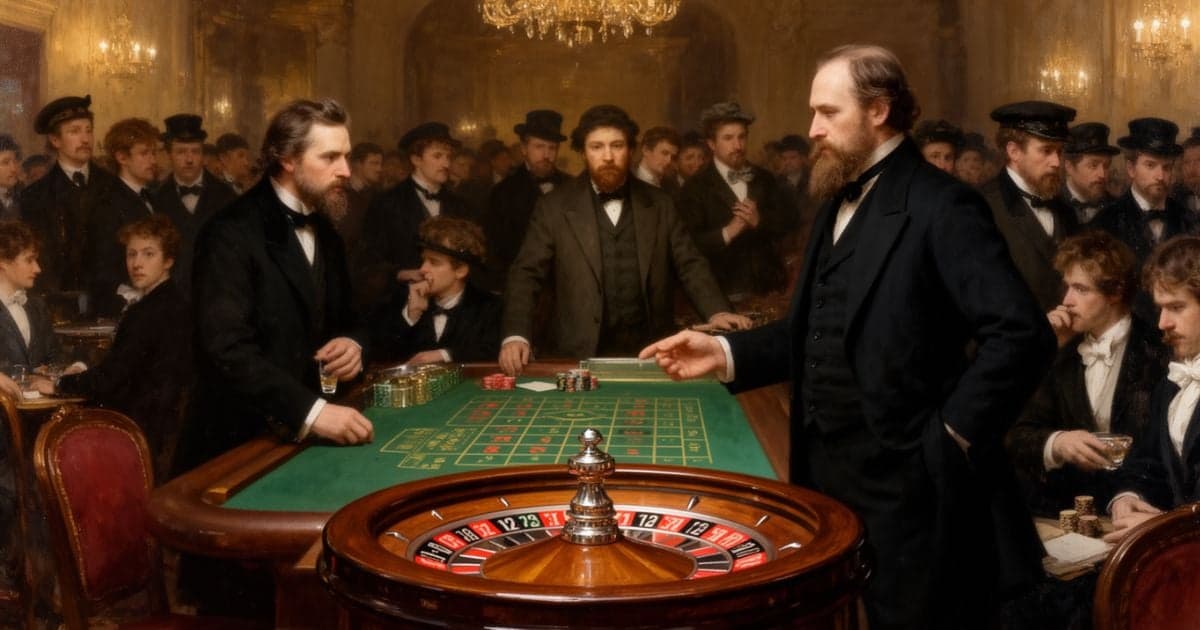
PART II — À Propos of the Wet Snow Chapter IV I had been certain the day before that I should be the first to arrive. But it was not a question of being the first to arrive. Not only were they not there, but I had difficulty in finding our room. The table was not laid even. What did it mean? After a good many questions I elicited from the waiters that the dinner had been ordered not for five, but for six o’clock. This was confirmed at the buffet too. I felt really ashamed to go on questioning…
Public-domain chapter text, formatted for reading.
Master this chapter. Complete your experience
Purchase the complete book to access all chapters and support classic literature
Available in paperback, hardcover, and e-book formats
Now let's explore the literary elements.
Key Quotes & Analysis
"I was overjoyed to see them, as though they were my deliverers, and even forgot that it was incumbent upon me to show resentment."
Context: When they finally arrive after he has waited alone for an hour
After an hour of solitary humiliation — the unlaid table, the candles not brought, the strangers eating in silence — his resentment simply evaporates at the sight of them. He needs company more than he needs dignity. The reversal is involuntary and he knows it.
In Today's Words:
I had been alone in that room for an hour, building myself up into a state of righteous indignation, and then they walked in and were so ordinarily human that all the careful preparation collapsed. I was overjoyed to see them, which immediately embarrassed me, because being overjoyed required admitting how much I had wanted them there.
"What if, in reality, without the least desire to be offensive, that sheepshead had a notion in earnest that he was superior to me and could only look at me in a patronising way? The very supposition made me gasp."
Context: Reacting to Zverkov's circumspect, General-like courtesy instead of the mockery he expected
Mockery would have been manageable — at least it would have been engagement. What unmans him is the possibility that Zverkov is simply not performing superiority, but actually feels it and is condescending out of genuine goodwill. That would mean the gap between them is real.
In Today's Words:
He was not trying to insult me. He was trying to include me, in his limited way, with the genuine belief that he was doing me a favor. The misunderstanding was completely sincere. He thought we were having the same conversation about the same dinner, and we were simply not at all.
"No one could have gone out of his way to degrade himself more shamelessly, and I fully realised it, fully, and yet I went on pacing up and down from the table to the stove."
Context: During the three-hour walk from table to stove while they ignore him entirely
The sentence contains everything. He knows — fully, not partially — what he is doing and what it costs him. The knowledge does not stop him. He paces for three hours, three times soaked with sweat and dry again, while they discuss Shakespeare on the sofa. Self-awareness here is not a tool. It is just something he carries.
In Today's Words:
I understood, fully and in real time, exactly how badly I was performing. I could see every wrong note I was hitting, every moment that made things worse rather than better. I kept playing. The awareness and the behavior occupied the same body simultaneously and neither could stop the other.
"Insulted? You insulted me? Understand, sir, that you never, under any circumstances, could possibly insult me."
Context: The Underground Man's attempt to apologise and ask for friendship as they are leaving
The cruelest thing Zverkov could say — and he says it without cruelty. He means it literally. To be insulted by someone, you have to register them as a peer capable of wounding you. Zverkov simply does not. The apology is refused not with contempt but with a kind of puzzled sincerity.
In Today's Words:
You cannot actually insult someone who has decided not to care what you think. I had not decided this. I cared enormously what Zverkov thought, which is why I needed him to believe the opposite. The speech was a defense mechanism pretending to be indifference.
Thematic Threads
Class
In This Chapter
The Underground Man's shame about his low salary and shabby appearance becomes the lens through which he interprets every interaction
Development
Evolved from earlier hints about his clerk position to direct confrontation with his economic inferiority
In Your Life:
You might feel this when your income or job title becomes the filter through which you see every social situation
Pride
In This Chapter
His wounded pride transforms a simple scheduling oversight into evidence of deliberate humiliation and conspiracy
Development
Pride has escalated from internal brooding to external self-destruction through the dinner performance
In Your Life:
You experience this when small slights feel like major attacks because they hit your most sensitive spots
Social Performance
In This Chapter
The bizarre toast and desperate attempts to join the brothel visit show performance becoming increasingly detached from reality
Development
Introduced here as the external manifestation of his internal social anxieties
In Your Life:
You might recognize this in your own tendency to 'perform' your worth when feeling excluded or judged
Isolation
In This Chapter
His desperate need to belong drives him to borrow money and beg to join people who clearly don't want him there
Development
Isolation has evolved from chosen solitude to desperate attempts at forced connection
In Your Life:
This shows up when loneliness makes you accept crumbs of attention from people who don't actually value you
Self-Sabotage
In This Chapter
Every attempt to improve his situation makes it worse, from the early arrival to the insulting toast to the pleading
Development
Self-sabotage emerges as the practical result of his underground thinking patterns
In Your Life:
You might notice this when your efforts to fix social situations consistently backfire because they're driven by panic rather than wisdom
You now have the context. Time to form your own thoughts.
Discussion Questions
This is not a test. Five prompts guide you through the chapter, from how it opens to how it closes, so you notice context and rhythm rather than facts to memorize. Sit with each question in your own words. When you see "One way to read it," treat it as a starting point, not the only answer.
- 1
The Underground Man arrives an hour early and is not told the dinner time has changed. What does this detail establish about his actual status in the group?
analysis • surfaceOne way to read it
He is not a guest; he is a presence they are managing at minimum effort. The failure to inform him is not malicious; it is indifferent. No one thought to tell him because no one thought about him at all, and that indifference is worse than deliberate exclusion.
- 2
He alternates between furious internal speeches, attempts to be included, and sullen silence throughout the dinner. What is he actually trying to accomplish, and why does every approach fail?
analysis • mediumOne way to read it
He is trying to exist on his own terms while also being accepted on theirs, and these two goals are incompatible in this room. Any assertion of his own perspective reads as hostility to the group; any attempt to fit in requires him to become someone he cannot maintain being for longer than a few minutes.
- 3
He stays through hours of being ignored, mocked when noticed, and excluded from the toast. Have you ever stayed in a social situation far past the point where it was clearly not working? What kept you there?
application • mediumOne way to read it
The chapter suggests the staying is about proof: he cannot leave because leaving would confirm that they have defeated him. Staying and enduring, even miserably, is the only form of resistance available to him in that moment, however little it actually accomplishes.
- 4
By the end he has decided to either make them beg for his friendship or slap Zverkov. Both options are impossible and he knows it. What does planning an impossible action accomplish psychologically?
application • deepOne way to read it
It restores a sense of agency in a situation where he has none. He cannot actually slap Zverkov or make anyone beg; the plan will evaporate when he arrives. But planning it is a way of exiting the scene as someone with a purpose rather than someone who was simply humiliated and left.
- 5
The dinner is a failure by any reasonable measure, yet the Underground Man has been planning and dreading it for a week. What does the intensity of his investment tell us about what social belonging means to him?
reflection • deepOne way to read it
It means everything, which is exactly what makes every failure so catastrophic. The Underground Man talks constantly about his contempt for these people, but the intensity of his planning, dreading, and responding tells the truth: connection with others is not peripheral but central, and he has no legitimate way to fulfill it.
Critical Thinking Exercise
Rewrite the Toast
The Underground Man's bizarre toast was a disaster that pushed everyone away. Imagine you're in his shoes—feeling excluded, defensive about your salary, and desperate to belong. Write a different toast that acknowledges the situation honestly without attacking anyone or begging for acceptance. Focus on what you would actually say to preserve your dignity while either connecting genuinely or gracefully exiting.
Consider:
- •How can you acknowledge feeling left out without making others responsible for fixing it?
- •What's the difference between stating your worth versus desperately performing it?
- •When is it better to leave with dignity than to stay where you're not wanted?
Journaling Prompt
Write about a time when you felt excluded from a group. How did you handle it? Looking back, what would you do differently to maintain your self-respect while either building genuine connection or walking away with dignity?
Coming Up Next...
Chapter 16: The Sledge Ride to Reckoning
Having borrowed money to follow his tormentors to a brothel, the Underground Man is about to encounter someone even more vulnerable than himself. This meeting will force him to confront what he's become - and whether he's capable of genuine human connection.