Complete Study Guide
Metamorphoses
by Ovid (8)
15 Chapters
6 hr read

Prestige · $2.99/month
Chapter audio, theme analysis, and downloads
by Ovid (8)
High school and college students studying poetry, book clubs, and readers interested in identity & self and love & romance
Complete Guide: 15 chapter summaries • Character analysis • Key quotes • Discussion questions • Modern applications • 100% free
Review themes and key characters to know what to watch for
Follow along chapter-by-chapter with summaries and analysis
Use discussion questions and quotes for essays and deeper understanding
From the moment divine power separates earth from sky and brings order from primordial Chaos, Ovid's Metamorphoses unfolds as a dazzling tapestry of transformation that has captivated readers for over two millennia. This Latin narrative poem, completed around 8 CE, weaves together more than 250 myths across fifteen books, all united by a single brilliant concept: nothing in the universe remains unchanged. Bodies shift into new forms, identities dissolve and reform, and fates pivot on the whims of gods and the follies of mortals.
Ovid's genius lies not merely in collecting these ancient stories, but in reimagining them with psychological depth and narrative sophistication that feels remarkably modern. His figures pulse with recognizable emotions and desires. When Daphne flees Apollo's unwanted advances and transforms into a laurel tree, Ovid captures both the terror of pursuit and the bittersweetness of a god who can only embrace bark and leaves. Actaeon becomes a stag and is torn apart by his own hounds after glimpsing Diana bathing, a meditation on the fatal cost of forbidden knowledge.
The poet's wit sparkles throughout these tales. He presents the gods as petty, jealous, and lustful beings who differ from humans primarily in their power to reshape reality. Narcissus falls in love with his own reflection while Echo, cursed to repeat only others' words, pines away until only her voice remains. Arachne challenges Athena and becomes a spider, forever spinning. Orpheus enchants the underworld with his music, only to lose Eurydice through a moment's doubt. Transformation here stems from love, pride, jealousy, and grief.
Yet Metamorphoses transcends mythological catalog to become a meditation on change as the fundamental force of existence. Ovid traces transformation from cosmic creation down to the most intimate human experiences. His voice shifts between grandeur and detail, tragic pathos and comic irony, ancient and eternal at once.
The poem's influence on Western art and literature cannot be overstated. From medieval allegory to Renaissance painting, from Shakespeare to contemporary fiction, Ovid established transformation as a central metaphor for the human condition.
Read in Augustan Rome yet insistently playful, the poem invites questions about power, spectacle, and who gets to tell the old stories anew. Its chain-linked plots, one tale nudging the next like relay-runners of fate, keep change feeling like momentum: cruel, funny, gorgeous, and unfinished in the way real life always is.
Wide Reads walks all fifteen books with Thomas, an emergency room nurse who witnesses bodies transform through trauma, illness, and healing every shift. The epic becomes a guide to change when identity itself seems to dissolve and reform under pressure.
Classic literature like Metamorphoses offers more than historical insight. It provides roadmaps for navigating modern challenges. In plain terms, each chapter reveals practical wisdom applicable to contemporary life, from career decisions to personal relationships.
Beyond literary analysis, Metamorphoses helps readers develop critical real-world skills:
Analyze complex characters, motivations, and moral dilemmas that mirror real-life decisions.
Understand human behavior, relationships, and the consequences of choices through character studies.
Gain historical context and understand timeless themes that shaped and continue to influence society.
Articulate complex ideas and engage in meaningful discussions about themes, ethics, and human nature.
Divine judge and destroyer
Featured in 2 chapters
Divine pursuer
Featured in 2 chapters
Vengeful spouse
Featured in 2 chapters
Hero and rescuer
Featured in 2 chapters
Jealous antagonist
Featured in 2 chapters
Tragic betrayer
Featured in 2 chapters
Tragic hero
Featured in 2 chapters
Divine lover
Featured in 2 chapters
Righteous survivor
Featured in 1 chapter
Faithful companion
Featured in 1 chapter
"At first, the sea, the earth, and the heaven, which covers all things, were the only face of nature throughout the whole universe, which men have named Chaos; a rude and undigested mass,[4] and nothing {more} than an inert weight, and the discordant atoms of things not harmonizing, heaped together in the same spot."
"No Sun[5] as yet gave light to the world; nor did the Moon,[6] by increasing, recover her horns anew."
"The palace of the Sun was raised high, on stately columns, bright with radiant gold, and carbuncle that rivals the flames; polished ivory covered its highest top, {and} double folding doors shone with the brightness of silver."
"By thine have my words been made rash."
"The son of Agenor, having wandered over the whole world,[1] as an exile flies from his country and the wrath of his father, for who is there that can discover the intrigues of Jupiter? A suppliant, he consults the oracle of Phœbus, and inquires in what land he must dwell."
"Under her guidance, go on thy way; and where she shall lie down on the grass, there cause a city to be built, and call it the Bœotian[2] {city}."
"But Alcithoë, the daughter of Minyas,[1] does not think that the rites[2] of the God ought to be received; but still, in her rashness, denies that Bacchus is the progeny of Jupiter; and she has her sisters[3] as partners in her impiety."
"Pyramus and Thisbe, the one the most beauteous of youths,[18] the other preferred before {all} the damsels that the East contained, lived in adjoining houses; where Semiramis is said to have surrounded her lofty city[19] with walls of brick."
"Behold! {now}, behold! I am come, the avenger of my wife, ravished from me; neither shall thy wings nor Jupiter turned into fictitious gold, deliver thee from me."
"Twas not Perseus, if thou wouldst know the truth, that took her away from thee; but the incensed majesty of the Nereids, and horned Ammon, and the monster of the sea, which came to be glutted with my bowels."
"To commend is but a trifling matter; let us, too, deserve commendation, and let us not permit our divine majesty to be slighted without {due} punishment."
"Let her contend with me."
"But a new power draws me on, against my will; and Cupid persuades one thing, reason another."
"I see which is the more proper {course}, and I approve of it, {while} I follow the wrong one."
"I am in doubt whether I should rejoice, or whether I should grieve, that this mournful war is carried on."
1. Opening movement: Why does Ovid begin with undivided Chaos instead of starting with a hero or city?
From Chapter 1 →2. Early chapter: What does the separation of elements suggest about leadership under overload?
From Chapter 1 →3. Opening movement: Why does Phaethon seek the chariot as proof of identity rather than as a trained responsibility?
From Chapter 2 →4. Middle movement: What does Apollo's warning reveal about the ethics of leadership promises?
From Chapter 2 →5. Opening movement: What does Cadmus's exile assignment reveal about duty and identity at the start of Chapter 3?
From Chapter 3 →6. Middle movement: Why does Apollo's indirect guidance matter for leadership practice?
From Chapter 3 →7. Opening movement: What does the Minyan daughters' refusal of Bacchic rites suggest about resistance and risk?
From Chapter 4 →8. Middle movement: Why is the wall in Pyramus and Thisbe more than a physical object?
From Chapter 4 →9. Opening movement: How does Phineus frame his attack, and what does that framing reveal about power?
From Chapter 5 →10. Middle movement: Why is Perseus's warning before using Medusa's head ethically significant?
From Chapter 5 →11. Why does Ovid place Arachne's technical excellence beside Minerva's wounded authority?
From Chapter 6 →12. What does Niobe's transformation into stone reveal about the relationship between grief and pride?
From Chapter 6 →13. How does Medea's opening monologue change the way we define heroism in this chapter?
From Chapter 7 →14. Why does Ovid emphasize oaths and witnesses before Medea helps Jason?
From Chapter 7 →15. Why does Scylla's betrayal fail to secure acceptance from Minos?
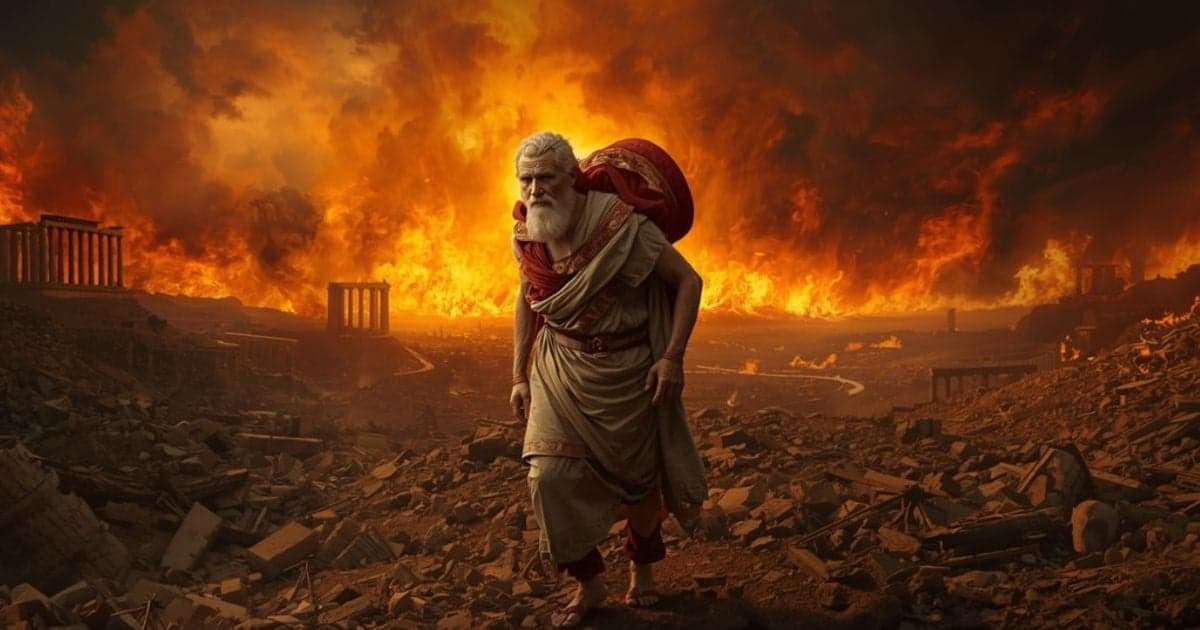
From Chapter 8 →Ovid opens the Metamorphoses with a declaration, not a battle scene. He will tell of forms changed into new bodies, from the beginning of the world to...
Chapter 2 opens with wounded pride, not cosmic creation. Phaethon, son of Clymene and claimed child of the Sun, is mocked by Epaphus, who boasts divin...
Chapter 3 opens in exile, not triumph. After Jupiter carries Europa away, her father Agenor commands Cadmus to find her or never return home. The miss...
Chapter 4 opens inside a house that refuses the street. While Thebes celebrates Bacchus with drums, garlands, and loosened hair, the daughters of Miny...
Chapter 5 resumes where celebration is thinnest. While Perseus recounts Medusa's slaying at his wedding feast, the royal courts fill with clamor that ...
Book 6 opens with Minerva hearing the Muses praise divine justice and deciding she, too, will punish mortal arrogance. She targets Arachne, a young we...
Book 7 begins with the Argonauts arriving in Colchis to demand the Golden Fleece, but Ovid immediately shifts the center of gravity from Jason's heroi...
Book 8 begins with siege warfare and erotic treason. Minos attacks Megara, whose safety depends on a purple lock on King Nisus's head. Nisus's daughte...
Book 9 opens with Achelous narrating his wrestling match with Hercules for Deianira's hand, framing the contest as both erotic competition and reputat...
Book 10 opens under bad omens at the wedding of Orpheus and Eurydice. Hymen appears without joy, the torch smokes without flame, and the marriage is i...
Book 11 opens in the wreckage left by Orpheus. The poet who could soften trees, calm rivers, and draw stones across the ground is now exposed to a cro...
Book 12 opens at Aulis where military ambition stalls against weather, omen, and fear. The Greek coalition has gathered overwhelming force, yet the fl...
Book 13 begins with a courtroom inside a war camp. Achilles is dead, but his armor remains as condensed prestige, and Ajax and Ulysses each argue that...
Book 14 opens with Glaucus carrying unreturned desire to Circe, hoping she can heal what Scylla refuses. Instead he triggers another cycle of redirect...
Book 15 serves as Ovid's philosophical and political capstone, opening with succession anxiety after Rome's early kings and moving quickly toward Numa...
Questions about using this guide. For plot, character, and theme questions about Metamorphoses, see Common Questions on the book page.
Metamorphoses is rated intermediate difficulty. Our chapter-by-chapter analysis breaks down complex passages, explains historical context, and highlights key themes to make the text more accessible. Each chapter includes summaries, character analysis, and discussion questions to deepen your understanding.
Yes — use this reading guide alongside Metamorphoses, not instead of it. Wide Reads exists to show you why the book still matters: lessons, chapter summaries with audio, and life skills you can carry into real life. That context can sharpen essays on themes, characters, and quotes. Always read Ovid's original text, though. We are the guide at the trailhead; the classic is still the point.
Traditional study guides list what happened in Metamorphoses. This guide maps the book chapter by chapter: summaries, key quotes, themes traced to scenes, and discussion questions — with links into every chapter. Wide Reads adds six lessons, summary audio, and the original text alongside the summaries. It is free with no paywall.
Each chapter includes our guided chapter notes, showing how Metamorphoses's insights apply to modern challenges in career, relationships, and personal growth.
Start Reading Chapter 1Discover the essential life skills readers develop through Metamorphosesin our Essential Life Index.
View in Essential Life IndexTheme-by-theme analyses that connect this book to modern life skills.
See transformation as the fundamental nature of existence, from cosmic creation to the bodies and identities that shift every day
Follow Orpheus, Niobe, and Daedalus through losses that permanently reshape the selves that survive
See Ovid's gods as magnified office politics: selective rules, wounded ego, and punishment redirected at the vulnerable
Identify recurring narrative patterns in myth that still map onto desire, jealousy, grief, and revenge today
Track how love, lust, and longing reshape bodies and selves in Daphne, Narcissus, and the poem's cruelest transformations
Follow Arachne, Phaethon, and others who challenge the gods and learn what happens when pride outruns power

Weekly insights from the classics. Amplify Your Mind.
We focus on public domain classics because these timeless works belong to everyone. No paywalls, no restrictions—just wisdom that has stood the test of centuries, freely accessible to all readers.
Public domain books have shaped humanity's understanding of love, justice, ambition, and the human condition. By amplifying these works, we help preserve and share literature that truly belongs to the world.
© 2026 Wide Reads™. All Rights Reserved.
Intelligence Amplifier™ and Wide Reads™ are proprietary trademarks of Arvin Lioanag.
Copyright Protection: All original content, analyses, discussion questions, pedagogical frameworks, and methodology are protected by U.S. and international copyright law. Unauthorized reproduction, distribution, web scraping, or use for AI training is strictly prohibited. See our Copyright Notice for details.
Disclaimer: The information provided on this website is for general informational and educational purposes only and does not constitute professional, legal, financial, or technical advice. While we strive to ensure accuracy and relevance, we make no warranties regarding completeness, reliability, or suitability. Any reliance on such information is at your own risk. We are not liable for any losses or damages arising from use of this site. By using this site, you agree to these terms.