Book 6 opens with Minerva hearing the Muses praise divine justice and deciding she, too, will punish mortal arrogance. She targets Arachne, a young weaver from humble origins whose technical brilliance is undeniable and whose pride is equally unrestrained. Disguised as an old woman, the goddess warns her to ask pardon, but Arachne doubles down and demands a contest. Ovid slows the scene to highlight craft itself: looms stretched, shuttles flashing, colors blended like a rainbow, and stories stitched with forensic precision. Minerva's tapestry celebrates Olympian order, showing gods victorious and mortals punished for impiety. Arachne's tapestry, by contrast, exposes the gods as serial deceivers, depicting Jupiter, Neptune, and other immortals transformed into animals and disguises to exploit women. The contest is not merely technical but ideological: official mythology versus unflinching memory. Minerva cannot fault the workmanship, and that perfect accuracy enrages her more than poor art would. She strikes Arachne with the shuttle; Arachne hangs herself in despair; then Minerva relents only enough to keep her alive as a spider, weaving forever. The first movement sets the chapter's governing law: talent without humility invites punishment, and truth spoken against power is never neutrally received.
The narrative then shifts from artisan pride to royal pride through Niobe, queen of Thebes, who mocks Latona for having only two children while she boasts many sons and daughters. Niobe treats fertility as moral superiority and demands public worship for herself. Latona answers through Apollo and Diana, who methodically kill Niobe's children in scenes that escalate from athletic confidence to maternal panic. Ovid makes the violence ceremonial and intimate: arrows strike in public games, in domestic spaces, and in attempts at last embraces. Niobe's husband cannot survive the grief; the mother moves from blasphemous rhetoric to numb astonishment, finally petrified into stone on Mount Sipylus, still weeping through the rock. Pride here is not only personal vanity but social theater, a ruler turning religious ritual into a referendum on status. The gods' response is disproportionate by modern ethics, yet narratively precise: the part of Niobe that would not bend becomes literally unbending stone. Ovid invites readers to see both sides at once, the danger of contempt and the terror of divine overreaction. The lesson lands as a warning about public humiliation cycles, where one boast triggers retaliation, retaliation demands escalation, and no one in the system can de-escalate once honor has been framed as zero-sum.
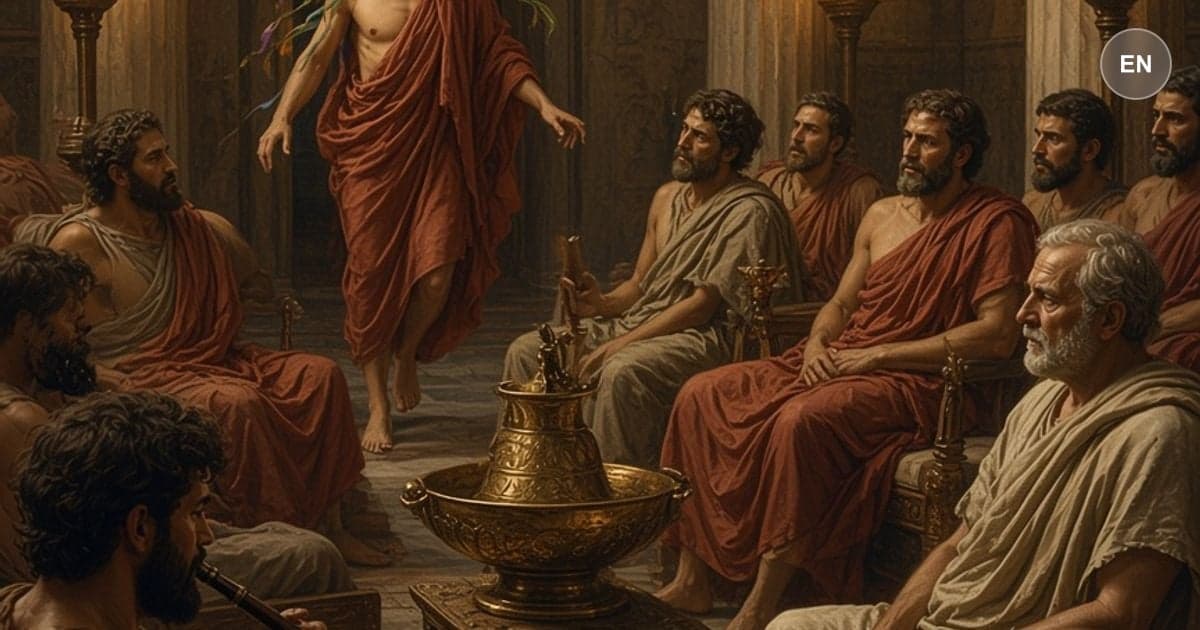
Marsyas extends the pattern into artistic rivalry and institutional cruelty. The satyr challenges Apollo to a music contest, wins early approval with his pipe, then loses when Apollo changes the terms by requiring instrumentalists to sing while playing. The rigged judgment allows the god to punish dissent not as debate but as treason. Marsyas is flayed alive, and Ovid dwells on flesh, blood, and nerves to force the reader into embodied horror. The scene exposes what happens when authority controls both standards and penalties. Nearby, the Pelops episode and related kinship curses continue this logic of wounded prestige and retaliatory violence. Family lines absorb crimes committed in moments of humiliation, and descendants inherit consequences they did not choose. Ovid's sequence is deliberate: first a craft contest, then a dynastic insult, then an adjudicated performance turned torture. In each case the stronger party reframes process to preserve supremacy. The chapter's middle movement therefore examines how systems become cruel while still claiming legality. The gods, kings, and judges all insist they are defending order, yet the outcomes reveal order captured by ego.
The final major arc, Tereus, Procne, and Philomela, pushes transformation into the terrain of sexual violence, silencing, and revenge. Tereus marries Procne, then becomes obsessed with her sister Philomela, abducts and rapes her, and cuts out her tongue to prevent testimony. Ovid then gives Philomela a different medium: she weaves the crime into cloth and secretly sends it to Procne. The woven text mirrors Arachne's opening challenge, but now tapestry is not artistic provocation; it is survival evidence. Procne's revenge is catastrophic: she kills her son Itys and serves him to Tereus at a feast. When Tereus discovers the truth, pursuit and attempted murder follow until the gods transform all three into birds, freezing unbearable motion into new forms. This section refuses clean moral comfort. Victims are not restored; perpetrators are not rehabilitated; justice arrives as metamorphosis rather than repair. Ovid shows trauma ricocheting through households and generations when power meets impunity. Language, when mutilated, returns through pattern and craft. That return carries both revelation and ruin.
Read together, Book 6 is a study in overreach and counter-overreach. Arachne's pride provokes Minerva, but Minerva's violence exceeds correction. Niobe's contempt desecrates ritual, but Latona's answer annihilates children. Marsyas contests prestige and is destroyed by procedural manipulation. Philomela is silenced, then re-speaks through weaving, and revenge consumes innocents along with guilty parties. Ovid's organizing intelligence lies in recurrence: loom, song, body, and lineage become sites where power tries to fix meaning and where suffering breaks those boundaries. Transformation is not whimsical magic; it is the residue of conflict that ordinary institutions cannot contain. For modern readers, the chapter maps familiar patterns: public arrogance, institutional retaliation, rules changed by winners, evidence smuggled through alternate channels, and vengeance that multiplies harm. The myths do not offer tidy virtues. They offer diagnostic clarity about what happens when status anxiety governs justice and when injured people, denied lawful redress, improvise catastrophic forms of reply.