Wide Reads
Literature MattersLife IndexEducators
Sign in
Where to Begin

Love, Betrayal, and Transformation — Metamorphoses

Metamorphoses - Love, Betrayal, and Transformation

Ovid

Metamorphoses

Love, Betrayal, and Transformation

Home›Books›Metamorphoses›Chapter 8: Love, Betrayal, and Transformation
Previous
8 of 15
Next

Analysis by the Wide Reads editorial team·Reviewed against the source text·Updated December 5, 2025

Summary

Love, Betrayal, and Transformation

Metamorphoses by Ovid

0:000:00
Listen to Next Chapter

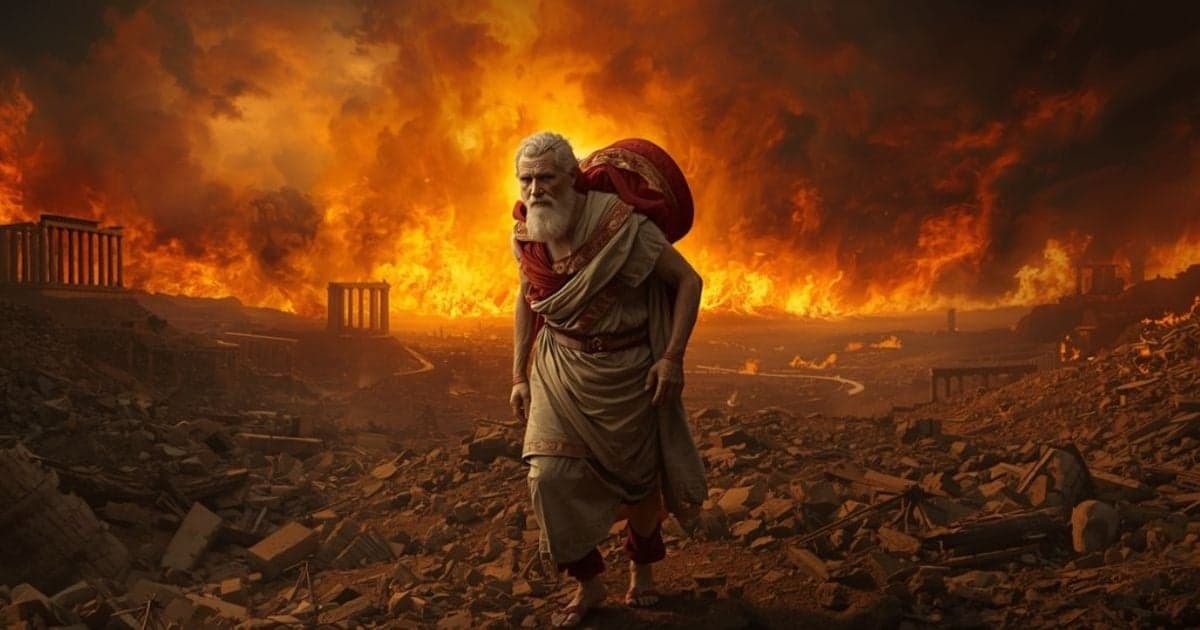
Book 8 begins with siege warfare and erotic treason. Minos attacks Megara, whose safety depends on a purple lock on King Nisus's head. Nisus's daughter Scylla watches the Cretan commander from a tower and gradually confuses admiration with entitlement. Ovid tracks her fixation through escalating fantasies: she praises Minos's armor, horse, and gestures, then imagines herself as diplomatic prize, then contemplates opening gates by love rather than arms. She eventually cuts her father's fatal lock and offers both city and self to Minos. The response is immediate revulsion. Minos condemns her crime, takes the city, and sails away. Scylla chases his fleet through the sea, clinging to ships until transformed while her father, also transformed, attacks her from the air. The episode establishes a brutal premise for the book: desire can become strategic sabotage, but betrayal rarely secures belonging with the side it serves. Scylla's punishment is not only metamorphosis; it is political homelessness, rejected by homeland and conqueror alike.

From failed loyalty Ovid moves to engineered escape. Minos returns to Crete and contains Daedalus, whose intellect has built labyrinthine power structures he no longer controls. Daedalus concludes that although Minos can block land and sea, he cannot block air, and he fabricates wings with wax and feathers for himself and his son Icarus. The preparation scene is tender and technical: hands shaping gradients of feather length, wax warmed, straps fitted, instructions repeated. Daedalus warns Icarus to fly a middle path, not too low for sea spray, not too high for sun heat. During flight, observers mistake them for gods. Then exhilaration overcomes discipline; Icarus rises, wax softens, feathers scatter, and he falls into the sea that bears his name. Daedalus survives, grief-stricken, and later buries his son while continuing his craft life in Sicily. Ovid frames invention as morally double-edged: technique enables liberation from tyranny and exposes new vectors of loss. Mastery can transmit procedure but not self-command.

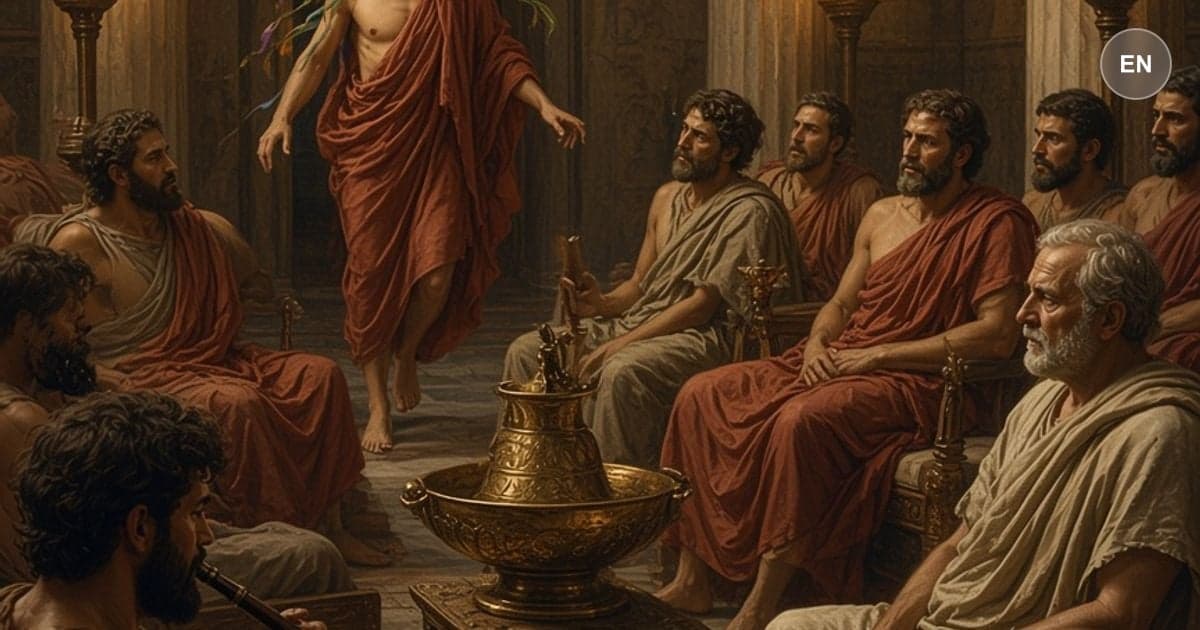
The chapter's center then shifts to the Calydonian boar hunt, where communal prestige, gender exclusion, and succession anxiety collide. Oeneus neglects Diana in sacrifice; the goddess sends a monstrous boar to ravage fields and people. Heroes from across Greece gather, including Meleager and the huntress Atalanta. Atalanta draws first blood, and Meleager, moved by admiration and perhaps desire, grants her the trophy hide despite objections from his maternal uncles who demand male precedence. Conflict moves from animal to kin: Meleager kills the uncles in rage, and domestic grief converts battlefield victory into family curse. His mother Althaea, torn between brotherly loyalty and maternal love, ultimately burns the fatal brand linked to her son's life, killing him at a distance. The hunt thus resolves not in civic restoration but in reciprocal mourning. Ovid exposes how collective campaigns collapse when honor distribution is perceived as illegitimate. The boar is slain, but the social body remains wounded.

Later episodes continue this pattern of rescue entangled with abandonment, especially in stories linked to Theseus and Ariadne. Ariadne helps Theseus navigate the Cretan labyrinth and escape, only to be deserted and then folded into a new mythic economy through Bacchus. Ovid repeatedly stages the same structural wound with different names: a woman provides the key technology, route, or loyalty required for male survival, then is displaced once the mission succeeds. Yet he also allows transformation to reassign value, making abandoned figures central in other narrative circuits. By Book 8's end, no stable boundary remains between heroism and exploitation, family duty and vanity, or invention and catastrophe. Every apparent solution carries deferred liabilities that emerge in the next household, island, or generation. Movement itself, by ship, wing, hunt, or marriage, becomes the mechanism through which costs are transferred.

As a whole, Book 8 is about dangerous thresholds: between admiration and betrayal, innovation and hubris, victory and inheritance. Scylla crosses loyalty boundaries for erotic fantasy and is unhomed. Daedalus crosses physical boundaries by engineering flight and loses his son to excess altitude. Meleager crosses kinship boundaries by privileging merit over blood and then blood over restraint. Ariadne crosses national and emotional boundaries and discovers that salvation work is not the same as social security. Ovid's craftsmanship lies in sequencing these stories so each reframes the previous one. Treason resembles bad engineering because both misjudge limits. Heroic hunting resembles civic leadership because both require fair recognition practices. Abandonment resembles political realignment because both turn former allies into residue. For modern readers, the chapter offers a map for risk governance: clarify loyalties before crisis, teach not only tools but thresholds, and audit who pays when celebrated breakthroughs depend on someone else's irreversible sacrifice. It also asks institutions to honor contributors before and after the breakthrough, because forgotten labor often returns as sabotage, grief, moral injury, or distrust in the very structures that claimed victory for years afterward.


In this chapter: Terms Characters Key Quotes Themes Modern Story

Why This Matters

Connect literature to life

Skill: Learning Limit Discipline

People usually cross fatal lines after naming them correctly but treating them as optional. Book 8 shows betrayal, flight, and heroics collapsing when emotional intensity outruns boundary discipline. Write limits before crisis and decide who can stop the action when those limits are breached.

Coming Up in Chapter 9

Book 9 turns toward Hercules, contested strength, and painful aftermath, where victories over monsters cannot prevent poison, mistaken cures, and transformations born from grief. Ovid asks whether survival ends the story or only relocates the cost. Thomas would recognize the ward where a saved patient still destabilizes because recovery and reckoning are not the same process.

Share it with friends

PreviousPrevious ChapterNextNext Chapter
Original text
1,837 wordscomplete

Chapter 08

Love, Betrayal, and Transformation

Now, Lucifer unveiling the day and dispelling the season of night, the East wind[1] fell, and the moist vapours arose. The favourable South winds gave a passage to the sons of Æacus,[2] and Cephalus returning; with which, being prosperously impelled, they made the port they were bound for, before it was expected. In the meantime Minos is laying waste the Lelegeian coasts,[3] and previously tries the strength of his arms against the city Alcathoë, which Nisus had; among whose honoured hoary hairs a lock, distinguished by its purple colour, descended from the middle of his crown, the safeguard of his…

Public-domain chapter text, formatted for reading.

Master this chapter. Complete your experience

Purchase the complete book to access all chapters and support classic literature

Buy at Powell'sBuy on Amazon

Available in paperback, hardcover, and e-book formats

Now let's explore the literary elements.

Key Quotes & Analysis

"I am in doubt whether I should rejoice, or whether I should grieve, that this mournful war is carried on."

— Scylla

Context: Scylla admits emotional conflict while watching Minos besiege her city.

Her uncertainty marks the pivot from observation to self-justified betrayal.

In Today's Words:

Thomas hears this in families split between loyalty to home and hope for safety elsewhere. Ambivalence is not weakness; it is often the last warning before a desperate irreversible choice. Thomas sees the same pattern in the ER when bodies and identities shift under pressure nobody chose.

"For, perish rather the desired alliance, than that I should prevail by treason; although the clemency of a merciful conqueror has often made it of advantage to many, to be conquered."

— Scylla

Context: She briefly states an ethical boundary before violating it.

The line shows how people articulate principles they are already preparing to cross.

In Today's Words:

In the ER Thomas watches administrators declare patient-first values right before shifting policy to protect metrics. The contradiction is usually audible before it becomes visible, and frontline nurses learn to read that tone change before the paperwork catches up. Thomas sees the same pattern in the ER when bodies and identities shift under pressure nobody

"In the meantime Minos is laying waste the Lelegeian coasts,[3] and previously tries the strength of his arms against the city Alcathoë, which Nisus had; among whose honoured hoary hairs a lock, distinguished by its purple colour, descended from the middle of his crown, the safeguard of his powerful kingdom."

— Narrator

Context: The siege context frames every later betrayal and invention in Book 8.

War pressure creates the urgency that pushes characters toward extreme and unstable choices.

In Today's Words:

Thomas sees this in the ER during surge nights when resource pressure makes everyone reach for shortcuts. Context is not an excuse, but it explains why marginal decisions suddenly carry life-changing consequences. Thomas sees the same pattern in the ER when bodies and identities shift under pressure nobody chose.

"Before the rest, she had observed the face of the chieftain, the son of Europa; even better than was enough for merely knowing him."

— Narrator

Context: Scylla's fixation on Minos begins with repeated visual attention during the siege.

Ovid marks obsession early, before the overt act of betrayal appears.

In Today's Words:

Thomas sees similar pattern drift when staff begin centering one charismatic authority figure over team protocol. By the time policy is openly broken, the emotional allegiance has already been built. Thomas sees the same pattern in the ER when bodies and identities shift under pressure nobody chose.

Thematic Threads

Love

In This Chapter

Love becomes destructive when it overrides judgment—Scylla's obsession, Icarus ignoring safety, mother's grief-driven revenge

Development

Evolved from earlier romantic transformations to show love's potential for complete destruction

In Your Life:

You might recognize this in relationships where 'because I love you' justifies controlling or harmful behavior.

Pride

In This Chapter

Icarus's pride in his ability to fly leads him to ignore his father's wisdom and fly toward the sun

Development

Continues the pattern of pride preceding downfall, now showing how it affects family relationships

In Your Life:

You see this when success goes to your head and you stop listening to people who helped you get there.

Betrayal

In This Chapter

Scylla betrays her father for love, Theseus abandons Ariadne after she saves him, family members turn against each other

Development

Deepens from earlier chapters to show betrayal within the most intimate relationships

In Your Life:

This appears when you sacrifice family loyalty for personal gain or romantic relationships.

Consequences

In This Chapter

Every choice leads to permanent transformation—wings melt, heroes become birds, magical protections are lost forever

Development

Reinforces that actions have lasting effects that can't be undone

In Your Life:

You experience this when realizing that some mistakes can't be taken back or forgiven.

Wisdom

In This Chapter

Daedalus's warnings are ignored, hospitality is rewarded while greed is punished, experience is dismissed by youth

Development

Introduced here as the antidote to emotional decision-making

In Your Life:

This shows up when you have to choose between what feels good and what you know is right.

You now have the context. Time to form your own thoughts.

Discussion Questions

This is not a test. Five prompts guide you through the chapter, from how it opens to how it closes, so you notice context and rhythm rather than facts to memorize. Sit with each question in your own words. When you see "One way to read it," treat it as a starting point, not the only answer.

  1. 1

    Why does Scylla's betrayal fail to secure acceptance from Minos?

    ▶One way to read it

    Because treason destroys trust capital. The side that benefits tactically still reads the betrayer as permanently unsafe for long-term alliance.

    analysis • medium
  2. 2

    What does Daedalus teach about the relationship between invention and parental responsibility?

    ▶One way to read it

    He can design and instruct brilliantly yet cannot control judgment once conditions change. Innovation requires stewardship plans for human behavior, not only mechanics.

    analysis • deep
  3. 3

    How does Atalanta's role in the boar hunt expose social fault lines beyond gender?

    ▶One way to read it

    Her merit-based success challenges inherited status claims, revealing that recognition politics can fracture kin groups even after a shared external threat is defeated.

    application • deep
  4. 4

    Why does Ovid pair public victories with private family disasters in this chapter?

    ▶One way to read it

    He shows that collective triumph can hide unresolved domestic grievances. Without fair honor distribution, victory events become accelerants for internal collapse.

    analysis • medium
  5. 5

    Where in your life might excitement about a breakthrough be masking a boundary you should not cross?

    ▶One way to read it

    Strong answers identify the specific boundary, the emotion pushing against it, and who is authorized to stop the action in real time.

    reflection • deep

Critical Thinking Exercise

10 minutes

Create Your Emotional Circuit Breaker

Think about a recent time when strong emotions drove you to make a choice you later regretted. Map out what you were feeling, what you thought you were achieving, and what actually happened. Then design a personal 'circuit breaker' system - specific steps you could take when you notice that emotional intensity building again.

Consider:

  • •What physical sensations signal when your emotions are taking over your decision-making?
  • •Who in your life could serve as a reality-check person when you're emotionally charged?
  • •What questions could you ask yourself to separate what you're feeling from what you're trying to achieve?

Journaling Prompt

Write about a time when you made a choice driven by love, fear, or anger that backfired. What would you do differently now, knowing what you know about emotional hijacking?

Coming Up Next...

Chapter 9: Transformation and the Price of Desire

Book 9 turns toward Hercules, contested strength, and painful aftermath, where victories over monsters cannot prevent poison, mistaken cures, and transformations born from grief. Ovid asks whether survival ends the story or only relocates the cost. Thomas would recognize the ward where a saved patient still destabilizes because recovery and reckoning are not the same process.

Continue to Chapter 9
Previous
Jason, Medea, and the Golden Fleece
Contents
Next
Transformation and the Price of Desire
Keep exploring

Continue Exploring

Study guides, teaching tools, themes, and the full library.More ways to read Metamorphoses: study guides, teaching tools, and the wider library.

  • Metamorphoses Study Guide
  • Teaching Resources
  • Essential Life Index
  • Browse by Theme
  • All Books

What this chapter teaches

Theme analyses that draw on this chapter and apply it to modern life.

  • Understanding Change As The Only ConstantOvid opens with Chaos giving way to order and closes with Pythagoras on flux: four books on transformation as the law of existence.

You Might Also Like

The Aeneid cover

The Aeneid

Virgil

Explores identity & self

The Iliad cover

The Iliad

Homer

Explores identity & self

The Book of Job cover

The Book of Job

Anonymous

Explores identity & self

Ecclesiastes cover

Ecclesiastes

Qoheleth

Explores identity & self

Browse all 106+ books

Share This Chapter

Know someone who'd enjoy this? Spread the wisdom!

TwitterFacebookLinkedInEmail

Go further with Prestige

Unlock study guides and downloads, early access, and exclusive content — and support free access for everyone.

Subscribe to PrestigeCreate free account
Intelligence Amplifier
Intelligence Amplifier™Powering Wide Reads

Exploring human-AI collaboration through books, essays, and philosophical dialogues. Classic literature transformed into navigational maps for modern life.

2025 Books

→ The Amplified Human Spirit→ The Alarming Rise of Stupidity Amplified→ San Francisco: The AI Capital of the World
Visit intelligenceamplifier.org
hello@widereads.com

WideReads Originals

→ You Are Not Lost→ The Last Chapter First→ The Lit of Love→ Wealth and Poverty→ Wisdom for the Wounded
Arvintech
arvintechAmplify your Mind
Visit at arvintech.com

Navigate

  • Home
  • Library
  • Essential Life Index
  • How It Works
  • Subscribe
  • Account
  • About
  • Contact
  • Authors
  • Suggest a Book
  • Landings

Made For You

  • Trending
  • Students
  • Educators
  • Families
  • Readers
  • Literary Analysis
  • Finding Purpose
  • Letting Go
  • Recovering from a Breakup
  • Corruption
  • Gaslighting in the Classics

Newsletter

Weekly insights from the classics. Amplify Your Mind.

Legal

  • Privacy Policy
  • Terms of Service
  • Editorial Standards
  • Cookie Policy
  • Accessibility

Why Public Domain?

We focus on public domain classics because these timeless works belong to everyone. No paywalls, no restrictions—just wisdom that has stood the test of centuries, freely accessible to all readers.

Public domain books have shaped humanity's understanding of love, justice, ambition, and the human condition. By amplifying these works, we help preserve and share literature that truly belongs to the world.

A Pilgrimage

Powell's City of Books

Portland, Oregon

If you ever find yourself in Portland, walk to the corner of Burnside and 10th. The building takes up an entire city block. Inside is over a million books, new and used on the same shelf, organized by color-coded rooms with names like the Rose Room and the Pearl Room. You can lose an afternoon. You can lose a weekend. You will find a book you have been looking for your whole life, and three you did not know existed.

It is a pilgrimage. We cannot find a bookstore like it anywhere on earth. If you read the classics, and you ever get the chance, go. It belongs on every reader's bucket list.

Visit powells.com

We are not in any way affiliated with Powell's. We are just a very big fan.

© 2026 Wide Reads™. All Rights Reserved.

Intelligence Amplifier™ and Wide Reads™ are proprietary trademarks of Arvin Lioanag.

Copyright Protection: All original content, analyses, discussion questions, pedagogical frameworks, and methodology are protected by U.S. and international copyright law. Unauthorized reproduction, distribution, web scraping, or use for AI training is strictly prohibited. See our Copyright Notice for details.

Disclaimer: The information provided on this website is for general informational and educational purposes only and does not constitute professional, legal, financial, or technical advice. While we strive to ensure accuracy and relevance, we make no warranties regarding completeness, reliability, or suitability. Any reliance on such information is at your own risk. We are not liable for any losses or damages arising from use of this site. By using this site, you agree to these terms.