Chapter 02
Fire, Transformation, and Divine Justice
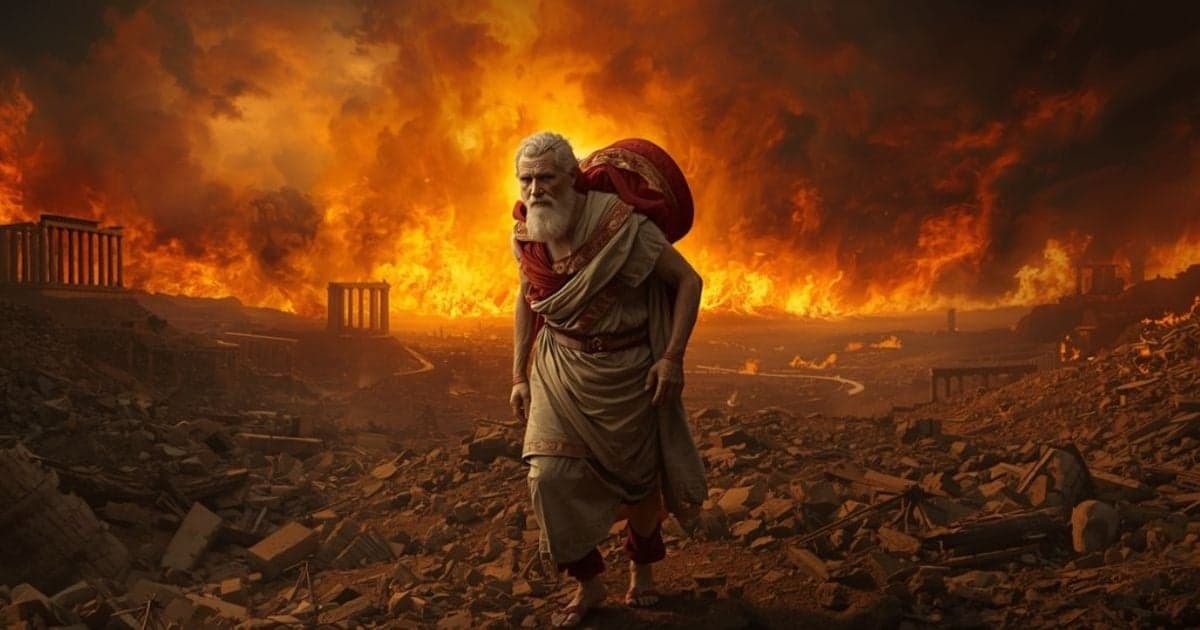
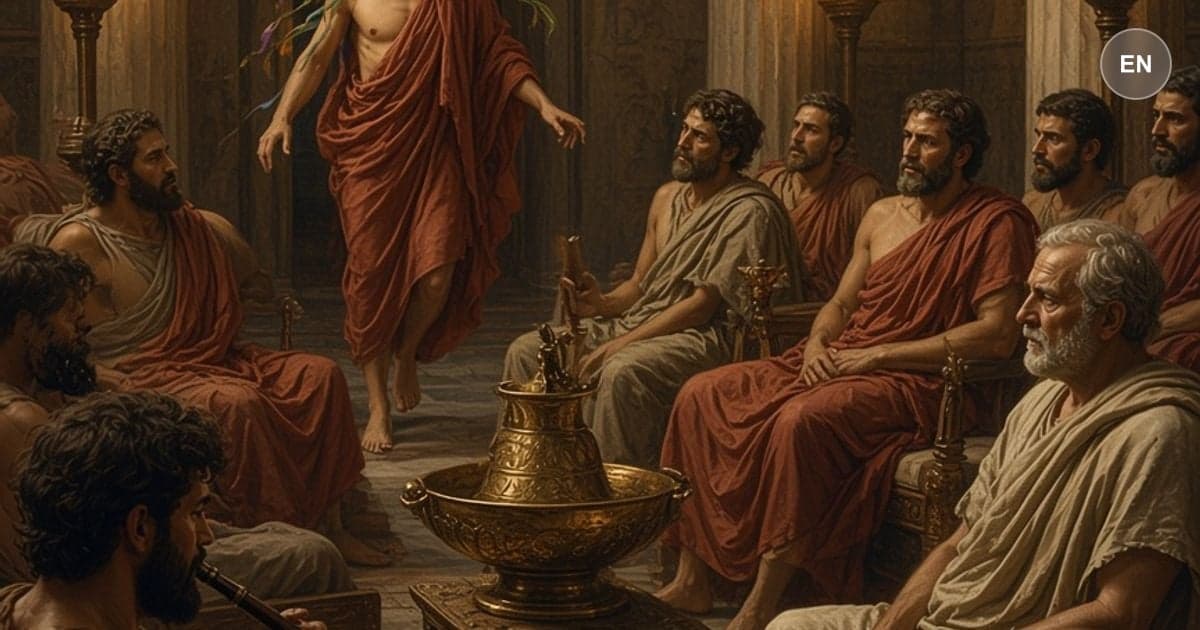
FABLE I. [II.1-303] Phaëton, insulted by Epaphus, goes to the Palace of Apollo, to beseech him to give some token that he is his son. Apollo, having sworn, by the river Styx, to refuse him nothing that he should desire, he immediately asks to guide his chariot for one day. He is unsuccessful in the attempt, and, the horses running away, the world is in danger of being consumed. The palace of the Sun was raised high, on stately columns, bright with radiant gold, and carbuncle that rivals the flames; polished ivory covered its highest top, {and} double folding doors…Public-domain chapter text, formatted for reading.
Master this chapter. Complete your experience
Purchase the complete book to access all chapters and support classic literature
Available in paperback, hardcover, and e-book formats
Now let's explore the literary elements.
Key Quotes & Analysis
"The palace of the Sun was raised high, on stately columns, bright with radiant gold, and carbuncle that rivals the flames; polished ivory covered its highest top, {and} double folding doors shone with the brightness of silver."
Context: The chapter introduces a structured cosmic workplace where time and order are visibly coordinated.
Power appears beautiful, but its operation is technical and regulated, not improvisational.
In Today's Words:
Thomas reads this bright palace like a command center where every role has timing and sequence. In his urban ER, ignoring that structure can turn one impulsive decision into a unit-wide cascade of avoidable harm. Thomas sees the same pattern in the ER when bodies and identities shift under pressure nobody chose.
"By thine have my words been made rash."
Context: Apollo realizes his oath has trapped him into granting a request he knows is unsafe.
The line captures leadership regret when public promises outpace risk assessment.
In Today's Words:
Thomas has heard versions of this after rushed approvals in crowded shifts. A senior says yes too quickly, then everyone inherits the risk. The quote reminds him that authority needs boundaries before commitment, not apologies after damage. Thomas sees the same pattern in the ER when bodies and identities shift under pressure nobody chose.
"Even the Ruler of vast Olympus, who hurls the ruthless bolts with his terrific right hand, cannot guide this chariot; and {yet}, what have we greater than Jupiter? The first {part of the} road is steep, and such as the horses, {though} fresh in the morning, can hardly climb."
Context: Apollo warns that the assignment exceeds even top-tier divine capacity under normal conditions.
Competence limits are objective. Prestige cannot substitute for practiced control.
In Today's Words:
Thomas uses this warning when a novice asks to run a high-risk protocol solo before readiness. Some tasks are hard for experts, not opportunities for proving ego. Respecting limits protects patients and preserves team trust. Thomas sees the same pattern in the ER when bodies and identities shift under pressure nobody chose.
"Thus does the chariot give jumps into the air without its usual weight, and is kicked up on high, and is like one empty."
Context: A later explanatory note clarifies how instability follows when expected burden and control are mismatched.
The physics metaphor mirrors institutional drift: underweighted leadership makes systems bounce unpredictably.
In Today's Words:
In the second half notes, Thomas sees his own department under thin staffing and unfamiliar hands. When the load is wrong for the person steering, workflow jolts, communication breaks, and vulnerable patients absorb the worst consequences first. Thomas sees the same pattern in the ER when bodies and identities shift under pressure nobody chose.
Thematic Threads
Pride
In This Chapter
Phaëton's need to prove his divine heritage drives him to attempt the impossible, while Apollo's pride prevents him from simply saying no to his son
Development
Evolved from Deucalion's humble acceptance of divine will to dangerous overreach
In Your Life:
You might see this when someone takes on responsibilities to prove their worth rather than because they're qualified
Power Dynamics
In This Chapter
Jupiter's casual seductions and transformations show how those with power use and discard the vulnerable without consequence
Development
Building on themes of divine authority from Chapter 1, now showing its destructive personal effects
In Your Life:
You might recognize this in workplace situations where supervisors make promises they don't keep or use their position for personal gain
Transformation
In This Chapter
Grief literally transforms Phaëton's sisters into trees and Cycnus into a swan, while divine anger transforms Calisto into a bear
Development
Expanding from flood transformation to show how trauma and emotion reshape identity
In Your Life:
You might notice how major losses or betrayals fundamentally change how you move through the world
Deception
In This Chapter
Jupiter disguises himself as a bull to seduce Europa, showing how predators mask their true nature with apparent gentleness
Development
Introduced here as a new pattern of manipulation through false presentation
In Your Life:
You might see this in relationships where someone presents themselves as safe and caring to gain access before revealing their true intentions
Consequences
In This Chapter
Every action creates cascading effects—Phaëton's ride scorches the earth, divine jealousy destroys innocent lives
Development
Deepening from the flood's universal consequences to personal, intimate destruction
In Your Life:
You might recognize how one poor decision in your family or workplace can create problems that affect everyone around you
You now have the context. Time to form your own thoughts.
Discussion Questions
This is not a test. Five prompts guide you through the chapter, from how it opens to how it closes, so you notice context and rhythm rather than facts to memorize. Sit with each question in your own words. When you see "One way to read it," treat it as a starting point, not the only answer.
- 1
Opening movement: Why does Phaethon seek the chariot as proof of identity rather than as a trained responsibility?
analysis • surfaceOne way to read it
His request answers social humiliation, not operational need. Ovid shows how identity insecurity can push people toward symbolic risks they are not prepared to manage safely.
- 2
Middle movement: What does Apollo's warning reveal about the ethics of leadership promises?
analysis • mediumOne way to read it
Leaders must bound commitments by safety realities. Compassion is not enough when stakes are systemic, and reversible disappointment is often better than irreversible catastrophe.
- 3
Middle movement: How does the earth's complaint change how we read the disaster?
application • mediumOne way to read it
It shifts focus from hero drama to distributed harm. The environment, communities, and bystanders become visible stakeholders who bear consequences of one prestige-driven decision.
- 4
Closing movement: Why do the chapter's side stories about Callisto, the crow, and Ocyrhoe matter structurally?
analysis • deepOne way to read it
They show broader patterns of power and punishment: vulnerable figures are blamed, truth tellers are penalized, and transformation records social injuries institutions refuse to repair directly.
- 5
Whole chapter: Where do you need a clearer rule that separates encouragement from high-risk authorization?
reflection • deepOne way to read it
Strong answers identify one domain, one pressure source, and one measurable readiness gate that protects both dignity and those affected by potential error.
Critical Thinking Exercise
Map Your Authority Audit
List three areas where you currently have responsibility or influence. For each area, honestly assess: Do you have genuine competence here, or are you operating on borrowed authority? What would building real competence look like versus just performing confidence? This isn't about being hard on yourself—it's about strategic self-awareness.
Consider:
- •Consider both formal roles (job titles, family positions) and informal influence (advice-giving, decision-making)
- •Look for areas where you feel like you're 'faking it' or constantly proving yourself
- •Think about who enables you to take on responsibilities you might not be ready for
Journaling Prompt
Write about a time when you took on something beyond your current ability. What drove that decision? How did it turn out, and what would you do differently knowing what you know now?
Coming Up Next...
Chapter 3: The Price of Defying the Gods
Chapter 3 shifts to Cadmus and Thebes, where dragon blood births warriors, Actaeon pays for forbidden sight, Semele burns for dangerous desire, and Narcissus with Echo reveal how self-absorption and misrecognition can become fatal forms of transformation.