Wide Reads
Literature MattersLife IndexEducators
Sign in
Where to Begin

Perseus's Wedding Battle and the Muses' Contest — Metamorphoses

Metamorphoses - Perseus's Wedding Battle and the Muses' Contest

Ovid

Metamorphoses

Perseus's Wedding Battle and the Muses' Contest

Home›Books›Metamorphoses›Chapter 5: Perseus's Wedding Battle and the Muses' Contest
Previous
5 of 15
Next

Analysis by the Wide Reads editorial team·Reviewed against the source text·Updated December 5, 2025

Summary

Perseus's Wedding Battle and the Muses' Contest

The Wedding Battle · Metamorphoses by Ovid

0:000:00
Listen to Next Chapter

The Wedding Battle (1 of 4)

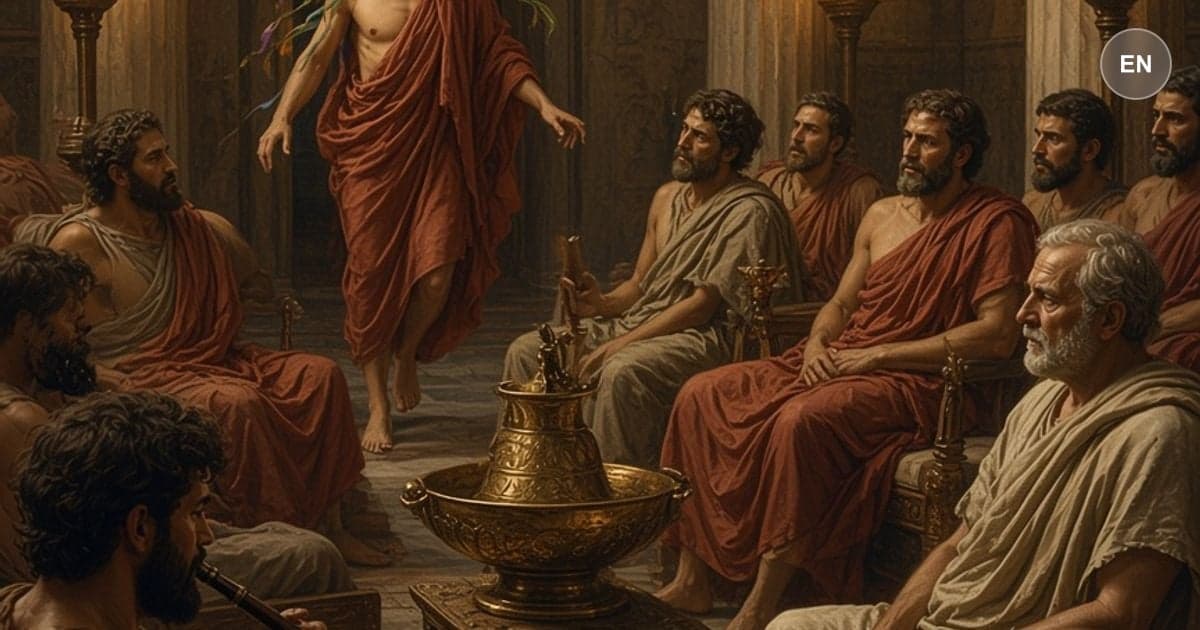
Chapter 5 resumes where celebration is thinnest. While Perseus recounts Medusa's slaying at his wedding feast, the royal courts fill with clamor that portends war, not marriage. Phineus storms in with armed followers, shaking an ashen spear, and calls Perseus a ravisher protected by wings and Jupiter's golden fraud. Cepheus intervenes with a speech that reframes the dispute. Andromeda was not stolen from Phineus by a rival's charm. She was bound to a rock for the sea monster until Perseus saved her. Custom and rescue collide, but rhetoric buys only a breath. Phineus hurls his spear anyway. It sticks in a cushion while Perseus leaps from the couch and would have killed him had Phineus not hidden behind an altar.

What follows is a banquet turned battlefield. Rhoeetus dies with a spear in his skull. Blood soaks the laid tables. Guests who came for wine draw swords. Pallas arrives with her shield to protect her brother. Ovid names the dead in grim procession: Athis struck while bending his bow, Lycabas pierced through his garment, Phorbas and Amphimedon slipping in warm blood, Emathion the aged observer of justice beheaded at the altar while his tongue still curses, the lyre player Pettalus mocked and stabbed so his dying fingers still touch the strings. Perseus fights with sword, bowl, and momentum until numbers favor Phineus.

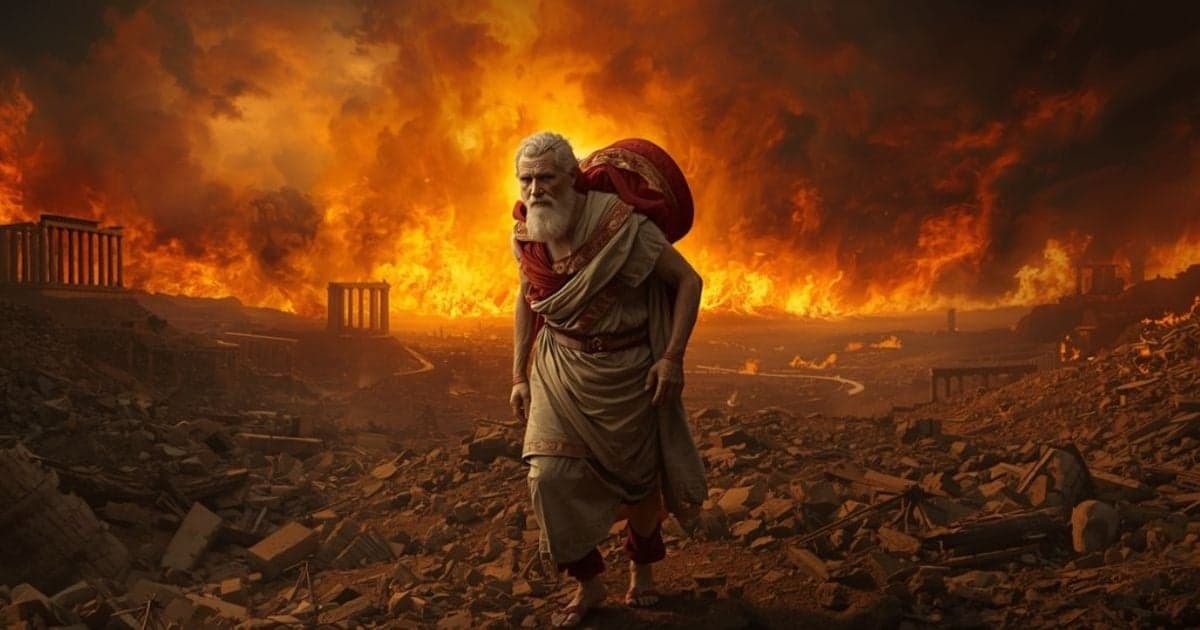
When the hero sees he will be overwhelmed, he warns allies to look away and lifts Medusa's head. Enemies stiffen into stone mid-lunge. Phineus, who mocked divine parentage moments earlier, begs for life with hands outstretched. Perseus petrifies him anyway, turning rivalry into permanent cautionary sculpture. The hall fills with mineral witnesses. Victory is total and ethically uneasy. Overwhelming force ends the fight but forecloses repentance. Thomas, the ER nurse anchoring this book, recognizes the pattern when a code team stabilizes a violent scene through restraint or sedation: necessary, irreversible, and requiring review afterward.

After Seriphus, Polydectes still denies Perseus's deeds as fiction. Perseus offers proof without bloodshed for bystanders and turns the skeptical king to stone. Transformation again functions as political messaging. Winners freeze opponents into readable warnings. Chapter 5's opening movement asks whether emergency power can ever feel clean. It can stop harm. It cannot automatically settle legitimacy. Phineus claimed prior contract. Perseus claimed rescue merit. Stone ended debate but not the moral accounting survivors owe one another.


In this chapter: Terms Characters Key Quotes Themes Modern Story

Why This Matters

Connect literature to life

Skill: Act Fast, Then Reopen Accountability

Crisis response often succeeds at immediate safety yet fails when institutions skip honest reconstruction of what happened. Perseus halts a deadly ambush, but Chapter 5 then moves to poetic contests that fight over meaning and memory. After urgent intervention, build a second phase where multiple witnesses document causes, choices, and consequences.

Coming Up in Chapter 6

Next, Arachne's challenge to Minerva turns craft into contest and punishment, while Niobe's pride, Latona's revenge, and Marsyas's suffering deepen Ovid's question of what happens when excellence, ego, and divine authority collide in public life.

Share it with friends

PreviousPrevious ChapterNextNext Chapter
Original text
14,515 wordscomplete

Chapter 05

Perseus's Wedding Battle and the Muses' Contest

FABLE I. [V.1-242] While Perseus is continuing the relation of the adventures of Medusa, Phineus, to whom Andromeda has been previously promised in marriage, rushes into the palace, with his adherents, and attacks his rival. A furious combat is the consequence, in which Perseus gives signal proofs of his valor. At length, perceiving himself likely to be overpowered by the number of his enemies, he shows them the head of the Gorgon; on which Phineus and his followers are turned into statues of stone. After this victory, he takes Andromeda with him to Argos, his native city, where he turns…

Public-domain chapter text, formatted for reading.

Master this chapter. Complete your experience

Purchase the complete book to access all chapters and support classic literature

Buy at Powell'sBuy on Amazon

Available in paperback, hardcover, and e-book formats

Now let's explore the literary elements.

Key Quotes & Analysis

"Behold! {now}, behold! I am come, the avenger of my wife, ravished from me; neither shall thy wings nor Jupiter turned into fictitious gold, deliver thee from me."

— Phineus

Context: Phineus opens the conflict by framing aggression as righteous reclamation of what he believes is his.

The line reveals entitlement language that converts relational dispute into public violence.

In Today's Words:

Thomas hears this as crisis rhetoric he sees before emergency room fights, grievance framed as justice, escalation framed as duty. In a packed urban hospital, naming this pattern early helps prevent bystander injuries and cascading harm. Thomas sees the same pattern in the ER when bodies and identities shift under pressure nobody chose.

"Twas not Perseus, if thou wouldst know the truth, that took her away from thee; but the incensed majesty of the Nereids, and horned Ammon, and the monster of the sea, which came to be glutted with my bowels."

— Cepheus

Context: Andromeda's father defends Perseus by grounding legitimacy in rescue from mortal danger.

The speech opposes possessive claim with merit and reciprocal obligation.

In Today's Words:

Thomas recognizes this as reframing from ownership to care contribution. In family disputes at bedside, he often redirects arguments toward who is actually protecting the patient now, not who holds louder status claims from the past. Thomas sees the same pattern in the ER when bodies and identities shift under pressure nobody chose.

"Since you yourselves force me to do it, I will seek assistance from an enemy: turn away your faces, if any of my friends are here;” and {then} he produced the head of the Gorgon."

— Perseus

Context: Outnumbered in battle, Perseus announces his decision to deploy Medusa's head and warns allies first.

The quote captures emergency escalation with procedural notice before irreversible force.

In Today's Words:

Thomas hears this as the moment a code leader escalates to highest intervention after lower options fail. He values the warning to allies because high-stakes action still requires protecting your own team from collateral damage. Thomas sees the same pattern in the ER when bodies and identities shift under pressure nobody chose.

"Now at length Phineus repents of this unjust warfare."

— Narrator

Context: In the chapter's latter half, Phineus regrets initiating violence only after irreversible losses mount.

Late repentance shows how quickly conflict can outrun intention and close off restorative outcomes.

In Today's Words:

By the back half, Thomas sees a pattern common after violent incidents, remorse appears once harm is done and options narrow. The quote reinforces prevention over reaction in high-risk institutional environments. Thomas sees the same pattern in the ER when bodies and identities shift under pressure nobody chose.

Thematic Threads

Pride

In This Chapter

Phineus's jealousy over losing Andromeda and the Pierides' arrogance in challenging the Muses both stem from wounded pride that demands satisfaction

Development

Evolved from earlier themes of transformation—now showing how pride itself transforms manageable situations into disasters

In Your Life:

You might see this when you can't let go of being right in an argument, even when winning would cost you the relationship

Justice

In This Chapter

Perseus defending his legitimate marriage and the Muses' rightful victory represent earned authority being challenged by those who feel entitled

Development

Building on earlier justice themes, now exploring how legitimate power must sometimes be defended through force

In Your Life:

You might face this when someone tries to take credit for your work or undermines your earned position

Power

In This Chapter

Perseus uses Medusa's head as ultimate authority, while the Muses transform their challengers—showing how true power reveals itself when tested

Development

Continuing the power dynamics theme, now showing how power must sometimes be demonstrated rather than just possessed

In Your Life:

You might need to actually use your authority or skills to stop someone from walking all over you

Consequences

In This Chapter

Phineus becomes stone despite begging for mercy, and the Pierides become magpies—showing that some choices create irreversible outcomes

Development

Deepening the consequences theme to show how pride-driven choices often have permanent results

In Your Life:

You might face situations where your stubborn choices burn bridges that can never be rebuilt

Compromise

In This Chapter

Proserpine's story shows even gods must accept painful compromises—she spends half the year in the underworld, creating seasons

Development

Introduced here as a counterpoint to the escalation stories—showing wisdom in accepting partial solutions

In Your Life:

You might need to accept that you can't have everything you want, but you can negotiate for what matters most

You now have the context. Time to form your own thoughts.

Discussion Questions

This is not a test. Five prompts guide you through the chapter, from how it opens to how it closes, so you notice context and rhythm rather than facts to memorize. Sit with each question in your own words. When you see "One way to read it," treat it as a starting point, not the only answer.

  1. 1

    Opening movement: How does Phineus frame his attack, and what does that framing reveal about power?

    ▶One way to read it

    He frames violence as rightful recovery of a stolen claim, revealing entitlement logic that converts personal grievance into public harm and recruits others into a private dispute.

    analysis • surface
  2. 2

    Middle movement: Why is Perseus's warning before using Medusa's head ethically significant?

    ▶One way to read it

    He combines escalation with ally protection, showing that emergency force can still include procedural care for bystanders and teammates rather than blind retaliatory action.

    analysis • medium
  3. 3

    Middle movement: What does the pivot from battle to poetic contest add to the chapter's meaning?

    ▶One way to read it

    It shows conflict continues after physical danger ends. Control of narrative determines legitimacy, memory, and whether future communities learn from or repeat the same destructive pattern.

    application • medium
  4. 4

    Closing movement: How does Arethusa's testimony reshape our understanding of transformation in Chapter 5?

    ▶One way to read it

    Her voice proves transformed figures still carry perspective and authority. Metamorphosis is not only punishment or escape; it is also a demand to hear altered survivors describe what happened.

    analysis • deep
  5. 5

    Whole chapter: Where do you need a two-phase response that pairs urgent intervention with honest after-action review?

    ▶One way to read it

    Strong answers identify one recurring conflict zone, one immediate safety protocol, and one concrete accountability step that includes voices usually excluded from official narratives.

    reflection • deep

Critical Thinking Exercise

10 minutes

De-escalation Strategy Map

Think of a recent conflict where you felt disrespected or challenged. Map out three different points where you could have interrupted the escalation pattern. For each point, write what you actually did versus what you could have done to address the real issue without defending your ego.

Consider:

  • •Separate the actual problem from the respect/pride issue
  • •Identify when you started fighting to win rather than to solve
  • •Consider what you were really afraid of losing in that moment

Journaling Prompt

Write about a time when you chose to escalate a conflict instead of backing down. What were you really protecting, and what did that choice cost you?

Coming Up Next...

Chapter 6: Pride, Punishment, and Transformation

Next, Arachne's challenge to Minerva turns craft into contest and punishment, while Niobe's pride, Latona's revenge, and Marsyas's suffering deepen Ovid's question of what happens when excellence, ego, and divine authority collide in public life.

Continue to Chapter 6
Previous
When Love Defies the Gods
Contents
Next
Pride, Punishment, and Transformation
Keep exploring

Continue Exploring

Study guides, teaching tools, themes, and the full library.More ways to read Metamorphoses: study guides, teaching tools, and the wider library.

  • Metamorphoses Study Guide
  • Teaching Resources
  • Essential Life Index
  • Browse by Theme
  • All Books

Life-skill deep dives in Metamorphoses

  • Learning From Hubris And OverreachPhaethon, Arachne, Niobe, and Ajax: four books on what happens when pride challenges powers you cannot outrun.
  • Recognizing Patterns In Human StoriesFour ages, forbidden love, war
  • Understanding Change As The Only ConstantOvid opens with Chaos giving way to order and closes with Pythagoras on flux: four books on transformation as the law of existence.
  • When Desire Rewrites IdentityDaphne, Pyramus and Thisbe, Orpheus, and Circe: four books on love and lust reshaping bodies, selves, and fate.

You Might Also Like

The Aeneid cover

The Aeneid

Virgil

Explores identity & self

The Iliad cover

The Iliad

Homer

Explores identity & self

The Book of Job cover

The Book of Job

Anonymous

Explores identity & self

Ecclesiastes cover

Ecclesiastes

Qoheleth

Explores identity & self

Browse all 106+ books

Share This Chapter

Know someone who'd enjoy this? Spread the wisdom!

TwitterFacebookLinkedInEmail

Go further with Prestige

Unlock study guides and downloads, early access, and exclusive content — and support free access for everyone.

Subscribe to PrestigeCreate free account
Intelligence Amplifier
Intelligence Amplifier™Powering Wide Reads

Exploring human-AI collaboration through books, essays, and philosophical dialogues. Classic literature transformed into navigational maps for modern life.

2025 Books

→ The Amplified Human Spirit→ The Alarming Rise of Stupidity Amplified→ San Francisco: The AI Capital of the World
Visit intelligenceamplifier.org
hello@widereads.com

WideReads Originals

→ You Are Not Lost→ The Last Chapter First→ The Lit of Love→ Wealth and Poverty→ Wisdom for the Wounded
Arvintech
arvintechAmplify your Mind
Visit at arvintech.com

Navigate

  • Home
  • Library
  • Essential Life Index
  • How It Works
  • Subscribe
  • Account
  • About
  • Contact
  • Authors
  • Suggest a Book
  • Landings

Made For You

  • Trending
  • Students
  • Educators
  • Families
  • Readers
  • Literary Analysis
  • Finding Purpose
  • Letting Go
  • Recovering from a Breakup
  • Corruption
  • Gaslighting in the Classics

Newsletter

Weekly insights from the classics. Amplify Your Mind.

Legal

  • Privacy Policy
  • Terms of Service
  • Editorial Standards
  • Cookie Policy
  • Accessibility

Why Public Domain?

We focus on public domain classics because these timeless works belong to everyone. No paywalls, no restrictions—just wisdom that has stood the test of centuries, freely accessible to all readers.

Public domain books have shaped humanity's understanding of love, justice, ambition, and the human condition. By amplifying these works, we help preserve and share literature that truly belongs to the world.

A Pilgrimage

Powell's City of Books

Portland, Oregon

If you ever find yourself in Portland, walk to the corner of Burnside and 10th. The building takes up an entire city block. Inside is over a million books, new and used on the same shelf, organized by color-coded rooms with names like the Rose Room and the Pearl Room. You can lose an afternoon. You can lose a weekend. You will find a book you have been looking for your whole life, and three you did not know existed.

It is a pilgrimage. We cannot find a bookstore like it anywhere on earth. If you read the classics, and you ever get the chance, go. It belongs on every reader's bucket list.

Visit powells.com

We are not in any way affiliated with Powell's. We are just a very big fan.

© 2026 Wide Reads™. All Rights Reserved.

Intelligence Amplifier™ and Wide Reads™ are proprietary trademarks of Arvin Lioanag.

Copyright Protection: All original content, analyses, discussion questions, pedagogical frameworks, and methodology are protected by U.S. and international copyright law. Unauthorized reproduction, distribution, web scraping, or use for AI training is strictly prohibited. See our Copyright Notice for details.

Disclaimer: The information provided on this website is for general informational and educational purposes only and does not constitute professional, legal, financial, or technical advice. While we strive to ensure accuracy and relevance, we make no warranties regarding completeness, reliability, or suitability. Any reliance on such information is at your own risk. We are not liable for any losses or damages arising from use of this site. By using this site, you agree to these terms.