
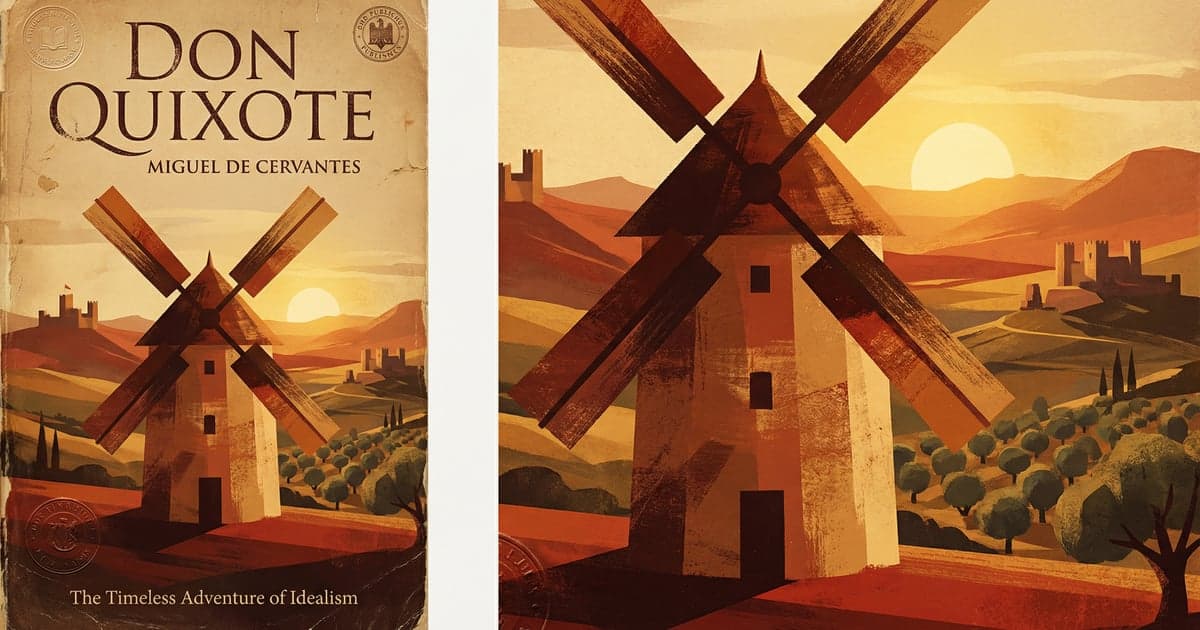
Loyal Friendship Under Absurdity
The Bargain Expires. The Road Does Not.
Sancho is recruited with a governorship that can appear in six days. That is not a friendship origin. It is a sales pitch. What follows is hundreds of miles of hunger, blanketing, mockery, and a master who will not retract a giant. Loyalty under absurdity is not finding a soulmate. It is remaining after the invoice has become a joke.
He clings in the dark when hammers sound like war. He invents a winnowing Dulcinea so the knight can keep a lady. He governs a fake island well enough to prove he could have taken the prize, then hands the costume back. Each act looks like foolishness from outside the pair. Inside it, one man keeps translating the world so the other can continue to be someone.
At the end Sancho does not congratulate the return of reason. He asks for more years. The quest is over. The companion is not. Cervantes's hardest claim about friendship is that it can outlive the shared delusion that first made the pair necessary, and that staying then is a different, quieter courage than charging beside someone.
The Central Lesson
Loyal friendship under absurdity is not agreement about mills. It is remaining after the recruiting promise has failed, translating enough of the world for the other person to keep going, and refusing the fake prize that would split the pair. Sancho clings in the dark, invents a visit, governs, resigns, and at the last asks for more years. The island was never the point. The point was not riding alone.
Applying This to Your Life
Separate the Pitch from the Person
Sancho was hired with an island. You may have been hired with status, a scene, or a future. Loyalty starts when you can name the expired bait and still choose the companion.
Decide When Truth Is a Weapon
The winnowing report and Andres's return sit in the same stretch of road. Protecting a friend's inner world is not the same as covering harm. Ask who is bleeding before you collapse the story.
Leave the Fake Office
Barataria is every title that exists to amuse someone else. If keeping the role costs the friendship, Sancho's walk back is the model: return the costume while you can still ride.
Other lessons in this book
More life-skill deep dives from the same classic.
Balancing Idealism and Pragmatism
Hold Quixote's vision and Sancho's earthiness in tension instead of choosing one as the only sane option.
5 chapters·Explore AnalysisDetecting Story-Driven Delusion
Notice when deep narrative immersion starts rewriting what you treat as real, as Quixote does from his first night of chivalry reading.
5 chapters·Explore AnalysisLiving Inside a Narrative
Follow Part II's metafiction as Quixote becomes famous for a story others have already read, and ask when your own role is performance.
5 chapters·Explore AnalysisReading Appearance vs Reality
Track how Quixote turns inns into castles and ordinary life into enchantment, and ask what your own filters add.
5 chapters·Explore AnalysisWhen Noble Intentions Miss the Target
See how Quixote's hunger to right wrongs can still leave real people hurt when the script matters more than the scene.
5 chapters·Explore Analysis
Continue exploring
Explore this theme
The same lessons in other books
See how other books teach the same life skills.

The Essays of Montaigne
Choosing Real FriendshipHear essay 27 answer La Boétie: because it was he, because it was I.
The Idiot
Maintaining Goodness Without NaivetySit with Myshkin on the train in chapter 1: honesty with no angle, and a city that can only call it idiocy.
Jude the Obscure
When Desire Becomes a TrapTrack the pig, the dimple, the false pregnancy, and the second marriage arranged over gin.
Where the lesson lives in the book
The Contract Is an Island. The Ride Is the Bond.
A poor neighbour is talked into esquire work with a governorship that can arrive any day. He leaves wife and children without a proper goodbye. The deal is comic. The loyalty that follows is not in the contract. It is what happens when two men keep choosing the same road after the terms have failed.
Key Insight:
Many friendships begin as a bad bargain. The test is not the promise that recruited you. It is whether you stay when the promise is late.
“without taking leave, Sancho Panza of his wife and children, or Don Quixote of his housekeeper and niece, they sallied forth unseen by anybody from the village one night”
Fear Clings to the Leg Anyway
Night hammers sound like an army. Sancho wants water, then delay, then a story told so slowly it never ends. Quixote claims the perils are reserved for him. They do not split camp. Absurd danger plus ordinary thirst: the pair stays in one dark, which is already more than the island required.
Key Insight:
Loyalty under absurdity looks like remaining in the same night, not winning the argument about what the noise is.
“I am he for whom perils, mighty achievements, and valiant deeds are reserved;”
He Invents a Visit So the Friend Can Keep the Lady
Sancho reports a Dulcinea who was winnowing wheat and smelled of work. He did not see the empress. He builds a scene that lets Quixote continue. Then Andres arrives and says the rescue ended in the opposite of what the knight supposed. Sancho is already practicing a painful kindness: do not collapse a companion's inner world in the road dust.
Key Insight:
Friendship can include a lie that protects a needed fiction. The moral cost is real. So is the refusal to use truth as a weapon at the worst moment.
“I did not, said Sancho, but I found her winnowing two bushels of wheat in the yard of her house.”
He Returns the Costume
The governorship vanishes in smoke and a staged battle. Sancho says he was not born for the office. He does not stay to squeeze a title out of a joke. He walks back toward a man who still needs a squire. Ambition was the bait. The remaining job is companionship.
Key Insight:
Loyalty is sometimes a demotion you choose. Leaving a fake honour to keep a real person is the opposite of clinging.
“I was not born to be a governor”
Don't Die. Take My Advice and Live.
The knight wakes lucid and renounces the name. Sancho begs him not to die, to take advice, to live many years. He offers fields and shepherd clothes rather than a clean ending. The friendship outlasts the quest that created it. One man wants rest. The other still wants a shared next chapter.
Key Insight:
The last loyalty is refusing to treat a friend's identity as disposable once it stops being useful to the plot.
“don't die, master, but take my advice and live many years”