Wide Reads
Literature MattersLife IndexEducators
Sign in
Where to Begin

Death of Don Quixote and Hamete's Farewell — Don Quixote

Don Quixote - Death of Don Quixote and Hamete's Farewell

Miguel de Cervantes Saavedra

Don Quixote

Death of Don Quixote and Hamete's Farewell

Home›Books›Don Quixote›Chapter 126: Death of Don Quixote and Hamete's Farewell
Previous
126 of 126

Analysis by the Wide Reads editorial team·Reviewed against the source text·Updated December 3, 2025

Summary

Death of Don Quixote and Hamete's Farewell

Don Quixote by Miguel de Cervantes Saavedra

0:000:00

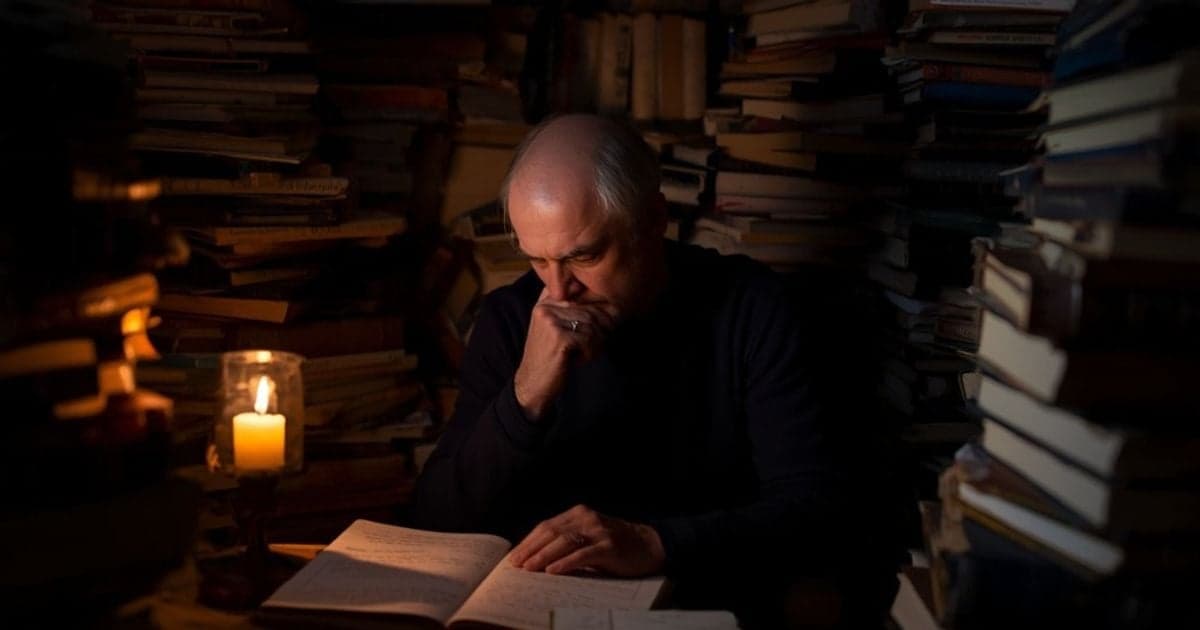
After his defeat a fever keeps Don Quixote in bed for six days while the curate, Samson, the barber, and Sancho try to cheer him with pastoral plans, dogs named Barcino and Butron, and an eclogue that will outshine Sannazaro. The doctor says his body is failing and his soul needs care; then Quixote wakes lucid, blesses God's mercy, and declares his reason free of the shadows chivalry books cast over it.

He renounces Don Quixote of La Mancha for Alonso Quixano the Good, calls Amadis and all knight-errantry odious, and insists on confession and a will while Samson still thinks it another craze. The will clears Sancho's accounts, leaves the estate to his niece Antonia with wages for the housekeeper, forbids her to marry any man who knows chivalry books, and asks his executors to beg Avellaneda's author forgiveness for provoking the fake Second Part. Sancho weeps and begs him to live and take to the fields in shepherd's trim; Quixote answers with the proverb about last year's nests and tells the notary to proceed. He receives the sacraments, dies calmly amid tears, and the notary records that Alonso Quixano the Good passed naturally so no false author may revive him. Samson writes an epitaph, and Cide Hamete hangs up his pen with a warning to any story-teller who would profane Don Quixote's rest.

In this chapter: Terms Characters Key Quotes Themes Modern Story

Why This Matters

Connect literature to life

Skill: Reading When Madness Ends in Reason and a Will

Some endings arrive not on a battlefield but in a bed with time to repent. Fever brings Don Quixote back to Alonso Quixano the Good, he confesses, disowns books of chivalry and the spurious Second Part, forgives Sancho in his will, and dies quietly while Hamete tells his pen to warn off false continuers. See how lucidity at the end can rename a life and close the door on counterfeit stories.

Share it with friends

PreviousPrevious Chapter
Original text
2,693 wordscomplete

Chapter 126

Death of Don Quixote and Hamete's Farewell

CHAPTER LXXIV. OF HOW DON QUIXOTE FELL SICK, AND OF THE WILL HE MADE, AND HOW HE DIED As nothing that is man’s can last for ever, but all tends ever downwards from its beginning to its end, and above all man’s life, and as Don Quixote’s enjoyed no special dispensation from heaven to stay its course, its end and close came when he least looked for it. For—whether it was of the dejection the thought of his defeat produced, or of heaven’s will that so ordered it—a fever settled upon him and kept him in his bed for six…

Public-domain chapter text, formatted for reading.

Master this chapter. Complete your experience

Purchase the complete book to access all chapters and support classic literature

Buy at Powell'sBuy on Amazon

Available in paperback, hardcover, and e-book formats

Now let's explore the literary elements.

Key Quotes & Analysis

"My reason is now free and clear, rid of the dark shadows of ignorance that my unhappy constant study of those detestable books of chivalry cast over it."

— Don Quixote

Context: Lucidity after fever

The delusion lifts when death is near.

In Today's Words:

My mind is clear at last The same dynamic turns up in offices, relationships, and public life today, wherever someone bends circumstances to fit a story they cannot put down The same dynamic turns up in offices, relationships, and public life today, wherever someone bends circumstances to fit a story they cannot put down.

"I am no longer Don Quixote of La Mancha, but Alonso Quixano, whose way of life won for him the name of Good."

— Don Quixote

Context: Renaming at the deathbed

Identity returns to the man beneath the knight.

In Today's Words:

I am Alonso Quixano the Good now The same dynamic turns up in offices, relationships, and public life today, wherever someone bends circumstances to fit a story they cannot put down The same dynamic turns up in offices, relationships, and public life today, wherever someone bends circumstances to fit a story they cannot put down.

"don’t die, master, but take my advice and live many years"

— Sancho Panza

Context: Pleading at the will

Sancho still hopes for shepherd days and Dulcinea.

In Today's Words:

Don't die, master, live many years The same dynamic turns up in offices, relationships, and public life today, wherever someone bends circumstances to fit a story they cannot put down The same dynamic turns up in offices, relationships, and public life today, wherever someone bends circumstances to fit a story they cannot put down.

"Second Part of the Achievements of Don Quixote of La Mancha"

— Don Quixote

Context: Will's Avellaneda clause

He dies regretting the counterfeit sequel he provoked.

In Today's Words:

The fake Second Part of my story The same dynamic turns up in offices, relationships, and public life today, wherever someone bends circumstances to fit a story they cannot put down The same dynamic turns up in offices, relationships, and public life today, wherever someone bends circumstances to fit a story they cannot put down.

Thematic Threads

When Madness Ends in Reason and a Will

In This Chapter

After his defeat a fever keeps Don Quixote in bed for six days while the curate, Samson, the barber, and Sancho try to cheer him with pastoral plans, dogs...

Development

This chapter pushes the pattern into visible action and consequence.

In Your Life:

You may recognize this pattern when stress removes the polite version of a situation.

Identity

In This Chapter

Characters defend who they are or who they pretend to be when challenged.

Development

Fantasy and reality collide around name, rank, and role.

In Your Life:

You might cling to a version of yourself that no longer matches your choices.

Class

In This Chapter

Rank, money, and reputation decide who is heard, protected, or punished.

Development

Social order shapes every rescue, betrayal, and humiliation here.

In Your Life:

You see this when status decides whose account of events becomes official.

You now have the context. Time to form your own thoughts.

Discussion Questions

This is not a test. Five prompts guide you through the chapter, from how it opens to how it closes, so you notice context and rhythm rather than facts to memorize. Sit with each question in your own words. When you see "One way to read it," treat it as a starting point, not the only answer.

  1. 1

    What does Don Quixote say about his reason when he wakes up, and how does he describe the effect of chivalry books on his mind?

    ▶One way to read it

    He says his reason is now 'free and clear, rid of the dark shadows of ignorance' that his study of chivalry books cast over it. He sees through their 'absurdities and deceptions.'

    analysis • surface
  2. 2

    Why does Cervantes have Sancho desperately offer to take the blame for Don Quixote's defeat and suggest they become shepherds together?

    ▶One way to read it

    It shows Sancho's loyalty and how he still believes in their shared fantasy even as his master abandons it. The irony is that Sancho now clings to the dream Don Quixote is rejecting.

    analysis • medium
  3. 3

    Where do you see people today suddenly rejecting beliefs or activities they once pursued passionately?

    ▶One way to read it

    People often abandon careers, hobbies, or political views they once embraced completely. Like someone quitting social media after years of posting, or leaving a religious community they once devoted their life to.

    application • medium
  4. 4

    If someone close to you suddenly declared their life's work meaningless and wanted to make amends, how would you respond?

    ▶One way to read it

    You might feel confused and want to convince them their work had value, like Sancho does. Or you might respect their new clarity while mourning the loss of who they used to be.

    application • deep
  5. 5

    What does Cide Hamete's farewell to his pen suggest about the relationship between authors, characters, and the stories that outlive them?

    ▶One way to read it

    It suggests that true characters become independent of their creators, living in readers' minds. Hamete warns against false continuations because authentic stories have natural endings that shouldn't be violated.

    reflection • deep

Critical Thinking Exercise

10 minutes

Name the When Madness Ends in Reason and a Will Move

Re-read the chapter summary and write down where when madness ends in reason and a will first appears, who pays for it, and who benefits from keeping it going. Then write one sentence you could say to interrupt the pattern without shaming the person caught in it.

Consider:

  • •Separate the person's worth from the pattern's cost
  • •Notice who has power to stop or fuel the scene
  • •Ask what truth would require someone to give up

Journaling Prompt

Write about a time when you saw when madness ends in reason and a will in your own life. What finally made the pattern impossible to ignore?

Previous
Omens, Homecoming, and Shepherd Quixotize
Contents
Keep exploring

Continue Exploring

Study guides, teaching tools, themes, and the full library.More ways to read Don Quixote: study guides, teaching tools, and the wider library.

  • Don Quixote Study Guide
  • Teaching Resources
  • Essential Life Index
  • Browse by Theme
  • All Books

Life-skill deep dives in Don Quixote

  • ChivalryExplore how Don Quixote examines what happens when outdated codes of honor meet modern reality—and what remains valuable.
  • FriendshipExplore how the friendship between Don Quixote and Sancho Panza reveals what true companionship means across differences.
  • Idealism vs RealityExplore how Don Quixote teaches the tension between noble ideals and practical reality—when to hold onto your vision and when to adapt.
  • Living Inside a NarrativeExplore Part II
  • Madness and SanityExplore how Don Quixote blurs the line between madness and sanity—questioning who truly sees the world more clearly.
  • The Power of StoriesExplore how Don Quixote reveals how stories shape identity, reality, and action—for better and worse.
Identity & Self-DiscoveryMoral Dilemmas & EthicsLove & Relationships

You Might Also Like

The Blue Castle cover

The Blue Castle

L. M. Montgomery

Explores identity & self

The Strange Case of Dr Jekyll and Mr Hyde cover

The Strange Case of Dr Jekyll and Mr Hyde

Robert Louis Stevenson

Explores identity & self

Emma cover

Emma

Jane Austen

Explores identity & self

Evelina, Or, the History of a Young Lady's Entrance into the World cover

Evelina, Or, the History of a Young Lady's Entrance into the World

Fanny Burney

Explores identity & self

Browse all 106+ books

Share This Chapter

Know someone who'd enjoy this? Spread the wisdom!

TwitterFacebookLinkedInEmail

Go further with Prestige

Unlock study guides and downloads, early access, and exclusive content — and support free access for everyone.

Subscribe to PrestigeCreate free account
Intelligence Amplifier
Intelligence Amplifier™Powering Wide Reads

Exploring human-AI collaboration through books, essays, and philosophical dialogues. Classic literature transformed into navigational maps for modern life.

2025 Books

→ The Amplified Human Spirit→ The Alarming Rise of Stupidity Amplified→ San Francisco: The AI Capital of the World
Visit intelligenceamplifier.org
hello@widereads.com

WideReads Originals

→ You Are Not Lost→ The Last Chapter First→ The Lit of Love→ Wealth and Poverty→ Wisdom for the Wounded
Arvintech
arvintechAmplify your Mind
Visit at arvintech.com

Navigate

  • Home
  • Library
  • Essential Life Index
  • How It Works
  • Subscribe
  • Account
  • About
  • Contact
  • Authors
  • Suggest a Book
  • Landings

Made For You

  • Trending
  • Students
  • Educators
  • Families
  • Readers
  • Literary Analysis
  • Finding Purpose
  • Letting Go
  • Recovering from a Breakup
  • Corruption
  • Gaslighting in the Classics

Newsletter

Weekly insights from the classics. Amplify Your Mind.

Legal

  • Privacy Policy
  • Terms of Service
  • Editorial Standards
  • Cookie Policy
  • Accessibility

Why Public Domain?

We focus on public domain classics because these timeless works belong to everyone. No paywalls, no restrictions—just wisdom that has stood the test of centuries, freely accessible to all readers.

Public domain books have shaped humanity's understanding of love, justice, ambition, and the human condition. By amplifying these works, we help preserve and share literature that truly belongs to the world.

A Pilgrimage

Powell's City of Books

Portland, Oregon

If you ever find yourself in Portland, walk to the corner of Burnside and 10th. The building takes up an entire city block. Inside is over a million books, new and used on the same shelf, organized by color-coded rooms with names like the Rose Room and the Pearl Room. You can lose an afternoon. You can lose a weekend. You will find a book you have been looking for your whole life, and three you did not know existed.

It is a pilgrimage. We cannot find a bookstore like it anywhere on earth. If you read the classics, and you ever get the chance, go. It belongs on every reader's bucket list.

Visit powells.com

We are not in any way affiliated with Powell's. We are just a very big fan.

© 2026 Wide Reads™. All Rights Reserved.

Intelligence Amplifier™ and Wide Reads™ are proprietary trademarks of Arvin Lioanag.

Copyright Protection: All original content, analyses, discussion questions, pedagogical frameworks, and methodology are protected by U.S. and international copyright law. Unauthorized reproduction, distribution, web scraping, or use for AI training is strictly prohibited. See our Copyright Notice for details.

Disclaimer: The information provided on this website is for general informational and educational purposes only and does not constitute professional, legal, financial, or technical advice. While we strive to ensure accuracy and relevance, we make no warranties regarding completeness, reliability, or suitability. Any reliance on such information is at your own risk. We are not liable for any losses or damages arising from use of this site. By using this site, you agree to these terms.