Chapter 20
The Pounding Hammers
OF THE UNEXAMPLED AND UNHEARD-OF ADVENTURE WHICH WAS ACHIEVED BY THE VALIANT DON QUIXOTE OF LA MANCHA WITH LESS PERIL THAN ANY EVER ACHIEVED BY ANY FAMOUS KNIGHT IN THE WORLD “It cannot be, señor, but that this grass is a proof that there must be hard by some spring or brook to give it moisture, so it would be well to move a little farther on, that we may find some place where we may quench this terrible thirst that plagues us, which beyond a doubt is more distressing than hunger.” The advice seemed good to Don Quixote, and,…
Public-domain chapter text, formatted for reading.
Master this chapter. Complete your experience
Purchase the complete book to access all chapters and support classic literature
Available in paperback, hardcover, and e-book formats
Now let's explore the literary elements.
Key Quotes & Analysis
"It cannot be, señor, but that this grass is a proof that there must be hard by some spring or brook to give it moisture, so it would be well to move a little farther on, that we may find some place where we may quench this terrible thirst that plagues us, which beyond a doubt is more distressing than hunger.”"
Context: Searching for water in the dark
Sancho reads the landscape for survival while Quixote reads it for adventure.
In Today's Words:
This green grass means water is close. We need to find it The same dynamic turns up in offices, relationships, and public life today, wherever someone bends circumstances to fit a story they cannot put down The same dynamic turns up in offices, relationships, and public life today, wherever someone bends circumstances to fit a
"I am he for whom perils, mighty achievements, and valiant deeds are reserved;"
Context: Hearing the ominous pounding
Ordinary noise triggers the golden-age monologue.
In Today's Words:
I was born to restore knighthood and face mighty perils The same dynamic turns up in offices, relationships, and public life today, wherever someone bends circumstances to fit a story they cannot put down The same dynamic turns up in offices, relationships, and public life today, wherever someone bends circumstances to fit a story they
"If that is the way thou tellest thy tale, Sancho,” said Don Quixote, “repeating twice all thou hast to say, thou wilt not have done these two days; go straight on with it, and tell it like a reasonable man, or else say nothing.”"
Context: During the Lope Ruiz story
Sancho's circular telling is revenge for a night of fear.
In Today's Words:
If you repeat every line twice, this story will never end The same dynamic turns up in offices, relationships, and public life today, wherever someone bends circumstances to fit a story they cannot put down The same dynamic turns up in offices, relationships, and public life today, wherever someone bends circumstances to fit a story
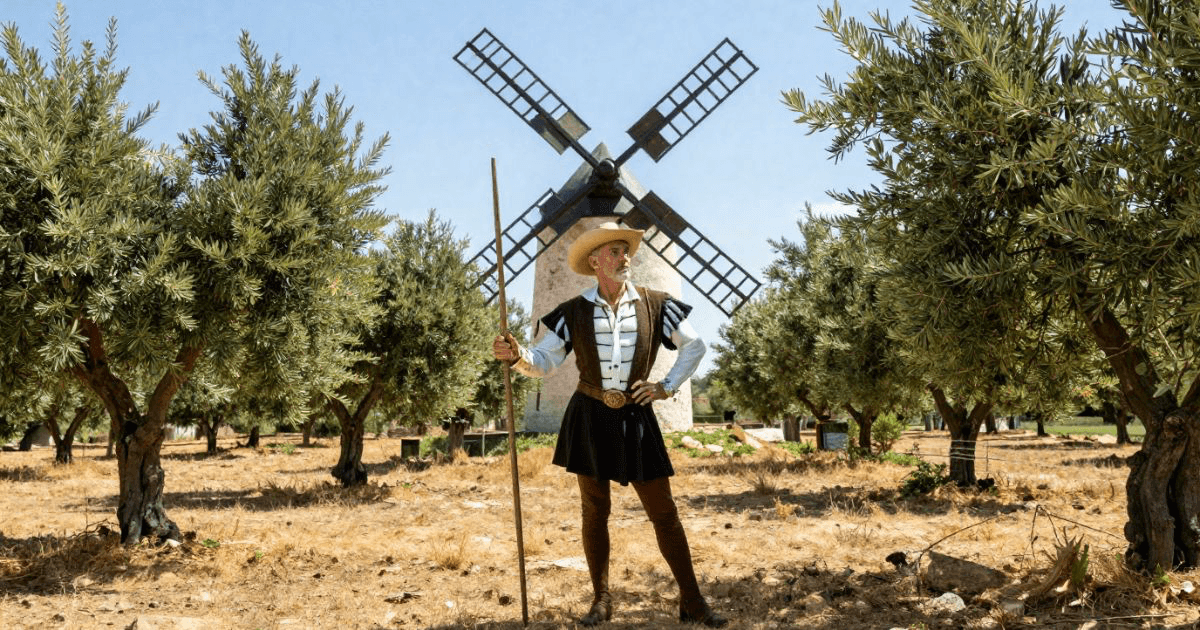
"But turn me these six hammers into six giants, and bring them to beard me, one by one or all together, and if I do not knock them head over heels, then make what mockery you like of me.”"
Context: After Sancho mocks him
Humiliation becomes bravado: mills would be giants if he said so.
In Today's Words:
Make them giants and I will still knock them down The same dynamic turns up in offices, relationships, and public life today, wherever someone bends circumstances to fit a story they cannot put down The same dynamic turns up in offices, relationships, and public life today, wherever someone bends circumstances to fit a story they
Thematic Threads
Hearing Giants in the Hammers
In This Chapter
Fear turns a fulling mill into an epic before dawn proves otherwise.
Development
This chapter pushes the pattern into visible action and consequence.
In Your Life:
You may recognize this pattern when stress removes the polite version of a situation.
Identity
In This Chapter
Characters defend who they are or who they pretend to be when challenged.
Development
Fantasy and reality collide around name, rank, and role.
In Your Life:
You might cling to a version of yourself that no longer matches your choices.
Class
In This Chapter
Rank, money, and reputation decide who is heard, protected, or punished.
Development
Social order shapes every rescue, betrayal, and humiliation here.
In Your Life:
You see this when status decides whose account of events becomes official.
You now have the context. Time to form your own thoughts.
Discussion Questions
This is not a test. Five prompts guide you through the chapter, from how it opens to how it closes, so you notice context and rhythm rather than facts to memorize. Sit with each question in your own words. When you see "One way to read it," treat it as a starting point, not the only answer.
- 1
What does Sancho do to Rocinante's legs while pretending to tighten the horse's girths, and how does he explain it to Don Quixote?
analysis • surfaceOne way to read it
Sancho secretly ties Rocinante's legs with his donkey's halter so the horse can only jump in place. He tells Don Quixote that Heaven has intervened to prevent him from leaving.
- 2
Why does Cervantes have Sancho tell such a deliberately repetitive and unfinished story about the goat crossing?
analysis • mediumOne way to read it
The endless goat counting mirrors how fear makes time crawl. Sancho uses the story to delay dawn and keep Don Quixote distracted from the terrifying sounds.
- 3
Where do you see people today turning ordinary sounds or situations into something much more frightening than they actually are?
application • mediumOne way to read it
Social media often amplifies normal events into crises, like a delayed flight becoming a travel disaster. Our imagination fills gaps with worst-case scenarios, just like the hammers becoming giants.
- 4
Think of a time you built up courage for something that turned out to be much simpler than expected. How did you handle the embarrassment?
application • deepOne way to read it
Like Don Quixote striking Sancho after the fulling mill revelation, we often get defensive when reality deflates our dramatic preparations. The key is learning to laugh at ourselves instead of lashing out.
- 5
What does this chapter suggest about the relationship between our stories about ourselves and the mundane reality we actually face?
reflection • deepOne way to read it
We need grand narratives to give meaning to ordinary life, but reality has a way of puncturing our heroic self-image. The challenge is maintaining dignity when the hammers turn out to be just hammers.
Critical Thinking Exercise
Name the Hearing Giants in the Hammers Move
Re-read the chapter summary and write down where hearing giants in the hammers first appears, who pays for it, and who benefits from keeping it going. Then write one sentence you could say to interrupt the pattern without shaming the person caught in it.
Consider:
- •Separate the person's worth from the pattern's cost
- •Notice who has power to stop or fuel the scene
- •Ask what truth would require someone to give up
Journaling Prompt
Write about a time when you saw hearing giants in the hammers in your own life. What finally made the pattern impossible to ignore?
Coming Up Next...
Chapter 21: Mambrino's Helmet
It now began to rain a little, and Sancho was for going into the fulling mills, but Don Quixote had taken such an abhorrence to them on account of the late joke that he would not enter them on...