
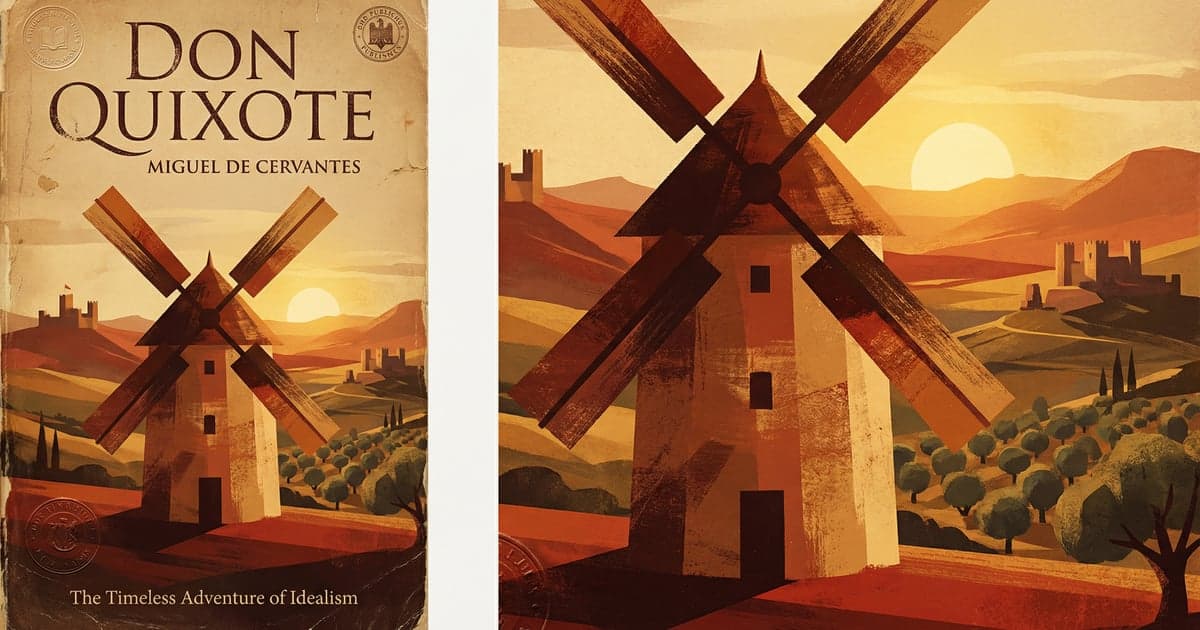
Cervantes does not ask you to pick a winner. He seats a man who will die for a code next to a man who will not skip a meal for one. The mills, the balsam, the acorns, and the fake island are the same exam in different rooms: can a vision survive a witness who still uses ordinary nouns? Sancho is not there to cancel the quest. He is there so the quest has a second meter.
The knight can speak like a clerk when Sancho is about to govern. The squire can refuse a crown of mustard-seed and still ride. Each man is incompetent in the other's native tongue and fluent in a crisis that belongs to the pair. Balance here is not moderation. It is refusing to let one vocabulary fire the other.
Barataria is the test that looks like a reward. Sancho does the job, then names the job a costume. Quixote's advice was sound and the office was still a prank. The lesson is not cynicism. It is dual literacy: keep the speech that makes action possible, and keep the onion that tells you when the table is a set.
The Central Lesson
Idealism without a witness becomes a private war. Pragmatism without a quest becomes a smaller life. Cervantes keeps both men on the same road so neither vocabulary gets to be the whole truth. The mills are mills. The courage is still courage. The island is a joke. The counsel about offices is not. Balance is dual literacy: keep the speech that makes action possible, and keep the companion who can still name grain.
Applying This to Your Life
Hire the Person Who Uses the Other Noun
If your team only speaks vision, you will charge mills. If it only speaks logistics, you will never leave the village. Put one Sancho in the room who is allowed to say mill without being treated as disloyal.
Let the Stomach Veto the Oration
Golden-age speeches after a free meal are cheap. Ask what the plan costs in sleep, money, and ordinary food. If the answer is always later, you are not balancing. You are postponing the onion.
Renegotiate the Currency
Sancho tries to swap an island for balsam. That is not greed. It is a partnership noticing that payment has to be real. When a collaboration only pays in future glory, rewrite the invoice now.
Other lessons in this book
More life-skill deep dives from the same classic.
Detecting Story-Driven Delusion
Notice when deep narrative immersion starts rewriting what you treat as real, as Quixote does from his first night of chivalry reading.
5 chapters·Explore AnalysisLiving Inside a Narrative
Follow Part II's metafiction as Quixote becomes famous for a story others have already read, and ask when your own role is performance.
5 chapters·Explore AnalysisLoyal Friendship Under Absurdity
Learn from Sancho's willingness to stay with Quixote through ridicule, beatings, and promises that never arrive on schedule.
5 chapters·Explore AnalysisReading Appearance vs Reality
Track how Quixote turns inns into castles and ordinary life into enchantment, and ask what your own filters add.
5 chapters·Explore AnalysisWhen Noble Intentions Miss the Target
See how Quixote's hunger to right wrongs can still leave real people hurt when the script matters more than the scene.
5 chapters·Explore Analysis
Continue exploring
Explore this theme
The same lessons in other books
See how other books teach the same life skills.

The Essays of Montaigne
Choosing Real FriendshipHear essay 27 answer La Boétie: because it was he, because it was I.
The Idiot
Maintaining Goodness Without NaivetySit with Myshkin on the train in chapter 1: honesty with no angle, and a city that can only call it idiocy.
Jude the Obscure
When Desire Becomes a TrapTrack the pig, the dimple, the false pregnancy, and the second marriage arranged over gin.
Where the lesson lives in the book
Two Accurate Reports of the Same Plain
One man sees a righteous war. The other sees machines that grind grain. Both are looking at the same field. Sancho is not the killjoy of the novel. He is the second instrument. Without him the charge has no witness who can still name mills after the lance snaps.
Key Insight:
Balance is not splitting the difference. It is refusing to fire the person who keeps saying the unsponsored name of the object.
“did I not tell your worship to mind what you were about, for they were only windmills?”
He Admits the Road Pays in Broken Heads
After the first beatings, Quixote tells Sancho these are not island adventures. They are cross-road work: a cracked skull, an ear the less. The idealist can do accounting when the squire is about to quit. Sancho offers to trade the island for the recipe of the balsam. Hunger and honour briefly share a ledger.
Key Insight:
Pragmatism often arrives as a renegotiation, not a conversion. Watch who is allowed to change the currency of the partnership.
“that this adventure and those like it are not adventures of islands, but of cross-roads, in which nothing is got except a broken head or an ear the less”
Acorns Summon a Golden Age. Onions Answer.
Goatherds feed them. Quixote orates about a time without property or locked doors. Sancho answers that bread and onions in a corner beat turkey at a table where you must chew slowly. The speech is beautiful. The stomach is the other thesis. Cervantes lets both stand.
Key Insight:
Idealism that cannot sit beside an onion is a performance. Pragmatism that cannot hear a golden-age speech is a smaller prison.
“if the truth is to be told, what I eat in my corner without form or fuss has much more relish for me, even though it be bread and onions”
The Knight Who Knows How Offices Work
On the eve of Barataria, Quixote warns that great trusts are a gulf of troubles and that virtue is worth more than blood. He is not raving. He is briefing. The man who charges mills can still describe a desk. Idealism here is not blindness. It is a second language he can set down.
Key Insight:
People you filed as dreamers often keep a practical register for someone they love. Ask which register they use when the cost is not theirs.
“for offices and great trusts are nothing else but a mighty gulf of troubles.”
The Governor Who Prefers the Road
The island arrives as theatre. Sancho judges well, then a mock battle ends the joke. He says he was not born to be a governor. He walks back toward a master who still needs a squire. Ambition was the bait. Companionship is the remaining job.
Key Insight:
Pragmatism is not always grabbing the prize. Sometimes it is recognising a fake office and leaving before the smoke is called a legacy.
“I was not born to be a governor”