Free study guide · no paywall
Das KapitalStudy Guide
by Karl Marx (1867)
A linen coat, a spinner's twelve hours, and a colony where capital arrives with no one left to fetch water: mapped across 33 chapters and six lessons.
Start here
Plot, characters & chapter jump
33 chapter summaries · 6 key figures · discussion questions · quotes · free
Plot summary
Volume 1 of Capital opens with an ordinary commodity, a linen coat, and argues that its price hides a social relation: hours of human labour made comparable through exchange. Marx follows that hidden relation into the factory, where a worker sells labour-power for a wage that replaces itself in the first hours of a shift while the remaining hours become surplus value the owner keeps. The middle of the book stages the fight over the working day itself, then cooperation, manufacture, and machinery. Volume 1 closes in the colonies, where a would-be capitalist named Peel discovers that capital is a social relation that has to be manufactured by force, not a natural fact that travels with the cargo.
Key characters
Jump to chapter
- Chapter 1The linen coat and the coat
- Chapter 6The buying and selling of labour-power
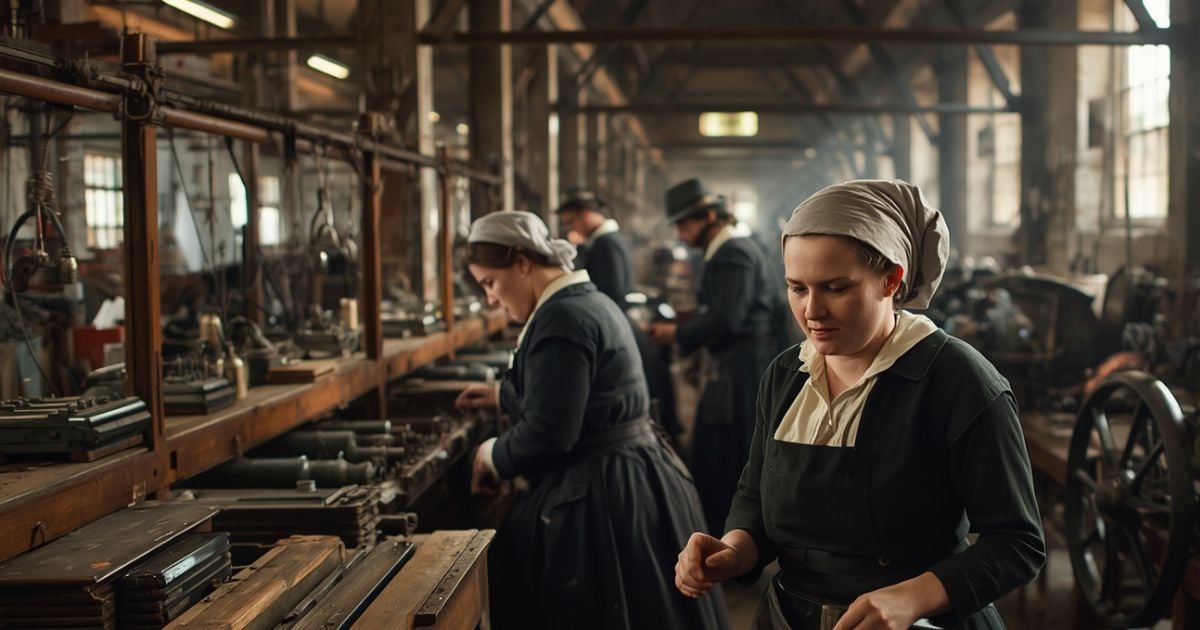
- Chapter 9The spinner's twelve hours
- Chapter 10Between equal rights, force decides
- Chapter 15The instrument strikes down the labourer
- Chapter 19The wage that makes unpaid labour look paid
- Chapter 26Original sin for economists
- Chapter 33Mr. Peel has no one to fetch water
What readers search for
Common questions about Das Kapital
What is surplus value in Das Kapital?
The unique commodity is labour-power, the worker's capacity to work for a day. Chapter 9 puts a spinner through twelve hours: the first hours replace the wage, and the rest becomes a remainder Marx calls surplus value. A popular version blames the last hour alone for the whole profit. Marx's point is that the split runs through the entire shift, so speeding the frame or cheapening the loaf moves the same ratio without ever announcing itself.
Understanding Surplus ValueWhat is commodity fetishism in Das Kapital?
Chapter 1 opens with twenty yards of linen equal to one coat, both containing the same quantity of human labour. Marx names the trick fetishism: a social relation between people takes on the fantastic form of a relation between things, so a price tag looks like a fact about the object instead of a fact about whose hours are inside it. Money finishes the disguise by letting commodities trade without ever naming the labour that made them comparable.
Seeing Labor Behind CommoditiesWhat is alienation according to Marx in Das Kapital?
Manufacture converts the labourer into what Marx calls a crippled monstrosity: excellent at one motion, useless at the whole, because only the combined product of many detail workers becomes a commodity. Machinery finishes the reversal in chapter 15, where the instrument of labour strikes down the labourer and the hand now extends the tool instead of the tool extending the hand. A wage can arrive on time and still leave a person outside the product, the process, and the worker standing next to them.
Recognizing AlienationWhat is primitive accumulation in Das Kapital?
Marx calls the standard economist's story, thrifty savers against a lazy majority, insipid childishness, and tells a different one: commons enclosed, tenants driven off arable land turned into sheep-walks, and a class created that owns nothing it can live on except its ability to work. Chapter 33 sends the theory to a colony, where a man named Peel arrives with capital and finds no servant left to fetch him water, because dependence has to be manufactured before a wage will stick.
Tracing Primitive AccumulationWhat is Das Kapital about?
Volume 1 of Capital, published in 1867, argues that profit comes from a gap most workers never see: labour-power sells for less than the value it produces across a working day. Chapter 10 stages that gap directly, mill children and factory inspectors and an Act that arrives only after decades of pressure, because as Marx puts it, between equal rights force decides. The book follows the gap from the shop window through the factory floor to the colonies, where the whole arrangement had to be built by force before economists could call it natural.
Reading the Working DayFast track
Short on time? Start here
You do not have to read all 33 chapters in one sprint. These 8 beats hold the book's argument together.
Chapter 1
The linen coat and the coat
Chapter 6
The buying and selling of labour-power
Chapter 9
The spinner's twelve hours
Chapter 10
Between equal rights, force decides
Chapter 15
The instrument strikes down the labourer
Chapter 19
The wage that makes unpaid labour look paid
Chapter 26
Original sin for economists
Chapter 33
Mr. Peel has no one to fetch water
Full coverage
Everything in this study guide
The same surfaces readers expect from a traditional study guide — plot, characters, themes, quotes, and homework help — grouped across 8 parts, with audio and the source text on every chapter. Free, no paywall.
Plot overview
Summary, context, and why the book still matters
33 chapter summaries
Every chapter with audio narration
6 key figures
Who drives the plot and what each one does
6 lessons
Themes traced to scenes, not generic labels
15+ important quotes
Verified lines with chapter links and analysis
Discussion questions
Five per chapter, with suggested answers for class and essays
Original text
Author's words beside every summary
This is not a plot cheat sheet. Wide Reads walks Das Kapital as a single argument built from a commodity to a colony: a linen coat that turns out to be a social relation, a working day fought hour by hour, and a history of dispossession the textbooks call thrift. Use the part-by-part path below to keep your bearings, follow the six lesson deep dives when a pattern hooks you, and open individual chapters for summaries, quotes, and audio.
For plot and theme questions about Das Kapital, see Common Questions on the book page.
How to use this guide
How to Read This Book with Wide Reads
Start with the commodity
Read chapters 1 through 6 for the linen coat and the coat, the magic of money, and the moment simple exchange turns into buying in order to sell. You need the hidden relation in place before the factory floor can show where the extra value actually comes from.
Follow the factory floor
Chapters 7 through 22 are the case itself: the working day as a battlefield in chapter 10, cooperation and manufacture breaking a craft into fragments, machinery that sets the pace instead of the worker, and a wage that finishes the disguise by making unpaid hours look paid.
Let the history close the argument
Chapters 23 through 33 turn from mechanism to history: accumulation, the industrial reserve army, and primitive accumulation, where commons are enclosed and a colony strips away the last excuse. Read chapter 33 last. Mr. Peel's missing servant is the secret the whole book has been building toward.
Plot & context
Book Overview
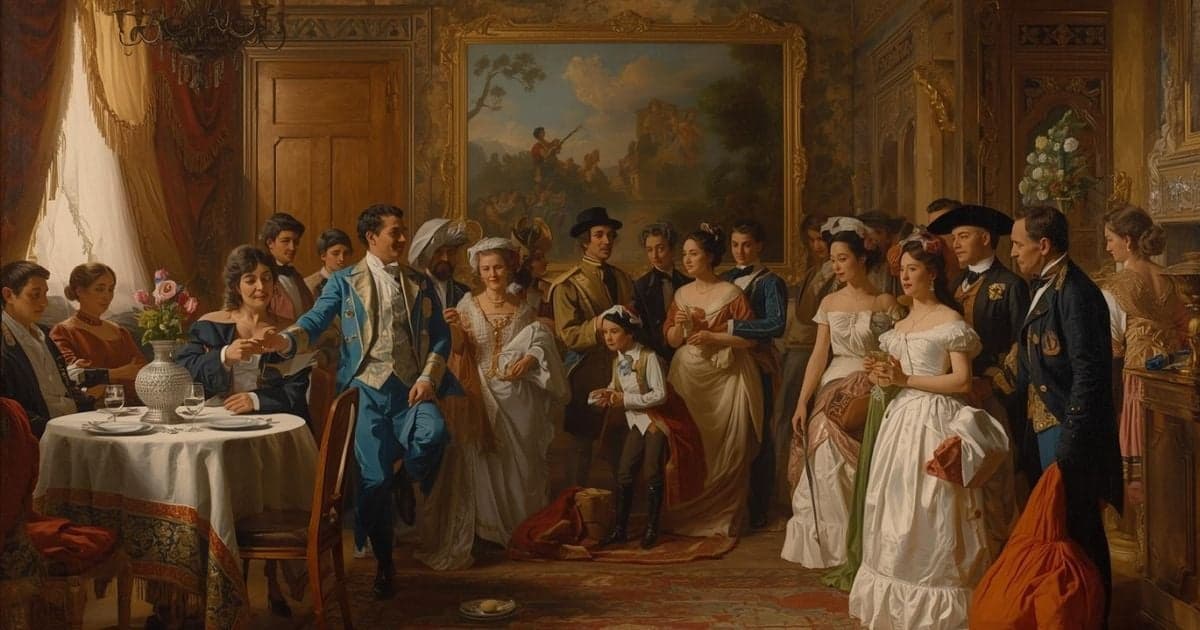
A linen coat hangs in a draper's window. Twenty yards of linen, Marx says, equal one coat, and both equal a certain quantity of human labour. That is where Das Kapital begins: not with a manifesto and not with a factory fire, but with an ordinary commodity that looks like a thing and turns out to be a social relationship wearing a price tag. It is 1867. Volume 1 of Capital is published in Hamburg. Marx has spent years in the British Museum reading room, working through factory inspectors' reports, parliamentary blue books, and the political economists who thought they had already explained the system.
The discovery he builds everything on is surplus value. A worker does not sell work. She sells labour-power, the capacity to work for a day, and that capacity produces more value than it costs to keep her alive and returning tomorrow. The first hours replace her wage. The hours after that belong to the owner. Profit, rent, interest, and the next round of accumulation all flow from that gap. The contract looks free because nobody holds a whip at the factory gate. Marx's point is that the freedom is real enough to sign the paper and false enough that she cannot opt out of selling herself. Kind employers do not escape the logic. The owner who pays generously and works shorter hours loses to the owner who does not.
The middle of the book is the factory floor. The working day becomes a battlefield: capital lengthens hours, workers push back through exhaustion, law, and the Factory Acts. Manufacture breaks a craft into fragments until a person is excellent at one motion and useless at the whole. Machinery arrives promising liberation and often delivers a faster pace, child labour at the machine, and a reserve army waiting outside the gate. Wages look like payment for a full day's work. They are payment for labour-power. The difference is the whole book.
Then Marx turns the history over. The system did not begin with thrifty savers and empty land. Primitive accumulation is the name he gives the original dispossession: commons enclosed, peasants driven off, colonies cleared, and a class created that owns nothing it can live on except its ability to work. He writes that capital comes into the world dripping from head to foot, from every pore, with blood and dirt. Volume 1 ends in the colonies, where Wakefield's own theory admits the secret: if workers can still claim land, they will not stay wage-labourers. The system requires manufactured dependency, then it calls the resulting contract a choice.
Read the full summary on the book page →
Why this book now
People still meet this argument at work before they have a name for it: a payslip that looks fair, a shift that leaves you drained anyway, a round of layoffs explained as the market rather than a decision someone signed. Marx does not ask readers to take his word for it. He sets the factory inspectors' own numbers beside the economists' defence of the system and lets readers watch the two accounts stop agreeing. This guide keeps that argument tied to the coat in the shop window, the spinner's twelve hours, and the colony where the whole arrangement had to be built by force before it could be called natural.
About Karl Marx
Karl Marx (1818-1883) was born in Trier, Prussia, to a Jewish family that converted to Lutheranism under social pressure. He studied philosophy at Bonn and Berlin, earning his doctorate with a thesis on ancient Greek atomism, and quickly established himself as one of the sharpest minds of his generation. He was expelled from three countries, Germany, France, and Belgium, for his radical journalism and political organizing before settling permanently in London, where he spent the rest of his life in grinding poverty, supported largely by his friend and collaborator Friedrich Engels. Das Kapital was the labour of decades. Marx spent years in the British Museum reading room, working through political economy, factory inspection reports, and parliamentary testimony to build an account of capitalism that was both philosophically rigorous and empirically grounded. Volume 1 was published in 1867; Marx died before finishing Volumes 2 and 3, which Engels edited from his manuscripts and published posthumously. The book transformed history. It gave the labour movement an intellectual framework, shaped the revolutions of the twentieth century, and established the discipline of critical political economy. It has also been misread, selectively quoted, and weaponized by regimes Marx would have opposed. What the actual text rewards is something simpler: a careful, unsentimental look at how a specific economic system works, and who it works for.
Themes with proof
Lessons from Das Kapital
Six pressures Marx traces from the shop window to the colony: the labour hidden behind every commodity's price tag, the surplus value that turns a spinner's twelve hours into someone else's profit, the working day as contested ground rather than a given schedule, the alienation manufacture and machinery produce in the person doing the work, class interests read as structural pressure rather than personal villainy, and the primitive accumulation that built today's labour market by dispossession before it was explained as free choice.
Deep dives
Chapter-by-chapter breakdowns
Reading the Working Day
Treat hours, overtime, and speed-ups as a fight over who keeps the value produced in that time, not as a schedule you were given.
Between equal rights force decides
Recognizing Alienation
Identify when work separates you from the product, the process, and other workers, even when the pay packet arrives on time.
the productive power developed by the labourer when working in co-operation, is the productive power of capital
Analyzing Class Interests
Read opposing pressures between workers and owners as structural, not personal, including when decent people still produce harsh outcomes.
Between equal rights force decides
Tracing Primitive Accumulation
See how today's labour market was built by dispossession first, then explained as a free contract after the alternatives were gone.
In actual history it is notorious that conquest, enslavement, robbery, murder, briefly force, play the great part
Character guide
Key Figures
Who drives the plot, what each one wants, and why they matter to the argument of the book.
The Worker
Sells labour-power, not labour itself, for a wage that replaces itself in the first hours of a shift while the remaining hours become someone else's profit.
The Capitalist
Buys labour-power to consume it, not from personal cruelty but because competition punishes the owner who will not extract the same rate as everyone else.
The Political Economists
The theorists Marx spends the book correcting, who treat wages as the price of a full day's work and profit as a mystery rather than an unpaid remainder.
The Factory Inspectors
Government officials whose own reports supply Marx's evidence: mill children, night shifts, and injuries the owners would rather leave unofficial.
Edward Gibbon Wakefield
The colonial theorist whose own writing admits the secret: wage labour will not stick where workers can still claim land, so dependence has to be manufactured.
Mr. Peel
The would-be capitalist who arrives in Australia with capital and finds no servant left to fetch him water, proving that capital is a social relation, not a thing.
Memorable lines
Key Quotes
Verified passages with chapter links — the lines teachers and essays keep returning to.
“socially necessary”
“homogeneous human labour”
“Commodities are things, and therefore without”
“mutually recognise in each other the rights”
“Money as a measure of value”
“Metamorphosis of Commodities”
“The circulation of commodities is the starting-point”
“buying in order to sell”
“How can this purely formal distinction”
“The capitalist class, as a whole”
“The possessor of money does find”
“capacity for labour”
“The purchaser of labour-power consumes it”
“PROCESS OF PRODUCING SURPLUS-VALUE”
“The value of the means of production”
Class & essay prep
Discussion Questions
Sample prompts drawn from the chapter guides — each with suggested answers for seminars and written work.
Why does Marx separate use-value from exchange-value instead of treating them as one property?
From Chapter 1What does socially necessary labour-time exclude from counting as value?
From Chapter 1Why must commodity owners recognise one another as private proprietors before exchange can occur?
From Chapter 2What contradiction forces commodities to be both use-values and values at once?
From Chapter 2How does money as measure of value differ from money as medium of circulation?
From Chapter 3Why does Marx call commodity circulation a metamorphosis rather than simple barter?
From Chapter 3How does M-C-M' differ from ordinary selling in order to buy use-values?
From Chapter 4Why can capital not be explained as a single act of buying cheap and selling dear?
From Chapter 4Why does buying cheap and selling dear fail as a class-wide theory of profit?
From Chapter 5What does Marx mean by calling some distinctions purely formal?
From Chapter 5Why must the commodity be labour-power rather than already completed labour?
From Chapter 6What two freedoms must the worker possess for labour-power to become a commodity?
From Chapter 6What changes when Marx examines the same process as production of surplus-value?
From Chapter 7How do means of production transfer value without creating new value?
From Chapter 7Why does Marx call means of production constant capital?
From Chapter 8Chapter by chapter
All Chapters
Grouped by 8 sections — the same structure as the book hub.
Part I
Chapters 1–3 · Commodities, exchange, and money
Ch. 1 · The Hidden Life of Things We BuyThe linen coat and the coat
Marx opens with the commodity, the cell-form of capitalist wealth. Every useful thing has a use-value, the quality that satisfies human need. But in a...
Ch. 2 · How Things Become Money
Commodities cannot walk to market on their own. They need owners who recognise one another as private proprietors and exchange by mutual consent. Marx...
Ch. 3 · Money's Three Faces
With money in hand, Marx tracks how commodities actually circulate. Money first serves as a measure of value, giving prices a visible form. Then it be...
Part II
Chapters 4–6 · The transformation of money into capital
Ch. 4 · The Money-Making Machine Revealed
Marx turns from circulation in general to capital in particular. Merchants and usurers already live by buying in order to sell, but the modern form is...
Ch. 5 · The Profit Puzzle
Marx now confronts the apparent contradiction head on. If equivalents exchange for equivalents, where does the surplus in M-C-M' come from? He first d...
Ch. 6 · The Labor Deal: Why Workers Always LoseThe buying and selling of labour-power
The puzzle of Chapter 5 resolves here. The money-owner must discover a commodity whose use-value is itself a source of value, and he finds it in labou...
Part III
Chapters 7–11 · The production of absolute surplus value
Ch. 7 · How Bosses Turn Work Into Profit
Marx crosses the threshold from market to workshop. The purchaser of labour-power consumes it by setting the worker to produce. In the labour-process,...
Ch. 8 · The Two Faces of Labor
Marx now sorts the ingredients of production by how they behave in value terms. Means of production transfer their existing value to the product as th...
Ch. 9 · The Rate of Surplus-ValueThe spinner's twelve hours
Marx turns to measurement. Surplus-value must be compared to variable capital alone, not to total capital advanced, because constant capital only pass...
Ch. 10 · The Battle for the Working DayBetween equal rights, force decides
Measurement is not enough; the length of the working day is fought over in courts, factories, and streets. Marx opens by stating a tension: capital ha...
Ch. 11 · The Math of Exploitation
Marx steps back to arithmetic after the battle over hours. Holding the value of labour-power constant, he shows how the rate of surplus-value and the ...
Part IV
Chapters 12–15 · Cooperation, manufacture, and machinery
Ch. 12 · Working Smarter, Not Harder: The Productivity Trap
Marx opens Part IV by asking a precise question: if the working day is fixed at twelve hours, with ten hours necessary and two hours surplus, how can ...
Ch. 13 · The Power of Working Together
Capitalist production begins when one employer puts many workers on the same task under one roof. At first this looks like simple addition: twelve wor...
Ch. 14 · Division of Labor and Manufacture
Manufacture, dominant from the mid-sixteenth to late eighteenth century, is cooperation organized through division of labour. It arises two ways: asse...
Ch. 15 · Machinery and Modern IndustryThe instrument strikes down the labourer
Machinery completes the revolution manufacture began. Marx starts from the machine as an organized system of tools driven by a motor mechanism, not a ...
Part V
Chapters 16–18 · Absolute and relative surplus value combined
Ch. 16 · Two Ways to Extract More Work
Marx reunites the two strategies of surplus extraction and sharpens the concept of productive labour under capitalism. Absolute surplus-value extends ...
Ch. 17 · The Math of Getting Squeezed
Marx formalizes how three variables, working-day length, labour intensity, and productivity, determine the split between wages and surplus-value. Assu...
Ch. 18 · The Math That Hides Exploitation
Marx dissects the formulae used to express the rate of surplus-value and shows that conventional political economy systematically understates exploita...
Part VI
Chapters 19–22 · Wages
Ch. 19 · The Wage Illusion RevealedThe wage that makes unpaid labour look paid
Wages appear to pay for labour, but Marx shows that appearance is systematically misleading. Labour cannot be a commodity sold before it exists; what ...
Ch. 20 · The Hidden Trap of Hourly Pay
Time-wages translate the value of labour-power into payment by hour, day, or week, but the form creates new room for deception. The same nominal daily...
Ch. 21 · When Your Boss Pays by the Job
Piece-wages look like payment for output rather than time, but Marx demonstrates they are converted time-wages. The piece rate is derived from the val...
Ch. 22 · Why Your Paycheck Goes Further Elsewhere
National wage differences look like simple comparisons of currency and living standards, but Marx shows the comparison fails without normalization. On...
Part VII
Chapters 23–25 · The accumulation of capital
Ch. 23 · The Endless Cycle
Part VII opens by stripping accumulation down to simple reproduction, where surplus-value is consumed and production repeats at the same scale. Marx s...
Ch. 24 · How Surplus Value Becomes Capital
Chapter 24 moves from simple reproduction to accumulation, defining it as reconverting surplus-value into capital. Marx first tracks accumulation in a...
Ch. 25 · The Iron Law of Capitalist Accumulation
Chapter 25 develops the general law of capitalist accumulation by linking capital composition, technical change, and labour demand. Marx distinguishes...
Part VIII
Chapters 26–33 · Primitive accumulation
Ch. 26 · The Secret of Primitive AccumulationOriginal sin for economists
Chapter 26 introduces primitive accumulation by criticizing the moral fable that thrift created capitalism. Marx frames the standard story as an econo...
Ch. 27 · The Great Land Theft
Chapter 27 narrates the expropriation of the English agricultural population as a prolonged process, not a single event. Marx begins with late medieva...
Ch. 28 · The Violence Behind Wage Labor
Chapter 28 examines the legal terror that followed expropriation and manufactured disciplined wage labourers. Marx argues newly displaced people could...
Ch. 29 · How Farmers Became Capitalists
Chapter 29 asks where capitalist farmers came from once peasants had been dispossessed. Marx traces a gradual evolution from feudal bailiff to tenant ...
Ch. 30 · How Rural Collapse Built Industrial Cities
Chapter 30 connects agrarian expropriation to industrial development by examining how home markets are created. Marx argues that expelling peasants fr...
Ch. 31 · The Birth of Industrial Capitalism
Chapter 31 traces the genesis of industrial capital through colonial plunder, slavery, fiscal systems, and state force. Marx distinguishes gradual pet...
Ch. 32 · The Rise and Fall of Economic Systems
Chapter 32 condenses Marx's historical argument into a theory of capitalism's trajectory and contradiction. He begins with petty property based on one...
Ch. 33 · The Colonial Truth About CapitalismMr. Peel has no one to fetch water
Chapter 33 uses colonial experience to expose assumptions hidden in metropolitan political economy. Marx distinguishes property based on one's own lab...
Using this guide
Study Guide FAQ
How to use Wide Reads for class, essays, and revision — and how this guide compares to traditional study sites.
Why Wide ReadsWhat makes this different from SparkNotes or CliffsNotes?
Traditional study guides summarise what Capital argues chapter by chapter. This guide gives you that coverage: all 33 chapters, six key figures and roles, and a three-part path from the shop window to the colony. Wide Reads adds Seeing Labor Behind Commodities and Tracing Primitive Accumulation traced through named scenes like the spinner's twelve hours and Mr. Peel's missing servant. Summaries include audio; the original text sits beside every chapter. Free, no paywall.
Is Das Kapital hard to read?
Das Kapital is rated intermediate difficulty. Our chapter-by-chapter analysis breaks down complex passages, explains historical context, and highlights key themes to make the text more accessible. Each chapter includes summaries, character analysis, and discussion questions to deepen your understanding.
Can I use this study guide for essays and homework?
Yes — use this reading guide alongside Das Kapital, not instead of it. Wide Reads exists to show you why the book still matters: lessons, chapter summaries with audio, and life skills you can carry into real life. That context can sharpen essays on themes, characters, and quotes. Always read Karl Marx's original text, though. We are the guide at the trailhead; the classic is still the point.
Begin at the shop window
Chapter 1 opens with a linen coat, not a manifesto. Each chapter adds summaries, quotes, audio, and the Lesson thread that turns 33 chapters of political economy into a map for reading the hours hidden inside a price.
Wide Reads is different.
Plot, characters, and themes — plus audio, source text, and patterns you can use after class
Two ways in
Read & listen to the summary
Chapter by chapter, with audio. The meaning arrives because you experienced it — not because someone listed bullet points.
Start with this.
Read the original text
The actual words the author wrote, alongside every summary. Use the guide, then step into the source.
Then step into the source.
Either way, the door opens inward.
— and most of all, Why does this matter?
Continue Exploring
Guides, life skills, and the full library.More ways to read Das Kapital: guides, life skills, and the wider library.