Wide Reads
Literature MattersLife IndexEducators
Sign in
Where to Begin
Das Kapital - How Rural Collapse Built Industrial Cities

Karl Marx

Das Kapital

How Rural Collapse Built Industrial Cities

Home›Books›Das Kapital›Chapter 30
Previous
30 of 33
Next

Summary

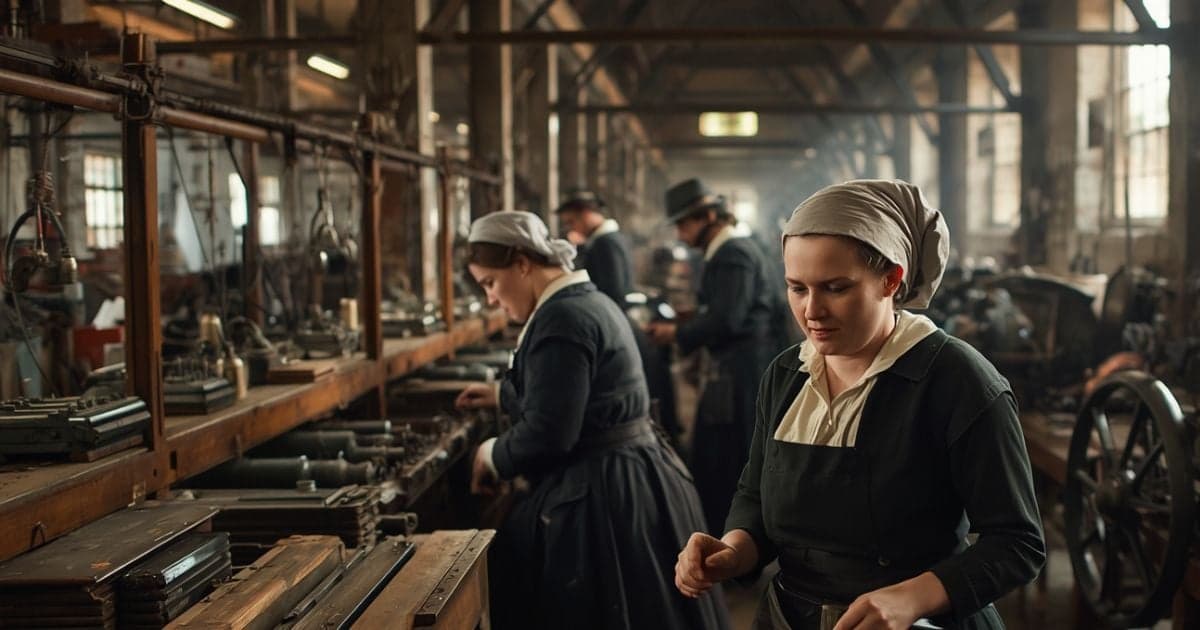
The expropriation of the agricultural population did not merely supply factories with workers — it created the market those factories required. The self-sufficient peasant household was its own economy. It grew food, spun flax, wove cloth, and produced much of what it consumed. When peasants were dispossessed and driven into wage labour, they lost not only their land but also the capacity for self-provisioning. Everything they had formerly produced for themselves they now had to purchase. Expropriation created consumers. The raw materials peasants had previously worked for themselves — flax, wool, timber — were simultaneously freed as inputs for industrial capital. Where a Westphalian peasant family once spun their own flax at home, the same flax now flowed to a centralised spinning mill. The product was identical; the social organisation of its production had been entirely transformed. The peasant's independent production became the worker's wage labour, and the peasant's domestic consumption became the factory's market. This double transformation — proletariat and home market created simultaneously — was the essential precondition for sustained industrial capitalism. The factory needed not just hands but customers. The dispossession of the peasantry supplied both. Capital did not find a pre-existing working class and a pre-existing home market waiting for it; it produced both through the same historical process of expropriation. The chapter is short but analytically important: it connects the rural history of Part VIII to the industrial analysis of the rest of the book, showing primitive accumulation as the condition of possibility for everything that followed.

Coming Up in Chapter 31

Now that we've seen how agricultural revolution created workers and markets, Marx turns to examine where industrial capitalists themselves came from. How did some people accumulate enough wealth to become the factory owners in the first place?

Share it with friends

Previous ChapterNext Chapter
GO ADS FREE — JOIN US
Original text
complete·2,033 words

REACTION OF THE AGRICULTURAL REVOLUTION ON INDUSTRY

1 / 2

Master this chapter. Complete your experience

Purchase the complete book to access all chapters and support classic literature
Read Free on GutenbergBuy at Powell'sBuy on Amazon

As an Amazon Associate, we earn a small commission from qualifying purchases at no additional cost to you.

Available in paperback, hardcover, and e-book formats

GO ADS FREE — JOIN US

Why This Matters

Connect literature to life

Skill: Recognizing Wealth Extraction Disguised as Progress

This chapter teaches how to spot when 'improvements' and 'innovations' actually transfer independence from workers to owners while maintaining the illusion of advancement.

Practice This Today

This week, notice when businesses promote 'efficiency' or 'convenience'—ask who loses independence and who gains control in the new arrangement.

GO ADS FREE — JOIN US

Now let's explore the literary elements.

Key Quotes & Analysis

"The expropriation and expulsion of the agricultural population, intermittent but renewed again and again, supplied the town industries with a mass of proletarians entirely unconnected with the corporate guilds and unfettered by them"

— Narrator

Context: Marx explains how kicking peasants off their land created desperate workers for factories

This shows how what looks like separate problems - rural poverty and urban labor issues - are actually connected. Creating desperate workers wasn't an accident but served the interests of factory owners who wanted cheap, compliant labor.

In Today's Words:

When people lose their traditional ways of making a living, they become willing to take whatever job they can get, even if it pays poorly.

"With the setting free of a part of the agricultural population, therefore, their former means of nourishment were also set free"

— Narrator

Context: Marx describes how displacing farmers created both workers and customers

This reveals the clever economics behind the transformation. The same food that peasants used to grow for themselves now gets sold back to them as wage workers. It's a system that creates dependency.

In Today's Words:

When people can't provide for themselves anymore, they become customers for the very things they used to make or grow themselves.

"In spite of the smaller number of its cultivators, the soil brought forth as much or more produce, after as before"

— Narrator

Context: Marx notes that fewer farmers produced more food through improved methods

This shows how efficiency gains don't automatically benefit everyone. Better farming techniques could have made everyone's life easier, but instead they just made some people unemployed while enriching landowners.

In Today's Words:

Just because we can do more with fewer people doesn't mean the benefits get shared - usually they just go to whoever owns the operation.

Thematic Threads

Economic Control

In This Chapter

Former self-sufficient peasants become dependent wage workers in factories processing the same materials they once controlled

Development

Builds on earlier themes of primitive accumulation by showing the complete transformation of economic relationships

In Your Life:

You might see this when your workplace gets bought by a larger company and suddenly you have less autonomy over how you do your job.

False Progress

In This Chapter

Larger factories and consolidated production are presented as advancement while actually concentrating wealth and eliminating independence

Development

Introduced here as critique of how 'development' is measured and defined

In Your Life:

You experience this when 'improvements' to systems you use actually make your life less convenient or more expensive.

Structural Dependency

In This Chapter

The same people who once provided for themselves must now buy necessities and sell their labor to survive

Development

Extends earlier analysis of how capitalism creates the conditions it needs to function

In Your Life:

You see this pattern when services you once could do yourself become so complex or regulated that you must pay professionals.

Identity Transformation

In This Chapter

Independent producers become wage laborers, fundamentally changing their relationship to their work and community

Development

Builds on class formation themes by showing how economic changes reshape social identity

In Your Life:

You might experience this when gig work or contract employment replaces stable jobs, changing how you see yourself professionally.

Power Concentration

In This Chapter

What was once distributed among many small producers becomes concentrated in the hands of factory owners

Development

Continues the theme of how capital accumulation centralizes control over production and people's livelihoods

In Your Life:

You encounter this when local businesses close and chain stores become your only options, reducing your choices and community connections.

GO ADS FREE — JOIN US

You now have the context. Time to form your own thoughts.

Discussion Questions

  1. 1

    What happened to the German peasants who used to spin flax in their homes, and how did their daily work change?

    analysis • surface
  2. 2

    Why did forcing peasants off their land create customers for the new factories at the same time it created workers?

    analysis • medium
  3. 3

    Where do you see this same pattern today - businesses getting bigger by making people more dependent on them?

    application • medium
  4. 4

    When faced with a choice between convenience and independence, how do you decide what trade-offs are worth making?

    application • deep
  5. 5

    What does this chapter reveal about the difference between efficiency and security in how we organize our lives?

    reflection • deep

Critical Thinking Exercise

10 minutes

Map Your Dependencies

List five essential things you need to survive and thrive - food, healthcare, income, transportation, etc. For each one, trace back who controls your access to it. Are you dependent on one big company, or do you have multiple options? Can you meet any of these needs yourself, or are you completely reliant on others?

Consider:

  • •Notice where you have backup plans versus where you're completely dependent on one source
  • •Consider which dependencies feel secure versus which ones make you nervous
  • •Think about whether increased convenience has come with decreased control

Journaling Prompt

Write about one area where you've traded independence for convenience. Was it worth it? What would it take to get some of that independence back, and do you want to?

GO ADS FREE — JOIN US

Coming Up Next...

Chapter 31: The Birth of Industrial Capitalism

Now that we've seen how agricultural revolution created workers and markets, Marx turns to examine where industrial capitalists themselves came from. How did some people accumulate enough wealth to become the factory owners in the first place?

Continue to Chapter 31
Previous
How Farmers Became Capitalists
Contents
Next
The Birth of Industrial Capitalism

Continue Exploring

Das Kapital Study GuideTeaching ResourcesEssential Life IndexBrowse by ThemeAll Books

You Might Also Like

Jane Eyre cover

Jane Eyre

Charlotte Brontë

Explores personal growth

Great Expectations cover

Great Expectations

Charles Dickens

Explores personal growth

The Strange Case of Dr Jekyll and Mr Hyde cover

The Strange Case of Dr Jekyll and Mr Hyde

Robert Louis Stevenson

Explores personal growth

Don Quixote cover

Don Quixote

Miguel de Cervantes Saavedra

Explores personal growth

Browse all 47+ books

Share This Chapter

Know someone who'd enjoy this? Spread the wisdom!

TwitterFacebookLinkedInEmail

Read ad-free with Prestige

Get rid of ads, unlock study guides and downloads, and support free access for everyone.

Subscribe to PrestigeCreate free account
Intelligence Amplifier
Intelligence Amplifier™Powering Wide Reads

Exploring human-AI collaboration through books, essays, and philosophical dialogues. Classic literature transformed into navigational maps for modern life.

2025 Books

→ The Amplified Human Spirit→ The Alarming Rise of Stupidity Amplified→ San Francisco: The AI Capital of the World
Visit intelligenceamplifier.org
hello@widereads.com

WideReads Originals

→ You Are Not Lost→ The Last Chapter First→ The Lit of Love→ Wealth and Poverty→ 10 Paradoxes in the Classics · coming soon
Arvintech
arvintechAmplify your Mind
Visit at arvintech.com

Navigate

  • Home
  • Library
  • Essential Life Index
  • How It Works
  • Subscribe
  • Account
  • About
  • Contact
  • Authors
  • Suggest a Book
  • Landings

Made For You

  • Students
  • Educators
  • Families
  • Readers
  • Literary Analysis
  • Finding Purpose
  • Letting Go
  • Recovering from a Breakup
  • Corruption
  • Gaslighting in the Classics

Newsletter

Weekly insights from the classics. Amplify Your Mind.

Legal

  • Privacy Policy
  • Terms of Service
  • Cookie Policy
  • Accessibility

Why Public Domain?

We focus on public domain classics because these timeless works belong to everyone. No paywalls, no restrictions—just wisdom that has stood the test of centuries, freely accessible to all readers.

Public domain books have shaped humanity's understanding of love, justice, ambition, and the human condition. By amplifying these works, we help preserve and share literature that truly belongs to the world.

A Pilgrimage

Powell's City of Books

Portland, Oregon

If you ever find yourself in Portland, walk to the corner of Burnside and 10th. The building takes up an entire city block. Inside is over a million books, new and used on the same shelf, organized by color-coded rooms with names like the Rose Room and the Pearl Room. You can lose an afternoon. You can lose a weekend. You will find a book you have been looking for your whole life, and three you did not know existed.

It is a pilgrimage. We cannot find a bookstore like it anywhere on earth. If you read the classics, and you ever get the chance, go. It belongs on every reader's bucket list.

Visit powells.com

We are not in any way affiliated with Powell's. We are just a very big fan.

© 2026 Wide Reads™. All Rights Reserved.

Intelligence Amplifier™ and Wide Reads™ are proprietary trademarks of Arvin Lioanag.

Copyright Protection: All original content, analyses, discussion questions, pedagogical frameworks, and methodology are protected by U.S. and international copyright law. Unauthorized reproduction, distribution, web scraping, or use for AI training is strictly prohibited. See our Copyright Notice for details.

Disclaimer: The information provided on this website is for general informational and educational purposes only and does not constitute professional, legal, financial, or technical advice. While we strive to ensure accuracy and relevance, we make no warranties regarding completeness, reliability, or suitability. Any reliance on such information is at your own risk. We are not liable for any losses or damages arising from use of this site. By using this site, you agree to these terms.