Wide Reads
Literature MattersLife IndexEducators
Sign in
Where to Begin
Das Kapital - The Rate of Surplus-Value

Karl Marx

Das Kapital

The Rate of Surplus-Value

Home›Books›Das Kapital›Chapter 9
Previous
9 of 33
Next

Summary

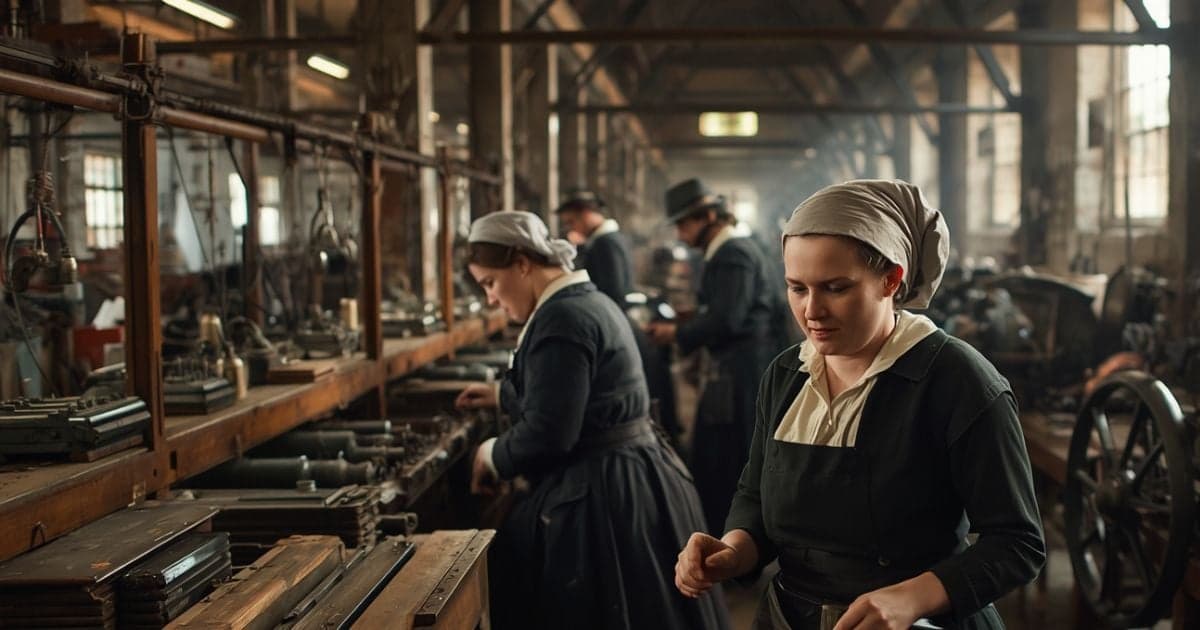
Marx turns to arithmetic, putting numbers to the concepts and introducing the rate of surplus-value as a precise measure of the degree of exploitation of labour-power. The formula is C = c + v: constant capital plus variable capital. After production, the product's value equals (c + v) + s, where s is surplus value. The rate of surplus-value is s/v — surplus value divided by variable capital alone. Marx insists on this ratio rather than s/(c+v) because constant capital adds no new value; comparing surplus to variable capital isolates what matters. If a worker is paid wages worth 6 hours of labour but works a 12-hour day, the rate of surplus-value is 100% — not 50%, which would result from comparing surplus to total capital. This section dismantles the 'last hour' argument made by Nassau Senior, the Oxford economist who claimed in 1836 that manufacturers' entire profit derived from the final hour of the working day — and that any reduction in hours would eliminate profit entirely. Marx subjects this claim to arithmetic and finds it nonsensical. Senior had confused the rate of surplus-value with the rate of profit on total capital, and then compounded the error by treating the working day as if each hour bore equal weight in producing profit. The calculation does not hold. Marx also introduces the concept of surplus-produce: the material form of surplus value. If necessary labour time reproduces the worker's wages in 6 hours, and the full day is 12 hours, then half the day's output is surplus-produce — the physical embodiment of unpaid labour. This is not metaphor but measurable fact: a definite portion of the yarn spun, the coal mined, or the cloth woven represents labour for which the worker received nothing. The rate of surplus-value becomes, in Marx's hands, a scientific instrument for comparing exploitation across industries, time periods, and countries — stripping away the surface appearances of wages and prices to reveal the underlying structure.

Coming Up in Chapter 10

Having established how to measure exploitation, Marx now turns to the length of the working day itself - the battlefield where workers and capitalists clash over the very hours of human life that can be converted into profit.

Share it with friends

Previous ChapterNext Chapter
GO ADS FREE — JOIN US
Original text
complete·8,850 words

THE RATE OF SURPLUS-VALUE

1 / 2

Master this chapter. Complete your experience

Purchase the complete book to access all chapters and support classic literature

Read Free on GutenbergBuy at Powell'sBuy on Amazon

As an Amazon Associate, we earn a small commission from qualifying purchases at no additional cost to you.

Available in paperback, hardcover, and e-book formats

GO ADS FREE — JOIN US

Why This Matters

Connect literature to life

Skill: Detecting Financial Manipulation

This chapter teaches how to separate real value creation from accounting tricks designed to hide exploitation.

Practice This Today

This week, notice when employers claim 'tight margins' while asking for more work—calculate what you actually produce versus what you're paid.

GO ADS FREE — JOIN US

Now let's explore the literary elements.

Key Quotes & Analysis

"The rate of surplus-value is therefore an exact expression for the degree of exploitation of labour-power by capital, or of the labourer by the capitalist."

— Marx

Context: After establishing the mathematical formula for measuring exploitation

This makes exploitation measurable and scientific rather than just a moral complaint. Marx shows that what feels unfair can actually be calculated precisely. It's not about individual bad bosses but systemic extraction.

In Today's Words:

Now we can actually calculate exactly how much you're getting screwed at work.

"If the whole working-day were to shrink to the length of its necessary portion, surplus labour would vanish, a thing that is impossible under the regime of capital."

— Marx

Context: Explaining why capitalists must extract surplus labor to survive as capitalists

This reveals the fundamental contradiction - capitalism requires unpaid labor to function. If workers were paid the full value they create, capitalism would collapse. It's not greed but structural necessity.

In Today's Words:

If you got paid what you're actually worth, your boss would go out of business.

"Senior's discovery was nothing more than his attempt to identify the working day's surplus-labour time with a definite portion of that day."

— Marx

Context: Demolishing Senior's 'last hour' theory

Marx shows how economists create false theories to justify exploitation. Senior's math was designed to make shorter working hours seem impossible, not to understand reality. It's ideology disguised as science.

In Today's Words:

The expert's big discovery was just fancy math to justify screwing workers.

"The labourer works one portion of the day for himself, the remaining portion for the capitalist."

— Marx

Context: Summarizing how the workday splits between necessary and surplus labor

This simple statement reveals the hidden structure of wage labor. Every workday is split between paid and unpaid time, but it's disguised as paying for the whole day. The clarity is devastating.

In Today's Words:

Part of your shift pays your bills, the rest is free labor for your boss.

Thematic Threads

Class

In This Chapter

Marx reveals class isn't just about income levels—it's about who captures the value that workers create versus who actually creates it

Development

Building on earlier chapters about commodity exchange, now showing the mathematical precision of class exploitation

In Your Life:

You might notice this when your workplace profits increase but your wages stay flat, or when you're told 'we're all family here' while owners get rich from your labor

Identity

In This Chapter

Workers are told their identity is tied to company success, while owners maintain separate identity as 'risk-takers' deserving profits

Development

Introduced here as psychological component of economic exploitation

In Your Life:

You might catch yourself saying 'we had a great quarter' when you didn't see any of those profits in your paycheck

Social Expectations

In This Chapter

Society expects workers to accept the 'last hour' logic—that capitalist profits are natural and justified

Development

Introduced here as ideological justification for mathematical exploitation

In Your Life:

You might feel guilty asking for raises or questioning why your productivity gains don't translate to wage increases

Human Relationships

In This Chapter

The employer-employee relationship is presented as mutual benefit while mathematically structured as value extraction

Development

Introduced here as the core deceptive relationship under capitalism

In Your Life:

You might notice how workplace 'appreciation' events replace actual compensation, or how personal loyalty is expected but not reciprocated financially

GO ADS FREE — JOIN US

You now have the context. Time to form your own thoughts.

Discussion Questions

  1. 1

    Marx shows that when factory owners claimed their profits came from 'the last hour' of production, they were hiding something important. What were they actually hiding, and why did this matter to workers?

    analysis • surface
  2. 2

    Why does Marx separate 'constant capital' (machinery, materials) from 'variable capital' (wages)? What does this distinction reveal about where profits actually come from?

    analysis • medium
  3. 3

    Think about your current job or a job you've had. Can you identify moments when you created value that someone else captured? How was this hidden or justified?

    application • medium
  4. 4

    Marx's 'rate of surplus-value' is basically a formula for measuring exploitation. If you could apply this kind of mathematical thinking to modern situations, what would you want to measure or expose?

    application • deep
  5. 5

    What does this chapter suggest about the relationship between truth and power? Why do those who benefit from a system often control how that system is explained?

    reflection • deep

Critical Thinking Exercise

15 minutes

Map Your Value Creation

Choose a situation from your work or personal life where someone else benefited from your effort. Draw a simple diagram showing: what you put in (time, skills, energy), what was produced, and where the value went. Then calculate: what percentage of the value you created actually came back to you?

Consider:

  • •Include hidden costs and unpaid time (commuting, training, emotional labor)
  • •Consider who owns the tools, platform, or relationships that made your work possible
  • •Think about what story you were told about why the distribution was 'fair'

Journaling Prompt

Write about a time when you realized someone was profiting from your work in ways they hadn't made clear. How did you handle it, and what would you do differently now?

GO ADS FREE — JOIN US

Coming Up Next...

Chapter 10: The Battle for the Working Day

Having established how to measure exploitation, Marx now turns to the length of the working day itself - the battlefield where workers and capitalists clash over the very hours of human life that can be converted into profit.

Continue to Chapter 10
Previous
The Two Faces of Labor
Contents
Next
The Battle for the Working Day

Continue Exploring

Das Kapital Study GuideTeaching ResourcesEssential Life IndexBrowse by ThemeAll Books

You Might Also Like

Jane Eyre cover

Jane Eyre

Charlotte Brontë

Explores personal growth

Great Expectations cover

Great Expectations

Charles Dickens

Explores personal growth

The Strange Case of Dr Jekyll and Mr Hyde cover

The Strange Case of Dr Jekyll and Mr Hyde

Robert Louis Stevenson

Explores personal growth

Don Quixote cover

Don Quixote

Miguel de Cervantes Saavedra

Explores personal growth

Browse all 47+ books
GO ADS FREE — JOIN US

Share This Chapter

Know someone who'd enjoy this? Spread the wisdom!

TwitterFacebookLinkedInEmail

Read ad-free with Prestige

Get rid of ads, unlock study guides and downloads, and support free access for everyone.

Subscribe to PrestigeCreate free account
Intelligence Amplifier
Intelligence Amplifier™Powering Wide Reads

Exploring human-AI collaboration through books, essays, and philosophical dialogues. Classic literature transformed into navigational maps for modern life.

2025 Books

→ The Amplified Human Spirit→ The Alarming Rise of Stupidity Amplified→ San Francisco: The AI Capital of the World
Visit intelligenceamplifier.org
hello@widereads.com

WideReads Originals

→ You Are Not Lost→ The Last Chapter First→ The Lit of Love→ Wealth and Poverty→ 10 Paradoxes in the Classics · coming soon
Arvintech
arvintechAmplify your Mind
Visit at arvintech.com

Navigate

  • Home
  • Library
  • Essential Life Index
  • How It Works
  • Subscribe
  • Account
  • About
  • Contact
  • Authors
  • Suggest a Book
  • Landings

Made For You

  • Students
  • Educators
  • Families
  • Readers
  • Literary Analysis
  • Finding Purpose
  • Letting Go
  • Recovering from a Breakup
  • Corruption
  • Gaslighting in the Classics

Newsletter

Weekly insights from the classics. Amplify Your Mind.

Legal

  • Privacy Policy
  • Terms of Service
  • Cookie Policy
  • Accessibility

Why Public Domain?

We focus on public domain classics because these timeless works belong to everyone. No paywalls, no restrictions—just wisdom that has stood the test of centuries, freely accessible to all readers.

Public domain books have shaped humanity's understanding of love, justice, ambition, and the human condition. By amplifying these works, we help preserve and share literature that truly belongs to the world.

A Pilgrimage

Powell's City of Books

Portland, Oregon

If you ever find yourself in Portland, walk to the corner of Burnside and 10th. The building takes up an entire city block. Inside is over a million books, new and used on the same shelf, organized by color-coded rooms with names like the Rose Room and the Pearl Room. You can lose an afternoon. You can lose a weekend. You will find a book you have been looking for your whole life, and three you did not know existed.

It is a pilgrimage. We cannot find a bookstore like it anywhere on earth. If you read the classics, and you ever get the chance, go. It belongs on every reader's bucket list.

Visit powells.com

We are not in any way affiliated with Powell's. We are just a very big fan.

© 2026 Wide Reads™. All Rights Reserved.

Intelligence Amplifier™ and Wide Reads™ are proprietary trademarks of Arvin Lioanag.

Copyright Protection: All original content, analyses, discussion questions, pedagogical frameworks, and methodology are protected by U.S. and international copyright law. Unauthorized reproduction, distribution, web scraping, or use for AI training is strictly prohibited. See our Copyright Notice for details.

Disclaimer: The information provided on this website is for general informational and educational purposes only and does not constitute professional, legal, financial, or technical advice. While we strive to ensure accuracy and relevance, we make no warranties regarding completeness, reliability, or suitability. Any reliance on such information is at your own risk. We are not liable for any losses or damages arising from use of this site. By using this site, you agree to these terms.