Master this chapter. Complete your experience
Purchase the complete book to access all chapters and support classic literature
As an Amazon Associate, we earn a small commission from qualifying purchases at no additional cost to you.
Available in paperback, hardcover, and e-book formats
Why This Matters
Connect literature to life
This chapter teaches you to see when someone profits significantly more from your labor, time, or resources than what they pay you, especially when the arrangement appears voluntary and fair.
Practice This Today
This week, notice when someone offers you 'flexibility' or 'opportunity' - ask yourself who bears the real costs and risks, and who captures most of the value created.
Now let's explore the literary elements.
Key Quotes & Analysis
"The possessor of money does find on the market such a special commodity in capacity for labour or labour-power."
Context: Marx reveals the solution to how money becomes more money
This is Marx's big reveal - the special commodity that makes capitalism work is human labor-power. Unlike other commodities, when you buy someone's ability to work, you can get more value out of it than you paid for.
In Today's Words:
The secret ingredient that makes businesses profitable is hiring people.
"He must be so lucky as to find, within the sphere of circulation, in the market, a commodity, whose use-value possesses the peculiar property of being a source of value."
Context: Explaining what makes labor-power unique among all commodities
Marx uses irony here - it's not 'luck' but the entire structure of society that creates this situation. Labor-power is the only commodity that creates more value than it costs, which is why capitalism depends on wage labor.
In Today's Words:
Capitalists need to find people whose work is worth more than their paycheck.
"One who is bringing his own hide to market and has nothing to expect but—a hiding."
Context: Describing how the worker follows the capitalist into production
This powerful image captures the worker's vulnerable position. They're selling something they can't separate from themselves - their capacity to work - and they know they'll be pushed hard for it. The pun on 'hide' emphasizes both the physical and economic exposure.
In Today's Words:
The worker knows they're about to get worked over, but they need the job.
Thematic Threads
Class
In This Chapter
Marx reveals how class relationships are built into the structure of capitalism - workers and owners may meet as legal equals, but the system ensures wealth flows upward
Development
Builds on earlier chapters about commodity exchange to show how human labor becomes a commodity with unique properties
In Your Life:
You might recognize this in how management presents company policies as 'fair for everyone' while executives get bonuses and workers get layoffs
Identity
In This Chapter
Workers are told they're free individuals making voluntary choices, while the system shapes their options and outcomes
Development
Introduced here as the contradiction between legal freedom and economic necessity
In Your Life:
You might feel this tension when job hunting - technically free to choose, but limited by bills, location, and available opportunities
Power
In This Chapter
True power lies not in obvious force but in controlling the rules of exchange and the definition of fairness
Development
Introduced here as systemic rather than personal power
In Your Life:
You might notice this in how landlords, banks, or employers frame their requirements as 'standard practice' while maintaining all the leverage
Visibility
In This Chapter
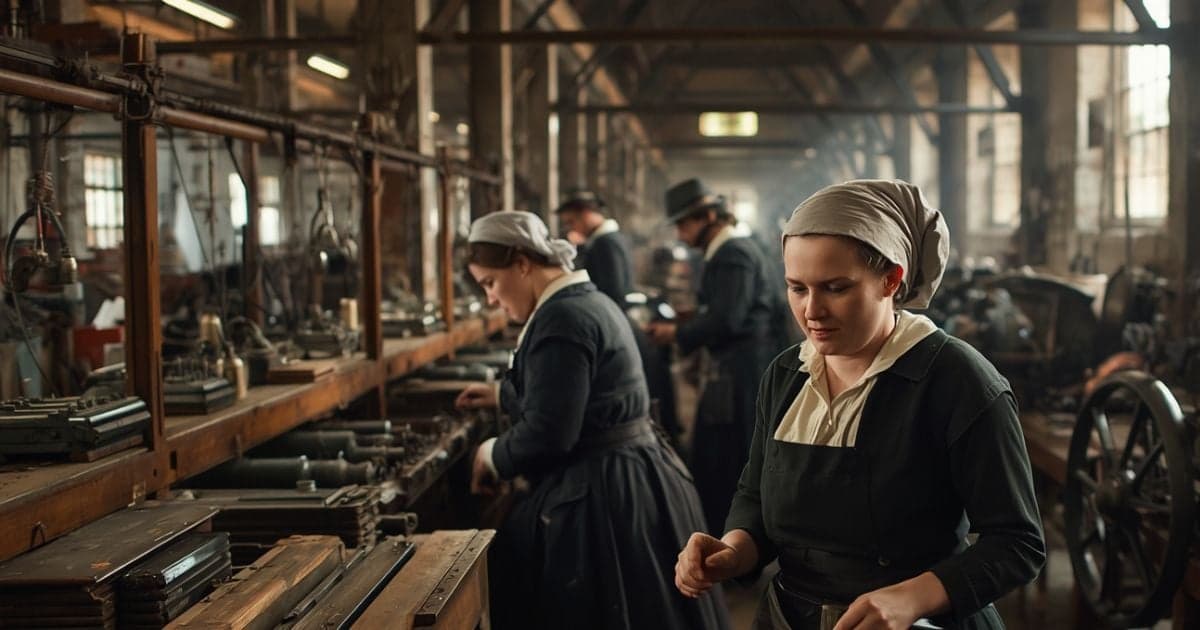
The real action happens in the 'hidden abode of production' - away from the polite, equal-seeming marketplace
Development
Introduced here as the difference between surface appearances and underlying mechanisms
In Your Life:
You might recognize this in how workplace culture looks collaborative in meetings but decisions are made behind closed doors
You now have the context. Time to form your own thoughts.
Discussion Questions
- 1
Marx describes the marketplace where workers and bosses meet as appearing 'equal and fair,' but says the real action happens in the 'hidden abode of production.' What's the difference between these two places?
analysis • surface - 2
Why does Marx say that even a kind, well-meaning boss still has to extract more value from workers than they pay them? What forces them into this position?
analysis • medium - 3
Where do you see this 'extraction disguised as exchange' pattern in your own life? Think about subscriptions, gig work, insurance, or even some personal relationships.
application • medium - 4
When you suspect you're in an extraction relationship disguised as partnership, what three questions should you ask to evaluate the real power dynamic?
application • deep - 5
Marx ends with the image of the worker 'bringing his own hide to market.' What does this reveal about how people can become complicit in their own exploitation?
reflection • deep
Critical Thinking Exercise
Map the Hidden Power Structure
Think of a recent 'deal' or arrangement in your life that felt fair at first but left you feeling like you got the short end. Draw or describe three layers: the surface presentation (how it was sold to you), the hidden mechanics (who really controls what), and the long-term flow of value (who benefits most over time).
Consider:
- •Look for who sets the rules versus who follows them
- •Notice who bears the risks if things go wrong
- •Pay attention to who captures most of the value created
Journaling Prompt
Write about a time when you realized you were in an unfair arrangement that had been presented as partnership. How did you recognize it, and what did you do about it?
Coming Up Next...
Chapter 7: How Bosses Turn Work Into Profit
Now Marx takes us behind the factory gates into that 'hidden abode of production' where the real magic happens. We'll see exactly how capitalists transform the labor-power they've bought into profits—and why this process creates the wealth gap that defines our world.