Wide Reads
Literature MattersLife IndexEducators
Sign in
Where to Begin
Das Kapital - The Battle for the Working Day

Karl Marx

Das Kapital

The Battle for the Working Day

Home›Books›Das Kapital›Chapter 10
Previous
10 of 33
Next

Summary

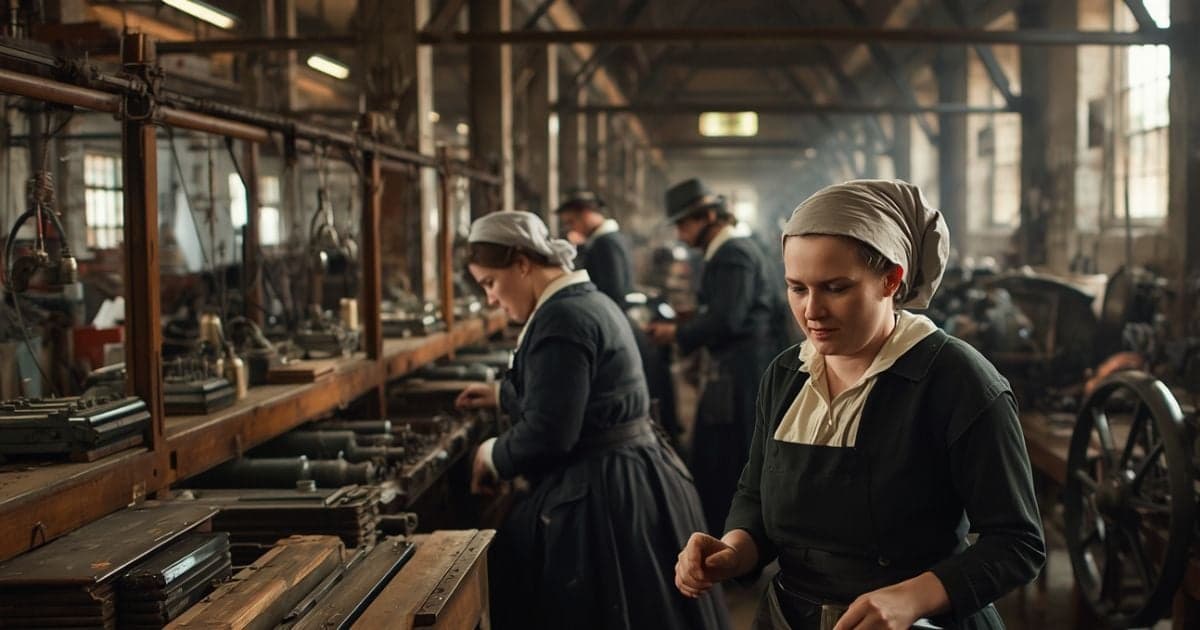
The longest and most powerful chapter in the book takes up a single question: who decides how long the working day is? The answer is not economics but struggle. The working day has a floor and a ceiling. The floor is necessary labour time: the hours required to reproduce the worker's labour-power. The ceiling is physical — a human body can only work so many hours before it breaks down. Between these limits, the length of the working day is indeterminate. The law of value does not fix it. Both the capitalist's claim — I have bought your labour-power for the day and am entitled to use it fully — and the worker's claim — I must preserve my health and humanity for tomorrow — are equally grounded in the logic of commodity exchange. 'Between equal rights, force decides.' The working day is the product of a power relation. Marx documents what this means in practice with factory inspection reports, parliamentary testimony, and medical surveys from 1840s–1860s England. Children worked from before dawn to after dark in potteries and lace-making; bakers worked through the night on rotating shifts with no day off; milliners worked 30-hour stretches during the London season; relay systems in textile mills were used to disguise illegal hours. The reports Marx cites are not polemical — they are official government documents, and they describe systematic destruction of workers' bodies and lives. The chapter then traces the history of the legal working day in England: from medieval statutes that fixed minimum hours of labour (to extract maximum work from labourers) through to the Factory Acts of 1833–1864, which fixed maximum hours after decades of working-class agitation. The Ten Hours Bill, passed in 1847, is presented not as capitalist benevolence but as a victory wrested from capital by organised workers and their political allies. The conclusion is precise: the normal working day was not discovered, it was won. Every hour that workers gained was the result of collective action against employers who fought each concession with legal manoeuvre, bribery, and the relay system. The history of the working day is the history of class conflict written in hours.

Coming Up in Chapter 11

Having established how capitalists extract surplus value through longer working days, Marx now turns to examine the mathematical relationship between the rate and total mass of surplus value—revealing the deeper mechanics of how wealth concentrates in fewer hands.

Share it with friends

Previous ChapterNext Chapter
GO ADS FREE — JOIN US
Original text
complete·33,792 words

THE WORKING DAY

1 / 12

Master this chapter. Complete your experience

Purchase the complete book to access all chapters and support classic literature

Read Free on GutenbergBuy at Powell'sBuy on Amazon

As an Amazon Associate, we earn a small commission from qualifying purchases at no additional cost to you.

Available in paperback, hardcover, and e-book formats

GO ADS FREE — JOIN US

Why This Matters

Connect literature to life

Skill: Reading Power Imbalances

This chapter teaches you to recognize when one party holds all the leverage in any negotiation or relationship.

Practice This Today

This week, notice when someone with power over you frames exploitation as 'opportunity'—employers calling unpaid overtime 'gaining experience,' landlords calling rent hikes 'market rates,' or insurance companies calling claim denials 'careful review.'

GO ADS FREE — JOIN US

Now let's explore the literary elements.

Key Quotes & Analysis

"Capital is reckless of the health or length of life of the laborer, unless under compulsion from society."

— Marx

Context: Explaining why workplace safety laws are necessary

This cuts through free-market mythology to reveal a harsh truth: businesses will sacrifice worker health and lives for profit unless forced to do otherwise. Marx shows this isn't personal evil but systemic logic.

In Today's Words:

Companies will work you to death unless laws stop them.

"The capitalist maintains his rights as a purchaser when he tries to make the working-day as long as possible. The laborer maintains his right as seller when he wishes to reduce the working-day to one of definite normal duration."

— Marx

Context: Describing the fundamental conflict over working hours

Marx reveals that both sides have legitimate claims under capitalism's own rules. This contradiction can only be resolved through power - whoever is stronger wins. Individual negotiation is meaningless.

In Today's Words:

Your boss wants to squeeze every hour out of you, you want a life - may the strongest side win.

"Between equal rights, force decides."

— Marx

Context: Explaining why worker organization is necessary

A stark recognition that legal rights mean nothing without power to enforce them. This explains why workers must organize collectively and why employers fight unions so fiercely.

In Today's Words:

Having rights on paper doesn't matter if you can't make them stick.

Thematic Threads

Power

In This Chapter

Capitalists use their control of jobs and capital to extract maximum labor from workers who have no alternative but to accept exploitative conditions

Development

Builds on earlier discussions of surplus value to show how power dynamics make exploitation structural, not personal

In Your Life:

You might recognize this in any situation where you need something more than the other party needs you—job interviews, medical care, housing.

Collective Action

In This Chapter

Workers only achieve the ten-hour day through organized struggle and legal intervention, not individual negotiation

Development

Introduced here as the solution to power imbalances revealed in earlier chapters

In Your Life:

This shows up when you realize that problems you thought were personal are actually shared by many others in similar situations.

Systematic Exploitation

In This Chapter

Child labor, dangerous working conditions, and worker deaths result from systemic incentives, not individual cruelty

Development

Expands from earlier focus on surplus value extraction to show its human costs

In Your Life:

You might see this in how healthcare, education, or workplace policies seem designed to benefit institutions rather than people.

Legal Protection

In This Chapter

Factory Acts represent external intervention necessary to prevent the worst abuses of unchecked power

Development

Introduced here as evidence that regulation can work when properly enforced

In Your Life:

This appears whenever you rely on workplace safety rules, consumer protections, or tenant rights that exist because someone fought for them.

False Choice

In This Chapter

Workers are told they freely choose their working conditions, but the alternative is starvation

Development

Builds on earlier analysis of 'free' labor markets to expose their coercive nature

In Your Life:

You encounter this when presented with options that aren't really options—like choosing between expensive healthcare and going without.

GO ADS FREE — JOIN US

You now have the context. Time to form your own thoughts.

Discussion Questions

  1. 1

    Why did factory owners want workers to work 16+ hour days, even when it made workers sick and exhausted?

    analysis • surface
  2. 2

    Marx shows how individual workers couldn't negotiate fair hours on their own. What made it impossible for a single worker to demand better conditions?

    analysis • medium
  3. 3

    Where do you see this same pattern today—one side holding all the power while the other side has to accept whatever terms are offered?

    application • medium
  4. 4

    The English workers only got the 10-hour day through collective action and laws. When you're dealing with a power imbalance in your own life, what strategies could level the playing field?

    application • deep
  5. 5

    Marx argues that exploitation isn't about evil people but about system pressures. How does this change how you think about conflicts in your workplace or community?

    reflection • deep

Critical Thinking Exercise

10 minutes

Map the Power Dynamic

Think of a situation where you felt you had no choice but to accept unfair terms—a job, rental agreement, medical situation, or family dynamic. Draw two columns: what power/resources the other side had, and what power/resources you had. Then brainstorm what external forces could have changed that balance.

Consider:

  • •Power isn't just money—it includes time, information, alternatives, and desperation levels
  • •Look for patterns: does one side always have more options than the other?
  • •Consider what collective action or outside intervention could shift the dynamic

Journaling Prompt

Write about a time when you felt trapped by a power imbalance. What would you do differently now, knowing that individual fairness often requires collective strength?

GO ADS FREE — JOIN US

Coming Up Next...

Chapter 11: The Math of Exploitation

Having established how capitalists extract surplus value through longer working days, Marx now turns to examine the mathematical relationship between the rate and total mass of surplus value—revealing the deeper mechanics of how wealth concentrates in fewer hands.

Continue to Chapter 11
Previous
The Rate of Surplus-Value
Contents
Next
The Math of Exploitation

Continue Exploring

Das Kapital Study GuideTeaching ResourcesEssential Life IndexBrowse by ThemeAll Books

You Might Also Like

Jane Eyre cover

Jane Eyre

Charlotte Brontë

Explores personal growth

Great Expectations cover

Great Expectations

Charles Dickens

Explores personal growth

The Strange Case of Dr Jekyll and Mr Hyde cover

The Strange Case of Dr Jekyll and Mr Hyde

Robert Louis Stevenson

Explores personal growth

Don Quixote cover

Don Quixote

Miguel de Cervantes Saavedra

Explores personal growth

Browse all 47+ books
GO ADS FREE — JOIN US

Share This Chapter

Know someone who'd enjoy this? Spread the wisdom!

TwitterFacebookLinkedInEmail

Read ad-free with Prestige

Get rid of ads, unlock study guides and downloads, and support free access for everyone.

Subscribe to PrestigeCreate free account
Intelligence Amplifier
Intelligence Amplifier™Powering Wide Reads

Exploring human-AI collaboration through books, essays, and philosophical dialogues. Classic literature transformed into navigational maps for modern life.

2025 Books

→ The Amplified Human Spirit→ The Alarming Rise of Stupidity Amplified→ San Francisco: The AI Capital of the World
Visit intelligenceamplifier.org
hello@widereads.com

WideReads Originals

→ You Are Not Lost→ The Last Chapter First→ The Lit of Love→ Wealth and Poverty→ 10 Paradoxes in the Classics · coming soon
Arvintech
arvintechAmplify your Mind
Visit at arvintech.com

Navigate

  • Home
  • Library
  • Essential Life Index
  • How It Works
  • Subscribe
  • Account
  • About
  • Contact
  • Authors
  • Suggest a Book
  • Landings

Made For You

  • Students
  • Educators
  • Families
  • Readers
  • Literary Analysis
  • Finding Purpose
  • Letting Go
  • Recovering from a Breakup
  • Corruption
  • Gaslighting in the Classics

Newsletter

Weekly insights from the classics. Amplify Your Mind.

Legal

  • Privacy Policy
  • Terms of Service
  • Cookie Policy
  • Accessibility

Why Public Domain?

We focus on public domain classics because these timeless works belong to everyone. No paywalls, no restrictions—just wisdom that has stood the test of centuries, freely accessible to all readers.

Public domain books have shaped humanity's understanding of love, justice, ambition, and the human condition. By amplifying these works, we help preserve and share literature that truly belongs to the world.

A Pilgrimage

Powell's City of Books

Portland, Oregon

If you ever find yourself in Portland, walk to the corner of Burnside and 10th. The building takes up an entire city block. Inside is over a million books, new and used on the same shelf, organized by color-coded rooms with names like the Rose Room and the Pearl Room. You can lose an afternoon. You can lose a weekend. You will find a book you have been looking for your whole life, and three you did not know existed.

It is a pilgrimage. We cannot find a bookstore like it anywhere on earth. If you read the classics, and you ever get the chance, go. It belongs on every reader's bucket list.

Visit powells.com

We are not in any way affiliated with Powell's. We are just a very big fan.

© 2026 Wide Reads™. All Rights Reserved.

Intelligence Amplifier™ and Wide Reads™ are proprietary trademarks of Arvin Lioanag.

Copyright Protection: All original content, analyses, discussion questions, pedagogical frameworks, and methodology are protected by U.S. and international copyright law. Unauthorized reproduction, distribution, web scraping, or use for AI training is strictly prohibited. See our Copyright Notice for details.

Disclaimer: The information provided on this website is for general informational and educational purposes only and does not constitute professional, legal, financial, or technical advice. While we strive to ensure accuracy and relevance, we make no warranties regarding completeness, reliability, or suitability. Any reliance on such information is at your own risk. We are not liable for any losses or damages arising from use of this site. By using this site, you agree to these terms.