Master this chapter. Complete your experience
Purchase the complete book to access all chapters and support classic literature
As an Amazon Associate, we earn a small commission from qualifying purchases at no additional cost to you.
Available in paperback, hardcover, and e-book formats
Why This Matters
Connect literature to life
This chapter teaches how to spot when collective effort creates extra value that gets captured by whoever controls the coordination.
Practice This Today
This week, notice when teamwork at your job creates results that exceed individual contributions - then track who gets credited and compensated for that success.
Now let's explore the literary elements.
Key Quotes & Analysis
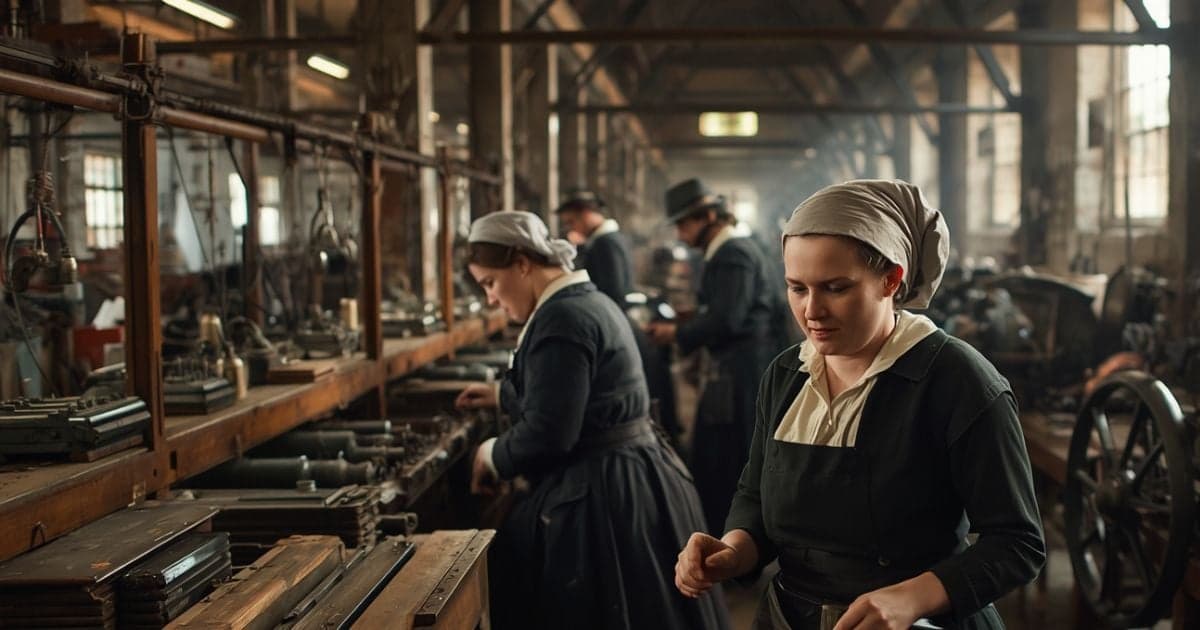
"A greater number of labourers working together, at the same time, in one place, in order to produce the same sort of commodity under the mastership of one capitalist, constitutes, both historically and logically, the starting-point of capitalist production."
Context: Marx is defining what makes capitalism different from earlier forms of work organization
This quote captures the essence of how capitalism transforms work from individual craft to collective production under private ownership. The key is that workers cooperate, but the capitalist controls and profits from that cooperation.
In Today's Words:
Capitalism really starts when a boss gets a bunch of people working together in one place to make the same thing, and keeps the profits.
"The number of workmen in itself does not affect, either the rate of surplus-value, or the degree of exploitation of labour-power."
Context: Explaining that simply having more workers doesn't automatically mean more exploitation per worker
Marx is making a crucial distinction - having 100 workers instead of 10 doesn't mean each worker is exploited ten times more. The rate of exploitation per worker can stay the same even as total profits increase.
In Today's Words:
Having more employees doesn't necessarily mean you're screwing over each one worse - you're just screwing over more people at the same rate.
"When numerous labourers work together side by side, whether in one and the same process, or in different but connected processes, they are said to co-operate, or to work in co-operation."
Context: Defining cooperation as a technical economic term, not just people being nice to each other
Marx distinguishes between casual teamwork and systematic cooperation that creates new productive power. This isn't about friendship - it's about how working together creates capabilities no individual possesses.
In Today's Words:
Real cooperation isn't just being friendly - it's when people working together can accomplish things none of them could do alone.
Thematic Threads
Class
In This Chapter
The structural division between workers who create collective value and capitalists who capture it through ownership of coordination
Development
Deepens from earlier chapters by showing how class division operates through control of cooperation itself
In Your Life:
You might notice how management captures the value your team creates while paying you individually
Identity
In This Chapter
Workers lose individual identity when absorbed into the capitalist's organized production machine
Development
Builds on alienation themes by showing how cooperation itself becomes a tool of identity erasure
In Your Life:
You might feel like just a cog in the machine when your individual skills get absorbed into team processes
Power
In This Chapter
The capitalist's power comes not from individual ability but from controlling how others cooperate
Development
Expands power analysis to show it operates through coordination rather than just ownership
In Your Life:
You might recognize how supervisors gain power by controlling how your team works together
Human Relationships
In This Chapter
Cooperation becomes a relationship mediated by capital rather than direct human connection
Development
Introduces how capitalism transforms natural human cooperation into a profit-generating mechanism
In Your Life:
You might notice how workplace teamwork feels different from family cooperation because someone else profits from it
You now have the context. Time to form your own thoughts.
Discussion Questions
- 1
Why does Marx say twelve people working together accomplish more than twelve people working separately, even for the same number of hours?
analysis • surface - 2
Who benefits when workers cooperate effectively, and why does this matter for understanding workplace dynamics?
analysis • medium - 3
Think about your workplace or a group project you've been part of. Where do you see this pattern of collective effort creating extra value that gets captured by whoever controls the coordination?
application • medium - 4
If you understand that teamwork creates bonus value that often flows to coordinators, how would you position yourself differently in group situations?
application • deep - 5
What does this chapter reveal about the difference between creating value and capturing value in human relationships?
reflection • deep
Critical Thinking Exercise
Map Your Cooperation Value
Think of a recent group effort you participated in - a work project, family event, volunteer activity, or community effort. Map out what each person contributed individually versus what the group accomplished together. Then identify who captured the extra value that cooperation created and how they positioned themselves to do so.
Consider:
- •Look for the gap between individual contributions and collective results
- •Notice who organized or coordinated the effort versus who did the work
- •Consider whether the extra value was shared fairly or concentrated
Journaling Prompt
Write about a time when you felt your teamwork created significant value but you didn't benefit proportionally. What would you do differently now to either capture more of that value or ensure it was shared more equitably?
Coming Up Next...
Chapter 14: Division of Labor and Manufacture
Having shown how cooperation amplifies labor's power, Marx next examines how capitalists organize this cooperation through the division of labor and manufacturing - breaking complex work into specialized parts that transform both the production process and the workers themselves.