
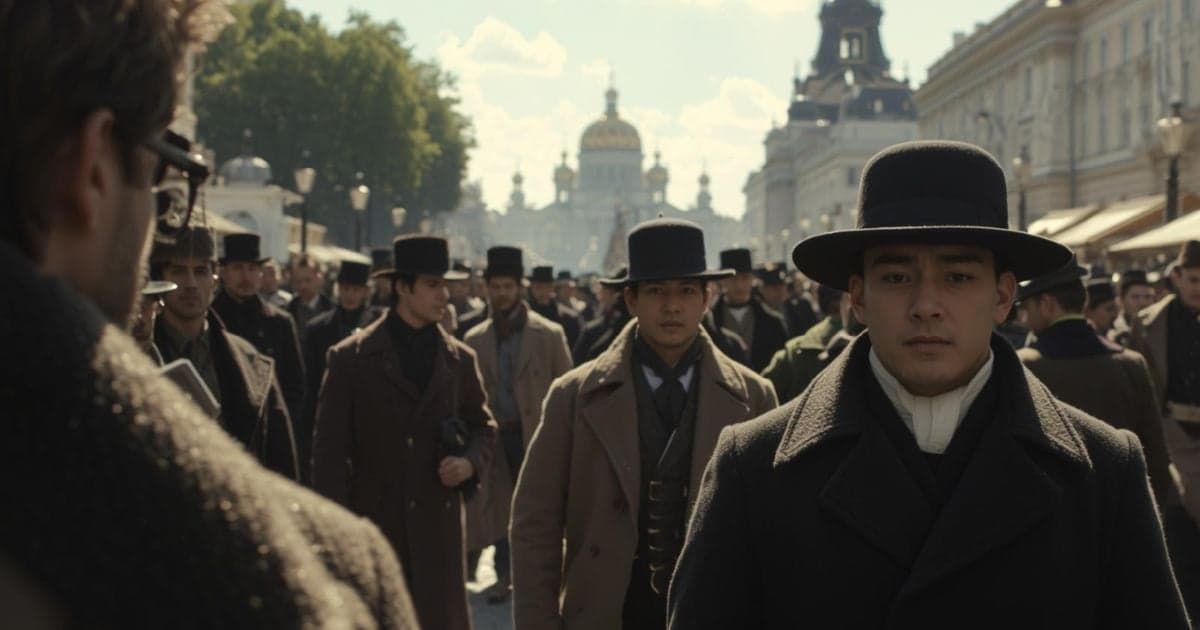
Navigating Redemption Through Truth
A True Sentence Without a Better Excuse
Sonya does not offer Raskolnikov a finer theory of extraordinary men. She reads Lazarus in a room that smells of rented poverty. Four days dead, come out. He asked for the story. He is not ready to be the story. Redemption in this novel is not insight. It is a plot that will not run on Napoleon any longer, and that has to be spoken in a voice that can be heard by someone who loved the second victim.
Porfiry already knows. Surrender and confess, he says, as if the remaining task were administrative. It is not. It is the death of the editor. In the Hay Market Sonia's instruction waits: kiss the earth, say murderer to the world. He manages the knees and fails the shout. At the station he manages the names. Lizaveta is in the sentence. Without her the confession would still be the old math: one louse, one experiment.
The epilogue refuses a clean halo. He can serve eight years and still call the past a blunder. Then the kiln, the river, the knees, the book under the pillow. Lazarus has been waiting in the luggage. Transformation here is not a mood you achieve. It is a truth you stop improving.
The Central Lesson
Redemption in Crime and Punishment is Lazarus read aloud, a detective who will not chase anymore, a Hay Market bow that almost fails, a station sentence that includes the sister, and a book under a pillow that stays shut until the knees give out. You cannot construct a better excuse and call it change. The true sentence is the one that no longer needs you to be extraordinary.
Applying This to Your Life
Read the Story You Cannot Spin
Sonya will not debate the article. She reads a raising. If you are stuck in a better excuse, pick one account of what you did that a harmed person would recognize, and sit with it without adding context. Context is often the tomb.
Say the Names, Not the Framework
The station line names Alyona and Lizaveta and the axe. It does not mention Napoleon. When you apologize or disclose, lead with who was hurt and what you did. If the first sentence is why you are complicated, you are still in the garret.
Allow the Slow Ending
The river comes after the trial. Do not demand to feel new the week you tell the truth. Keep the next ordinary promise: show up, work, stop rewriting. Redemption that needs to look finished in public is another performance.
Other lessons in this book
More life-skill deep dives from the same classic.
Confronting Consequences vs. Theorizing Them
Distinguish between imagining outcomes and experiencing their full weight
4 chapters·Explore AnalysisReading the Warning Signs of Isolation
Understand how disconnection from community amplifies dangerous thinking patterns
4 chapters·Explore AnalysisRecognizing Dangerous Rationalization
Identify when intellectual justifications are masking harmful behavior before thought becomes action
4 chapters·Explore AnalysisRecognizing When Pride Prevents Confession
Understand how ego keeps you trapped in lies that are destroying you from within
4 chapters·Explore AnalysisUnderstanding the Psychology of Guilt
See how conscience operates through lived experience, not abstract principles
4 chapters·Explore Analysis
Continue exploring
Explore this theme
The same lessons in other books
See how other books teach the same life skills.

Les Misérables: Essential Edition
Navigating Poverty and Social ClassTrace Fantine from 1817 hope to factory gossip, and the class that treats need as indictment.
The Jungle
Reading Graft as Everyday GovernmentStay with Duane's cell and chapter 25: votes, inspectors, and a city that prices justice.
The Essays of Montaigne
Choosing Real FriendshipHear essay 27 answer La Boétie: because it was he, because it was I.
Where the lesson lives in the book
Where Is the Story of Lazarus
In the rented room on the canal he asks, suddenly, where the story of Lazarus is. Sonia looks at the ground. She reads. A man four days dead is called out. The scene is not decoration. Raskolnikov has been living as if the essay could keep a soul in the tomb and still call the tomb a laboratory. The reading does not convert him. It names the only plot left: something has to come out that the theory buried.
Key Insight:
Redemption starts as a story you cannot improve. Lazarus is not an excuse. It is a demand that the dead thing speak instead of the brief that killed it.
“Where is the story of Lazarus?”
Surrender Is the Remaining Task
Porfiry comes to the room, names him, and stops hunting. The proposition is that he should surrender and confess. It will be infinitely more to his advantage, and to the detective's, because the task will be done. Pride hears a trap. The line is actually a map: the remaining work is not to outplay the office. It is to stop using the office as a reason not to speak.
Key Insight:
A better excuse is still an excuse. Porfiry can wait because time favors the sentence, not the performance. Transformation requires a truth that does not come with a new theory attached.
“you should surrender and confess”
The Earth, Then the Station
He comes for Sonia's wooden peasant cross. She has told him to go to the cross-roads, bow, kiss the earth, for he has sinned against it too, and say to the whole world, I am a murderer. In the Hay Market the phrase dies on his lips under mockery, but the knees still go. At the office the water is refused. Softly, brokenly, distinctly: it was I killed the old pawnbroker woman and her sister Lizaveta with an axe and robbed them.
Key Insight:
Public speech kills the last edit. You can kneel and still choke on murderer. The station line does not improve the crime. It stops the lie that the crime is still a draft.
“It was I killed the old pawnbroker woman and her sister Lizaveta with an axe and robbed them.”
The Book Under the Pillow
He does not repent in the first Siberian months. Then they send him to the river bank to pound alabaster. Something seizes him and flings him at Sonia's feet. He weeps and throws his arms round her knees. Under the pillow lies the New Testament, hers, the Lazarus book. He takes it up mechanically. Life steps into the place of theory, not as a prize for having suffered enough, but as what arrives when the performance finally drops.
Key Insight:
Authentic change is slow and unfinished on purpose. Dostoevsky will not sell a converted evening. He sells a man who can at last hold the book without turning it into another article.
“He wept and threw his arms round her knees.”