
Reading the Warning Signs of Isolation
When the Room Becomes the Only Court
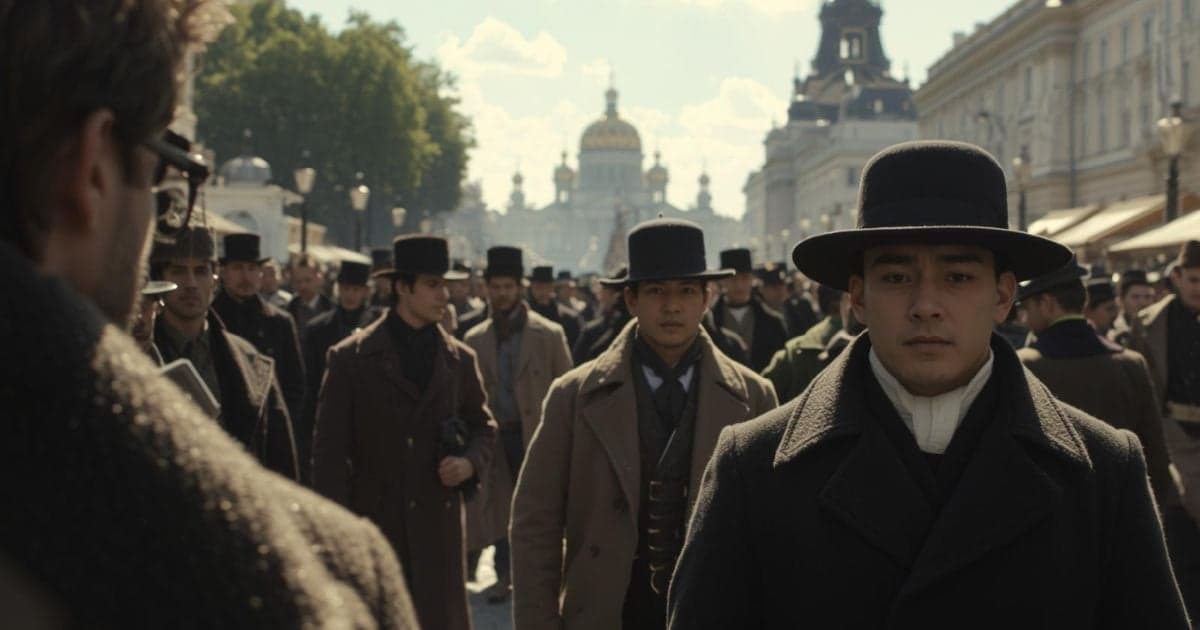
Petersburg is crowded. Raskolnikov is not. The garret is coffin-shaped, the landlady is an enemy to dodge, the walk to the pawnbroker is a private experiment. Isolation here is not quiet recovery. It is a jurisdiction. Inside it, seven hundred and thirty steps can feel like a proof because nothing in the room is allowed to vote no.
The mare dream almost votes. A child screams and a father pulls him away. He wakes, and the second voice is missing. After the axe the missing voice becomes policy: flash, chill, hidden threads, a door that still shuts. Razumihin knocks later. The first night does not include him. Guilt wants a witness. Isolation withholds the witness and calls that strength.
By the strange period after Katerina's death he can walk a city of mouths and still file every thought as if the garret were the Supreme Court. Sonya exists. Pulcheria exists. He keeps the docket internal. The warning sign of isolation is not an empty calendar. It is a full city used as scenery while the only admissible mind remains your own.
The Central Lesson
Isolation in this novel is a coffin garret, a dream that expires without a hearer, a fever behind a shut door, and a later wandering that refuses every available court. A terrible plan feels like proof when no one can test it. The warning is not loneliness as mood. It is a life that has stopped admitting other minds as evidence.
Prestige deep dive
A Psychological Reading of Crime and Punishment
Crime and Punishment shows a man who builds a theory so murder can feel like proof that he is extraordinary, then finds that an unplanned death, an unopened purse, and a woman who asks what he has done to himself will not let the theory survive as truth.
Read the full psychological readingApplying This to Your Life
Notice When Solitude Stops Being Rest
Rest restores you to other people. A closed court rehearses a verdict. If your best ideas only survive in the hours when no one can reply, schedule a reply before you act. Raskolnikov's staircase needed a classmate more than it needed another count.
Keep One Witness for the Bad Dream
The mare almost stopped him. Almost is what happens when you wake alone. Tell one trusted person the image that will not leave, without the theory that makes it noble. If you cannot tell it, you already know it is not a thought experiment.
Use the People You Already Have
Late isolation is a choice. He had Sonia and still wandered as if the room were mandatory. Name the person you are treating as scenery. Ask them one factual question about the plan you have been polishing alone. Let the answer into the file.
Other lessons in this book
More life-skill deep dives from the same classic.
Confronting Consequences vs. Theorizing Them
Distinguish between imagining outcomes and experiencing their full weight
4 chapters·Explore AnalysisNavigating Redemption Through Truth
Learn that authentic transformation requires confronting reality, not constructing better excuses
4 chapters·Explore AnalysisRecognizing Dangerous Rationalization
Identify when intellectual justifications are masking harmful behavior before thought becomes action
4 chapters·Explore AnalysisRecognizing When Pride Prevents Confession
Understand how ego keeps you trapped in lies that are destroying you from within
4 chapters·Explore AnalysisUnderstanding the Psychology of Guilt
See how conscience operates through lived experience, not abstract principles
4 chapters·Explore Analysis
Continue exploring
Explore this theme
The same lessons in other books
See how other books teach the same life skills.

Les Misérables: Essential Edition
Navigating Poverty and Social ClassTrace Fantine from 1817 hope to factory gossip, and the class that treats need as indictment.
The Jungle
Reading Graft as Everyday GovernmentStay with Duane's cell and chapter 25: votes, inspectors, and a city that prices justice.
The Essays of Montaigne
Choosing Real FriendshipHear essay 27 answer La Boétie: because it was he, because it was I.
Where the lesson lives in the book
The Coffin That Thinks
He slips out of a coffin-like garret, behind on rent, half-starved, treating the counted walk as evidence. No landlady, no classmate, no mother in the room. Isolation does the first work of the crime: it makes the plan feel like a discovery instead of a temptation. A closed court with one juror will always return the verdict the juror needs.
Key Insight:
The first warning sign is not the theory. It is furniture that no longer has to answer to anyone. When solitude stops being rest and starts being the only admissible room, the idea is already testing you.
“Taking a new step, uttering a new word is what they fear most....”
The Dream with No Witness
He catches himself planning Razumihin not today but the day after It, when everything will begin afresh. The thought shocks him. Then the mare. A child, a father, a cart, a property shout. He wakes alone. The city does not argue back. Conscience can still speak in isolation. What isolation removes is the second voice that would keep the first one from fading.
Key Insight:
A nightmare is a visitor. A room that lets the visitor expire without a conversation is the danger. Isolation does not create the image. It starves the image of a hearer.
“Father! Why did they... kill... the poor horse!”
Fever with the Door Shut
He wakes on the sofa past two and the evening returns in one flash. Blood, threads, hiding. Razumihin will later try to pull him into ordinary work. The first hours after the axe belong to a man who has no one to tell and nowhere to put the act except back inside his own head. The room is still a coffin. Now it is a locked exhibit.
Key Insight:
After a violation, solitude stops being privacy. Speech is the only form that can leave the room. Isolation keeps the knowledge as a private museum, which is how it keeps growing.
“All at once, in one flash, he recollected everything.”
The Strange Period
After Katerina Ivanovna's death the dates blur. He wanders, permanently thinking of Svidrigailov after those words in Sonia's room, still not speaking the sentence that would end the closed circuit. The city is full of people. He is still in the garret. This isolation is worse because it is chosen: mother, sister, Razumihin, Sonia exist. He treats his own head as the only court that counts.
Key Insight:
Late isolation is not lack of company. It is the refusal to let company become a court. When you have people and still file every motion internally, the warning sign has become the sentence.