
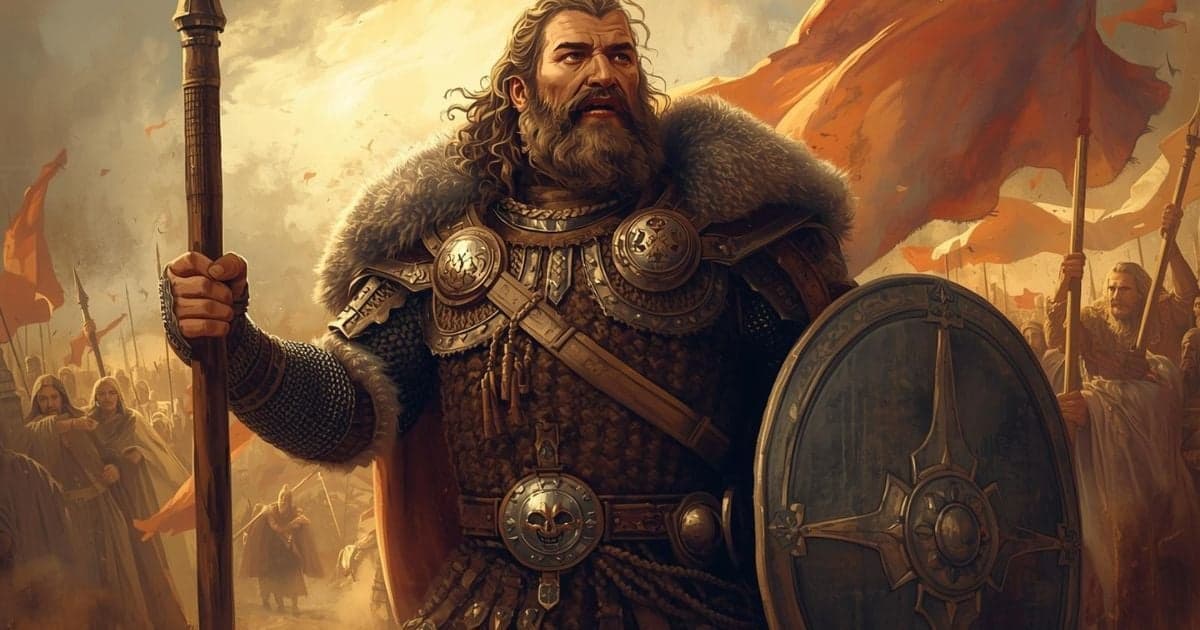
They make him a shield meant for this heat alone. That smithing is already a confession. Grendel's arm was a young man's problem. Dragonfire is what you admit when the old method will not be enough and you go anyway. Wyrd has been in the poem since the first funeral ship: an hour you meet well or badly, and cannot cancel. The old king still walks out. The iron is the tell. He knows this is different.
The worm is cut. The poison is already working. Wounded and war-sick, he asks to look at gold he will not spend, because he needs the last act to have bought something for the people he served. Wealth can easily turn to vanity. He looks anyway, then puts the collar on Wiglaf while he can still speak. A messenger reaches the men who waited at the edge. The free-giving friend-lord is fast in his death-bed. Then comes the list: every enemy who feared that body and will not fear a grave.
The Geats call him kindest of kings under heaven, which is a different praise from strongest. Kindness is what they can still use. Strength is what just ended. Mortality in this poem is not a surprise beast. It is the bill for a career spent being the answer, and the test is whether the last hours match the life: a successor named, a war list faced without lying, a mound that orients after the smoke is gone.
The Central Lesson
The dragon at the end of Beowulf is a shield forged for a fire the old method cannot take, gold looked at and not kept, a collar passed while the wound is still talking, and a messenger already listing the wars that start when a deterrent dies. Wyrd is not permission to sit still. It is the poem's word for a limit you will meet in character or out of it. Kindest, they say, not strongest. That is the praise that still works after the body does not.
Applying This to Your Life
Notice When the Old Method Is a Cage
Beowulf's answer to every threat has been personal presence. That answer built a kingdom and then left it fragile. If your worth is still 'I will handle it,' ask what happens to the people behind you when you cannot. Mortality is not only a date. It is a method that will one day fail.
Say the Transfer While You Can Still Speak
The collar in Wiglaf's hand is a leadership act, not a souvenir. Name the person, the duty, and the treasure that is not yours to keep. A deathbed that only settles your feelings leaves the hall with a rumor instead of a charge.
Build the Thing That Still Works After You
The Geats do not write a biography. They raise a mound sailors can use. Ask what will still orient people when your name is only a story: a standard, a successor, a practice. Grief is not the product. Use is.
Other lessons in this book
More life-skill deep dives from the same classic.
Stepping Up When Others Run
Stay when the room flees: crisis reveals who actually has the will to lead
5 chapters·Explore AnalysisThe Earned Authority Loop
Build real authority through action, generosity, and proving yourself when action is costly
13 chapters·Explore AnalysisThe Only Way Through Is Through
Step forward when others step back: earn the right to act, deliver results, and go back in when the job isn't done
15 chapters·Explore AnalysisWhat You Leave Behind
Distinguish legacy from reputation: what people do differently because you existed
8 chapters·Explore AnalysisWhen Victory Opens the Next Threat
Recognise how winning creates the conditions for your next failure if you stop paying attention
10 chapters·Explore Analysis
Continue exploring
Explore this theme
The same lessons in other books
See how other books teach the same life skills.
Hamlet
Distinguishing Truth from DeceptionTest a ghost, a play within a play, and a story that only Horatio will carry out.Hamlet
Paralysis in Decision-MakingWatch the ghost's charge, the play that proves the king, and the prayer Hamlet will not interrupt.
The Consolation of Philosophy
Reading Fortune's TermsHear Book II name the job: Fortune gives and takes, and a wheel that only rose would not be a wheel.
Where the lesson lives in the book
The Sermon on What Fades
Hrothgar warns Beowulf that strength and life-vigor do not last: illness, blade, fire, age, or darkness will take even the world-famous champion. The old king speaks from fifty years of rule interrupted by Grendel. Mortality here is counsel offered while the hero still feels invincible.
Key Insight:
The limit is easier to hear from someone who has already been humbled by it. Do not wait for your own dragon to believe that strength is a lease, not a deed.
“But a little-while lasts thy life-vigor's fulness”
The Hall Already Burning
The dragon's fire reaches Beowulf's own kingdom and destroys his great hall. The king who saved others' buildings now watches his own smoke rise. The threat he deferred by being the answer everywhere has finally arrived at home.
Key Insight:
Mortality arrives as a change in venue. The crisis you thought belonged to other halls will eventually test the house you kept standing by personal force.
Last Reflection Before the Barrow
Beowulf senses this fight may finish him. He speaks of his life, his people, and the road he has walked. The shield forged for dragonfire is already an admission that the old body cannot meet this enemy with the old ease.
Key Insight:
When you know the odds have turned, clarity matters more than swagger. Name what you are protecting before you walk in.
“as Fate decreeth”
The Shield Made for Fire
Beowulf has kept the Geats for fifty winters. A dragon burns what he kept. He will not send a substitute. Fate, he says, will decree, and he goes with a shield built for this heat, which is already a confession that the old fights are not this fight. His men speed to the forest. The man who has been the answer to impossible problems is now the problem his people cannot replace.
Key Insight:
Mortality first appears as a method that no longer fits. The identity that served you becomes the cage that spends you.
“as Fate decreeth”
Gold Looked At, Collar Given
Wounded and war-sick, Beowulf asks to see the treasure on the bottom, not to keep it but to know the last act bought something for his people. Wealth, the poem says, can easily turn to vanity. He still looks. Then he gives the gold collar to Wiglaf. The dying king's last clear work is transfer: of metal, of office, of the story the hall will tell.
Key Insight:
Facing a limit well is not dying without fear. It is settling the account and naming the person who will carry what you can no longer hold.
“Wealth can easily”
Beside the Dead Dragon
Wiglaf sits with the dying Beowulf while the cowards begin to return. The king's breath is failing and the poison is already the story's last measure. Mortality here is not abstract wyrd. It is a young man watching the body that held a kingdom stop.
Key Insight:
The end is often smaller than the legend. One person breathing out while another stays is how most limits actually arrive.
“fast in his death-bed”
The News That Unmakes a Peace
A messenger reaches the men who waited at the edge. The free-giving friend-lord of the Weders is fast in his death-bed. Wiglaf is sitting with what is left. The speech that follows is not only grief. It is a list of old enemies who feared Beowulf's body and will not fear a barrow. One death ends a deterrent. A season of strife is already on the road.
Key Insight:
A life of service leaves a hole the shape of what it held back. You only see the full weight of a presence when the messenger has to say it is gone.
“fast in his death-bed”
The Wars the Messenger Names
The messenger continues his prophecy, recounting old battles between Geats and Swedes. Beowulf's body was a peace that enemies respected. Without it, the poem says, the old feuds will wake. Mortality is political as soon as the strong man is gone.
Key Insight:
Your absence has a shape in other people's plans. The limit of one life can reopen every account your presence kept closed.
A Beacon, Not a Biography
The Geats raise the largest of dead-fires, then a hill on the height, high and extensive, of sea-going sailors. They praise him as kindest of kings under heaven. The gold in the barrow is as useless to mortals as it was in the dragon's house. What they keep is a landmark. Sailors who never heard the swimming-match will still steer by the mound.
Key Insight:
The poem's last image of a death is not triumph. It is a community turning grief into orientation: a point on the coast that still works after the smoke is gone.
“kindest of kings under heaven”