
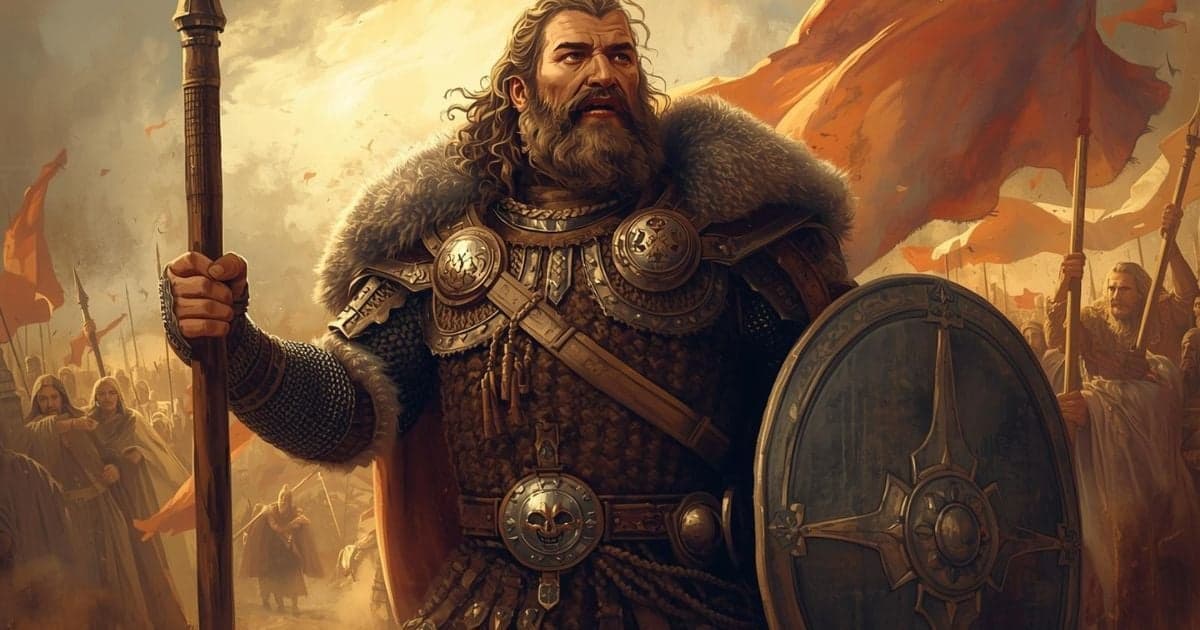
Wiglaf does not make a speech first. He minds the holding Beowulf once gave him, the folk-rights, the weapons, and his hand seizes the yellow shield. The forest is still an available idea. Kin-love, the poem has already said, is not a substitute for this. Gratitude that stays in memory is only a souvenir. He converts it into motion while the smoke is still a choice.
Hrothgar named the same gap decades earlier, before any Geat had gripped Grendel. His war-band was waned, his hall-troop wasted. Fees had compounded feuds and still not kept the night. The Danes who swore over ale were a count of empty benches by morning. The poem wanted you to know the pattern before the dragon, so that Wiglaf would not look like a miracle. He looks like the one man who treated a gift as a debt.
His head is unguarded. The hand is consumed. He strikes the worm lower so the old king can cut. So a liegeman should prove him, a thaneman when needed. Afterward the men who chose the trees come back, and Wiglaf does not offer them a verse. Many an earlman must sorrow on one man's account. Then he orders the fire. Authority after a crisis is paperwork. Authority during it was the walk. The room later agrees because it has no other honest story.
The Central Lesson
Stepping up when others run, in Beowulf, is a homestead remembered as a debt, a yellow shield taken while the trees are still an option, a burned hand that lets the last cut happen, and a young thane who will not share the story with men who returned for the ending. Hrothgar had already counted empty benches. Wiglaf is not a surprise. He is the one who treated a gift as payable in heat. The poem gives the room to that walk, and it does not ask the forest to vote.
Prestige deep dive
A Psychological Reading of Beowulf
Beowulf shows a self that stays real only while a hall can retell it, and the grief, second attack, and ageing body that collect the cost.
Read the full psychological readingApplying This to Your Life
Watch Who Chooses the Forest
Hrothgar already knew which promises dissolved by morning. In a crisis, ignore the loudest toast from last quarter. Watch who is still in the room when staying has a cost. That list is shorter than the org chart, and it is the only list that matters that day.
Convert the Gift into Motion
Wiglaf remembers land and weapons, then moves. Gratitude that never becomes action is a speech. If someone invested in you, the repayment is rarely a card. It is showing up when they cannot carry the heat alone.
Stay Without Needing the Song
Wiglaf's hand burns so Beowulf can finish the cut. You may not get the title that night. You may get the wound that lets the work complete. The people who ran will still know who to follow when they come back. That knowledge is the promotion.
Other lessons in this book
More life-skill deep dives from the same classic.
The Dragon at the End
Face mortality when strength fades and transfer what matters before the end
9 chapters·Explore AnalysisThe Earned Authority Loop
Build real authority through action, generosity, and proving yourself when action is costly
13 chapters·Explore AnalysisThe Only Way Through Is Through
Step forward when others step back: earn the right to act, deliver results, and go back in when the job isn't done
15 chapters·Explore AnalysisWhat You Leave Behind
Distinguish legacy from reputation: what people do differently because you existed
8 chapters·Explore AnalysisWhen Victory Opens the Next Threat
Recognise how winning creates the conditions for your next failure if you stop paying attention
10 chapters·Explore Analysis
Continue exploring
Explore this theme
The same lessons in other books
See how other books teach the same life skills.
Hamlet
Distinguishing Truth from DeceptionTest a ghost, a play within a play, and a story that only Horatio will carry out.Hamlet
Paralysis in Decision-MakingWatch the ghost's charge, the play that proves the king, and the prayer Hamlet will not interrupt.
The Consolation of Philosophy
Reading Fortune's TermsHear Book II name the job: Fortune gives and takes, and a wheel that only rose would not be a wheel.
Where the lesson lives in the book
A King Who Names the Empty Benches
Hrothgar welcomes Beowulf and tells the truth the hall already knows: his war-band is waned, his hall-troop wasted. He had compounded feuds with fees. Fees did not keep Grendel out. The Danes who should have held Heorot by night are a count of absences. Before the Geat fights, the old king has already distinguished performed courage from bodies in the morning.
Key Insight:
Crisis exposes the gap between people who talk loyalty and people who are still in the building when the cost arrives.
“Waned is my war-band, wasted my hall-troop”
Ten Men Choose the Trees
Wiglaf sees his lord under helmet and visor in the heat. He minds the holding Beowulf once gave him, the homestead and the folk-rights, and his hand seizes the target. The others speed to the forest. Kin-love, the poem has already said, can never be a substitute for this. One young thane walks toward the fire because the gifts in his memory are a debt, not a souvenir.
Key Insight:
True loyalty shows when retreat is rational. Wiglaf does not wait to be ordered. He converts gratitude into motion while the smoke is still a choice.
“minded the holding that erst he had given him”
The Hand That Goes In Uncovered
Wiglaf does not guard his head. His hand is consumed while he succors his kinsman. He strikes the dragon lower. Beowulf, still conscious, brandishes the war-knife and cuts the worm in the middle. So a liegeman should prove him, a thaneman when needed. The pair kill the beast. The poison is already the king's last world-deed. Stepping up here is not replacing the leader. It is making the last victory possible.
Key Insight:
The person who stays does not always get the song. He gets the wound that lets the song exist. Support in the minute is the skill, not the eulogy after.
“a liegeman should prove him”
Shame Named Beside the Corpse
After the dragon falls, Wiglaf rebukes the warriors who hid in the woods. He tells them their lord gave them rings and land and that their flight has shamed the Geatish name. The poem gives the moral work to the one who stayed, not to the men who return with excuses ready.
Key Insight:
Stepping up includes naming the retreat while the cost is still visible. Silence after a cowardice lets the forest become the normal choice next time.
The Runners Return to a New Voice
When the dragon is dead and Beowulf is gone, the men who chose the forest come back. Wiglaf does not celebrate. He tells them that many an earlman must sorrow on one man's account. Then he directs the fire-hill. Authority after the crisis is paperwork. Authority during it was the walk into heat. They will take his command because they already saw what they were unwilling to do.
Key Insight:
You do not claim the room after it empties. You occupy it while it is emptying, and the room later agrees because it has no other honest story.
“Oft many an earlman on one man's account must”