
Mortality & Legacy in Classic Literature
Death in literature is never only an ending. It reorganises memory, inheritance, guilt, and the stories survivors tell to make sense of a life.
These works ask what remains when a person is gone: reputation, children, unfinished work, or the silence of those who outlive them. They are guides for thinking about legacy while there is still time to shape it.
Books Exploring Mortality & Legacy
Avoiding mortality does not extend life; it often shrinks it. These books confront finitude directly, which can clarify what you want to build, repair, or release before time runs short.
A Christmas Carol
Charles Dickens • 1843
As I Lay Dying
William Faulkner • 1930
Beowulf
Unknown • 1000
Dracula
Bram Stoker • 1897
Dracula by Bram Stoker: free 27-chapter gothic guide to ignored warnings, institutional predators, and collective courage. Summaries, quotes, themes, and audio.
Ecclesiastes
Qoheleth • -300
Hamlet
William Shakespeare • 1601
Letters from a Stoic
Seneca (Lucius Annaeus Seneca) • 65
Meditations
Marcus Aurelius • 180
Before he writes a single victory, Marcus Aurelius lists the people who made him less vain. Grandfather Verus gets gentleness. Rusticus gets the copy of Epictetus. Antoninus Pius gets a ruler who works without a troop of guards. The notebook was written in Greek on the Danube frontier, late in the second century, while plague thinned the legions, and never meant for a reader. The emperor is trying to become a man he would still respect if the purple came off. Marcus is Roman emperor from 161 to 180, last of the Five Good Emperors, writing notes he never meant anyone else to read. Antoninus Pius, his adoptive father, is the model of a ruler who works without vanity and never mistakes flattery for respect. Rusticus is the teacher who tells him his life needs correction, not performance, and hands him Epictetus. Grandfather Verus taught gentleness. His mother taught piety and a spare diet. Fronto showed him how envy and fraud run through courts. Each morning he prepares to meet the idle, the ungrateful, the envious, and the flatterers who want a show. The dead keep returning: Alexander and his mule-driver, Hippocrates, Socrates. Faustina is the wife he thanks the gods for. The only opponent who never leaves the page is himself. Book One is a roll call: Verus, the tutors who kept him off circus factions, Rusticus giving him Epictetus and permission to stop playing the philosopher in a long robe, Antoninus governing with measure. At Granua he writes the morning drill: expect fools today; they act from ignorance; anger at them is as irrational as hating a stone for falling. Book Two asks how long he has already delayed the inner work. Book Four says the inner fortress is not a place you travel to: retreat into yourself if the principles are stored. Book Five is the warm-bed argument: you were born for a man's work; bees and ants already do theirs. Alexander and Pompey conquered towns and still died. The best revenge is not becoming like the people who wrong you. Waste no more time arguing what a good man should be. Be one. The last book asks what is the present estate of his understanding, and tells him to enjoy now whatever he keeps deferring. Marcus never meant the notebook for an audience, and he never treats the repetition as failure. He writes the same pressures in different words: distraction, flattery, fear of death, rage at people who will not change, the temptation to dress virtue up instead of living it. Power does not exempt him from the morning argument. Philosophy composed for display fails. What remains is not a system. It is a picture of a man catching himself slipping and starting again, blunt and free of vanity, one day at a time. Building Earned Authority starts on that Book One page: Verus, Rusticus handing him Epictetus, Antoninus working without a troop of guards, credit written before any victory. The day that follows spends it. Morning Preparation for Difficult People is the Granua drill before the idle and the envious arrive, and Separating What You Control is the ruling reason that will not become a slave to appetite, reputation, or other people's opinions once they do. Controlling the Inner Fortress is Book Four saying you do not need the seashore if the principles are already stored. Facing Mortality Without Panic sits with Hippocrates dying sick, Alexander and the mule-driver both gone, and time that will not return. Getting Up and Doing the Work is the warm bed in Book Five: bees already work, rest has a stint, and duty does not. A warm bed on the Danube is still the first argument of the day. Bees are already at work while the emperor argues with a blanket no one else can see. Wide Reads puts summaries, quotes, and audio beside all twelve books, from the debts in Book One to a man talking himself onto his feet.
Moby-Dick
Herman Melville • 1851
On the Shortness of Life
Lucius Annaeus Seneca • 49
On the Shortness of Life by Seneca: free 20-chapter guide to time, waste, and living fully. Summaries, key quotes, themes, and audio.
The Apology
Plato • -399
The Consolation of Philosophy
Boethius • 524
The Divine Comedy
Dante Alighieri • 1320
The Divine Comedy: free 100-canto guide through Inferno, Purgatorio, and Paradiso. Canto summaries, key quotes, moral themes, and life lessons with audio.
Life-skill deep dives
What classic books teach about mortality & legacy — chapter-by-chapter analysis.

Hamlet
A Ghost She Cannot SeeGertrude cannot see the ghost in her own closet. Shakespeare locates truth in who shares a room, not in one more test.Hamlet
A Patch of GroundFortinbras fights for a straw while Hamlet watches. Shakespeare makes delay look like intelligence until someone else can still march.
The Consolation of Philosophy
A Wheel That Only RoseFortune's job is to give and take. A wheel that only rose would not be a wheel, and Boethius had cashed the upswing.
Dracula
Alone for Your Own SafetyA locked castle and a kind exclusion do the same job: leave one person without witnesses.
A Christmas Carol
Answering for Those Who Depend on YouFifteen shillings, a cold office, Tiny Tim's chair. Five staves on the lives tied to your wage.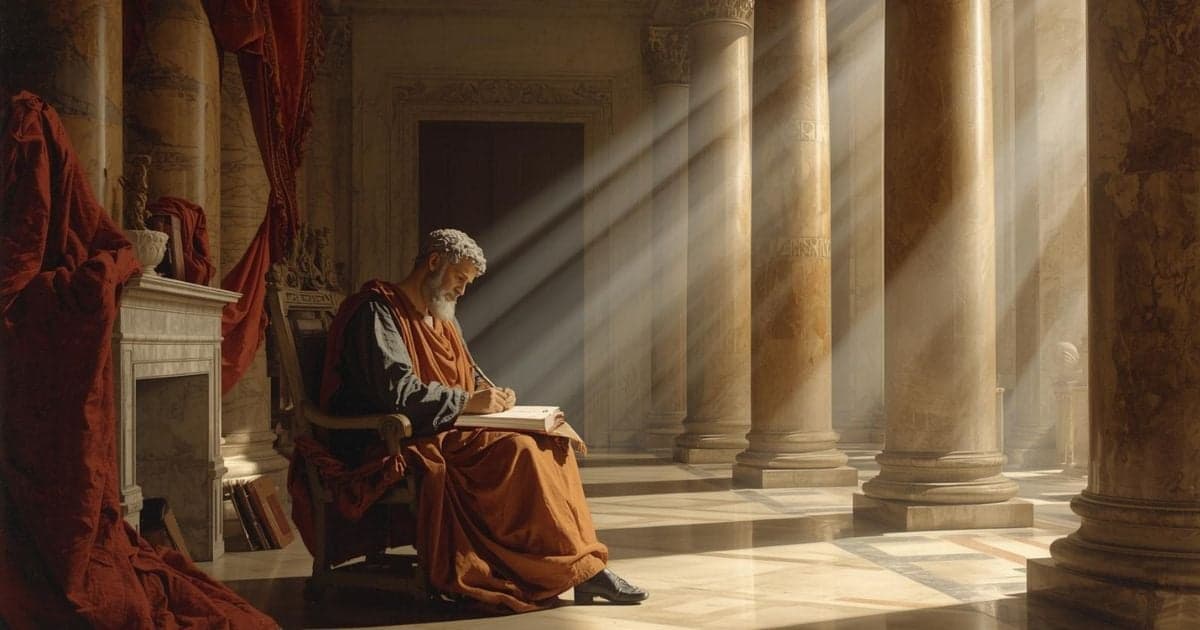
Letters from a Stoic
Bravery Even to LiveIllness nearly ended him. What stopped the knife was his father, not a theory. Hardship is not the misery; naming it is.
War and Peace
Building Authentic RelationshipsThe dance, Anatole's trap, the epilogue kitchen: eight chapters on love that outlasts performance.
Meditations
Building Earned AuthorityFrom My Grandfather VerusMarcus opens with Verus, Rusticus, and Antoninus, not a victory. Authority that lasts starts as a debt you are willing to name.
Moby-Dick
Building Unlikely AlliancesI'll Try a Pagan FriendIshmael and Queequeg are tied at both ends over the whale. What drops one drops the other.
The Iliad
Caught by the HairAthena stops the sword. The withdrawal still kills. Rage that looks like control is the kind that burns the ships.A Christmas Carol
Choosing Connection Over IsolationFred's refused dinner and the party Scrooge watches. Five staves on walking back into rooms.
On the Shortness of Life
Choosing What Deserves Your DaysWhen Usefulness Spends the PersonPaulinus feeds Rome and has not yet fed his own life. Competence can spend you before you notice.A Christmas Carol
Confronting Your PastAn empty school, Fezziwig's dance, and Belle's release. Five staves on the past Scrooge buried.Meditations
Controlling the Inner FortressYou Do Not Need the SeashorePeople seek the countryside. Marcus says rest is a stored principle you can enter now, even at the centre of an empire.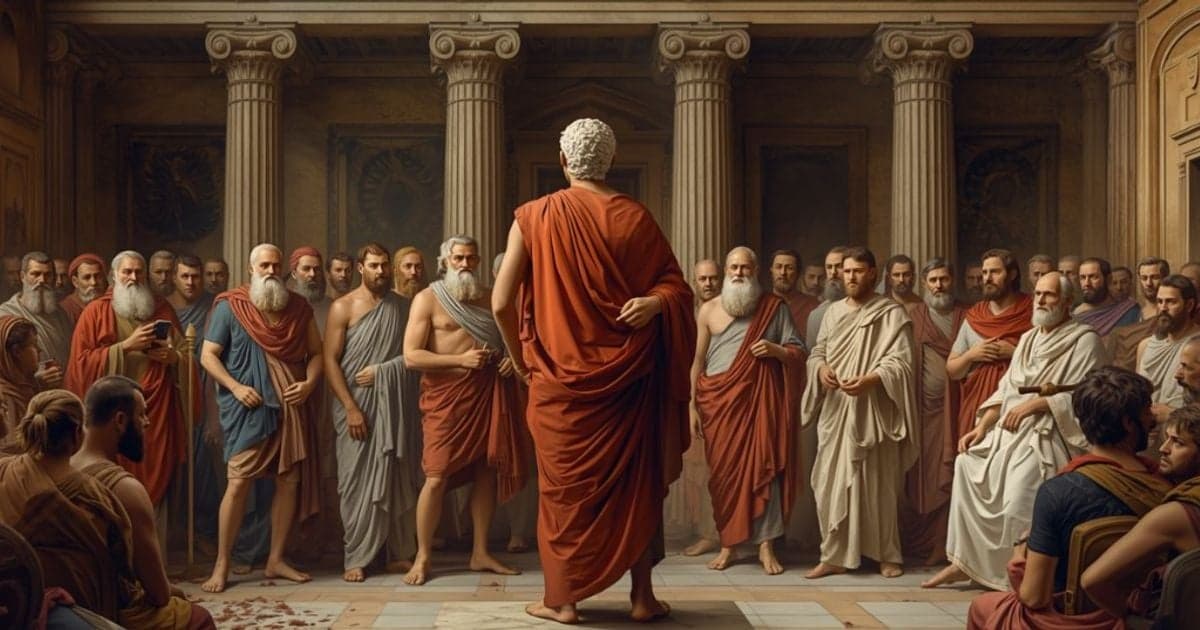
The Apology
Cross-Examining Weak AccusationsWatch Meletus's charge collapse when Socrates asks who actually improves the youth.
Ecclesiastes
Death as a Working LensThe wise man and the fool share one grave. That fact is a calendar, not a verdict.Letters from a Stoic
Deed and Word in AccordPhilosophy that stays in the lecture-room is a costume. Letter 20 wants deed and word on the same path when the crowd is gone.
The Divine Comedy
Delay Is Not a TerraceCasella's song stops the climb. Cato sends them running. Change is a schedule, not a mood you announce from the shore.The Apology
Dignity Over DesperationFollow the refused parade of sons and the oath Socrates will not ask the jury to break.On the Shortness of Life
Distinguishing Busy from AliveWhen the Calendar Is Full and No One Is HomeA full calendar can still leave nobody home. Seneca names the respectable motion that never becomes a life.Letters from a Stoic
Do Not Spend TwiceLucilius pays twice for a lawsuit that has not landed. If the fear is still future, stop spending the present on it.The Iliad
Dust on the HeadAchilles spreads ashes on his hair and will not eat. Grief starts as a body before it becomes a thought.War and Peace
Embracing SimplicityA tavern in the rain, Karataev's potato, Nicholas at the plow: six chapters on enough.Ecclesiastes
Enough Is a FacultyThe labourer sleeps. The owner lies awake counting. Enough was never a number.