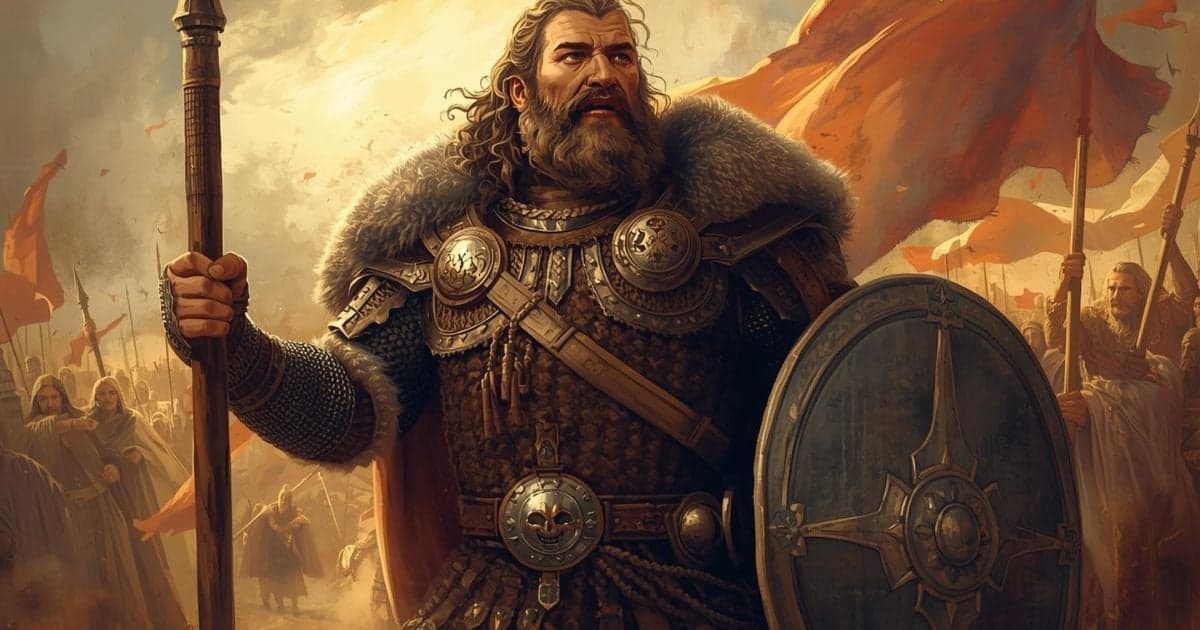
The Geats gather to give Beowulf the funeral befitting a king. They build a massive funeral pyre, adorning it with helmets, shields, and armor as their fallen leader requested. The warriors place Beowulf's body at the center, then light the great fire. As smoke rises and flames consume their hero, the people mourn openly, warriors weep, and a widow sings sorrowful songs.
After the fire burns for ten days, they construct a great burial mound on a high cliff overlooking the sea, visible to sailors from far away. Inside the barrow, they place rings, jewels, and treasures, the same gold that Beowulf died protecting, now returned to the earth where it will remain 'as useless to mortals as in foregoing eras.' Twelve noble warriors ride around the mound, speaking of their lord's greatness, praising his deeds, and mourning his loss. They remember him as the kindest of kings, gentlest of men, most gracious in manner, friendliest to his people, and most eager for honor.
This final scene reveals how a life of service creates lasting legacy. Beowulf's physical strength is gone, but his impact on his people endures. The elaborate funeral shows how communities preserve the memory of those who protected them.
The treasure buried with him suggests that material wealth means nothing compared to the respect and love of one's people. True immortality comes not from avoiding death, but from living in a way that makes others want to honor your memory.