
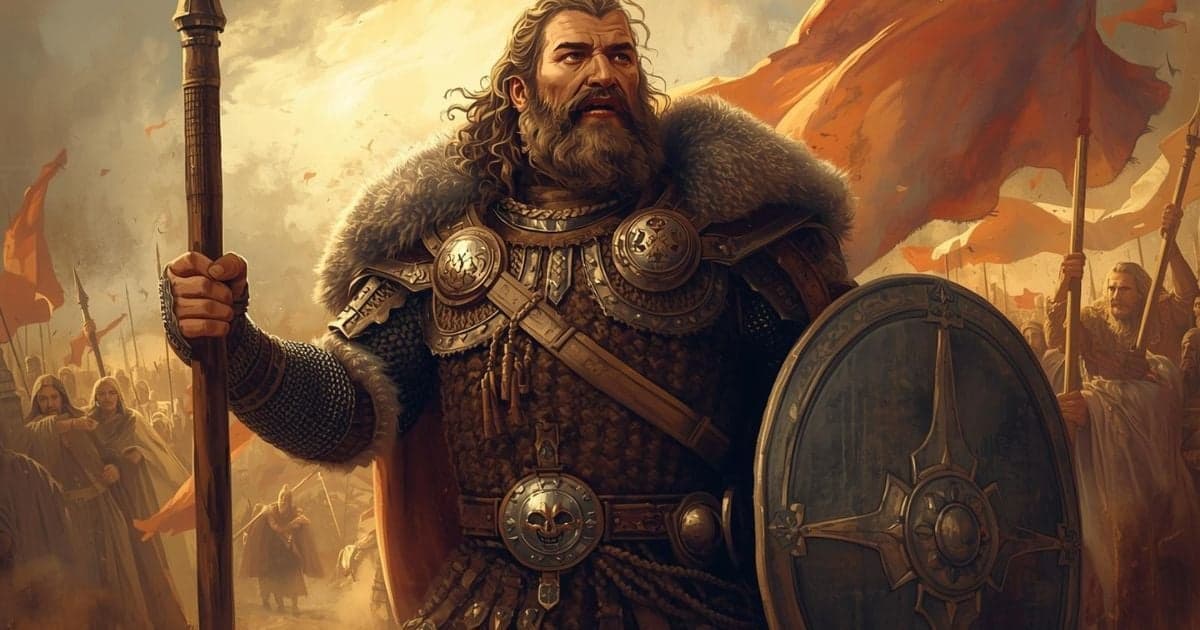
The poem ends with twelve men riding around a mound, and the word they reach for is gentleness as well as courage. That is a strange praise for a dragon-killer unless you have been paying attention. Strength got the gold into the hill. The gold, sealed, is as useless to mortals as it was under the worm. What they keep is a way of talking about a life: generous, kind, a standard other people can still aim at. Legacy starts here, at the eulogy they chose, not at the inventory of metal.
Work backward and the same choice keeps appearing. Hrothgar does not only thank Beowulf. He names him a son in open hall, which is a map other mouths will retell. Dying, the Geat king looks at a hoard he will not spend and puts a collar on Wiglaf so the office has a visible line. Wiglaf then does the unglamorous work: the fire, the cowards named, the mound begun. He does not invent a style. He copies the one he watched.
Scyld's people packed a ship and let the current take him because the giving had already taught them how to honour a life. The gold went with the body. The habit stayed. Legacy in this poem is never a personal brand. It is what still runs when the person cannot: a method, a named successor, a landmark strangers can use. Reputation is the ride around the pyre. Use is the outline that remains after the riders go home.
The Central Lesson
What you leave behind, in Beowulf, is twelve riders choosing gentleness as a word worth keeping, gold that does no work in a sealed hill, a king renaming a foreigner his son, a collar that makes succession visible, and a young thane copying a method under shock. Reputation is the praise at the pyre. Legacy is what still works for people who never sat in your hall. Unused treasure is vanity. The habit that taught Wiglaf to stay is the estate.
Applying This to Your Life
Leave a Pattern, Not Only a Memory
Scyld's gifts taught the next prince how to keep friends. Ask what people around you would reproduce without a memo: how you share credit, how you show up, how you treat the person with no title. That reproduction is the estate. The eulogy is optional.
Make the Hand-Off Visible
The collar on Wiglaf is public. If your work matters, do not leave succession as a rumor. Name the person who already proved they can carry the heat, and do it while you can still speak. Ambiguity after a death is a second crisis.
Build Something Strangers Can Use
The barrow is a beacon, not a closed museum of gold. Prefer the tool, the standard, the practice that helps people who will never know your jokes. Use outlasts praise. The poem is willing to call unused gold vanity.
Other lessons in this book
More life-skill deep dives from the same classic.
Stepping Up When Others Run
Stay when the room flees: crisis reveals who actually has the will to lead
5 chapters·Explore AnalysisThe Dragon at the End
Face mortality when strength fades and transfer what matters before the end
9 chapters·Explore AnalysisThe Earned Authority Loop
Build real authority through action, generosity, and proving yourself when action is costly
13 chapters·Explore AnalysisThe Only Way Through Is Through
Step forward when others step back: earn the right to act, deliver results, and go back in when the job isn't done
15 chapters·Explore AnalysisWhen Victory Opens the Next Threat
Recognise how winning creates the conditions for your next failure if you stop paying attention
10 chapters·Explore Analysis
Continue exploring
Explore this theme
The same lessons in other books
See how other books teach the same life skills.
Hamlet
Distinguishing Truth from DeceptionTest a ghost, a play within a play, and a story that only Horatio will carry out.Hamlet
Paralysis in Decision-MakingWatch the ghost's charge, the play that proves the king, and the prayer Hamlet will not interrupt.
The Consolation of Philosophy
Reading Fortune's TermsHear Book II name the job: Fortune gives and takes, and a wheel that only rose would not be a wheel.
Where the lesson lives in the book
A Ship the Hall Cannot Follow
Scyld's people do not keep him in a stone vault. They lay the ring-giver on a vessel icy in glimmer, heap weapons and jewels at the mast, stretch a gold standard, and let the holm-currents bear him. Men in halls cannot tell what haven he hied. The first image of legacy in the poem is a gift given away permanently, to water.
Key Insight:
What lasts is not the body you keep. It is the loyalty and the pattern you spent while you could still choose the spending.
“Scyld then departed to the All-Father's keeping”
A Son Named in Open Hall
Hrothgar sees Grendel's hand and does more than thank the Wielder. He tells Beowulf he will love him in spirit as a son. That sentence rewrites the Danish court's map of who counts. Scops will retell the night. The Geat's name will travel farther than the arm on the beam. Legacy here is a relationship other people feel compelled to keep telling.
Key Insight:
Acts of real service create stories that outlast the crisis. You do not write those stories. Other people do, because the debt felt large enough to carry.
“I'll love thee in spirit”
The Song That Keeps the Dead Alive
The scop sings of Finn and Hengest while the hall still celebrates Beowulf. Old feuds and loyalties enter the room as art. The poem treats memory as something performed in company, not stored only in a single mind.
Key Insight:
Legacy includes what your people sing when you are not in the room. The stories you repeat become the inheritance whether you intend them or not.
The Farewell That Binds
Beowulf and Hrothgar part with gifts, tears, and promises. The old king tells the young hero to be a help to his own people and to remember what he learned in Denmark. The leave-taking is more than travel. It is a transfer of counsel across kingdoms.
Key Insight:
Goodbyes can be deposits. What you say at the edge of departure may be the sentence that outlasts the gold in the boat.
Treasure That Becomes a Kingdom
Beowulf places Hrothgar's gifts in Hygelac's hands and receives land and a seat in return. The foreign errand becomes domestic strength. Legacy here is not hoarding abroad but making the home kingdom larger because you came back generous.
Key Insight:
Bring the win home in a form others can use. A private hoard from a public deed shrinks your estate; a shared return expands it.
The Collar Before the Breath Stops
Dying, Beowulf looks at gold he will not spend, then puts the all-golden token on Wiglaf. The gift is not sentiment. It is a public transfer of the office the old king is leaving. Without that gesture, Wiglaf's later command is only nerve. With it, the hall has a line it cannot easily dispute.
Key Insight:
The most important leadership act may be the one where you clearly pass what you built to someone who has already proved they can carry heat.
“Wealth can easily”
The Pattern Reproduced Under Shock
Wiglaf organises the body, names the men who ran, and starts the work of a people in wreck. He does not invent a new style of command. He does what he watched: show up, take the cost, speak without theatre. Legacy is operating in the hour it is needed, which is the only hour that counts.
Key Insight:
A monument is what people say. A methodology is what they do when you are not in the room to correct them.
“Oft many an earlman on one man's account must”
The Hill Built for Sailors
They raise a hill on the height, high and extensive, of sea-going sailors. Twelve men ride the barrow and praise courage, generosity, and gentleness. The gold sealed in the mound is as useless to mortals as it was under the dragon. The beacon is not. People who never sat in Heorot will still use the outline on the coast.
Key Insight:
Reputation is the eulogy. Legacy is the thing that keeps working for people who never met you. The poem ends on the second, not the first.
“kindest of kings under heaven”