
War and Peace

In the glittering ballrooms of St. Petersburg and the blood-soaked fields of Borodino, Leo Tolstoy weaves together the grand tapestry of Russian life during the Napoleonic Wars. Set against the tumultuous backdrop of 1805 to 1812 and beyond, this monumental novel follows the intertwined destinies of several aristocratic families as they navigate love, loss, and the sweeping forces of history that threaten to reshape their world forever.
At the heart of the story stands Pierre Bezukhov, an awkward, illegitimate son who unexpectedly inherits a vast fortune and struggles to find meaning in his privileged but spiritually empty existence. His journey from bumbling youth to philosophical seeker takes him through disastrous marriage, Freemasonry, and eventually into the burning streets of Moscow itself. Alongside him moves Prince Andrei Bolkonsky, a brilliant but disillusioned officer seeking glory on the battlefield to escape personal tragedy, only to discover that war's reality differs vastly from its romantic ideals.
The radiant Natasha Rostova bursts onto Tolstoy's pages as the embodiment of youthful vitality and emotional authenticity. Her transformation from spirited girl to woman encompasses first love, heartbreak, and the profound experiences that shape her understanding of life's deeper currents. The Rostov family circle, including her brother Nikolai, represents the warmth of traditional Russian family life, even as financial troubles and wartime pressures strain their bonds. In contrast stands the severe Prince Bolkonsky household, where Andrei's sister Maria endures her tyrannical father's demands while developing an inner strength that will serve her well when external chaos arrives.
Threading through these personal stories are the scheming Kuragin family members, whose various romantic and financial machinations provide both comic relief and genuine menace to our protagonists' happiness. Their presence reminds us that even during history's most dramatic moments, ordinary human vanity and ambition continue unabated.
Tolstoy's narrative genius lies in his ability to shift seamlessly between intimate family scenes crackling with wit and domestic tension, heart-stopping battle sequences that capture war's brutal reality, and the sophisticated social comedy of aristocratic drawing rooms. The devastating Battle of Austerlitz, where Russian forces face crushing defeat, gives way to quieter moments of personal revelation. The epic confrontation at Borodino, where Russian and French armies clash in desperate struggle, alternates with scenes of Moscow's abandonment and the great fire that consumes the ancient capital.
Perhaps most remarkably, Tolstoy interrupts his narrative with bold philosophical essays examining the nature of historical causation, questioning whether great leaders truly shape events or merely ride the tide of deeper forces. These meditations on freedom versus necessity challenge readers to consider how much control individuals actually possess over their destinies, whether in matters of the heart or the fate of nations.
Through it all, Tolstoy demonstrates his conviction that truth emerges not from grand theories or heroic gestures, but from the authentic human connections that endure despite war's devastation and society's pretensions.
For new readers, the scale can feel vast—yet the novel insists that the smallest household quarrel and the largest army are part of one fabric: history is felt first in bodies, marriages, letters, and mistakes.
Essential Skills
Life skills and patterns this book helps you develop—drawn from its themes and characters.
Critical Thinking Through Literature
Develop analytical skills by examining the complex themes and character motivations in War and Peace, learning to question assumptions and see multiple perspectives.
Historical Context Understanding
Learn to place events and ideas within their historical context, understanding how War and Peace reflects and responds to the issues of its time.
Empathy and Perspective-Taking
Build empathy by experiencing life through the eyes of characters from different times, backgrounds, and circumstances in War and Peace.
Recognizing Timeless Human Nature
Understand that human nature remains constant across centuries, as War and Peace reveals patterns of behavior and motivation that persist today.
Articulating Complex Ideas
Improve your ability to express nuanced thoughts and feelings by engaging with the sophisticated language and themes in War and Peace.
Moral Reasoning and Ethics
Develop your ethical reasoning by grappling with the moral dilemmas and philosophical questions raised throughout War and Peace.
Table of Contents
The Art of Salon Politics
In an elegant St. Petersburg salon in 1805, we meet Anna Pavlovna Scherer, a court favorite who host...
The Art of Social Theater
At Anna Pávlovna's elegant salon, St. Petersburg's elite gather for an evening of carefully orchestr...
The Art of Social Performance
Anna Pávlovna's salon is in full swing, and we see how high society really works. The hostess orches...
The Art of Social Leverage
Prince Andrew arrives at the salon, and his cold demeanor toward everyone—especially his wife—reveal...
When Politics Divides the Room
At Anna Pávlovna's salon, the conversation turns heated when Pierre defends Napoleon Bonaparte while...
The Awkward Exit and Hidden Motives
As Anna Pavlovna's salon winds down, we see three men dealing with social expectations in very diffe...
The Strain of War Preparations
Prince Andrew's wife Lise confronts him about his decision to go to war, creating an uncomfortable s...
The Marriage Warning
Prince Andrew delivers a shocking confession to his friend Pierre over dinner: marriage has destroye...
The Dangerous Bet
Pierre breaks his promise to Prince Andrew and joins Anatole Kuragin's wild party, rationalizing his...
Social Networks and Family Connections
Prince Vasíli keeps his promise to Anna Mikháylovna, using his influence to get her son Borís transf...
When Children Burst the Adult Facade
The stuffy drawing room conversation between the countess and her formal visitor gets completely upe...
Young Hearts on Display
In the Rostov drawing room, teenage emotions run high as Nicholas prepares to join the army. Sonya, ...
First Kiss in the Conservatory
Thirteen-year-old Natasha hides in the conservatory and becomes an invisible witness to adult drama....
Family Dynamics and Social Maneuvering
This chapter reveals the complex web of relationships within the Rostov household through two parall...
Navigating Power and Desperation
Anna Mikháylovna and her son Borís arrive at the dying Count Bezúkhov's mansion, where Anna desperat...
About Leo Tolstoy
Published 1869
Leo Tolstoy (1828-1910) was a Russian writer widely regarded as one of the greatest novelists of all time. A count by birth, he experienced a profound moral crisis that led him to reject wealth and embrace radical Christian anarchism. War and Peace, his epic masterpiece, took six years to write and draws on his own experiences in the Crimean War.
Why This Author Matters Today
Reading Leo Tolstoy is an act of self-discovery — one that tends to be more unsettling, and more rewarding, than you expect. Their work doesn't offer easy answers. It offers something rarer: the right questions. Questions about what we owe each other, what we owe ourselves, and what kind of person we are quietly becoming through the choices we make every day.
What makes Leo Tolstoy indispensable isn't just their insight into human nature — it's their honesty about its contradictions. They understood that people are capable of extraordinary courage and ordinary cowardice, often in the same breath. That we can hold convictions firmly and abandon them the moment they cost us something. That the gap between who we think we are and who we actually are is where most of life's real drama lives.
In an age of noise, distraction, and the constant pressure to perform certainty we don't feel,Leo Tolstoy is a corrective. Their pages slow you down and ask you to look more carefully — at the world, yes, but especially at yourself. Few writers have done more to show us that thinking well is not an academic exercise but a survival skill, and that the examined life is not a luxury but the only honest way to live.
More by Leo Tolstoy in Our Library
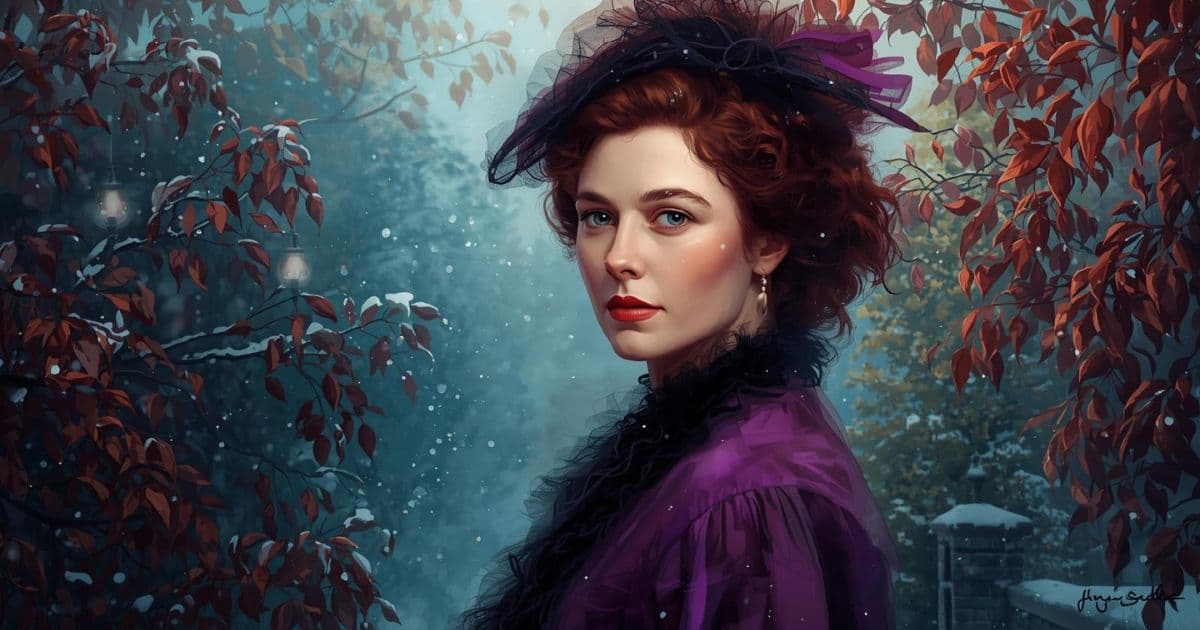
Wide Reads is different.
not a sparknotes, nor a cliffnotes
This is a retelling. The story is still told—completely. You walk with the characters, feel what they feel, discover what they discover. The meaning arrives because you experienced it, not because someone explained a summary.
Read this, then read the original. The prose will illuminate—you'll notice what makes the author that author, because you're no longer fighting to follow the story.
Read the original first, then read this. Something will click. You'll want to go back.
Either way, the door opens inward.
Get the Full Book
Purchase the complete book to access all chapters and support classic literature
Available in paperback, hardcover, and e-book formats
You Might Also Like

Free to read • No account required