Wide Reads
Literature MattersLife IndexEducators
Sign in
Where to Begin
The Republic - The Cave and the Light

Plato

The Republic

The Cave and the Light

Home›Books›The Republic›Chapter 7
Previous
7 of 10
Next

Summary

The Cave and the Light

The Republic by Plato

0:000:00
Listen to Next Chapter

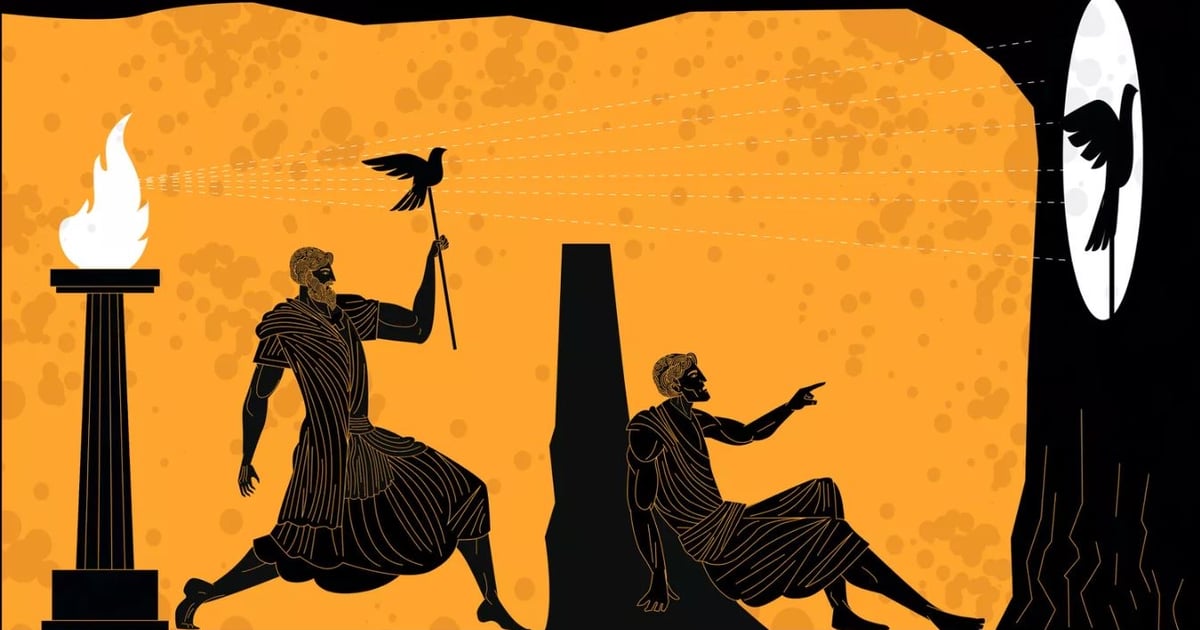
Plato presents his most famous image: people chained in a cave, watching shadows on a wall, believing these shadows are reality. When one prisoner breaks free and sees the real world, the sunlight blinds him at first. Eventually his eyes adjust and he sees things as they truly are - but when he returns to tell the others, they mock him and refuse to believe. This isn't just a story about ancient philosophy. It's about every time we've had our assumptions challenged - whether it's realizing your job isn't what you thought, discovering hard truths about people you trusted, or seeing through comfortable lies. The chapter then shifts to education, laying out a curriculum starting with arithmetic and geometry, moving through astronomy and music, all designed to train the mind to see patterns and think abstractly. But Plato warns about the danger of teaching critical thinking too early. Young people who learn to question everything before they have wisdom often become cynics who believe in nothing. Like someone who discovers their parents aren't who they claimed to be, they lose all moorings. The goal isn't to tear down all beliefs, but to build the mental tools to distinguish truth from shadow. Mathematics teaches precision; astronomy teaches us to look beyond appearances; music teaches harmony and proportion. These aren't just school subjects - they're mental training for recognizing what's real in a world full of illusions. The chapter ends with a practical timeline: physical training in youth, introduction to abstract thinking in the twenties, serious philosophical study only after thirty, and real-world application through leadership roles. Truth isn't just an idea to contemplate - it's something you must bring back to help others, even when they resist.

Coming Up in Chapter 8

Having described the ideal state and its education system, Plato now turns to examine how governments decay. What causes a perfect system to fall apart? The answer reveals uncomfortable truths about human nature and the cycles of power.

Share it with friends

Previous ChapterNext Chapter
GO ADS FREE — JOIN US
Original text
complete·7,236 words
B

OOK VII. And now I will describe in a figure the enlightenment or unenlightenment of our nature:—Imagine human beings living in an underground den which is open towards the light; they have been there from childhood, having their necks and legs chained, and can only see into the den. At a distance there is a fire, and between the fire and the prisoners a raised way, and a low wall is built along the way, like the screen over which marionette players show their puppets. Behind the wall appear moving figures, who hold in their hands various works of art, and among them images of men and animals, wood and stone, and some of the passers-by are talking and others silent. ‘A strange parable,’ he said, ‘and strange captives.’ They are ourselves, I replied; and they see only the shadows of the images which the fire throws on the wall of the den; to these they give names, and if we add an echo which returns from the wall, the voices of the passengers will seem to proceed from the shadows. Suppose now that you suddenly turn them round and make them look with pain and grief to themselves at the real images; will they believe them to be real? Will not their eyes be dazzled, and will they not try to get away from the light to something which they are able to behold without blinking? And suppose further, that they are dragged up a steep and rugged ascent into the presence of the sun himself, will not their sight be darkened with the excess of light? Some time will pass before they get the habit of perceiving at all; and at first they will be able to perceive only shadows and reflections in the water; then they will recognize the moon and the stars, and will at length behold the sun in his own proper place as he is. Last of all they will conclude:—This is he who gives us the year and the seasons, and is the author of all that we see. How will they rejoice in passing from darkness to light! How worthless to them will seem the honours and glories of the den! But now imagine further, that they descend into their old habitations;—in that underground dwelling they will not see as well as their fellows, and will not be able to compete with them in the measurement of the shadows on the wall; there will be many jokes about the man who went on a visit to the sun and lost his eyes, and if they find anybody trying to set free and enlighten one of their number, they will put him to death, if they can catch him. Now the cave or den is the world of sight, the fire is the sun, the way upwards is the way to knowledge, and in the world of knowledge the idea of good is last seen and with difficulty, but when seen is inferred to be the author of good and right—parent of the lord of light in this world, and of truth and understanding in the other. He who attains to the beatific vision is always going upwards; he is unwilling to descend into political assemblies and courts of law; for his eyes are apt to blink at the images or shadows of images which they behold in them—he cannot enter into the ideas of those who have never in their lives understood the relation of the shadow to the substance. But blindness is of two kinds, and may be caused either by passing out of darkness into light or out of light into darkness, and a man of sense will distinguish between them, and will not laugh equally at both of them, but the blindness which arises from fulness of light he will deem blessed, and pity the other; or if he laugh at the puzzled soul looking at the sun, he will have more reason to laugh than the inhabitants of the den at those who descend from above. There is a further lesson taught by this parable of ours. Some persons fancy that instruction is like giving eyes to the blind, but we say that the faculty of sight was always there, and that the soul only requires to be turned round towards the light. And this is conversion; other virtues are almost like bodily habits, and may be acquired in the same manner, but intelligence has a diviner life, and is indestructible, turning either to good or evil according to the direction given. Did you never observe how the mind of a clever rogue peers out of his eyes, and the more clearly he sees, the more evil he does? Now if you take such an one, and cut away from him those leaden weights of pleasure and desire which bind his soul to earth, his intelligence will be turned round, and he will behold the truth as clearly as he now discerns his meaner ends. And have we not decided that our rulers must neither be so uneducated as to have no fixed rule of life, nor so over-educated as to be unwilling to leave their paradise for the business of the world? We must choose out therefore the natures who are most likely to ascend to the light and knowledge of the good; but we must not allow them to remain in the region of light; they must be forced down again among the captives in the den to partake of their labours and honours. ‘Will they not think this a hardship?’ You should remember that our purpose in framing the State was not that our citizens should do what they like, but that they should serve the State for the common good of all. May we not fairly say to our philosopher,—Friend, we do you no wrong; for in other States philosophy grows wild, and a wild plant owes nothing to the gardener, but you have been trained by us to be the rulers and kings of our hive, and therefore we must insist on your descending into the den. You must, each of you, take your turn, and become able to use your eyes in the dark, and with a little practice you will see far better than those who quarrel about the shadows, whose knowledge is a dream only, whilst yours is a waking reality. It may be that the saint or philosopher who is best fitted, may also be the least inclined to rule, but necessity is laid upon him, and he must no longer live in the heaven of ideas. And this will be the salvation of the State. For those who rule must not be those who are desirous to rule; and, if you can offer to our citizens a better life than that of rulers generally is, there will be a chance that the rich, not only in this world’s goods, but in virtue and wisdom, may bear rule. And the only life which is better than the life of political ambition is that of philosophy, which is also the best preparation for the government of a State.

1 / 21

Master this chapter. Complete your experience

Purchase the complete book to access all chapters and support classic literature

Read Free on GutenbergBuy at Powell'sBuy on Amazon

As an Amazon Associate, we earn a small commission from qualifying purchases at no additional cost to you.

Available in paperback, hardcover, and e-book formats

GO ADS FREE — JOIN US

Why This Matters

Connect literature to life

Skill: Reading Resistance Patterns

This chapter teaches you to recognize when people attack new ideas not because the ideas are wrong, but because they threaten familiar illusions.

Practice This Today

This week, notice when someone dismisses a suggestion immediately - ask yourself if they're defending the idea's merit or defending their comfort with the status quo.

GO ADS FREE — JOIN US

Now let's explore the literary elements.

Key Quotes & Analysis

"The prison house is the world of sight, the light of the fire is the sun, and you will not misapprehend me if you interpret the journey upwards to be the ascent of the soul into the intellectual world."

— Socrates

Context: Explaining what the cave allegory really means

This transforms the cave from just a story into a map of human understanding. The physical journey out of darkness represents the mental journey from ignorance to wisdom. It's validating that enlightenment is hard - you're supposed to struggle.

In Today's Words:

Breaking free from limiting beliefs feels like climbing out of a dark hole into blinding daylight - painful but necessary.

"Better to be the poor servant of a poor master, and to endure anything, rather than think as they do and live after their manner."

— Socrates

Context: Quoting Homer about preferring harsh reality to comfortable illusion

Once you've seen truth, you can't go back to pretending. This explains why people who've had major awakenings often can't return to their old lives, even when the new reality is harder.

In Today's Words:

I'd rather struggle with the truth than be comfortable with lies.

"Men would say of him that up he went and down he came without his eyes; and that it was better not even to think of ascending."

— Socrates

Context: How the other prisoners react to the one who returns from above

This captures how threatening truth-tellers can be to those invested in illusions. The prisoners don't just disagree - they use his initial blindness as proof that seeking truth is dangerous. It's easier to attack the messenger than question your reality.

In Today's Words:

Look what happened to him when he tried to change - better to stay where we are and not rock the boat.

"The power and capacity of learning exists in the soul already; and that just as the eye was unable to turn from darkness to light without the whole body, so too the instrument of knowledge can only by the movement of the whole soul be turned from the world of becoming into that of being."

— Socrates

Context: Explaining how education really works

Learning isn't about stuffing information into an empty head - it's about turning your whole self toward truth. Real education changes how you see everything, not just what you know about one subject.

In Today's Words:

You already have what it takes to understand - you just need to shift your perspective to see what's been there all along.

Thematic Threads

Truth vs Comfort

In This Chapter

The cave prisoners choose familiar shadows over painful enlightenment, preferring comfortable lies to difficult truths

Development

Evolves from earlier discussions of justice—now showing how people resist even seeing true justice

In Your Life:

When someone's success or growth makes you uncomfortable, you might be defending your own cave

Education as Disruption

In This Chapter

True education doesn't add information—it fundamentally changes how you see, making you unable to return to old ways

Development

Builds on the guardian training theme, but now reveals education as potentially isolating and dangerous

In Your Life:

That feeling when you can't relate to old friends after you've grown—you've left a shared cave

Resistance to Growth

In This Chapter

The other prisoners don't just doubt the freed one—they want to kill him for threatening their worldview

Development

Deepens the theme of how societies resist change, even positive change, from previous chapters

In Your Life:

When family members say you've 'changed' as an accusation, not a compliment

Timing of Wisdom

In This Chapter

Plato warns against teaching critical thinking too early—without foundation, questioning everything leads to believing nothing

Development

Introduced here—adds nuance to the education discussion

In Your Life:

Why your teenager who questions everything needs structure, not just more freedom

Obligation of Knowledge

In This Chapter

The freed prisoner must return to help others, even knowing they'll hate him for it

Development

Transforms the leadership theme—true leaders serve those who resist them

In Your Life:

When you've learned something that could help your coworkers, but know they'll resent you for sharing it

GO ADS FREE — JOIN US

You now have the context. Time to form your own thoughts.

Discussion Questions

  1. 1

    In the cave allegory, what happens when the freed prisoner tries to tell others about the real world?

    analysis • surface
  2. 2

    Why do the other prisoners mock and reject the one who's seen the truth instead of being curious?

    analysis • medium
  3. 3

    Think of a time someone tried to show you a different way of doing things at work or home. How did you react? Were you the prisoner defending shadows or the one bringing light?

    application • medium
  4. 4

    You discover your workplace has been doing something inefficiently for years. You know a better way but also know you'll face resistance. How do you introduce change without becoming the 'know-it-all' everyone resents?

    application • deep
  5. 5

    Plato says we shouldn't teach critical thinking too early or people become cynics. What's the difference between healthy questioning and destructive cynicism? How do you stay curious without losing all faith?

    reflection • deep

Critical Thinking Exercise

10 minutes

Map Your Cave

Draw three columns: 'Shadows I Used to Believe', 'Light That Changed My View', and 'Shadows I Might Still Believe'. In the first column, list beliefs or assumptions you've outgrown (about work, family, yourself). In the second, note what helped you see differently. In the third, honestly consider what comfortable lies you might still be holding onto.

Consider:

  • •Focus on specific examples, not abstract concepts - 'overtime always equals dedication' rather than 'work culture'
  • •Notice who resisted when you changed your views and why they might have felt threatened
  • •Consider one 'shadow' you're currently defending - what would you lose if you admitted it wasn't real?

Journaling Prompt

Write about a time you were the freed prisoner trying to share new knowledge. How did others react? Looking back, what would you do differently to help them see without triggering their defenses?

GO ADS FREE — JOIN US

Coming Up Next...

Chapter 8: The Decline of States and Souls

Having described the ideal state and its education system, Plato now turns to examine how governments decay. What causes a perfect system to fall apart? The answer reveals uncomfortable truths about human nature and the cycles of power.

Continue to Chapter 8
Previous
The Ship of Fools
Contents
Next
The Decline of States and Souls

Continue Exploring

The Republic Study GuideTeaching ResourcesEssential Life IndexBrowse by ThemeAll Books
Moral Dilemmas & EthicsPower & CorruptionIdentity & Self-Discovery

You Might Also Like

On Liberty cover

On Liberty

John Stuart Mill

Explores justice & fairness

The Analects cover

The Analects

Confucius

Explores society & class

The Idiot cover

The Idiot

Fyodor Dostoevsky

Explores society & class

Nicomachean Ethics cover

Nicomachean Ethics

Aristotle

Explores morality & ethics

Browse all 47+ books
GO ADS FREE — JOIN US

Share This Chapter

Know someone who'd enjoy this? Spread the wisdom!

TwitterFacebookLinkedInEmail

Read ad-free with Prestige

Get rid of ads, unlock study guides and downloads, and support free access for everyone.

Subscribe to PrestigeCreate free account
Intelligence Amplifier
Intelligence Amplifier™Powering Wide Reads

Exploring human-AI collaboration through books, essays, and philosophical dialogues. Classic literature transformed into navigational maps for modern life.

2025 Books

→ The Amplified Human Spirit→ The Alarming Rise of Stupidity Amplified→ San Francisco: The AI Capital of the World
Visit intelligenceamplifier.org
hello@widereads.com

WideReads Originals

→ You Are Not Lost→ The Last Chapter First→ The Lit of Love→ Wealth and Poverty→ 10 Paradoxes in the Classics · coming soon
Arvintech
arvintechAmplify your Mind
Visit at arvintech.com

Navigate

  • Home
  • Library
  • Essential Life Index
  • How It Works
  • Subscribe
  • Account
  • About
  • Contact
  • Authors
  • Suggest a Book
  • Landings

Made For You

  • Students
  • Educators
  • Families
  • Readers
  • Literary Analysis
  • Finding Purpose
  • Letting Go
  • Recovering from a Breakup
  • Corruption
  • Gaslighting in the Classics

Newsletter

Weekly insights from the classics. Amplify Your Mind.

Legal

  • Privacy Policy
  • Terms of Service
  • Cookie Policy
  • Accessibility

Why Public Domain?

We focus on public domain classics because these timeless works belong to everyone. No paywalls, no restrictions—just wisdom that has stood the test of centuries, freely accessible to all readers.

Public domain books have shaped humanity's understanding of love, justice, ambition, and the human condition. By amplifying these works, we help preserve and share literature that truly belongs to the world.

A Pilgrimage

Powell's City of Books

Portland, Oregon

If you ever find yourself in Portland, walk to the corner of Burnside and 10th. The building takes up an entire city block. Inside is over a million books, new and used on the same shelf, organized by color-coded rooms with names like the Rose Room and the Pearl Room. You can lose an afternoon. You can lose a weekend. You will find a book you have been looking for your whole life, and three you did not know existed.

It is a pilgrimage. We cannot find a bookstore like it anywhere on earth. If you read the classics, and you ever get the chance, go. It belongs on every reader's bucket list.

Visit powells.com

We are not in any way affiliated with Powell's. We are just a very big fan.

© 2026 Wide Reads™. All Rights Reserved.

Intelligence Amplifier™ and Wide Reads™ are proprietary trademarks of Arvin Lioanag.

Copyright Protection: All original content, analyses, discussion questions, pedagogical frameworks, and methodology are protected by U.S. and international copyright law. Unauthorized reproduction, distribution, web scraping, or use for AI training is strictly prohibited. See our Copyright Notice for details.

Disclaimer: The information provided on this website is for general informational and educational purposes only and does not constitute professional, legal, financial, or technical advice. While we strive to ensure accuracy and relevance, we make no warranties regarding completeness, reliability, or suitability. Any reliance on such information is at your own risk. We are not liable for any losses or damages arising from use of this site. By using this site, you agree to these terms.