
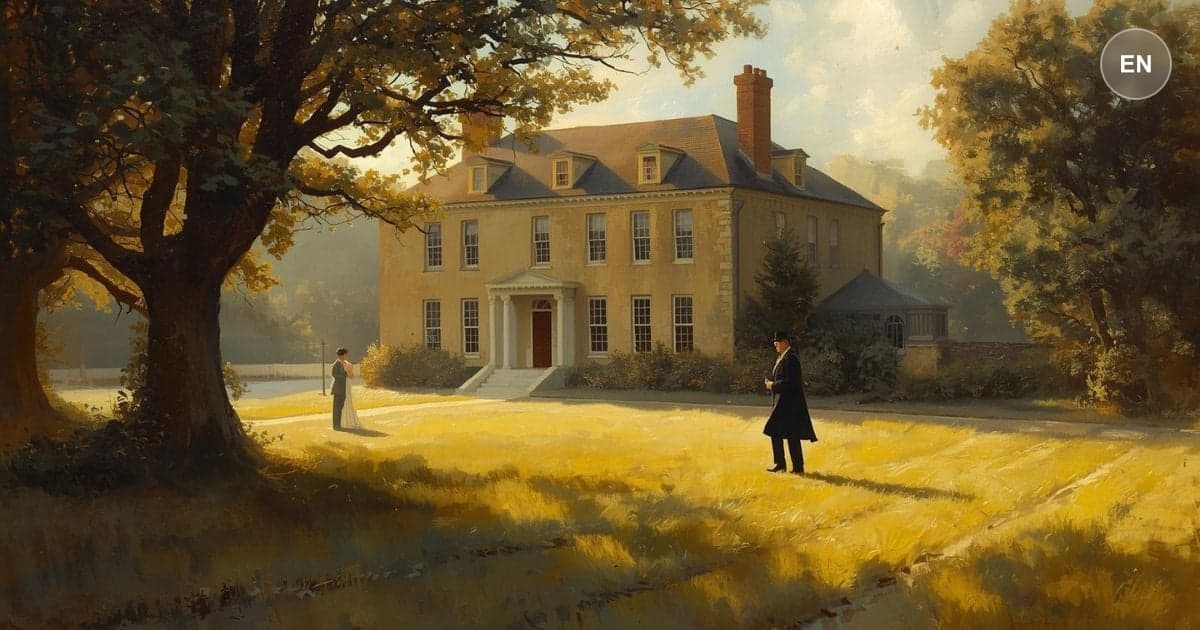
Nick Carraway's first gift is a theory of himself. Reserve judgment. Remember advantages. Believe you are one of the few honest people you have known. Fitzgerald lets that theory run the whole book so you can watch it fail as ethics while it succeeds as prose. The man who will write the most precise sentences in American fiction about a wreck is the same man who stays in Myrtle's apartment after her nose is broken, calling the stance within and without, enchanted and repelled. Double vision feels like intelligence. It is also how you do not pick a door.
His one real plot move is a tea. He is not asked to forge a will. He is asked to invite his cousin over, and he does, because Gatsby is compelling and no is effort. The cottage becomes the hinge. After that he is back to watching: the Plaza, the road, the lawn where he finally shouts that Gatsby is worth the whole damn bunch. The ranking is true and late. Wilson is still being aimed. Daisy is still going to turn out a light. Honesty that peaks as a shouted compliment is still spectatorship with better taste.
By the funeral Nick is done being within and without. He calls, he fetches a father, he stands in rain that the guest list will not enter. Nobody came. He goes West and writes. Late loyalty is real, and Fitzgerald will not let it erase the kettle. The cost of watching is not that you saw too much. It is that seeing became your job, and jobs like that collect prestige: I am trusted, I am fair, I am the one who understood. Understanding is not a substitute for the afternoon when a different sentence might have moved a gun. The witness who tells the story is still a cause in it.
The Central Lesson
Reserved judgment is a beautiful alibi. Nick is honest enough to see the broken nose, kind enough to host the tea, loyal enough to shout across a lawn, and late enough that nobody comes. Within and without is how a decent man becomes infrastructure for a wreck he will later describe better than anyone. See clearly. Then pick a door while the afternoon still has a different ending. The book you write afterward will not unbreak the nose.
Applying This to Your Life
Notice When Both-And Means Staying
Enchanted and repelled is a feeling. It is also a method for remaining after the injury. If you can narrate a room so well you never have to leave it, you are not wise yet. You are convenient.
Treat Small Favors as Plot
Nick's tea is every introduction, every cc, every 'sure, I'll host' that makes a worse plan possible. You do not have to be the villain. You only have to be the kettle. Ask what the favor enables before you boil the water.
Spend the Verdict While It Can Still Move
Worth the whole damn bunch is a fine last line and a poor emergency. If you know who is rotten and who is being aimed, say it to the person who can still act, not only to the friend who wants comfort. Secrets in a disaster are not a personality.
Other lessons in this book
More life-skill deep dives from the same classic.
Confusing the Dream with the Person
Hear Daisy's voice full of money and see why no real Daisy could carry what she represented to Gatsby.
5 chapters·Explore AnalysisWhat Wealth Actually Signals
Read East Egg against West Egg, then the valley of ashes, and watch millions fail at the one boundary that matters.
6 chapters·Explore AnalysisThe Cost of Reinvention
Trace James Gatz from Cody's yacht to the Hopalong Cassidy schedule and the name that dies in a pool.
6 chapters·Explore AnalysisYou Cannot Repeat the Past
Watch the green light, the claim that 1917 can be recovered, and the boats against the current that close the book.
6 chapters·Explore AnalysisCorruption Beneath Glamour
Sit with Wolfshiem's molars, Myrtle's broken nose, and the guests who ate all summer and skipped the funeral.
6 chapters·Explore Analysis
Continue exploring
The same lessons in other books
See how other books teach the same life skills.
The Idiot
Maintaining Goodness Without NaivetySit with Myshkin on the train in chapter 1: honesty with no angle, and a city that can only call it idiocy.
Northanger Abbey
Separating Fiction from RealityStop letting Gothic plots supply the story: laundry bills become clues, an old abbey becomes a crime scene, and real cruelty arrives without a villain's mask.
The Blue Castle
Building a Life of Your OwnLeave Elm Street for Mistawis, lock a house that is yours, and keep the Blue Castle after the excuse to live is withdrawn.
Where the lesson lives in the book
The Advantages Speech
Nick opens with his father's advice and a claim that he is one of the few honest people he has known. Reserve judgment, because others lacked your advantages. The posture sounds like wisdom. In practice it will mean staying in rooms where a woman is hit, a marriage is raided, and a friend is left to a gun, all without forfeiting the right to describe it beautifully later.
Key Insight:
Honesty advertised in the first chapter is the novel's longest irony. A man who names himself honest can watch almost anything if watching feels like fairness. Reserved judgment is often reserved action in better clothes.
“I'm one of the few honest people that I have ever known.”
Enchanted and Repelled
Tom takes him off the train, upstairs, into Myrtle's apartment. Nick drinks. He watches Tom break her nose for saying Daisy's name. He does not leave. He later finds the sentence that will excuse the afternoon: he was within and without, enchanted and repelled. The double position feels like intelligence. It is also how you stay at a party after the blood.
Key Insight:
Both-and is a narrator's gift and a citizen's failure. If you can be inside the room and above it at once, you will never have to choose a door. Nick's most famous self-description is a method for remaining.
“I was within and without, simultaneously enchanted and repelled by the inexhaustible variety of life.”
Just Invite Her to Tea
The most active thing Nick does in the book is agree to a small hospitality. Gatsby does not ask him to lie in court. He asks him to host Daisy. Nick knows the history. He finds Gatsby compelling. Saying yes is easier than explaining a no. The cottage becomes the set. Everything after is downstream of a kettle.
Key Insight:
Complicity rarely looks like a crime. It looks like a favor for a neighbor who has been kind. Nick is not a villain. He is the person whose manners make the second half possible. Gentle enabling still counts as a cause.
“You're just supposed to invite her to tea.”
The Whole Damn Bunch
After the Plaza and the road, Nick shouts across the lawn that Gatsby is worth the whole damn bunch put together. It is the one moral ranking he allows himself, and it arrives when ranking will not change the night. He has seen Daisy's fear, Tom's contempt, the moment the project ended. Understanding peaks. Intervention does not.
Key Insight:
A verdict delivered too late is still a kind of watching. Nick is right about the bunch. Rightness that never becomes a warning to Wilson, a call to the police, or a refusal to host is rightness as literature, not as help.
“You're worth the whole damn bunch put together.”
I Don't Think She Ever Loved Him
Gatsby needs Nick to agree that Daisy never loved Tom. Nick listens. He has the facts of the car, the vigil, the story Tom is feeding Wilson. He remains the trusted ear. The honest man holds information that could reroute a gun and treats it as a confidence between friends.
Key Insight:
Being the person people confess to is not neutral. It is a job with a duty. Nick keeps the job's prestige (I am trusted) and declines the job's cost (I must move). Secrets in a disaster are not souvenirs.
“I don't think she ever loved him.”
Nobody Came
Nick finally acts: he finds a father, he argues with Wolfshiem, he stands in the rain, he writes the book. The action is funeral work. The guests who could have been a circle are a blank. He goes West. The witness's last skill is arranging memory once arranging lives has failed.
Key Insight:
Late loyalty is not nothing. It is also not the same as the afternoon when a different sentence might have saved a man. Nick becomes the moral center after the bodies. Fitzgerald lets you feel both the dignity and the bill.
“Nobody came.”