Wide Reads
Literature MattersLife IndexEducators
Sign in
Where to Begin

Waiting in the Pool — The Great Gatsby

The Great Gatsby - Waiting in the Pool

F. Scott Fitzgerald

The Great Gatsby

Waiting in the Pool

Home›Books›The Great Gatsby›Chapter 8: Waiting in the Pool
Previous
8 of 9
Next

Analysis by the Wide Reads editorial team·Reviewed against the source text·Updated January 28, 2025

Summary

Waiting in the Pool

The Great Gatsby by F. Scott Fitzgerald

0:000:00
Listen to Next Chapter

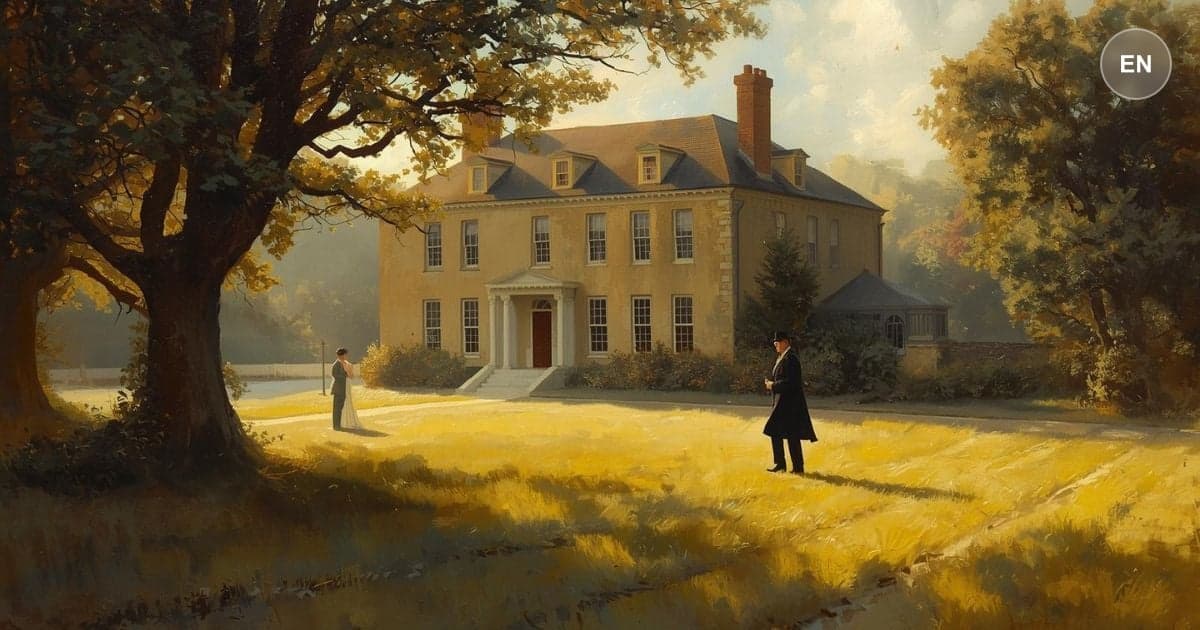
Nick cannot sleep after the accident. At dawn he crosses to Gatsby's open house and finds him slumped in the hall. Nothing happened, Gatsby says: he waited all night, and about four o'clock Daisy came to the window, stood there a minute, then turned out the light. Nick tells him to leave town before the yellow car is traced. Gatsby refuses. He cannot abandon Daisy until he knows what she will do. In the grey dawn he finally tells Nick the story behind the dream: how he met Daisy in Louisville as a penniless officer, took her on an October night under false pretenses of security, and felt married to her after one month. He went to war, got delayed at Oxford, and while Daisy drifted through orchids and saxophones Tom Buchanan arrived as the force of practical love. The letter reached Gatsby at Oxford.

When the story ends, daylight is back on Long Island and Gatsby is still editing the verdict. He insists Daisy never loved Tom, that yesterday's Plaza fight only frightened her into saying things she did not mean. Nick listens and knows better. They have breakfast on the porch while the gardener asks to drain the pool before the leaves clog the pipes. Gatsby says not today. He has waited this long for a phone call that may never come. Up in the city Nick tries to work, then dozes until Jordan phones. She is cool and distant; Tom and Daisy have left town without a forwarding address. The link Nick half expected is already gone.

The chapter cuts back to Wilson's garage the night before. Michaelis stays with him until dawn while Wilson mutters about the yellow car, remembers Myrtle's bruised face, and decides the driver murdered her on purpose. At the window he tells Myrtle's body that you may fool me but you can't fool God, staring at the giant eyes of Doctor T. J. Eckleburg until he repeats, God sees everything. By afternoon Wilson has found his way to West Egg. Gatsby floats on an inflated mattress in the pool, still waiting for word from Daisy. No call comes. Nick's prose catches the cost: a man who has paid a high price for living too long with a single dream, looking up at an unfamiliar sky.

Wilson shoots Gatsby and then himself. Nick arrives from the station to find the chauffeur, butler, gardener, and himself hurrying to the pool. The mattress drifts toward the drain, leaves turning it slowly and tracing a thin red circle in the water. They carry Gatsby toward the house; only then does the gardener see Wilson's body in the grass. The holocaust is complete.

In this chapter: Terms Characters Key Quotes Themes Modern Story

Why This Matters

Connect literature to life

Skill: Seeing When Hope Outlasts Evidence

Some people do not leave when the window goes dark; they stay and rewrite what the signal meant. Gatsby waits all night, sees Daisy appear and turn out the light, and still tells Nick she never loved Tom and that the Plaza fight only frightened her into lying. Notice when someone keeps editing the story after the evidence has already arrived, because that is often when the cost turns fatal.

Coming Up in Chapter 9

Nick arranges Gatsby's funeral and discovers how quickly a summer of guests vanishes when the host is dead. Henry Gatz will arrive with a boyhood schedule and a photograph of the house Jimmy promised to build, and Nick will measure what the dream cost.

Share it with friends

PreviousPrevious ChapterNextNext Chapter
Original text
4,530 wordscomplete

Chapter 08

Waiting in the Pool

VIII I couldn’t sleep all night; a foghorn was groaning incessantly on the Sound, and I tossed half-sick between grotesque reality and savage, frightening dreams. Toward dawn I heard a taxi go up Gatsby’s drive, and immediately I jumped out of bed and began to dress—I felt that I had something to tell him, something to warn him about, and morning would be too late. Crossing his lawn, I saw that his front door was still open and he was leaning against a table in the hall, heavy with dejection or sleep. “Nothing happened,” he said wanly. “I waited, and…

Public-domain chapter text, formatted for reading.

Master this chapter. Complete your experience

Purchase the complete book to access all chapters and support classic literature

Buy at Powell'sBuy on Amazon

Available in paperback, hardcover, and e-book formats

Now let's explore the literary elements.

Key Quotes & Analysis

"I waited, and about four o’clock she came to the window and stood there for a minute and then turned out the light."

— Jay Gatsby

Context: Gatsby telling Nick what happened after the accident while Daisy stayed inside

The light going out is closure, but Gatsby hears it as proof he should keep waiting.

In Today's Words:

Gatsby watched Daisy's house all night, clinging to the smallest sign she might need him. When her bedroom light finally went out, he took it as encouragement to keep waiting. It's like refreshing someone's social media after they ghost you, reading hope into silence. Sometimes we mistake indifference for playing hard to get.

"I don’t think she ever loved him."

— Jay Gatsby

Context: Gatsby after telling the Louisville story, still reframing the Plaza fight

Even after Tom wins and Daisy returns inside, Gatsby edits the story so the dream can survive.

In Today's Words:

Even after losing completely, Gatsby still rewrites the story in his head. He convinces himself Daisy never really loved her husband, that their marriage was fake. It's like insisting your ex was never happy with their new partner. When reality destroys our dreams, we just edit reality instead of accepting the truth.

"God sees everything"

— George Wilson

Context: Wilson at the garage window staring at the Eckleburg billboard

Wilson needs cosmic certainty the way Gatsby needs romantic certainty; both hunt a final meaning for the crash.

In Today's Words:

Wilson stares at that billboard like it's watching him, needing to believe someone's keeping score of right and wrong. When your world collapses, you desperately want cosmic justice, some higher power tracking the damage. It's the same impulse that makes us post cryptic quotes after betrayal, hoping karma's listening.

"paid a high price for living too long with a single dream."

— Nick

Context: Nick narrating Gatsby in the pool waiting for Daisy's call

The chapter names the cost before the gunshot: one dream held so long it replaces the living world.

In Today's Words:

Nick realizes Gatsby destroyed himself by never letting go of one fantasy. He spent years building his entire identity around winning back Daisy, missing actual life happening around him. It's like staying obsessed with your college glory days while your actual career stagnates. Some dreams become prisons when held too long.

Thematic Threads

Letting Go

In This Chapter

Gatsby's inability to let go of the past

Development

The inability to let go becomes his destruction

In Your Life:

Recognize when you can't let go of the past, when you can't accept that a moment is gone—the inability to let go is powerful but destructive

Hope

In This Chapter

Gatsby's hope persists even after the dream is dead

Development

Hope becomes a trap when it persists without reason

In Your Life:

Recognize when hope persists without reason, when it becomes a trap rather than a strength

You now have the context. Time to form your own thoughts.

Discussion Questions

This is not a test. Five prompts guide you through the chapter, from how it opens to how it closes, so you notice context and rhythm rather than facts to memorize. Sit with each question in your own words. When you see "One way to read it," treat it as a starting point, not the only answer.

  1. 1

    What does Gatsby tell Nick he saw at four o'clock at Daisy's window?

    ▶One way to read it

    He waited all night; she came to the window, stood a minute, then turned out the light. He reads it as contact; Nick reads it as refusal to choose.

    analysis • surface
  2. 2

    How does Gatsby's Louisville story explain the origin of the green light dream?

    ▶One way to read it

    Penniless officer, false security, one month that felt like marriage, then war, Oxford delay, and Tom's practical love. The dream began as class lack dressed as romance.

    analysis • medium
  3. 3

    Why does Gatsby refuse to leave town even after Nick warns him Wilson may trace the car?

    ▶One way to read it

    He will not abandon Daisy until he knows her verdict. Responsibility for Myrtle is secondary to rewriting what Daisy felt yesterday at the Plaza.

    application • medium
  4. 4

    What does Gatsby mean when he says Daisy's voice is full of money?

    ▶One way to read it

    Nick names what Gatsby fused: desire and class. Daisy is not separable from the wealth that made her desirable, the voice is the dream's currency.

    application • deep
  5. 5

    When have you kept editing a relationship's story after evidence said it was already over?

    ▶One way to read it

    Rewriting the verdict after defeat is how hope becomes trap. Notice when you explain away a closed window as almost enough.

    reflection • deep

Critical Thinking Exercise

10 minutes

The Letting Go Analysis

Gatsby can't let go of the past, and it destroys him. Think about when letting go is necessary and how to do it.

Consider:

  • •Why is it so difficult to let go of the past?
  • •When is letting go necessary?
  • •How do you know when to let go?
  • •What helps you move forward after letting go?

Journaling Prompt

Write about a time when you struggled to let go of the past. What helped you move forward? How did you learn to let go?

Coming Up Next...

Chapter 9: Nobody Came

Nick arranges Gatsby's funeral and discovers how quickly a summer of guests vanishes when the host is dead. Henry Gatz will arrive with a boyhood schedule and a photograph of the house Jimmy promised to build, and Nick will measure what the dream cost.

Continue to Chapter 9
Previous
The Hottest Day
Contents
Next
Nobody Came
Keep exploring

Continue Exploring

Study guides, teaching tools, themes, and the full library.More ways to read The Great Gatsby: study guides, teaching tools, and the wider library.

  • The Great Gatsby Study Guide
  • Teaching Resources
  • Essential Life Index
  • Browse by Theme
  • All Books

What this chapter teaches

Theme analyses that draw on this chapter and apply it to modern life.

  • The Cost of WatchingNick Carraway sees everything clearly and does almost nothing. Fitzgerald
  • You Cannot Repeat the PastGatsby
Social Class & StatusLove & RelationshipsIdentity & Self-Discovery

You Might Also Like

Great Expectations cover

Great Expectations

Charles Dickens

Explores society & class

Madame Bovary cover

Madame Bovary

Gustave Flaubert

Explores love & romance

A Room with a View cover

A Room with a View

E.M. Forster

Explores love & romance

The Blue Castle cover

The Blue Castle

L. M. Montgomery

Explores love & romance

Browse all 106+ books

Share This Chapter

Know someone who'd enjoy this? Spread the wisdom!

TwitterFacebookLinkedInEmail

Go further with Prestige

Unlock study guides and downloads, early access, and exclusive content — and support free access for everyone.

Subscribe to PrestigeCreate free account
Intelligence Amplifier
Intelligence Amplifier™Powering Wide Reads

Exploring human-AI collaboration through books, essays, and philosophical dialogues. Classic literature transformed into navigational maps for modern life.

2025 Books

→ The Amplified Human Spirit→ The Alarming Rise of Stupidity Amplified→ San Francisco: The AI Capital of the World
Visit intelligenceamplifier.org
hello@widereads.com

WideReads Originals

→ You Are Not Lost→ The Last Chapter First→ The Lit of Love→ Wealth and Poverty→ Wisdom for the Wounded
Arvintech
arvintechAmplify your Mind
Visit at arvintech.com

Navigate

  • Home
  • Library
  • Essential Life Index
  • How It Works
  • Subscribe
  • Account
  • About
  • Contact
  • Authors
  • Suggest a Book
  • Landings

Made For You

  • Trending
  • Students
  • Educators
  • Families
  • Readers
  • Literary Analysis
  • Finding Purpose
  • Letting Go
  • Recovering from a Breakup
  • Corruption
  • Gaslighting in the Classics

Newsletter

Weekly insights from the classics. Amplify Your Mind.

Legal

  • Privacy Policy
  • Terms of Service
  • Editorial Standards
  • Cookie Policy
  • Accessibility

Why Public Domain?

We focus on public domain classics because these timeless works belong to everyone. No paywalls, no restrictions—just wisdom that has stood the test of centuries, freely accessible to all readers.

Public domain books have shaped humanity's understanding of love, justice, ambition, and the human condition. By amplifying these works, we help preserve and share literature that truly belongs to the world.

A Pilgrimage

Powell's City of Books

Portland, Oregon

If you ever find yourself in Portland, walk to the corner of Burnside and 10th. The building takes up an entire city block. Inside is over a million books, new and used on the same shelf, organized by color-coded rooms with names like the Rose Room and the Pearl Room. You can lose an afternoon. You can lose a weekend. You will find a book you have been looking for your whole life, and three you did not know existed.

It is a pilgrimage. We cannot find a bookstore like it anywhere on earth. If you read the classics, and you ever get the chance, go. It belongs on every reader's bucket list.

Visit powells.com

We are not in any way affiliated with Powell's. We are just a very big fan.

© 2026 Wide Reads™. All Rights Reserved.

Intelligence Amplifier™ and Wide Reads™ are proprietary trademarks of Arvin Lioanag.

Copyright Protection: All original content, analyses, discussion questions, pedagogical frameworks, and methodology are protected by U.S. and international copyright law. Unauthorized reproduction, distribution, web scraping, or use for AI training is strictly prohibited. See our Copyright Notice for details.

Disclaimer: The information provided on this website is for general informational and educational purposes only and does not constitute professional, legal, financial, or technical advice. While we strive to ensure accuracy and relevance, we make no warranties regarding completeness, reliability, or suitability. Any reliance on such information is at your own risk. We are not liable for any losses or damages arising from use of this site. By using this site, you agree to these terms.