
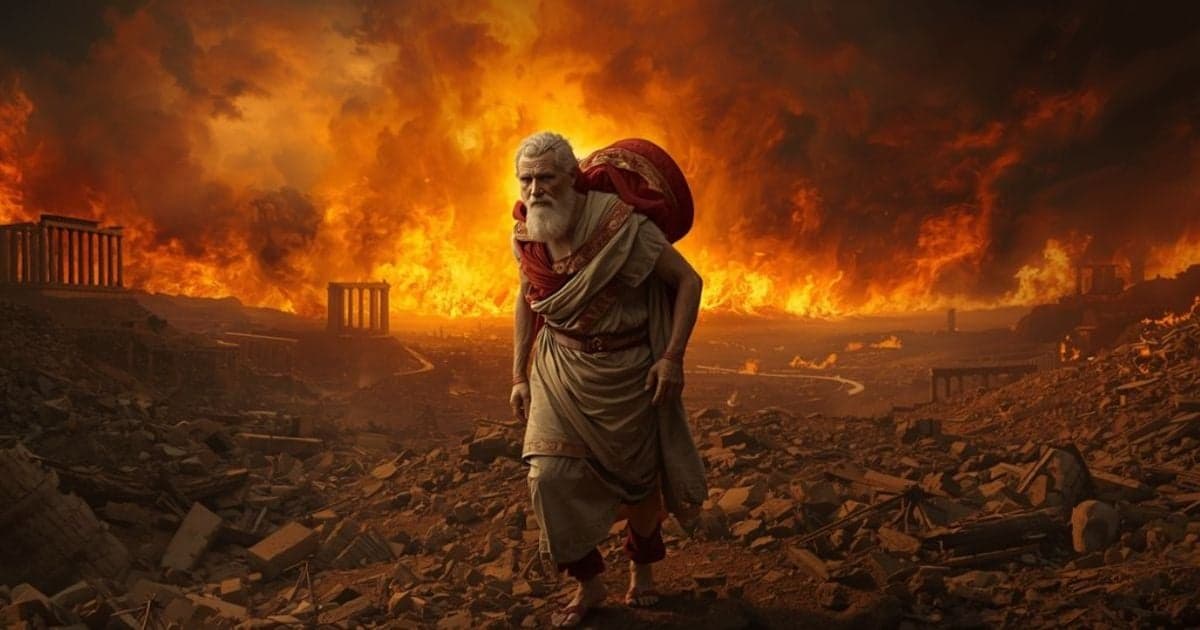
The second half of the poem is not a march into empty land. Latinus is willing. Juno is not. Allecto puts fire into a queen, a prince, and a hunting party until hospitality is a corpse. Virgil's Italy is already inhabited, already promised to someone else, already ready to call the newcomers a crime.
Nisus and Euryalus die in the dark trying to be useful. Pallas dies in daylight so Turnus can stand on the body. Camilla dies chasing a glittering prize. These are not obstacles cleared for Rome. They are the poem's insistence that a founding war has faces, ages, and mothers.
The last book offers a cleaner ending: one duel, one death, a kingdom settled. Then Aeneas sees the belt. The hesitation is real. It does not last. Augustus wanted an origin worthy of empire. Virgil ends on a soul fleeing in protest, which is a different kind of origin story.
The Central Lesson
Violence in The Aeneid is not a side effect of destiny. It is the method by which a promised land is taken from people who already live there. Allecto's fire, the night raid, Pallas under Turnus's feet, Camilla on the ground, and the belt that ends the pause are one argument. You can finish the assignment and still fail the moral test. Virgil will not let the last stroke feel like architecture.
Applying This to Your Life
Separate Necessity From Appetite
Aeneas fights when diplomacy collapses, not because he enjoys domination. Ask whether your conflict is defending a real obligation or feeding an old hunger to win. Virgil trusts you to feel the difference even when outcomes look similar.
Count Who Pays on Every Side
Camilla, Pallas, Turnus, and unnamed Latins die for a future Rome will inherit. Founding stories often hide those bodies. Virgil forces you to look. Anyone building something large should know whose blood is on the blueprint.
Watch the Trophy That Makes Mercy Impossible
Turnus wearing the belt is not only insult. It is a reminder Aeneas cannot put down. Before you keep a souvenir of someone else's loss, ask whether you are making the next killing easier.
Other lessons in this book
More life-skill deep dives from the same classic.
Carrying Grief While You Lead
Tell Troy while it still hurts, watch Dido's smoke, walk the underworld, and bury Pallas without putting the command down.
6 chapters·Explore AnalysisDuty When Destiny Demands Sacrifice
Follow Mercury out of Carthage, Anchises's parade of Romans, and the duel that fulfills prophecy without feeling like triumph.
6 chapters·Explore AnalysisLeading People Past Exhaustion
Hold the fleet through Juno's storm, the ship-burning mutiny, Evander's alliance, and a truce that will not hold.
6 chapters·Explore AnalysisThe Cost of Building Something New
Sit with Troy on Aeneas's back, the burning ships, and Latium's first blood, and name who pays for a city that does not exist yet.
6 chapters·Explore AnalysisWhen Love Collides With Duty
Watch Dido offer a kingdom already built, then the cave, the secret departure, and the shade that will not speak.
4 chapters·Explore Analysis
Continue exploring
Explore this theme
The same lessons in other books
See how other books teach the same life skills.

North and South
Acting on Conscience When It Costs YouWatch Hale leave the church, Margaret lie at the station for Frederick, and Thornton refuse a speculation that would save him.North and South
Navigating Class and Economic PowerTrace Milton from imported Irish hands and Boucher's brook to the inheritance that buys a partnership, not a husband.
The Scarlet Pimpernel
Acting Despite MisunderstandingRide for France while Marguerite still calls him the biggest fool in England, then let her find the rope.
Where the lesson lives in the book
Hospitality Turns to Arms
Latinus is ready for a foreign son-in-law. Juno will not have a peaceful landing. Allecto fires Amata, then Turnus, then the hunting party that sheds first blood. What began as a marriage alliance becomes a war with people who already live on the promised ground.
Key Insight:
Virgil strips away the fantasy that building something new can avoid conflict with what already exists. Aeneas did not choose war first. He inherits it when integration is sabotaged.
“Arms! arms!”
Glory in the Dark
With Aeneas away, Nisus and Euryalus leave the walls to cut through the sleeping enemy. The raid begins as strategy and ends as slaughter, then as a botched escape. Friendship and appetite for action kill two of the camp's best before the war has a field commander back.
Key Insight:
Founding wars consume the young who cannot stand waiting. Virgil honors the friends and still shows the mission failing. Courage without command can be a kind of waste.
“O happy friends! for, if my verse can give Immortal life, your fame shall ever live,”
A Body Used as a Platform
Turnus kills Pallas and stands over the corpse. Aeneas returns with divine armor and answers in kind. Lausus dies trying to save a father. Mezentius dies refusing the gods. The war is no longer a misunderstanding. It is a sequence of bodies.
Key Insight:
There is a difference between craving violence and accepting it when every peaceful door closes. Standing over the dead as a display turns a necessary fight into a debt the victor will pay later.
“Turnus bestrode the corpse:”
Camilla Forgets the Field
Camilla leads her riders in a dazzling assault, then dies chasing a prize and forgetting her surroundings. Aeneas has already sent Pallas home. He grants truces so both sides can bury their dead before the war resumes.
Key Insight:
Founding wars consume the brilliant on every side. Virgil pauses for funerals because the poem wants you to count the bodies, not only the prophecy fulfilled.
“Acca, 'tis past! he swims before my sight, Inexorable Death; and claims his right.”
The Belt That Ends the Pause
Turnus and Aeneas agree to settle the war in single combat. The duel breaks, resumes, and ends when Aeneas sees Pallas's belt on the fallen man. Fury overtakes mercy. The epic closes on a killing that fulfills fate without offering catharsis.
Key Insight:
Virgil refuses a clean victory. Aeneas kills because the poem's world demands closure, not because justice feels complete. Founders may finish the task and still leave you asking whether the cost was worth it.
“'Tis Pallas, Pallas gives this deadly blow.”