
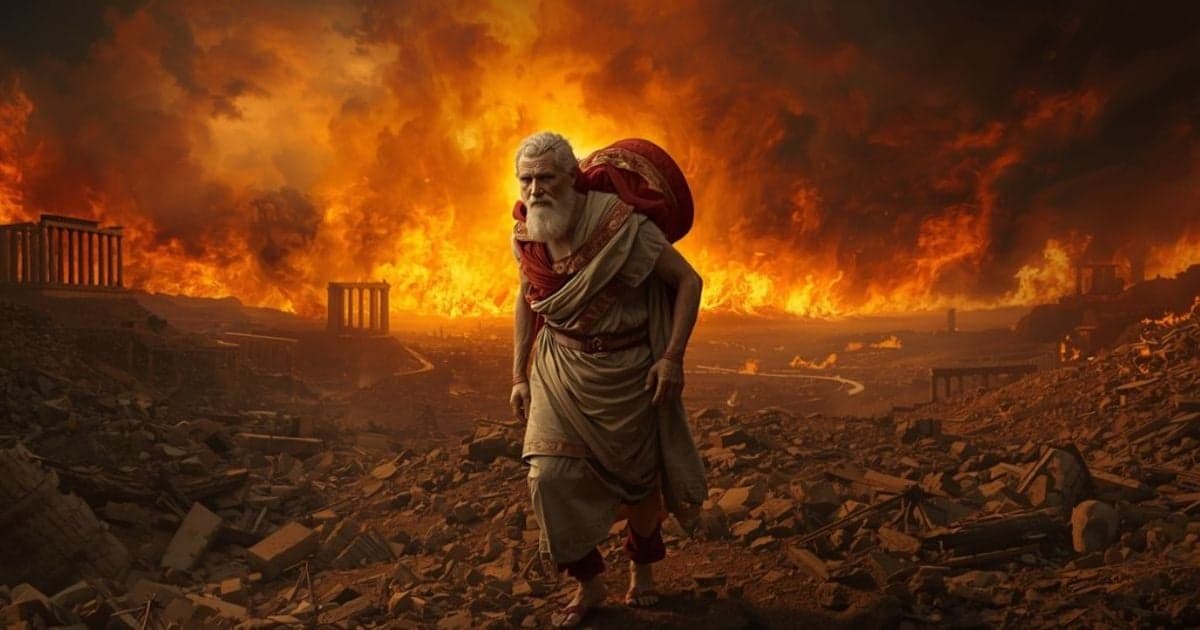
In Juno's temple at Carthage, Aeneas finds his own war painted on the walls. He weeps at Priam, at the fighting, at himself in the picture. The survivors are still hungry. He does not skip the pictures to look like a founder. He lets the loss be visible, then he goes to the feast where Dido will ask him to tell it all again.
Book 2 is that telling: the horse, the night, Creusa lost in the smoke while he carries Anchises and leads Ascanius. Book 5 is the anniversary games for the father who died on the road, interrupted by fire on the African coast. Book 6 is Dido's shade, who will not hear the speech he finally has. Grief here is not a private weekend. It is the work that happens in front of people who still need a destination.
Pallas dies in a war Aeneas asked him to join. The body goes home with full honors. Aeneas grants the Latins time to bury their own. Then he fights again. Virgil's claim is not that leaders should be unfeeling. It is that the people who follow you can tell when you have decided their dead do not count.
The Central Lesson
Grief in The Aeneid is not the opposite of command. It is the proof that command has not become stone. The murals, Creusa, the smoke over Carthage, Dido's silence, and Pallas's funeral are the same test from five angles: can you name the loss accurately and still move the living? Aeneas weeps in public and still sails. The poem never treats that combination as a contradiction. It treats it as the job.
Prestige deep dive
A Psychological Reading of The Aeneid
The Aeneid is the psychology of obedience that can weep and still leave, and of the finished lives spent so a city that does not exist yet can be called necessary.
Read the full psychological readingApplying This to Your Life
Name the Loss Before You Sell the Next Step
Aeneas retells Troy without sanitizing it. People follow him because he does not pretend the past is over. If you lead through a layoff, a move, or a death, your credibility may depend less on optimism than on accurate witness.
Do Not Wait for Closure Before You Act
Dido's silence in the underworld is the poem's refusal of tidy repair. Some wounds stay open. The job is to keep moving the living without demanding that the dead bless the plan.
Build Ritual Into the Mission
Funeral honors and truces are not delays in Aeneas's war. They keep the community human enough to continue. Schedule grief on purpose when your people are running on fumes.
Other lessons in this book
More life-skill deep dives from the same classic.
Duty When Destiny Demands Sacrifice
Follow Mercury out of Carthage, Anchises's parade of Romans, and the duel that fulfills prophecy without feeling like triumph.
6 chapters·Explore AnalysisLeading People Past Exhaustion
Hold the fleet through Juno's storm, the ship-burning mutiny, Evander's alliance, and a truce that will not hold.
6 chapters·Explore AnalysisThe Cost of Building Something New
Sit with Troy on Aeneas's back, the burning ships, and Latium's first blood, and name who pays for a city that does not exist yet.
6 chapters·Explore AnalysisWhen Founding Demands Violence
Track Camilla, Pallas's belt, and Turnus on the ground, and refuse to call the last stroke a clean victory.
5 chapters·Explore AnalysisWhen Love Collides With Duty
Watch Dido offer a kingdom already built, then the cave, the secret departure, and the shade that will not speak.
4 chapters·Explore Analysis
Continue exploring
Explore this theme
The same lessons in other books
See how other books teach the same life skills.

North and South
Acting on Conscience When It Costs YouWatch Hale leave the church, Margaret lie at the station for Frederick, and Thornton refuse a speculation that would save him.North and South
Navigating Class and Economic PowerTrace Milton from imported Irish hands and Boucher's brook to the inheritance that buys a partnership, not a husband.
The Scarlet Pimpernel
Acting Despite MisunderstandingRide for France while Marguerite still calls him the biggest fool in England, then let her find the rope.
Where the lesson lives in the book
Troy on the Temple Walls
After the storm, Aeneas hides his despair while he tells the survivors to endure. In Carthage he finds the fall of Troy painted on Juno's temple. He weeps at Priam, at the fighting, at his own figure in the picture. The people still need a harbor. He does not skip the pictures to look like a founder.
Key Insight:
The first leadership test is not cheer. It is whether you can let loss be visible without handing your panic to the people who still have to eat.
“Endure, and conquer! Jove will soon dispose”
Creusa Lost in the Smoke
At Dido's feast he retells the night Troy died: the horse, Priam slaughtered, Anchises on his back, Ascanius by the hand. He looks back for Creusa and finds only her shade, telling him to go. The story is not a résumé. It is a wound he agrees to open in public.
Key Insight:
People follow a leader who can name what burned. Sanitizing the night would have made Aeneas sound heroic and made the survivors feel alone in the wreckage.
“Nor tears, nor cries, can give the dead relief.”
Games for a Father, Smoke for a Queen
On the anniversary of Anchises's death, Aeneas stages funeral games instead of rushing the voyage. Then he sees fire on the Carthaginian coast and understands Dido is gone. Duty has already sailed. Memory arrives as smoke he cannot row back to.
Key Insight:
Ritual is how a leader keeps grief from turning into drift. The games honor the dead. The smoke proves that finishing an obligation does not close the account.
The Shade That Will Not Answer
In the underworld Aeneas finds the words he failed to speak in Carthage. Dido turns away. He weeps. His father's shade offers a parade of unborn Romans, which is consolation of a different kind: a future that will not restore the people already lost.
Key Insight:
Delayed honesty cannot always retrieve what departure destroyed. Aeneas finally feels fully, and it changes nothing for Dido. Leaders learn that some griefs must be carried without reconciliation.
“Unwilling I forsook your friendly state, Commanded by the gods, and forc'd by fate.”
Pallas on the Ground
Young Pallas dies fighting in a war Aeneas asked him to join. Turnus stands over the body. Aeneas is still the commander of an unfinished campaign. The grief has a name, an age, and a father waiting in Pallanteum.
Key Insight:
Command includes the deaths you invited by asking for help. Aeneas cannot pause the war to become a private mourner, and Virgil will not let him treat Pallas as a statistic.
“Turnus bestrode the corpse:”
Funeral as Governance
Aeneas sends Pallas home with full honors and grants the Latins time to bury their dead. The truce is military and humane at once. Exhausted armies and bereaved fathers cannot fight forever without breaking.
Key Insight:
Leading through grief includes structuring time for mourning. The pause is not weakness. It is how a community stays human enough to continue.
“Peace with the manes of great Pallas dwell! Hail, holy relics! and a last farewell!”