The Aeneid
Virgil
0:000:00
0:00 / 0:00

Prestige · $2.99/month
Chapter audio, theme analysis, and downloads
Virgil
0:00 / 0:00
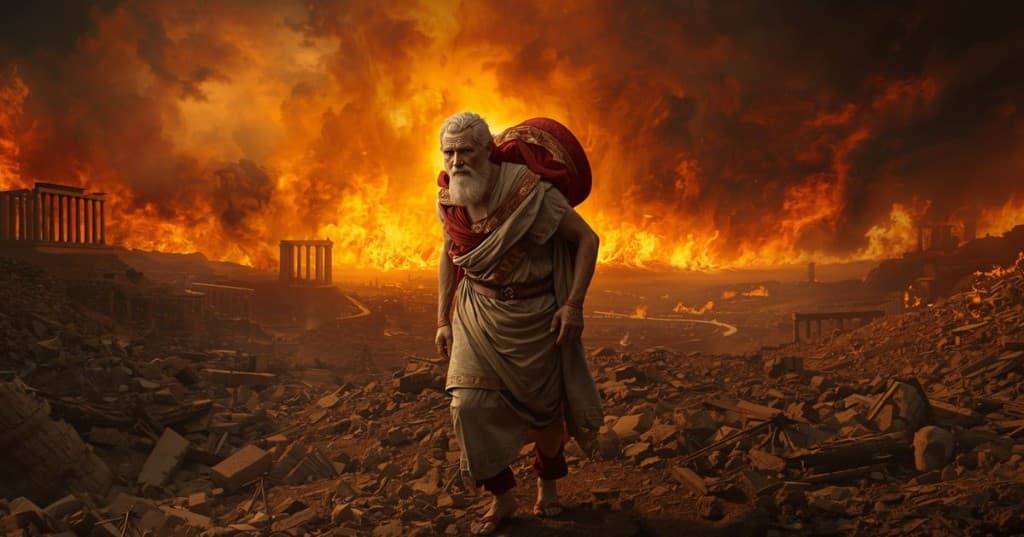
Juno sends a storm against the Trojan fleet. Aeneas, who already carried his father out of a city on fire, washes onto Dido's shore and is asked to tell how Troy fell. He tells it. The survivors who crawl onto her sand have already lost a city and years of false harbors. Virgil spent the last eleven years of his life on the poem and died in 19 BC asking that the unfinished manuscript be burned. Augustus refused. Fate keeps assigning the next departure, and each one costs a life that was already working. The man everyone will call the founder of Rome does what fate requires and still cannot call the ending a victory.
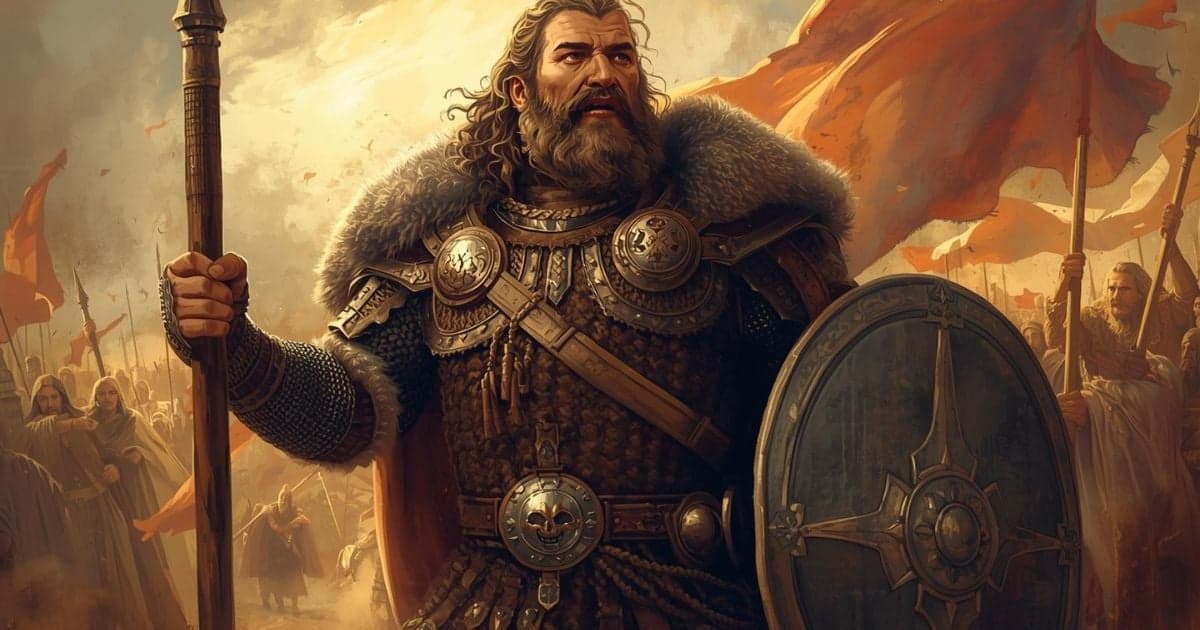
Aeneas is pius: dutiful, grieving, often uncertain, and still moving. Dido is the queen who built Carthage from exile and offers him a kingdom already standing. Turnus is the Latin prince who will not yield the land or the bride the gods have already assigned. Anchises dies on the road and still waits in the underworld with a vision of Rome. Ascanius is the son the future is supposed to belong to. Around them Virgil places Juno, who will not forgive Troy; Venus, who keeps bargaining for her son; Mercury, who arrives with the order to sail; Camilla, who dies magnificent; Pallas, whose belt will decide the last second of the poem; and Latinus, who wanted peace and got a war.
The poem turns on a storm, a cave, an underworld, and a belt. Juno's storm drives the survivors onto the Carthaginian coast. Aeneas tells the wooden horse, the night the city burned, and the moment he put Anchises on his back. False harbors waste years. In Carthage, Dido and Aeneas take shelter in a cave. Mercury tells him Italy waits. He sails. She builds a pyre. The ships burn at Drepanum. In the underworld he meets Dido's silence and Anchises's parade of unborn Romans. Latinus offers alliance. Juno and Allecto unmake it. Evander gives Pallas. Camilla falls. Turnus wears the belt. Aeneas sees it and does not spare him.
Virgil wrote the poem for Augustus and asked that the unfinished manuscript be burned. Augustus refused. He never treats Carthage as a cute delay, or the Italian war as a necessary inconvenience the reader is meant to cheer. Mercy, when it arrives, arrives as a hesitation over Turnus that does not last. What remains is not a hymn to empire. It is a picture of how a promised land is paid for by people who will not live to see it.
Juno's storm is already the first bill. Duty When Destiny Demands Sacrifice is Mercury at Carthage, Anchises's parade of unborn Romans, and the duel that fulfills prophecy without feeling like triumph. The Cost of Building Something New is Troy on Aeneas's back, the ships burned at Drepanum, and Latium's first blood, paid by people who will not see the city. When Love Collides With Duty is Dido's hospitality, the cave, the secret departure, and the shade that will not speak. Leading People Past Exhaustion is the fleet through the storm, the mutiny at the games, Evander's alliance, and a truce Juno and Allecto unmake. Carrying Grief While You Lead is Troy retold on Dido's shore, her smoke on the horizon, the underworld, and Pallas's funeral. When Founding Demands Violence is Camilla on the ground, the belt Turnus wears, and the last second when Aeneas sees it and does not spare him.
The ships that burned at Drepanum never make Italy. Turnus is already on the ground, asking to be sent back to his father. Aeneas sees Pallas's belt and the hesitation does not last. Dido's pyre is still smoking behind the departing ships. Anchises is still on his son's back in the story told on her shore. Wide Reads pairs summaries, quotes, and audio with all twelve books, and the last line is still a soul fleeing in protest.
Book 1 opens with Virgil's famous declaration: arms and the man, forced by fate and Juno's hatred, b...
Book 2 is Aeneas's painful answer to Dido's question. Before the court he warns that retelling Troy ...
Book 3 continues the banquet narrative with years of wandering after Troy's fall. Near Ida the Troja...
Book 4 turns from travelogue to tragedy of passion and duty. Dido confesses to Anna that Aeneas has ...
Aeneas leaves Carthage and sails toward Italy, but a storm drives him to Sicily, where King Acestes ...
Aeneas lands at Cumae and climbs to Apollo's temple to consult the Sibyl, Deiphobe, who speaks for t...
Aeneas buries his nurse Caieta at the place that will bear her name, then sails past Circe's coast w...
War preparations intensify on both sides. Turnus raids the countryside and sends Venulus to Diomedes...
While Aeneas is away seeking Tuscan allies, Turnus receives a divine nudge from Iris, who tells him ...
Jupiter summons the gods and orders them to stop taking sides in the Latin war. Venus pleads for the...
Morning after the slaughter, Aeneas erects a trophy from Mezentius's armor on an oak trunk and tells...
The Latin army breaks, and Turnus feels public scorn pressing on his promise to fight. Humiliation s...
Published -19
Publius Vergilius Maro, known as Virgil (70-19 BC), was born near Mantua and trained in rhetoric and philosophy before the Eclogues and Georgics made him the poet Augustus trusted with a national origin. He spent the last eleven years of his life on The Aeneid. He worked slowly, dictating lines in the morning and revising them all day. He died at Brundisium with the poem unfinished and asked that the manuscript be burned. Augustus overruled him.
The book became a school text, a political scripture, and Dante's guide through Hell and Purgatory. Readers of empire still hear flattery in it. The grief is louder: Aeneas weeps, Dido curses, Turnus begs, and the last line is a soul fleeing in protest.
His gift was making destiny feel local: a storm, a cave, a funeral, a belt. The poem still finds readers who recognize the moment they were told to leave a life that was working, and the moment they finished the assigned task and could not call it a win.
Virgil speaks to the moment the right decision still feels like a betrayal: the job that requires you to leave people who are still working, the mission that costs a life you cannot get back, the founding that only happens because someone paid for it who will not see the city finished. The Aeneid names that pressure at Carthage, in Latium, and on the ground where Turnus asks to be sent home.
What makes him indispensable is that he refused to make the cost invisible. Commissioned by Augustus to give Rome an origin story to rival Homer, he spent the last eleven years of his life on the poem and asked, dying, that the unfinished manuscript be burned. Augustus overruled him. Virgil gave the emperor his epic and still let Dido curse the man who leaves her, let Turnus beg for his life, and ended the poem on a soul fleeing in protest, not a triumph.
Plot, characters, and themes — plus audio, source text, and patterns you can use after class
Two ways in
Chapter by chapter, with audio. The meaning arrives because you experienced it — not because someone listed bullet points.
Start with this.
The actual words the author wrote, alongside every summary. Use the guide, then step into the source.
Then step into the source.
Either way, the door opens inward.
— and most of all, Why does this matter?
Purchase the complete book to access all chapters and support classic literature
Available in paperback, hardcover, and e-book formats
Free to read • No account required

Weekly insights from the classics. Amplify Your Mind.
We focus on public domain classics because these timeless works belong to everyone. No paywalls, no restrictions—just wisdom that has stood the test of centuries, freely accessible to all readers.
Public domain books have shaped humanity's understanding of love, justice, ambition, and the human condition. By amplifying these works, we help preserve and share literature that truly belongs to the world.
© 2026 Wide Reads™. All Rights Reserved.
Intelligence Amplifier™ and Wide Reads™ are proprietary trademarks of Arvin Lioanag.
Copyright Protection: All original content, analyses, discussion questions, pedagogical frameworks, and methodology are protected by U.S. and international copyright law. Unauthorized reproduction, distribution, web scraping, or use for AI training is strictly prohibited. See our Copyright Notice for details.
Disclaimer: The information provided on this website is for general informational and educational purposes only and does not constitute professional, legal, financial, or technical advice. While we strive to ensure accuracy and relevance, we make no warranties regarding completeness, reliability, or suitability. Any reliance on such information is at your own risk. We are not liable for any losses or damages arising from use of this site. By using this site, you agree to these terms.
Deep dives
Watch Dido offer a kingdom already built, then the cave, the secret departure, and the shade that will not speak.
Relate at large, my godlike guest,
Hold the fleet through Juno's storm, the ship-burning mutiny, Evander's alliance, and a truce that will not hold.
Endure, and conquer! Jove will soon dispose
Trending search questions mapped to the six lessons in this epic—what readers actually ask Google about Aeneas and Dido, why Virgil wanted the poem burned, Turnus's death, Anchises in the underworld, and Rome's founding cost.
Virgil's epic follows Aeneas, who carries his father out of burning Troy and spends the rest of the poem paying for a city that does not exist yet. Juno's storm strands him at Dido's Carthage, Mercury orders him to Italy, and the war he fights there to found Rome costs Camilla, Pallas, and Turnus before the last line: a soul fleeing in protest, not a victory chant.
Explore The Cost of Building Something NewDido offers him a kingdom already built at Carthage, and their cave becomes, in her telling, a marriage. Mercury arrives with a direct order: Italy waits, and the gods have already assigned the coast. Aeneas obeys, faces her fury and her curse, and later meets her silent shade in the underworld. Virgil does not let duty look clean. Aeneas's own eloquence arrives too late to matter.
Explore When Love Collides With DutyHe spent the last eleven years of his life on the poem and died at Brundisium in 19 BC with it still unfinished, asking that the manuscript be destroyed rather than published in that state. Augustus overruled him. The poem became Rome's national epic anyway, a school text, and Dante's guide through Hell, built on a request its own author did not want honored.
Explore Duty When Destiny Demands SacrificeNo. Turnus is beaten to the ground and begs to be sent back to his father. Aeneas hesitates, an instant the poem lets you feel as real mercy considered, then sees Pallas's belt on Turnus's shoulder, the trophy taken from the young ally Turnus killed, and drives the sword home. The last lines follow Turnus's soul, not a Roman triumph.
Explore When Founding Demands ViolenceAeneas travels to the underworld and finds his father Anchises among the unborn, who shows him a parade of Roman souls still waiting to be born, including the future emperor Augustus. It is the poem's clearest sales pitch for empire, delivered as a father's pride to a grieving son who has already lost Troy, Dido, and Anchises himself. The vision does not undo the cost already paid to reach it.
Explore Carrying Grief While You LeadSix lessons run through the epic: duty exacts sacrifice even when destiny demands it and no one calls it a triumph; building something new costs people who will not live to see it finished; love and duty rarely resolve cleanly when they collide; leading people past exhaustion means holding a fleet, a mutiny, and a truce together with nothing left in reserve; carrying grief while you lead means telling the story of what you lost without putting the command down; and founding anything durable usually demands violence you cannot fully justify afterward. Those skills, not a flattering national myth, are why the poem still answers modern searches.
The poem became a school text, a piece of imperial propaganda, and Dante's guide through Hell. Readers still return to it for the line the propaganda cannot absorb: duty done at full cost, counted rather than celebrated. Anyone who has followed orders that were right and still felt like a loss is reading the same ledger Virgil kept for Aeneas.