Wide Reads
Literature MattersLife IndexEducators
Sign in
Where to Begin

The Night Raid and Its Tragic Cost — The Aeneid

The Aeneid - The Night Raid and Its Tragic Cost

Virgil

The Aeneid

The Night Raid and Its Tragic Cost

Home›Books›The Aeneid›Chapter 9: The Night Raid and Its Tragic Cost
Previous
9 of 12
Next

Analysis by the Wide Reads editorial team·Reviewed against the source text·Updated December 11, 2025

Summary

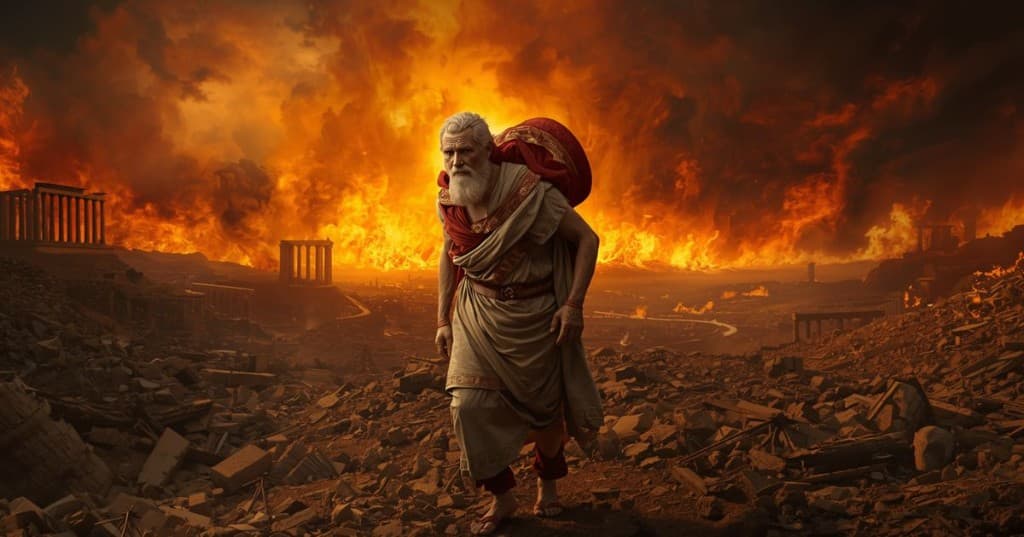
While Aeneas is away seeking Tuscan allies, Turnus receives a divine nudge from Iris, who tells him the Trojan camp is undefended and urges an immediate assault. Turnus reads the moment as providence, gathers his Rutulian forces, and marches on the walled settlement where the Trojans wait behind defenses their absent leader ordered them not to abandon. Frustrated by Trojan caution, Turnus tries to burn the ships anchored below the camp. The attack should destroy their last hope of escape, but Cybele intervenes: the sacred pines from Ida transform into sea nymphs, break their cables, and dive into the Tiber while both armies watch in shock. Turnus alone refuses to be intimidated. He reframes the miracle as a sign that the Trojans are trapped on land and promises his men a final assault after nightfall. Virgil compares him to a starving wolf circling a fold, furious that prey remains just out of reach. The image captures Turnus's energy and his frustration with enemies who will not come out and fight on his terms. Messapus keeps watch while the Rutulians feast, never imagining that the quiet Trojan post above them is studying every gap in their discipline. Inside the camp, fear and duty compete. Mnestheus and Seresthus share command, soldiers rotate watch, and two young friends, Nisus and Euryalus, stand guard together at a vulnerable post near the enemy lines. Nisus studies the sleeping Rutulian camp and proposes a daring mission: slip through the lines, reach Aeneas, and bring help before the Trojans are overrun. Euryalus refuses to be left behind. Their debate is tender and fierce. Nisus worries for the younger man's life; Euryalus insists that glory and friendship are inseparable. They win approval from the Trojan council and rich promises from Ascanius, who pledges gifts, land, and lifelong loyalty. Euryalus asks only that someone care for his mother, who followed him into exile without knowing the danger he would choose. Alethes weeps with pride, Mnestheus gives armor, and the boys leave the ramparts to applause they will never hear again as living men. Armed and blessed, the two pass through the trenches and into the enemy camp, where wine, sleep, and overconfidence have left the Latins exposed. Nisus cuts a path through sleeping warriors, killing Rhamnes and others with silent efficiency. Euryalus matches his ferocity, and for a time the raid succeeds beyond expectation. But dawn approaches, and Nisus urges retreat. Euryalus pauses to claim shining armor from a slain enemy, including Messapus's helmet. That trophy catches moonlight. Volscens and his cavalry spot them, give chase, and trap Euryalus in the woods. Nisus escapes, realizes his friend is missing, and turns back into certain death. He kills Sulmo and Tagus with thrown spears, then rushes into the open crying that he alone is guilty. Volscens kills Euryalus anyway. Nisus kills Volscens in return and dies on his friend's body. Virgil pauses to promise their names immortality, but the practical cost is immediate. Turnus parades their severed heads on spears at dawn, and the Trojan ramparts fill with horror. Euryalus's mother runs through the battlements, tearing her hair and cursing the war. Her public grief shakes the defenders' morale at the worst possible moment. Turnus launches a full assault. Messapus breaches the palisades, Mezentius hurls fire, and the Latins press the walls from every side. The Volscians raise moving shields like a shed, fill ditches, and try to scale the works while the Trojans answer with stones, javelins, and ten years of siege experience. Numanus taunts the Trojans for softness and eastern rituals until young Ascanius, firing his first war bow, kills him with Jove's thunder as omen. Apollo briefly appears in disguise to tell the prince not to tempt fate further. Pandarus and Bitias, two giant brothers, impulsively open the gates and invite disaster inside. Turnus slips through like a tiger in a fold and slaughters until Mnestheus rallies the Trojans and drives him toward the Tiber, where the river god receives the exhausted prince and washes the gore from his limbs. A wooden tower burns and collapses on defenders. Young Lycus and Helenor die trying to escape the flames. Turnus kills Caeneus and drives the Trojans back in ferocious hand-to-hand fighting until he is forced toward the river. The chapter closes with the camp still standing but battered, its defenders reminded that individual courage can be magnificent and still fail to change the strategic picture. Nisus and Euryalus embody loyal friendship, but their story also warns that love without limits and trophies without discipline can turn a brilliant raid into a public catastrophe. Turnus gains momentum, the Trojans remain cut off from their leader, and the war's human cost becomes visible in a mother's scream above the walls. Book 9 leaves Italy burning on two fronts: the siege still tightens, and the story of two friends will be told as long as Latin is read.

In this chapter: Terms Characters Key Quotes Themes Modern Story

Why This Matters

Connect literature to life

Skill: Timing a Risky Rescue

Courage needs an exit plan as much as an entry plan. Nisus and Euryalus win the night, then lose everything when Euryalus pauses for trophy armor and daylight finds them. Before you act for someone you love, define when to stop, what not to take, and how you will get out if the plan works.

Coming Up in Chapter 10

Help is closer than the besieged camp knows. Aeneas returns with Tuscan allies, the gods declare neutrality, and a single act of trophy-taking will set revenge in motion.

Share it with friends

PreviousPrevious ChapterNextNext Chapter
Original text
8,739 wordscomplete

Chapter 09

The Night Raid and Its Tragic Cost

THE ARGUMENT. Turnus takes advantage of Aeneas’s absence, fires some of his ships (which are transformed into sea nymphs,) and assaults his camp. The Trojans, reduced to the last extremities, send Ninus and Euryalus to recall Aeneas; which furnishes the poet with that admirable episode of their friendship, generosity, and the conclusion of their adventure. While these affairs in distant places pass’d, The various Iris Juno sends with haste, To find bold Turnus, who, with anxious thought, The secret shade of his great grandsire sought. Retir’d alone she found the daring man, And op’d her rosy lips, and thus began:…

Public-domain chapter text, formatted for reading.

Master this chapter. Complete your experience

Purchase the complete book to access all chapters and support classic literature

Buy at Powell'sBuy on Amazon

Available in paperback, hardcover, and e-book formats

Now let's explore the literary elements.

Key Quotes & Analysis

"What none of all the gods could grant thy vows, That, Turnus, this auspicious day bestows."

— Iris

Context: Iris tells Turnus that Aeneas has left the camp undefended.

Opportunity arrives dressed as divine favor, encouraging a risky strike when defenses look weakest.

In Today's Words:

Iris tells Turnus the gods have handed him the hour he wanted, with the Trojan leader gone and the camp exposed. When a door suddenly opens, it is easy to call it fate instead of asking what you might be walking into and who pays if the gamble fails.

"A gen'rous ardour boils within my breast, Eager of action, enemy to rest:"

— Nisus

Context: Nisus explains to Euryalus why he wants to attempt the night mission.

Noble restlessness can be genuine courage, but it also pushes people toward action before consequences are weighed.

In Today's Words:

Nisus admits his blood is up and rest feels impossible, so he wants to act now rather than wait safely on the wall. That heat can produce heroism, yet it can also rush people past planning, especially when friendship makes caution feel like betrayal instead of care.

"Me! me!" he cried—"turn all your swords alone On me—the fact confess'd, the fault my own."

— Nisus

Context: Nisus rushes out to claim guilt as Volscens threatens Euryalus.

Loyalty at its extreme chooses confession and death over surviving while a friend is killed for your shared choice.

In Today's Words:

Nisus shouts that the fault is his and begs the enemy to turn every blade on him alone. The moment shows friendship as moral witness, not strategy, because he cannot accept living after Euryalus dies for a mission they chose together in the dark. The same pattern shows up wherever leaders must carry grief in

"O happy friends! for, if my verse can give Immortal life, your fame shall ever live,"

— Virgil (narrator)

Context: The poet honors Nisus and Euryalus after their deaths.

Culture tries to redeem pointless battlefield loss by promising that love and courage will be remembered even when the mission fails.

In Today's Words:

Virgil says that if poetry can grant immortality, these friends will never die in memory. Communities use that promise after young people are lost, turning private grief into public honor, even when the tactical result of their bravery is disaster and a mother's scream at dawn.

Thematic Threads

Friendship

In This Chapter

Nisus and Euryalus demonstrate deep loyalty, willing to die for each other and their cause

Development

Introduced here as contrast to the political alliances elsewhere in the epic

In Your Life:

You might see this in workplace friendships that blur professional boundaries or family relationships where loyalty conflicts with good judgment.

Leadership

In This Chapter

Aeneas's absence creates a power vacuum that Turnus exploits, while the Trojans struggle without clear command

Development

Continues the theme of leadership burden from earlier chapters

In Your Life:

You might see this when your supervisor is away and workplace dynamics shift, or when the family decision-maker is unavailable during a crisis.

Class

In This Chapter

Young soldiers seek glory and recognition through dangerous missions, while their families bear the cost of their choices

Development

Develops the theme of how class affects who takes risks and who pays the price

In Your Life:

You might see this in how working-class families sacrifice for opportunities that middle-class families take for granted.

Grief

In This Chapter

Euryalus's mother's public mourning weakens community morale and spreads despair

Development

Introduced here as a force that affects entire communities

In Your Life:

You might see this in how one person's visible struggle can impact workplace morale or family dynamics.

Sacrifice

In This Chapter

The young men's deaths seem pointless despite their brave intentions and genuine love for their people

Development

Continues exploring when sacrifice serves a purpose versus when it becomes waste

In Your Life:

You might see this in your own tendency to give more than you can afford, whether time, money, or emotional energy.

You now have the context. Time to form your own thoughts.

Discussion Questions

This is not a test. Five prompts guide you through the chapter, from how it opens to how it closes, so you notice context and rhythm rather than facts to memorize. Sit with each question in your own words. When you see "One way to read it," treat it as a starting point, not the only answer.

  1. 1

    Why does Iris's message push Turnus toward attack at this specific moment?

    ▶One way to read it

    Aeneas is absent and the camp looks vulnerable, so the message turns desire into apparent destiny and makes delay feel like failure.

    analysis • surface
  2. 2

    What makes Euryalus's choice to take trophy armor a turning point rather than a minor mistake?

    ▶One way to read it

    The armor reflects moonlight, reveals their position, and converts a successful raid into a chase that ends in public death.

    analysis • medium
  3. 3

    How does Euryalus's mother's grief affect the Trojan defenders beyond her personal loss?

    ▶One way to read it

    Her public mourning spreads fear along the walls and weakens morale just as Turnus launches a full assault.

    application • medium
  4. 4

    Where do you see leaders praise courage while failing to provide the structure that keeps courage from becoming waste?

    ▶One way to read it

    Strong answers name settings where sacrifice is honored but planning, backup, or exit timing is treated as unnecessary caution.

    application • deep
  5. 5

    Have you ever watched good intentions make a crisis worse because someone skipped the exit plan?

    ▶One way to read it

    Look for a moment when urgency, loyalty, or trophy-taking turned a private fix into a public disaster.

    reflection • deep

Critical Thinking Exercise

10 minutes

Map Your Good Intention Risks

Think of a current situation where you want to help someone you care about or volunteer for something important. Write down your noble intention, then honestly list three things that could go wrong. For each risk, write one specific step you could take to protect yourself or prepare for failure.

Consider:

  • •Consider both emotional and practical costs if things go badly
  • •Think about how your failure might hurt the very people you're trying to help
  • •Ask yourself what you can actually afford to lose without destroying your stability

Journaling Prompt

Write about a time when your desire to help someone led to problems you didn't expect. What warning signs did you ignore, and what would you do differently now?

Coming Up Next...

Chapter 10: Divine Intervention and Mortal Consequences

Help is closer than the besieged camp knows. Aeneas returns with Tuscan allies, the gods declare neutrality, and a single act of trophy-taking will set revenge in motion.

Continue to Chapter 10
Previous
Divine Arms and Earthly Alliances
Contents
Next
Divine Intervention and Mortal Consequences
Keep exploring

Continue Exploring

Study guides, teaching tools, themes, and the full library.More ways to read The Aeneid: study guides, teaching tools, and the wider library.

  • The Aeneid Study Guide
  • Teaching Resources
  • Essential Life Index
  • Browse by Theme
  • All Books

Life-skill deep dives in The Aeneid

  • Duty When Destiny Demands SacrificeAeneas chooses obligation over comfort when fate demands he leave love, safety, and his own desires behind to found Rome.
  • Leading People Past ExhaustionHow Aeneas leads exhausted refugees through storms, mutiny, and war when faith in the journey has run out.
  • The Cost Of Building Something NewExile, displacement, and founding: what Virgil shows about the human price of building a civilization when everything familiar has burned.
  • When Love Collides With DutyDido and Aeneas: Virgil

You Might Also Like

Beowulf cover

Beowulf

Unknown

Explores war & conflict

Metamorphoses cover

Metamorphoses

Ovid

Explores identity & self

The Odyssey cover

The Odyssey

Homer

Explores identity & self

The Iliad cover

The Iliad

Homer

Explores war & conflict

Browse all 106+ books

Share This Chapter

Know someone who'd enjoy this? Spread the wisdom!

TwitterFacebookLinkedInEmail

Go further with Prestige

Unlock study guides and downloads, early access, and exclusive content — and support free access for everyone.

Subscribe to PrestigeCreate free account
Intelligence Amplifier
Intelligence Amplifier™Powering Wide Reads

Exploring human-AI collaboration through books, essays, and philosophical dialogues. Classic literature transformed into navigational maps for modern life.

2025 Books

→ The Amplified Human Spirit→ The Alarming Rise of Stupidity Amplified→ San Francisco: The AI Capital of the World
Visit intelligenceamplifier.org
hello@widereads.com

WideReads Originals

→ You Are Not Lost→ The Last Chapter First→ The Lit of Love→ Wealth and Poverty→ Wisdom for the Wounded
Arvintech
arvintechAmplify your Mind
Visit at arvintech.com

Navigate

  • Home
  • Library
  • Essential Life Index
  • How It Works
  • Subscribe
  • Account
  • About
  • Contact
  • Authors
  • Suggest a Book
  • Landings

Made For You

  • Trending
  • Students
  • Educators
  • Families
  • Readers
  • Literary Analysis
  • Finding Purpose
  • Letting Go
  • Recovering from a Breakup
  • Corruption
  • Gaslighting in the Classics

Newsletter

Weekly insights from the classics. Amplify Your Mind.

Legal

  • Privacy Policy
  • Terms of Service
  • Editorial Standards
  • Cookie Policy
  • Accessibility

Why Public Domain?

We focus on public domain classics because these timeless works belong to everyone. No paywalls, no restrictions—just wisdom that has stood the test of centuries, freely accessible to all readers.

Public domain books have shaped humanity's understanding of love, justice, ambition, and the human condition. By amplifying these works, we help preserve and share literature that truly belongs to the world.

A Pilgrimage

Powell's City of Books

Portland, Oregon

If you ever find yourself in Portland, walk to the corner of Burnside and 10th. The building takes up an entire city block. Inside is over a million books, new and used on the same shelf, organized by color-coded rooms with names like the Rose Room and the Pearl Room. You can lose an afternoon. You can lose a weekend. You will find a book you have been looking for your whole life, and three you did not know existed.

It is a pilgrimage. We cannot find a bookstore like it anywhere on earth. If you read the classics, and you ever get the chance, go. It belongs on every reader's bucket list.

Visit powells.com

We are not in any way affiliated with Powell's. We are just a very big fan.

© 2026 Wide Reads™. All Rights Reserved.

Intelligence Amplifier™ and Wide Reads™ are proprietary trademarks of Arvin Lioanag.

Copyright Protection: All original content, analyses, discussion questions, pedagogical frameworks, and methodology are protected by U.S. and international copyright law. Unauthorized reproduction, distribution, web scraping, or use for AI training is strictly prohibited. See our Copyright Notice for details.

Disclaimer: The information provided on this website is for general informational and educational purposes only and does not constitute professional, legal, financial, or technical advice. While we strive to ensure accuracy and relevance, we make no warranties regarding completeness, reliability, or suitability. Any reliance on such information is at your own risk. We are not liable for any losses or damages arising from use of this site. By using this site, you agree to these terms.