Chapter 37
Power Plays and Protection
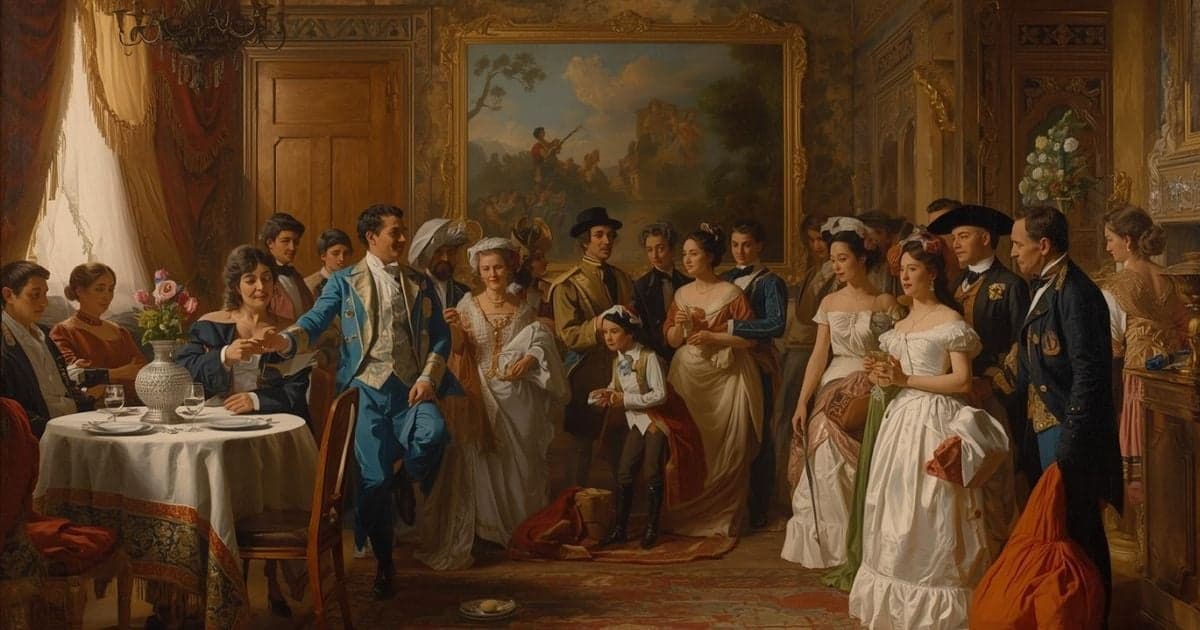
His Excellency "I Want to talk with that young man," said his Excellency to an aide. "He has aroused all my interest." "They have already gone to look for him, General. But here is a young man from Manila who insists on being introduced. We told him that your Excellency had no time for interviews, that you had not come to give audiences, but to see the town and the procession, and he answered that your Excellency always has time to dispense justice--" His Excellency turned to the alcalde in wonder. "If I am not mistaken," said the latter with…
Public-domain chapter text, formatted for reading.
Master this chapter. Complete your experience
Purchase the complete book to access all chapters and support classic literature
Available in paperback, hardcover, and e-book formats
Now let's explore the literary elements.
Key Quotes & Analysis
"Has this friar set himself to stir up the whole province or does he think that he governs here?"
Context: Hearing of Damaso's conflicts
Civil authority names friar overreach aloud. The governor signals that pulpit bullies do not own the islands.
In Today's Words:
The Captain-General asks whether Damaso is provoking the entire province or imagining himself its ruler. The same pattern still appears when corrupt institutions punish honesty, reward flattery, and teach people to mistake cruelty for order or tradition. The same pattern still appears when corrupt institutions punish honesty, reward flattery, and teach people to mistake cruelty
"your Excellency always has time to dispense justice"
Context: Insisting on an audience
Appealing to justice flatters power into acting. The student turns busy schedule into moral obligation.
In Today's Words:
A young man from Manila tells aides the governor always makes time to dispense justice when they refuse him entry. The same pattern still appears when corrupt institutions punish honesty, reward flattery, and teach people to mistake cruelty for order or tradition. The same pattern still appears when corrupt institutions punish honesty, reward flattery, and
"I Want to talk with that young man"
Context: Ordering Ibarra's interview
Reformers who defy local tyrants can attract higher allies. Curiosity follows courage when scandal reaches Manila.
In Today's Words:
His Excellency tells an aide he wants to speak with Ibarra because the youth has aroused all his interest. The same pattern still appears when corrupt institutions punish honesty, reward flattery, and teach people to mistake cruelty for order or tradition. The same pattern still appears when corrupt institutions punish honesty, reward flattery, and teach
"we are not all puppets of theirs"
Context: After meeting Ibarra
Governor claims independence from friar strings. The line previews civil power using Ibarra to humble clergy.
In Today's Words:
The Captain-General tells his aide that Spaniards in office are not all puppets of the religious orders. The same pattern still appears when corrupt institutions punish honesty, reward flattery, and teach people to mistake cruelty for order or tradition. The same pattern still appears when corrupt institutions punish honesty, reward flattery, and teach people to
Thematic Threads
Power
In This Chapter
The Captain-General uses his authority to humble the friars and elevate Ibarra as a demonstration of who really controls the Philippines
Development
Evolved from showing religious power dominating social life to revealing how secular authority can challenge church influence
In Your Life:
You might see this when upper management uses your situation to send messages to middle management about who's really in charge
Identity
In This Chapter
Ibarra chooses to stay in the Philippines despite offers of European opportunities, defining himself through his homeland commitment
Development
Continued from earlier chapters where Ibarra struggled between European education and Filipino roots
In Your Life:
You face this when opportunities require you to choose between advancement and staying true to your community or values
Class
In This Chapter
The Captain-General recognizes Ibarra as an exceptional Filipino worthy of protection, but this very exceptionalism reinforces class divisions
Development
Building on themes of how education and wealth create different treatment within the same racial category
In Your Life:
You might experience this when you're treated as 'one of the good ones' in ways that separate you from your background
Relationships
In This Chapter
Maria Clara's refusal to see Ibarra shows how political conflicts damage personal connections, even when you're winning publicly
Development
Introduced here as a new complication to their previously smooth courtship
In Your Life:
You see this when standing up for principles at work creates tension with friends or family who want you to 'just go along'
Social Expectations
In This Chapter
The friars expect automatic deference from the Captain-General but are shocked to find their influence has limits
Development
Continued from earlier scenes showing how entrenched power assumes its own permanence
In Your Life:
You encounter this when people who usually get their way can't believe you're not following their usual script
You now have the context. Time to form your own thoughts.
Discussion Questions
This is not a test. Five prompts guide you through the chapter, from how it opens to how it closes, so you notice context and rhythm rather than facts to memorize. Sit with each question in your own words. When you see "One way to read it," treat it as a starting point, not the only answer.
- 1
Why does the Captain-General make the friars wait while he meets others first?
analysis • surfaceOne way to read it
He signals civil power over clergy. Keeping priests in the hall humbles Damaso's faction publicly.
- 2
What does Ibarra gain and lose from the Captain-General's protection?
analysis • mediumOne way to read it
He wins official shielding and praise for his school, but Maria Clara still refuses to see him. Political victory does not restore love.
- 3
Why does Ibarra refuse the offer to leave for Europe?
application • mediumOne way to read it
He chooses homeland over comfort. Staying affirms duty to fathers' memory and reform projects already begun.
- 4
How does Salvi's mention of excommunication fail against the governor?
application • deepOne way to read it
Higher authority can override local church punishment when it suits state interests. Excommunication becomes bargaining chip, not absolute ban.
- 5
When has winning institutional support still left your personal life unchanged or worse?
reflection • deepOne way to read it
Promotions, legal wins, or boss protection that do not fix family silence mirror Ibarra at Maria Clara's locked door.
Critical Thinking Exercise
Map Your Power Network
Think of a current situation where you're caught between conflicting authorities - maybe management versus union, family members in conflict, or competing department heads. Draw a simple map showing who has what kind of power and where the tensions lie. Then identify where you might find unexpected allies or protection.
Consider:
- •Look for authorities who benefit from your principled stance
- •Consider what kind of example you represent to each side
- •Remember that protection often comes with expectations or trade-offs
Journaling Prompt
Write about a time when you found unexpected support during a conflict. What made that person willing to help you, and what did you learn about navigating institutional politics?
Coming Up Next...
Chapter 38: The Sacred and the Absurd
The town prepares for its grand religious procession, but beneath the pageantry, tensions simmer as various factions position themselves for what's to come. Ibarra must navigate the public celebration while trying to understand Maria Clara's sudden distance.