Chapter 36
When Love Meets Power
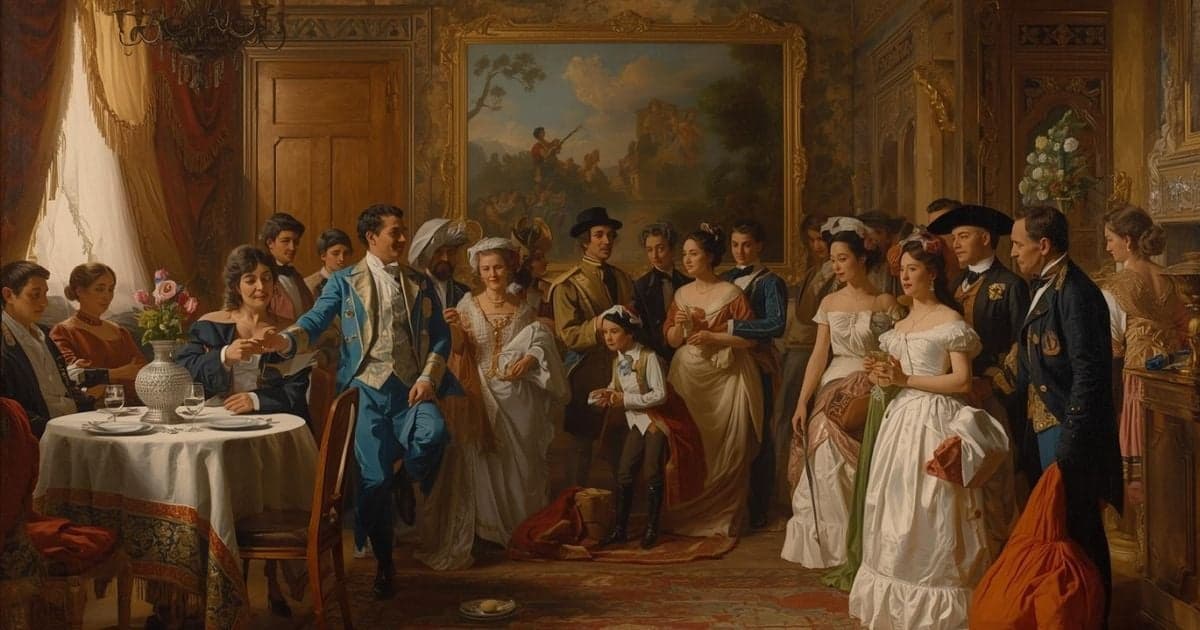
The First Cloud In Capitan Tiago's house reigned no less disorder than in the people's imagination. Maria Clara did nothing but weep and would not listen to the consoling words of her aunt and of Andeng, her foster-sister. Her father had forbidden her to speak to Ibarra until the priests should absolve him from the excommunication. Capitan Tiago himself, in the midst of his preparations for receiving the Captain-General properly, had been summoned to the convento. "Don't cry, daughter," said Aunt Isabel, as she polished the bright plates of the mirrors with a piece of chamois. "They'll withdraw the excommunication,…
Public-domain chapter text, formatted for reading.
Master this chapter. Complete your experience
Purchase the complete book to access all chapters and support classic literature
Available in paperback, hardcover, and e-book formats
Now let's explore the literary elements.
Key Quotes & Analysis
"All is lost! Padre Damaso has ordered me to break the engagement, otherwise he will damn me in this life and in the next."
Context: Returning from the convento
Spiritual terror joins earthly ruin in one sentence. The father announces that friar will can erase engagement and salvation together.
In Today's Words:
Capitan Tiago tells his household that Damaso demands the broken betrothal or eternal and bodily punishment. The same pattern still appears when corrupt institutions punish honesty, reward flattery, and teach people to mistake cruelty for order or tradition. The same pattern still appears when corrupt institutions punish honesty, reward flattery, and teach people to mistake
"What are confessionals for if not that we may sin? Everything is forgiven by telling it to the curate."
Context: Comforting Maria Clara
Cynical wisdom exposes religion as loophole. The servant suggests sinning then confessing beats obeying cruel orders.
In Today's Words:
Andeng whispers that Maria can meet Ibarra secretly because priests forgive anything reported in confession. The same pattern still appears when corrupt institutions punish honesty, reward flattery, and teach people to mistake cruelty for order or tradition. The same pattern still appears when corrupt institutions punish honesty, reward flattery, and teach people to mistake cruelty
"They'll withdraw the excommunication, they'll write now to the Pope, and we'll make a big poor-offering."
Context: Polishing mirrors while consoling Maria Clara
Naive faith in procedure mistakes power for paperwork. Donations cannot buy back love once friars decree otherwise.
In Today's Words:
Aunt Isabel promises papal letters and charity payments will restore Ibarra as if the church were a marketplace. The same pattern still appears when corrupt institutions punish honesty, reward flattery, and teach people to mistake cruelty for order or tradition. The same pattern still appears when corrupt institutions punish honesty, reward flattery, and teach people
"'Which do you prefer to lose,' they asked me, 'fifty thousand pesos or your life and your soul?'"
Context: Repeating the friars' ultimatum
False choice engineering makes surrender look rational. Debt to Ibarra weighs less than threatened damnation and violence.
In Today's Words:
Tiago says priests forced him to choose between fifty thousand pesos owed Crisostomo and his own body and soul. The same pattern still appears when corrupt institutions punish honesty, reward flattery, and teach people to mistake cruelty for order or tradition. The same pattern still appears when corrupt institutions punish honesty, reward flattery, and teach
Thematic Threads
Institutional Power
In This Chapter
The church uses spiritual, economic, and physical threats to control Capitan Tiago's family decisions
Development
Escalated from earlier social pressure to direct intimidation and ultimatums
In Your Life:
You might see this when employers, healthcare systems, or schools use fear tactics to pressure major decisions
Powerlessness
In This Chapter
Capitan Tiago feels trapped between protecting his daughter and protecting his family from institutional retaliation
Development
Developed from earlier hints of social anxiety into complete paralysis when faced with direct threats
In Your Life:
You might feel this when caught between doing what's right and avoiding consequences from powerful systems
False Choices
In This Chapter
Maria Clara is presented with marriage to a stranger as the only alternative to family destruction
Development
Introduced here as the culmination of mounting social pressure
In Your Life:
You might encounter this when institutions frame complex situations as having only two extreme options
Economic Control
In This Chapter
Despite being owed money, Capitan Tiago prioritizes church approval over financial interests
Development
Evolved from earlier displays of wealth anxiety into direct financial subordination
In Your Life:
You might face this when economic pressures are used to control personal or family decisions
Maternal Absence
In This Chapter
Maria Clara prays to the Virgin Mary for comfort her deceased mother cannot provide
Development
Developed from earlier mentions of her mother's death into acute need during crisis
In Your Life:
You might feel this when facing major life changes without the guidance or support you need most
You now have the context. Time to form your own thoughts.
Discussion Questions
This is not a test. Five prompts guide you through the chapter, from how it opens to how it closes, so you notice context and rhythm rather than facts to memorize. Sit with each question in your own words. When you see "One way to read it," treat it as a starting point, not the only answer.
- 1
Why does Capitan Tiago obey the friars despite owing Ibarra fifty thousand pesos?
analysis • surfaceOne way to read it
Priests stack spiritual damnation, bodily threat, and social ruin. Tiago fears excommunication more than debt.
- 2
What does Andeng's joke about confession reveal about how people survive the system?
analysis • mediumOne way to read it
Rules become loopholes when power is arbitrary. Servants learn to sin quietly and buy forgiveness rather than obey cruelty.
- 3
How does Maria Clara's prayer to the Virgin differ from Aunt Isabel's optimism?
application • mediumOne way to read it
Isabel trusts donations and paperwork; Maria Clara grieves a destroyed future. One performs hope, the other feels loss.
- 4
Why must Maria Clara perform for the Captain-General while her engagement collapses?
application • deepOne way to read it
Colonial hospitality demands visible composure. Women hide heartbreak so men can keep trading favors with power.
- 5
When have you seen institutions pressure a family to abandon someone they loved or owed?
reflection • deepOne way to read it
Churches, employers, or relatives threatening shame or ruin over a relationship echo Tiago's false choice.
Critical Thinking Exercise
Map the Pressure Points
Think of a time when an institution (employer, school, healthcare system, landlord) pressured you or someone you know into a decision that benefited them more than you. Draw or list the different types of pressure they used - was it financial threats, social pressure, time constraints, fear tactics, or appeals to duty? Then identify which pressure points were real consequences versus manufactured urgency.
Consider:
- •Institutions often bundle multiple threats together to make resistance feel impossible
- •The most effective pressure combines immediate fear with long-term consequences
- •Sometimes the institution has more to lose from public exposure than you do from resistance
Journaling Prompt
Write about a situation where you felt trapped by institutional pressure. What would you do differently now that you can recognize the pattern of layered intimidation?
Coming Up Next...
Chapter 37: Power Plays and Protection
The Captain-General's arrival brings new players into the deadly game surrounding Ibarra. As Maria Clara must perform for powerful guests while her heart breaks, the political forces that will determine everyone's fate begin to converge under one roof.