A Tale of Two Cities

Charles Dickens
0:000:00
0:00 / 0:00

Prestige · $2.99/month
Chapter audio, theme analysis, and downloads
Charles Dickens
0:00 / 0:00
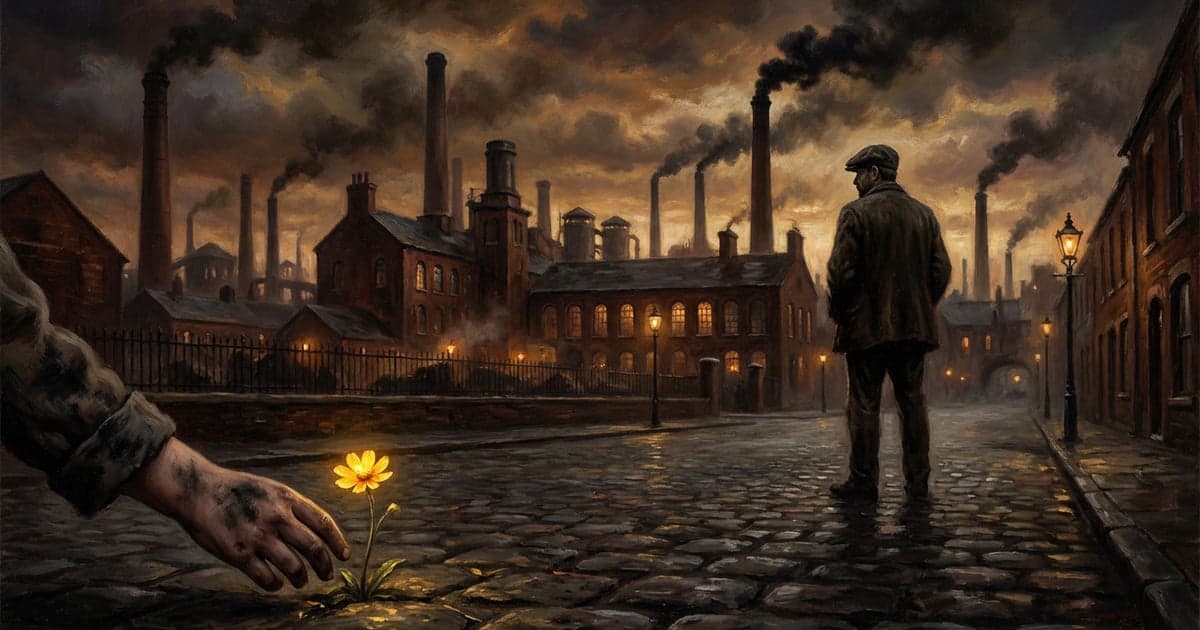
A wine cask breaks in the Saint Antoine street, and the people of the quarter drop to their knees to drink from the gutter before it runs away. Someone dips a finger in the spill and writes BLOOD on a wall. Dickens is not painting a symbol for a textbook. He is naming what happens when a people are treated as scenery until they answer in kind. A Tale of Two Cities will spend two cities, a recalled prisoner, and a wasted man on that bill.
Lucie Manette is the golden thread, patient enough to sit through a father's silence and a husband's danger. Jarvis Lorry is the Tellson's banker who pretends he has no heart and then spends the novel proving the opposite. Dr Manette has spent eighteen years in the Bastille. His hands know shoes better than they know her face. Charles Darnay has refused the Evrémonde name and still cannot refuse the claim that name makes on him. Sydney Carton does a barrister's grinding paperwork, drinks what is left of his evenings, and loves Lucie knowing he will never be the man she chooses. A marquis of the Evrémonde line treats a dead child as a bill paid with a coin. Madame Defarge knits names into a register and does not forget. A fierce companion guards Lucie with a force that has no French. The pressure among them is not a romance triangle. It is a debt moving between London and Paris, and someone will have to pay it in a face that is not his own.
A messenger stops the Dover mail and hands Lorry a scrap that says Recalled to Life. In the room above the wine shop Lucie meets the cobbler. At the Old Bailey, Darnay is charged with treason. Carton saves him because they share a face, and later uses that same face as a key. In Paris the marquis's coach kills a child. He tosses a coin and is found stabbed in his bed. Darnay marries Lucie. Carton tells her he would give his life to keep a life she loves. The Bastille falls. Defarge finds a paper in One Hundred and Five, North Tower. A local official writes from a French prison. Darnay crosses to answer for his house and is locked up as an emigrant aristocrat. Dr Manette's suffering buys a first acquittal. The hinge is a new denunciation: the Defarges, and a third accuser, Manette himself, through the Bastille letter that names every Evrémonde for a raped peasant girl and a murdered brother. Carton drugs Darnay in the Conciergerie and takes his place. Lucie's fierce companion stays behind. The pistol that goes off in her struggle with Madame Defarge ends the register. Carton rides the tumbril with a seamstress who does not know the swap.
Dickens is not writing a costume romance that the Terror interrupts. He is building a machine in three books, Recalled to Life, The Golden Thread, and The Track of a Storm, and every wasted hour Carton spends is a part. He drew on Carlyle and on a fear that England could walk the same road if it kept treating poverty as scenery. The London courtroom and the Paris grindstone belong to one case. The swap at the end is not a last-minute trick. Lucie's family leaves. Carton thinks of a far, far better rest. The book lets him have that sentence because the cart has already been paid for.
The first pressure is already in that street, and Understanding How Oppression Breeds Violence is the Marquis's coin after his coach kills a child, the grindstone in Saint Antoine once the Bastille has fallen, a tossed payment coming back as a city. Finding Purpose After Wasting Years is Carton doing Stryver's briefs at the Old Bailey and drinking what is left of his evenings until the Conciergerie offers one act those wasted years can still finish. His promise to Lucie, made after she has chosen Darnay, is Loving Without Possession in practice: a love that wants her house standing more than it wants him inside it. Recognizing Mob Mentality lives in Madame Defarge's knitting and in the roar after Manette's Bastille letter is read, when a crowd treats Lucie's child as the next name on a register. Breaking Cycles of Revenge is Defarge hunting that child because she is the surviving sister from the letter, revenge that will not stop at the man who did the harm. Sacrifice and Meaning is the face that is not Darnay's on the last cart, and a seamstress who takes his hand because the swap has made room for two lives.
BLOOD still drying on the wall when the Dover mail says Recalled to Life. Wide Reads carries summaries, quotes, and audio through all forty-five chapters, from a cobbler's bench above the wine shop to a cart that carries one face in place of another.
Two kings with large jaws and two queens sit on their thrones, both certain that things are settled ...
On a foggy November night in 1775, a mail coach struggles up Shooter's Hill outside London. The hors...
Dickens opens with a profound meditation on human isolation: every person is a complete mystery to e...
Mr. Lorry arrives in Dover after a grueling coach journey, transforming from muddy traveler to respe...
In the poor Saint Antoine district of Paris, a broken wine cask creates a moment of desperate joy as...
In a dim garret above the Defarge wine shop, we finally meet the mysterious prisoner, Dr. Alexandre ...
Published 1859
Charles Dickens (1812-1870) wrote A Tale of Two Cities as a warning about the consequences of ignoring poverty and injustice. The novel's famous opening, "It was the best of times, it was the worst of times," reflected Dickens's fear that England could follow France into revolution if the wealthy continued to ignore the suffering of the poor. It remains his best-selling novel.
Dickens wrote the book in 1859, drawing on Thomas Carlyle's history of the French Revolution and his own outrage at social inequality in Victorian England. The novel is shorter and more tightly plotted than his other major works, built like a machine: every character and scene feeds the final sacrifice. Sydney Carton, the cynical drunk who finds purpose in death, became one of literature's defining portraits of wasted potential redeemed by a single decisive act.
The book's dual setting, London and Paris, was not merely historical colour. Dickens wanted his readers to see that the conditions that produced the Terror existed in their own country. His warning was not that revolution was wrong, but that ignoring injustice until it explodes guarantees suffering for everyone, including those who thought themselves safe.
Charles Dickens speaks to the moment when a comfortable country starts pretending the conditions for its own uprising do not exist at home: a wasted life that still has one act left in it, a debt that keeps compounding until someone unrelated ends up paying it, a mob that stops being able to tell a guilty name from a convenient one. A Tale of Two Cities treats revolution as arithmetic, not melodrama, and asks what a person who has wasted his years actually owes the people he loves.
Plot, characters, and themes — plus audio, source text, and patterns you can use after class
Two ways in
Chapter by chapter, with audio. The meaning arrives because you experienced it — not because someone listed bullet points.
Start with this.
The actual words the author wrote, alongside every summary. Use the guide, then step into the source.
Then step into the source.
Either way, the door opens inward.
— and most of all, Why does this matter?
Purchase the complete book to access all chapters and support classic literature
Available in paperback, hardcover, and e-book formats
Free to read • No account required

Weekly insights from the classics. Amplify Your Mind.
We focus on public domain classics because these timeless works belong to everyone. No paywalls, no restrictions—just wisdom that has stood the test of centuries, freely accessible to all readers.
Public domain books have shaped humanity's understanding of love, justice, ambition, and the human condition. By amplifying these works, we help preserve and share literature that truly belongs to the world.
© 2026 Wide Reads™. All Rights Reserved.
Intelligence Amplifier™ and Wide Reads™ are proprietary trademarks of Arvin Lioanag.
Copyright Protection: All original content, analyses, discussion questions, pedagogical frameworks, and methodology are protected by U.S. and international copyright law. Unauthorized reproduction, distribution, web scraping, or use for AI training is strictly prohibited. See our Copyright Notice for details.
Disclaimer: The information provided on this website is for general informational and educational purposes only and does not constitute professional, legal, financial, or technical advice. While we strive to ensure accuracy and relevance, we make no warranties regarding completeness, reliability, or suitability. Any reliance on such information is at your own risk. We are not liable for any losses or damages arising from use of this site. By using this site, you agree to these terms.
Deep dives
Tell Lucie you would give your life to keep a life she loves, after you already know she will marry Darnay.
Buried how long? Almost eighteen years.
Hear the roar after the Bastille letter is read, then watch a crowd treat Lucie's child as the next name on a list.
Gentlemen! In the king's name, all of you!
Follow Madame Defarge from the knitted register to Lucie's daughter, revenge that will not stop at the man who did the harm.
Repression is the only lasting philosophy. The dark deference of fear and slavery, my friend, will keep the dogs obedient to the…
Trending search questions mapped to the lessons in this novel: what readers actually ask Google about Sydney Carton's sacrifice, Madame Defarge, the guillotine, revenge, and why the ending still works.
A wine cask breaks in the Saint Antoine street and someone writes BLOOD on a wall in the spilled dregs. Dr Manette is recalled to life after eighteen years in the Bastille, his daughter Lucie marries Charles Darnay, and Sydney Carton, the wasted lawyer who loves her from a distance, discovers his one useful talent is a face that matches Darnay's. Dickens spends two cities, a recalled prisoner, and a wasted man on a single debt that London and Paris both end up paying.
Explore Understanding How Oppression Breeds ViolenceCarton has spent the novel doing Stryver's paperwork and drinking away his evenings, certain he will never be the man Lucie chooses. He promises her early on that he would give his life to keep a life she loves, and the Conciergerie finally gives that promise something to do. Drugging Darnay and taking his place on the last cart is not a sudden virtue. It is the one act his wasted years were always capable of, spent on purpose instead of drink.
Explore Finding Purpose After Wasting YearsHer Bastille letter, read aloud by Dr Manette's own testimony, names the Evrémondes for a raped peasant girl and a murdered brother: her sister and brother. Madame Defarge has knitted that register for years, and when the family line survives in Lucie's daughter, she hunts the child because revenge that starts with the man who did the harm rarely agrees to stop there.
Explore Breaking Cycles of RevengeSaint Antoine's grindstone and the roar in the courtroom show a crowd that has stopped being able to tell a guilty name from a convenient one. Dickens does not excuse the aristocracy that caused the Terror, but he refuses to romanticise the mob that answers it: a tossed coin for a dead child becomes a tossed head for anyone the register happens to name next.
Explore Recognizing Mob MentalityCarton rides the tumbril with a seamstress who does not know the swap, and Dickens gives him the line about a far, far better rest he has never earned before. It reads as triumph because the whole machine of the book, every wasted hour and every early scene, has been quietly building toward one face standing in for another. The sacrifice works because it costs exactly what the rest of the novel has shown Carton had left to spend.
Explore Sacrifice and MeaningSix lessons run through the novel: understand how oppression breeds violence when a coin tossed for a dead child comes back as a grindstone; find purpose after wasting years the way Carton finally does; love without possession when the person you want has already chosen someone else; recognise mob mentality before a crowd stops checking names; break cycles of revenge before they outlive the harm that started them; and hold sacrifice and meaning together on the last cart. Those lessons, not a costume drama, are why the book still answers modern searches.
What makes him indispensable is how deliberately he built the warning. Dickens wrote the novel in 1859, working from Thomas Carlyle's history of the French Revolution and his own fear that Victorian England, with its debtors' prisons and starving poor, was closer to Saint Antoine than anyone wanted to admit. He built the book like the machine Sydney Carton finally becomes part of: shorter than his other novels, tightly plotted, with every early scene a part that pays off in the last one.
That discipline is why the ending still works. Dickens does not let Carton earn his death with a speech. He earns it with the same wasted, grinding paperwork he has always done, turned toward one person instead of no one. The novel's warning was never that revolution is wrong. It is that ignoring injustice until it explodes guarantees suffering for everyone, including the people who were sure they would always be safe.