

The numbering happens before the blow. Gradgrind does not need to strike a child. He needs a grammar in which a girl is already a slot, a vessel, a gallon waiting to be filled. Bitzer can define a horse because the definition was written to exclude the girl who has lived beside horses. The failure is not Sissy's. It is the instrument congratulating itself. Dickens is exact about the sequence. First the name that is not a name. Then the town that looks like the school. Then the mill that counts Hands the way it counts steam.
Coketown is not a backdrop. It is the same sentence at a larger type size. Fact, fact, fact, until a street that differs is a defect, and a weaver with a private life is a management problem. Bounderby will later translate any human request into turtle soup and a gold spoon, which is how a system stays respectable while it starves. The workers' wants are not heard as wants. They are heard as ingratitude. That translation is the cruelty. Nobody has to raise a voice once the dictionary has been captured.
Stephen calls it a muddle and loses the job for refusing both shirts. The mill wanted a Hand. The meeting wanted a vote. A man who would be neither is treated as a fault in the man. If you have ever been easier to process as a number, a role, or a cost, you already know this weather. The skill is not to collect synonyms for exploitation. It is to catch the moment a living person is replaced by the position they occupy, and to refuse to speak of them, or of yourself, in the mill's census.
The Central Lesson
A dehumanizing system does not begin with hatred. It begins with a useful name. Girl number twenty. Hand. Vessel. Headcount. Once the person is the position, suffering has to file as a cost, and mercy has to file as waste. Dickens lets the school, the town, and the mill share one grammar so you can hear it anywhere the furniture is already arranged in rows. Do not wait for a villain. Listen for the census. If you can be fully described by the part of you that produces, you are already inside Coketown, whether the brick is red or the dashboard is green.
Applying This to Your Life
Catch the Noun
Write down what your workplace, school, or clinic calls the people inside it. If the word could also describe inventory, the philosophy is already running. Change the noun in one meeting and see who flinches. The flinch is the system noticing it has been seen.
Refuse the Luxury Translation
When a basic need is answered as if you asked for venison, do not argue inside their menu. Name the need again without their adjectives. Bounderby wins when hunger has to defend itself as not-greed.
Watch Who Cannot Be Filed
The person who will not join either camp is often the first to be processed as a problem. Ask whether they are difficult, or whether your categories have no drawer for a whole human being.
Other lessons in this book
More life-skill deep dives from the same classic.
Understanding Worker Dignity
Watch Stephen refuse both mill-owner and union when each side treats him as a unit, and see what integrity costs when neither camp will have you.
6 chapters·Explore AnalysisBreaking Free from Rigid Thinking
Track Gradgrind from Facts-only certainty to the study after the storm, when Bitzer quotes the catechism back at the man who wrote it.
6 chapters·Explore AnalysisSeeing Through Productivity Obsession
Identify when efficiency culture has colonized your sense of self-worth, and find your way back to a life that measures more than output.
6 chapters·Explore AnalysisReclaiming Imagination
Understand why creativity and play are not luxuries but necessities, and how to restore them after years of purely rational living.
6 chapters·Explore AnalysisRecovering from Emotional Suppression
Heal from being raised to ignore your feelings and intuition, and learn to trust your inner life as a source of wisdom, not weakness.
6 chapters·Explore Analysis
Continue exploring
Explore this theme
The same lessons in other books
See how other books teach the same life skills.
The Jungle
Reading Graft as Everyday GovernmentStay with Duane's cell and chapter 25: votes, inspectors, and a city that prices justice.
The Idiot
Maintaining Goodness Without NaivetySit with Myshkin on the train in chapter 1: honesty with no angle, and a city that can only call it idiocy.
Jude the Obscure
When Desire Becomes a TrapTrack the pig, the dimple, the false pregnancy, and the second marriage arranged over gin.
Where the lesson lives in the book
Imperial Gallons
The schoolroom is a vault. An unnamed speaker wants Facts poured until the children are full to the brim. They are already arranged as an inclined plane of little vessels. No child speaks. The philosophy does not need a victim yet. It needs a container.
Key Insight:
Dehumanization starts as furniture. If a room is designed to fill people rather than meet them, the cruelty is already in the architecture. Policy only has to keep the vessels in rows.
“ready to have imperial gallons of facts poured into them until they were full to the brim.”
The Horse That Counts
Girl number twenty has lived with horses. Bitzer, pale and washed, recites the approved animal: quadruped, graminivorous, forty teeth. Sissy cannot produce the definition. Gradgrind treats the failure as emptiness. The girl who knows the creature is marked as the one who does not know it.
Key Insight:
A system dehumanizes by deciding which knowledge is real. Lived experience that cannot be scored is filed as absence. When someone who has done the work fails the test written by people who have not, check the test before you check the person.
“Quadruped. Graminivorous. Forty teeth, namely twenty-four grinders, four eye-teeth, and twelve incisive.”
Fact, Fact, Fact
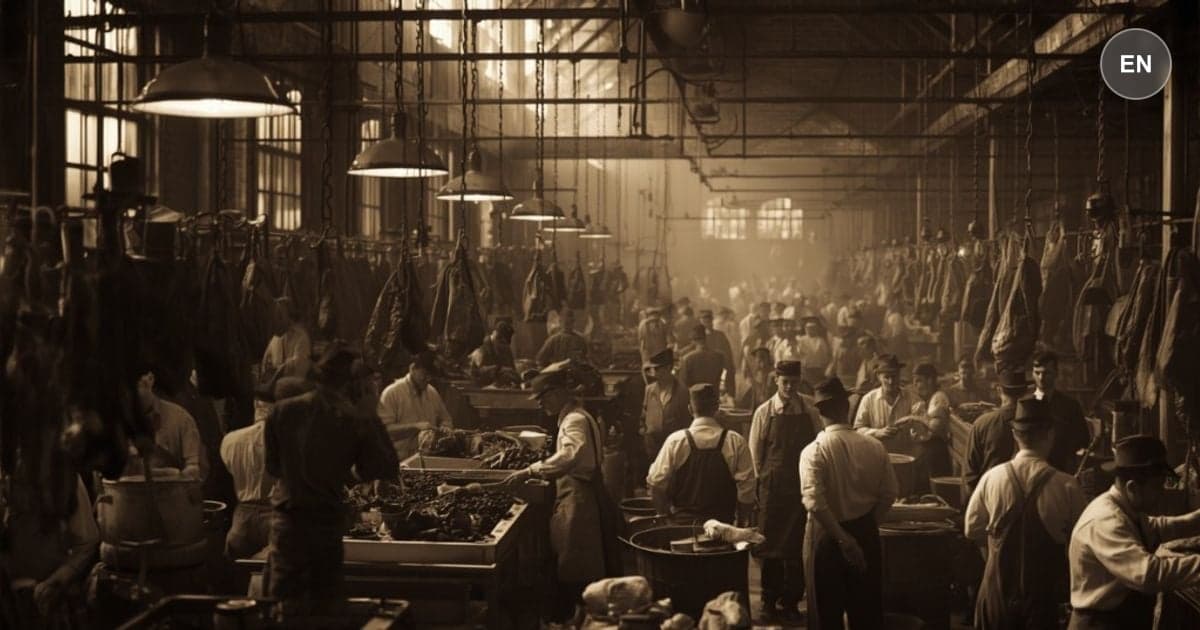
Coketown is the school at town scale. Streets, smoke, and brick repeat until difference looks like waste. The river runs the color of the dye. Dickens asks whether the population and the little Gradgrinds are the same case. A place sacred to fact does not, as it happens, get on quite well.
Key Insight:
An environment optimized for one value will slowly starve every other. If your workplace, town, or school looks interchangeable on purpose, the sameness is not neutrality. It is a claim that only one kind of life is allowed to show.
“Fact, fact, fact, everywhere in the material aspect of the town; fact, fact, fact, everywhere in the immaterial.”
Named for the Part That Works
Stephen is at the loom when Dickens counts the mill. So many hundred Hands, so many hundred horse Steam Power. The engine can be known to a pound. The weaver's inner life cannot. He leaves at noon to ask Bounderby a question the census has no column for.
Key Insight:
Listen for the noun that names people after the organ the institution uses. Hands, resources, seats, headcount. The rest of the person has to smuggle itself in after hours, or it does not exist.
“So many hundred Hands in this Mill; so many hundred horse Steam Power.”
The Muddle Has No Feature
Stephen will not join the union and will not flatter Bounderby. He says the town is a muddle. Bounderby hears a defect in the unit, not a man describing a trap. Work is withdrawn. The mill's answer to a person who will not categorize is to stop needing him.
Key Insight:
Systems built on categories treat an uncategorized person as a fault in the person. If your refusal to be a type costs you the job, the dignity was never in the role. It was in the refusal, and the role has just priced it.
“Who can look on 't, sir, and fairly tell a man 'tis not a muddle?”
Turtle Soup and a Gold Spoon
When workers want anything that is not output, Bounderby translates. They want venison, a coach, a gold spoon. Hunger becomes ingratitude. Rest becomes luxury. The translation is the system protecting itself: if the request is greedy, the refusal is virtue.
Key Insight:
Dehumanizing institutions recast ordinary need as excess. Wanting a livable hour becomes entitlement. Wanting a name becomes drama. When basic humanity is billed as a luxury good, you are no longer in a negotiation. You are in Bounderby's kitchen, being told the menu.
“He means turtle soup and venison, with a gold spoon, and that he wants to be set up with a coach and six.”