Wide Reads
Literature MattersLife IndexEducators
Sign in
Where to Begin
Hard Times - When Workers and Bosses Collide

Charles Dickens

Hard Times

When Workers and Bosses Collide

Home›Books›Hard Times›Chapter 21
Previous
21 of 36
Next

Summary

When Workers and Bosses Collide

Hard Times by Charles Dickens

0:000:00
Listen to Next Chapter

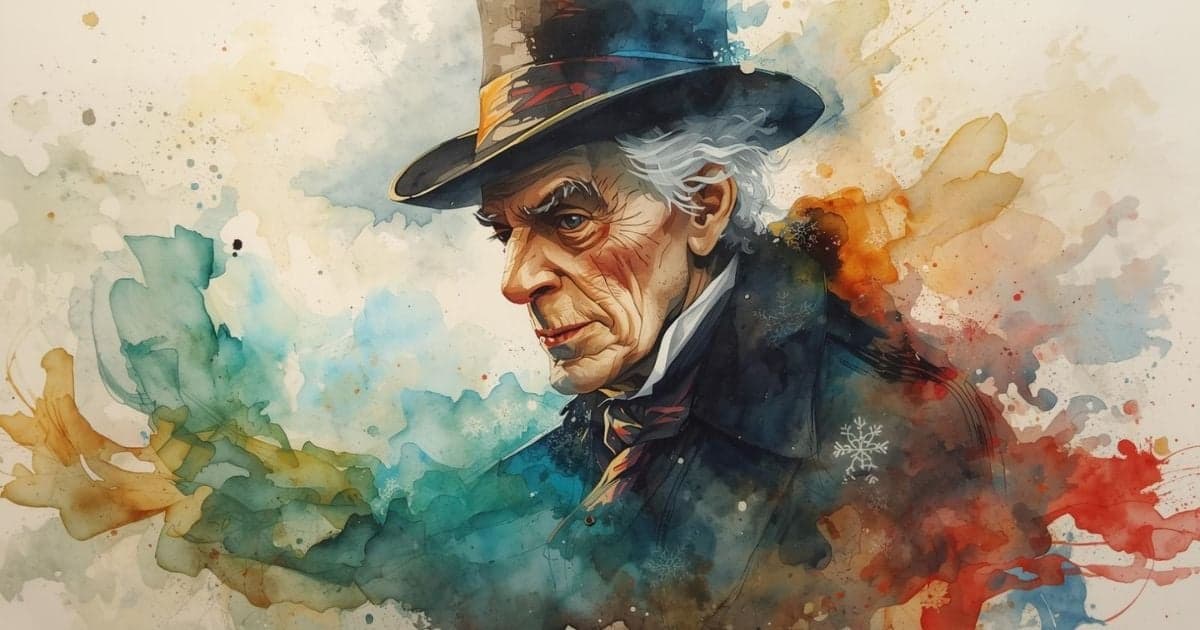
Bounderby has summoned Stephen to his drawing room. Harthouse is there, and Louisa, and Tom. Bounderby demands Stephen speak up about the Combination. Stephen says he has nothing to say about it — not from fear, from principle. Bounderby presses: the man who won't speak is as good as a confederate. Stephen holds his ground. Then Bounderby gives him the real choice: become an informer — report on the union men — or consider himself dismissed. Stephen refuses both. But first he speaks, quietly and with great force, about what is actually wrong: 'the muddle' — the mutual incomprehension between masters and men, the way every reform is crushed or ridiculed, the way workers are treated as bad lots when they are in fact desperate. He names what he sees: that the relationship between capital and labour is broken in ways that statistics and suppression cannot fix. He is shown out. On his way through the hall, Louisa calls him back. She puts money in his hand — more than she intends, and he knows it. She asks his name. Harthouse observes all of this from the doorway. Stephen walks out into Coketown, fired and outcast from both sides.

Coming Up in Chapter 22

As the industrial conflict intensifies, personal relationships begin to crumble under the pressure. Someone close to the heart of Coketown's struggles faces a devastating choice that will change everything.

Share it with friends

Previous ChapterNext Chapter
GO ADS FREE — JOIN US
Original text
complete·2,521 words
W

‘ELL, Stephen,’ said Bounderby, in his windy manner, ‘what’s this I hear? What have these pests of the earth been doing to you? Come in, and speak up.’

It was into the drawing-room that he was thus bidden. A tea-table was set out; and Mr. Bounderby’s young wife, and her brother, and a great gentleman from London, were present. To whom Stephen made his obeisance, closing the door and standing near it, with his hat in his hand.

‘This is the man I was telling you about, Harthouse,’ said Mr. Bounderby. The gentleman he addressed, who was talking to Mrs. Bounderby on the sofa, got up, saying in an indolent way, ‘Oh really?’ and dawdled to the hearthrug where Mr. Bounderby stood.

‘Now,’ said Bounderby, ‘speak up!’

After the four days he had passed, this address fell rudely and discordantly on Stephen’s ear. Besides being a rough handling of his wounded mind, it seemed to assume that he really was the self-interested deserter he had been called.

‘What were it, sir,’ said Stephen, ‘as yo were pleased to want wi’ me?’

1 / 15

Master this chapter. Complete your experience

Purchase the complete book to access all chapters and support classic literature

Read Free on GutenbergBuy at Powell'sBuy on Amazon

As an Amazon Associate, we earn a small commission from qualifying purchases at no additional cost to you.

Available in paperback, hardcover, and e-book formats

GO ADS FREE — JOIN US

Why This Matters

Connect literature to life

Skill: Reading Power Dynamics

This chapter teaches how to spot when people use moral certainty to avoid dealing with complex human needs.

Practice This Today

This week, notice when someone becomes absolutely certain they're right in a conflict—ask yourself what legitimate need might be driving the behavior you find frustrating.

GO ADS FREE — JOIN US

Now let's explore the literary elements.

Key Quotes & Analysis

"United we stand, divided we fall"

— Slackbridge

Context: During his speech rallying the workers to stick together against the masters

This classic phrase captures the central tension of the chapter - the power that comes from collective action versus the pressure it puts on individual conscience. Slackbridge uses it to justify excluding anyone who won't fully commit to the cause.

In Today's Words:

We're stronger together, but if you're not completely with us, you're against us

"I ha' my reasons - mine, yo see - for being hindered; not on'y now, but awlus"

— Stephen Blackpool

Context: When pressed to explain why he won't join the union

Stephen's broken speech pattern reflects his social position, but his words show dignity and principle. He won't be bullied into explaining his private moral reasoning to a hostile crowd.

In Today's Words:

I have my own personal reasons that I don't owe anyone an explanation for

"The masters against the men, and the men against the masters"

— Narrator

Context: Describing the escalating conflict between workers and factory owners

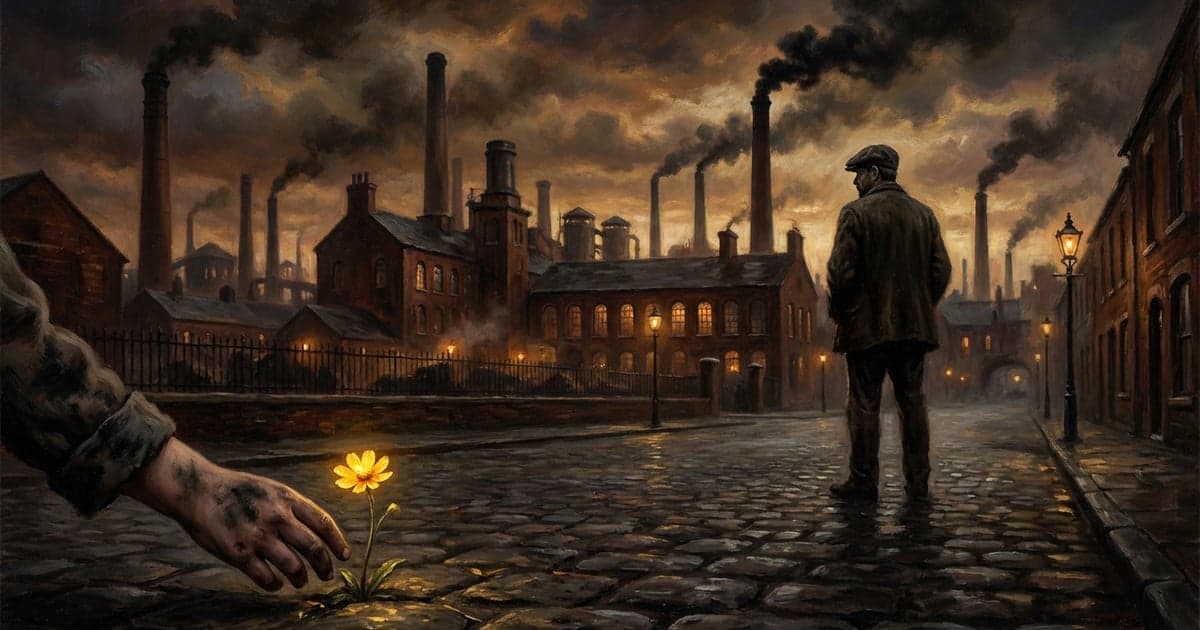
Dickens shows how both sides have retreated into opposing camps, making compromise impossible. The repetitive structure emphasizes how this becomes a cycle of mutual antagonism rather than problem-solving.

In Today's Words:

Everyone's picked their side and stopped listening to each other

Thematic Threads

Class

In This Chapter

The rigid divide between workers and owners becomes an unbridgeable chasm as each side sees only enemies, not fellow humans with different pressures

Development

Evolved from earlier hints of tension into open warfare, showing how class divisions destroy empathy

In Your Life:

You might notice this when you automatically distrust people based on their job title, income level, or background rather than listening to their actual concerns.

Identity

In This Chapter

Stephen's identity becomes impossible to maintain as he's forced to choose between competing group loyalties that both feel essential to who he is

Development

Built from Stephen's earlier struggles with belonging, now reaching a crisis point where identity fragments under pressure

In Your Life:

You experience this when different parts of your life—family, work, friends—demand loyalty to conflicting values or choices.

Social Expectations

In This Chapter

Both workers and owners expect absolute loyalty to their cause, making Stephen's attempt at independent thinking seem like betrayal

Development

Intensified from previous chapters where expectations were implicit, now becoming explicit demands for conformity

In Your Life:

You face this when your workplace, family, or community expects you to publicly support positions you privately question.

Human Relationships

In This Chapter

Personal connections get sacrificed to abstract principles as former friends become enemies based on which side they choose

Development

Deteriorated from earlier chapters where relationships had complexity, now reduced to simple categories of ally or enemy

In Your Life:

You see this when political beliefs, workplace conflicts, or family disputes start determining who you can remain close to.

GO ADS FREE — JOIN US

You now have the context. Time to form your own thoughts.

Discussion Questions

  1. 1

    What specific pressures are both the workers and factory owners facing that make them dig in their heels?

    analysis • surface
  2. 2

    Why does Stephen Blackpool's position become impossible once the conflict escalates?

    analysis • medium
  3. 3

    Where do you see this pattern of 'righteous blindness' playing out in your workplace, family, or community?

    application • medium
  4. 4

    When you're convinced you're right in a conflict, what specific steps could you take to stay curious about the other person's legitimate needs?

    application • deep
  5. 5

    What does this chapter reveal about why good people with good intentions can still end up hurting each other?

    reflection • deep

Critical Thinking Exercise

10 minutes

Flip the Script

Think of a current conflict in your life where you're convinced you're right. Write a brief paragraph from your perspective, then flip it—write the same situation from the other person's point of view, trying to understand their legitimate concerns and pressures. Focus on what they might be trying to protect or achieve, not just what they're doing wrong.

Consider:

  • •What pressures or fears might be driving their behavior that you haven't considered?
  • •What would they say you're missing or not understanding about their situation?
  • •How might your certainty about being right be preventing you from hearing them?

Journaling Prompt

Write about a time when someone you were in conflict with surprised you by revealing something you hadn't understood about their situation. How did that change things?

GO ADS FREE — JOIN US

Coming Up Next...

Chapter 22: When Love Becomes a Burden

As the industrial conflict intensifies, personal relationships begin to crumble under the pressure. Someone close to the heart of Coketown's struggles faces a devastating choice that will change everything.

Continue to Chapter 22
Previous
When Workers Unite Against Power
Contents
Next
When Love Becomes a Burden

Continue Exploring

Hard Times Study GuideTeaching ResourcesEssential Life IndexBrowse by ThemeAll Books

You Might Also Like

Great Expectations cover

Great Expectations

Charles Dickens

Also by Charles Dickens

Jane Eyre cover

Jane Eyre

Charlotte Brontë

Explores personal growth

The Strange Case of Dr Jekyll and Mr Hyde cover

The Strange Case of Dr Jekyll and Mr Hyde

Robert Louis Stevenson

Explores personal growth

Don Quixote cover

Don Quixote

Miguel de Cervantes Saavedra

Explores personal growth

Browse all 47+ books
GO ADS FREE — JOIN US

Share This Chapter

Know someone who'd enjoy this? Spread the wisdom!

TwitterFacebookLinkedInEmail

Read ad-free with Prestige

Get rid of ads, unlock study guides and downloads, and support free access for everyone.

Subscribe to PrestigeCreate free account
Intelligence Amplifier
Intelligence Amplifier™Powering Wide Reads

Exploring human-AI collaboration through books, essays, and philosophical dialogues. Classic literature transformed into navigational maps for modern life.

2025 Books

→ The Amplified Human Spirit→ The Alarming Rise of Stupidity Amplified→ San Francisco: The AI Capital of the World
Visit intelligenceamplifier.org
hello@widereads.com

WideReads Originals

→ You Are Not Lost→ The Last Chapter First→ The Lit of Love→ Wealth and Poverty→ 10 Paradoxes in the Classics · coming soon
Arvintech
arvintechAmplify your Mind
Visit at arvintech.com

Navigate

  • Home
  • Library
  • Essential Life Index
  • How It Works
  • Subscribe
  • Account
  • About
  • Contact
  • Authors
  • Suggest a Book
  • Landings

Made For You

  • Students
  • Educators
  • Families
  • Readers
  • Literary Analysis
  • Finding Purpose
  • Letting Go
  • Recovering from a Breakup
  • Corruption
  • Gaslighting in the Classics

Newsletter

Weekly insights from the classics. Amplify Your Mind.

Legal

  • Privacy Policy
  • Terms of Service
  • Cookie Policy
  • Accessibility

Why Public Domain?

We focus on public domain classics because these timeless works belong to everyone. No paywalls, no restrictions—just wisdom that has stood the test of centuries, freely accessible to all readers.

Public domain books have shaped humanity's understanding of love, justice, ambition, and the human condition. By amplifying these works, we help preserve and share literature that truly belongs to the world.

A Pilgrimage

Powell's City of Books

Portland, Oregon

If you ever find yourself in Portland, walk to the corner of Burnside and 10th. The building takes up an entire city block. Inside is over a million books, new and used on the same shelf, organized by color-coded rooms with names like the Rose Room and the Pearl Room. You can lose an afternoon. You can lose a weekend. You will find a book you have been looking for your whole life, and three you did not know existed.

It is a pilgrimage. We cannot find a bookstore like it anywhere on earth. If you read the classics, and you ever get the chance, go. It belongs on every reader's bucket list.

Visit powells.com

We are not in any way affiliated with Powell's. We are just a very big fan.

© 2026 Wide Reads™. All Rights Reserved.

Intelligence Amplifier™ and Wide Reads™ are proprietary trademarks of Arvin Lioanag.

Copyright Protection: All original content, analyses, discussion questions, pedagogical frameworks, and methodology are protected by U.S. and international copyright law. Unauthorized reproduction, distribution, web scraping, or use for AI training is strictly prohibited. See our Copyright Notice for details.

Disclaimer: The information provided on this website is for general informational and educational purposes only and does not constitute professional, legal, financial, or technical advice. While we strive to ensure accuracy and relevance, we make no warranties regarding completeness, reliability, or suitability. Any reliance on such information is at your own risk. We are not liable for any losses or damages arising from use of this site. By using this site, you agree to these terms.