
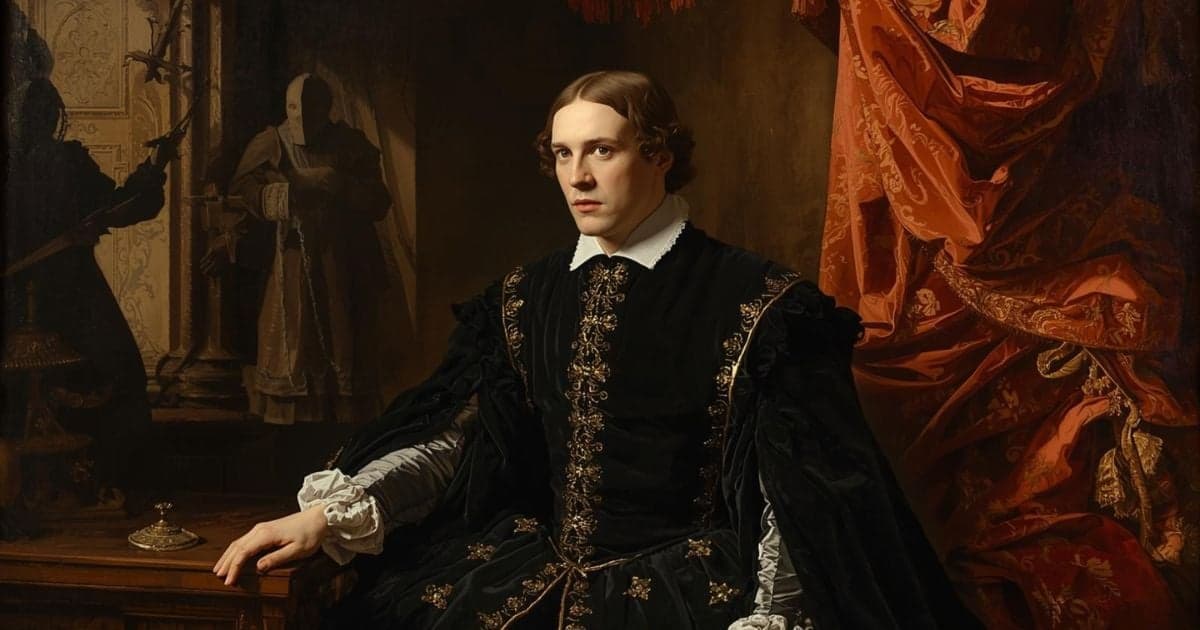
Hamlet's problem is not that he lacks a case. It is that he keeps meeting people who can move on less of one. A hired player weeps for Hecuba. Fortinbras sends men to die for a patch of ground that will not hold the corpses. Laertes hits the palace doors with a sentence as short as give me my father. Each of them looks crude next to Hamlet's mind. Each of them is already in a room Hamlet is still describing.
Shakespeare is not writing a pamphlet against thought. He is showing what thought becomes when it is used as a way to remain the most interesting person in the stall. The pale cast does not erase resolution. It sicklies the colour until acting would look like a drop in tone. Comparison does the rest. If a stranger can cry on cue, and a rival can march for a name, then delay starts to feel like taste. Taste is a flattering word for a man who will not be seen trying.
Pirates have to steal him home. Osric has to bring the wager. The readiness he finally claims is attendance at an event other people scheduled. Fortinbras inherits what the commentator emptied. If you have ever let a worse person take the field because your reasons were still being refined, you already know this weather. The skill is not to become thoughtless. It is to stop using other people's motion as proof that you are deeper.
The Central Lesson
Delay becomes paralysis the moment other people can still march. Hamlet is not waiting for a missing fact. He is watching a player cry, an army walk, and a brother storm a door, then calling his own stillness intelligence. Shakespeare lets pirates and a wager do what thought would not: move the body into a room that already has a time on it. Do not copy Fortinbras's cause. Copy his occupancy. If your refinement requires that nobody else act first, you are not being careful. You are auditioning for the part of the person who understood the play after the kingdom was gone.
Applying This to Your Life
Stop Auditioning Against the Marcher
When a colleague, sibling, or rival acts on a thinner case than yours, do not upgrade your pause into superiority. Write the smallest next step that would put you in the same room. Depth that never arrives is commentary.
Give Thought a Clock
If a question cannot be answered by a time and a place, you are furnishing a room, not deciding. Set a deadline that survives your next elegant sentence. Hamlet's famous speech produces no appointment. That is the tell.
Refuse the Bout You Did Not Design
When the first action available is an event someone else already printed, you are in Osric's errand. Ask who set the terms. Acting late inside their calendar is not courage. It is showing up.
Other lessons in this book
More life-skill deep dives from the same classic.
Distinguishing Truth from Deception
Test a ghost, a play within a play, and a story that only Horatio will carry out.
6 chapters·Explore AnalysisProcessing Grief Without Surrendering Judgment
See the suits of woe Claudius wants retired, Ophelia's flowers, and Yorick in the dirt.
6 chapters·Explore AnalysisRecognizing Surveillance Disguised as Care
Follow Reynaldo's forgeries, Ophelia sent to walk where the king can hear, and Polonius behind the curtain.
6 chapters·Explore AnalysisNavigating Toxic Workplaces
Read Claudius's speeches, Polonius's listening posts, and the sponge speech as a court that needs you confused.
6 chapters·Explore AnalysisManaging Moral Ambiguity
Sit with the prayer, the arras, and the deaths that follow a delayed strike.
6 chapters·Explore Analysis
Continue exploring
The same lessons in other books
See how other books teach the same life skills.

Les Misérables: Essential Edition
Navigating Poverty and Social ClassTrace Fantine from 1817 hope to factory gossip, and the class that treats need as indictment.
The Jungle
Reading Graft as Everyday GovernmentStay with Duane's cell and chapter 25: votes, inspectors, and a city that prices justice.
The Essays of Montaigne
Choosing Real FriendshipHear essay 27 answer La Boétie: because it was he, because it was I.
Where the lesson lives in the book
What's Hecuba to Him
The players arrive and one of them weeps for Hecuba, a queen who is not his, in a city that is not his. Hamlet watches a hired man produce tears on cue and turns the spectacle on himself. He has a murdered father, a living murderer, and still cannot match a stranger's performance of feeling. The player does not need a better reason. He needs a part.
Key Insight:
Comparison is how delay learns to call itself taste. When someone with less at stake can still move, your pause stops looking careful. It looks like a refusal to be seen trying.
“What's Hecuba to him, or he to Hecuba, That he should weep for her?”
The Pale Cast
Alone, Hamlet turns action into a question about being. Thought does not clarify the next step. It coats the step until the original colour is gone. Ophelia appears with a book she was given to hold. He tells her to get to a nunnery. The speech that made him famous is also the speech in which he does not leave the room with a plan.
Key Insight:
A question that cannot be answered by walking is being used as a room. If your thinking never produces a time and a place, it is not deliberation. It is furniture.
“And thus the native hue of resolution Is sicklied o'er with the pale cast of thought.”
A Little Patch of Ground
A captain tells Hamlet that Fortinbras is marching to fight for a plot of land that will not hold the men who die on it. No profit but the name. Hamlet sees an army going to its graves like beds and names himself a beast if his time is only sleep and feed. Bloody thoughts are the vow. The army keeps walking without him.
Key Insight:
People with worse reasons will still occupy the field you are still describing. The lesson is not to copy Fortinbras's cause. It is to notice that movement, even stupid movement, is already rewriting the map while you remain the commentator.
“We go to gain a little patch of ground That hath in it no profit but the name.”
Laertes Already in the Building
While Hamlet is still converting shame into verse, Laertes comes back from France with a mob that wants a king. Give me my father is a sentence with a destination. Claudius does not need to out-think him. He only needs to greet the man who already arrived. Hamlet's delay has not preserved options. It has invited a substitute.
Key Insight:
If you will not occupy the conflict, someone quicker will, and they will not share your scruples. Vacancy is a job posting. The first applicant is rarely the person you would have chosen.
“Give me my father.”
Thieves of Mercy
Pirates take the ship. Hamlet is returned to Denmark by accident and force, not by a decision he finally made on the deck. Rosencrantz and Guildenstern hold their course for England with the original packet. The one piece of luck in the middle of the play is that other people acted on him.
Key Insight:
When your plot stalls, the world does not stall with it. Weather, enemies, and errands keep moving. If the only progress in your story required being kidnapped, you were not steering. You were cargo that got lucky.
“They have dealt with me like thieves of mercy.”
The Readiness Is All
Osric brings a wager. Horatio smells the trap. Hamlet says there is a special providence in the fall of a sparrow, and that the readiness is all. He walks into a bout that was designed while he was still at sea. Four bodies later, Fortinbras takes the room. The man who could march for a name inherits the kingdom the thinker emptied.
Key Insight:
Readiness that arrives after the invitation is already printed is not wisdom. It is consent. If you wait until the calendar belongs to someone else, your first clean action will be attendance.
“The readiness is all.”