
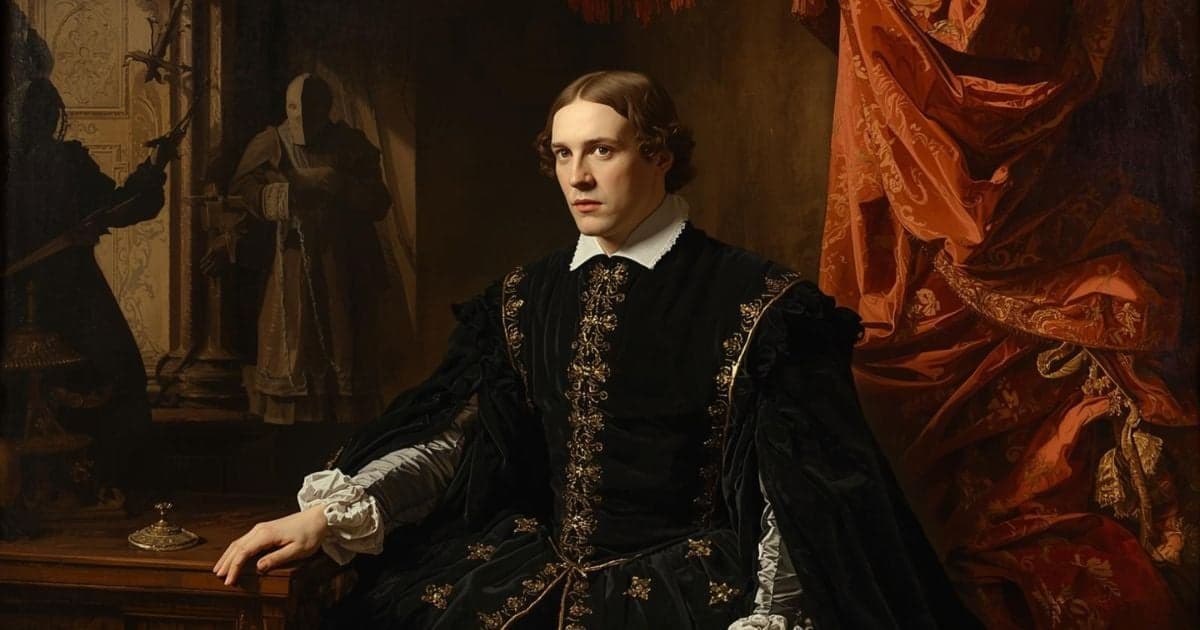
Elsinore is full of tests, and tests are a trap. They suggest that truth is a result you can stage if you are clever enough. Shakespeare keeps locating it somewhere colder. A sentry asks who's there. A king can hold funeral and marriage in one breath. A son holds two portraits up to his mother and still cannot make her see the ghost that is in the room with them. The problem is not insufficient proof. It is that people who share a floor do not share a world.
Gertrude is the hard case because she is not simply lying. She sees nothing at all, yet all that is she sees. That is what a blended official story does to perception. Claudius taught the court to weigh delight and dole in equal scale until objection sounded like bad manners. Hamlet answers with words, words, words, then with a packet he was not meant to open. Ink, it turns out, is more honest than ceremony. The command is death. The reasons were garnish.
The last request is not another experiment. It is a job for the person who was actually there. Horatio is told to stay and speak, because Fortinbras will need minutes that fit a new reign. If you have ever argued with someone in the same kitchen about an event they will not admit happened, you already know the closet. The skill is to stop adding tests and start asking who was awake, who can still see, and who is about to be paid to forget.
The Central Lesson
Truth in a corrupt room is not the prize for one more test. It is a question about perception: who was awake on the platform, who can hold two pictures and still not see the ghost, who is about to write the minutes for a new king. Claudius's gift is a sentence that makes contradiction sound like wisdom. Hamlet's last accurate move is not a cleverer play. It is handing the story to a person who shared the hall and is not on the payroll. Stop auditioning proofs. Ask who stands in the closet with you, and what it would cost them to admit what is there.
Applying This to Your Life
Ask Who Is Allowed to See It
When two people recount the same meeting as two different events, do not escalate to a third test. Ask what noticing would cost each of them. Gertrude's nothing is not stupidity. It is the price of remaining queen in that room.
Shorten the Speech to a Checkable Sentence
Words, words, words is the tell. Take the email, the all-hands, the family announcement, and reduce it to one claim you could verify. If the claim disappears when the garnish is gone, you were being managed, not informed.
Open the Packet You Were Not Shown
Courtesy in a document is not mercy. Read the verb. Who is being sent, hired, fired, or moved. Then appoint a witness who will still be in the hall after the winner writes the minutes.
Other lessons in this book
More life-skill deep dives from the same classic.
Paralysis in Decision-Making
Watch the ghost's charge, the play that proves the king, and the prayer Hamlet will not interrupt.
6 chapters·Explore AnalysisProcessing Grief Without Surrendering Judgment
See the suits of woe Claudius wants retired, Ophelia's flowers, and Yorick in the dirt.
6 chapters·Explore AnalysisRecognizing Surveillance Disguised as Care
Follow Reynaldo's forgeries, Ophelia sent to walk where the king can hear, and Polonius behind the curtain.
6 chapters·Explore AnalysisNavigating Toxic Workplaces
Read Claudius's speeches, Polonius's listening posts, and the sponge speech as a court that needs you confused.
6 chapters·Explore AnalysisManaging Moral Ambiguity
Sit with the prayer, the arras, and the deaths that follow a delayed strike.
6 chapters·Explore Analysis
Continue exploring
The same lessons in other books
See how other books teach the same life skills.

Les Misérables: Essential Edition
Navigating Poverty and Social ClassTrace Fantine from 1817 hope to factory gossip, and the class that treats need as indictment.
The Jungle
Reading Graft as Everyday GovernmentStay with Duane's cell and chapter 25: votes, inspectors, and a city that prices justice.
The Essays of Montaigne
Choosing Real FriendshipHear essay 27 answer La Boétie: because it was he, because it was I.
Where the lesson lives in the book
Who's There
The play opens on a question from a night watch, not a prince. Francisco is sick at heart. Barnardo has already seen what Horatio calls fantasy. The scholar has to be walked to the platform before belief will take hold. Truth in Denmark starts with people who work the cold hours, not with the person who will later make a theory of it.
Key Insight:
Do not wait for the credentialed witness. Ask who has been standing where the thing happens. The first accurate report often comes from the person whose job is to stay awake, not the person whose job is to explain.
“Who's there?”
One Auspicious and One Dropping Eye
Claudius addresses the court with a grammar that can hold funeral and marriage in one sentence. Discretion has fought with nature. Wisdom has gone along. The official story is not a lie in the simple sense. It is a blending that makes objection look like bad taste. Hamlet's first private speech is that he must hold his tongue.
Key Insight:
The most effective deception is not a false fact. It is a public sentence that makes two incompatible things sound like maturity. If the room applauds the blend, ask what the blend required you to stop naming.
“With mirth in funeral, and with dirge in marriage, In equal scale weighing delight and dole.”
Words, Words, Words
Polonius asks what Hamlet is reading. Hamlet answers with the same noun three times. The book is in his hand and not in his mind. Later he will catch a king with a play. Here he shows the other trick: language that occupies the ear without delivering a fact. Elsinore is already fluent in that trick. Hamlet is learning to speak it back.
Key Insight:
Volume is not evidence. A person who can fill a hallway with words may be hiding that nothing is on the page. Ask what would change if the speech were shortened to one sentence you could check.
“Words, words, words.”
Nothing at All, Yet All That Is I See
Hamlet holds two pictures up to Gertrude: the brother who was king, the brother who is. He wants her eyes to do what his already do. Then the ghost enters the closet. Hamlet asks if she sees nothing there. She sees nothing at all, yet all that is she sees. They share a room and not a perception. That gap is the play's hardest truth problem.
Key Insight:
Two honest people can stand in one closet and not inhabit the same event. Do not treat disagreement as proof that someone is performing. Treat it as a question about access: what they are allowed to notice, and what noticing would cost them.
“Do you see nothing there? Nothing at all; yet all that is I see.”
An Exact Command
At sea Hamlet unseals a packet larded with reasons. The reasons are decoration. The command is death. Paper lies more cleanly than a face because it can carry a tone of necessity. He rewrites the names. Truth here is not a feeling in the gut. It is a willingness to open the document that was not meant for you.
Key Insight:
Official language is often a garnish on a verdict. If a letter is full of why and thin on what, read the what first. Courtesy in a commission is not evidence of mercy. It is evidence that someone expected the reader to need a story.
“I have words to speak in thine ear will make thee dumb.”
Tell My Story
Dying, Hamlet does not ask Horatio to interpret. He asks him to stay and speak to the unsatisfied. Fortinbras will take the room and need a version that fits a new reign. The last defence against deception is not a cleverer test. It is a witness who was in the hall and is not being paid to smooth it.
Key Insight:
When power is about to write the minutes, appoint the person who saw the bodies before the speech. A story entrusted to the winner will be a story about order. A story entrusted to the friend will still be a story. It will at least begin with what happened.
“Absent thee from felicity awhile, And in this harsh world draw thy breath in pain, To tell my story.”