Great Expectations

Charles Dickens
0:000:00
0:00 / 0:00

Prestige · $2.99/month
Chapter audio, theme analysis, and downloads
Charles Dickens
0:00 / 0:00
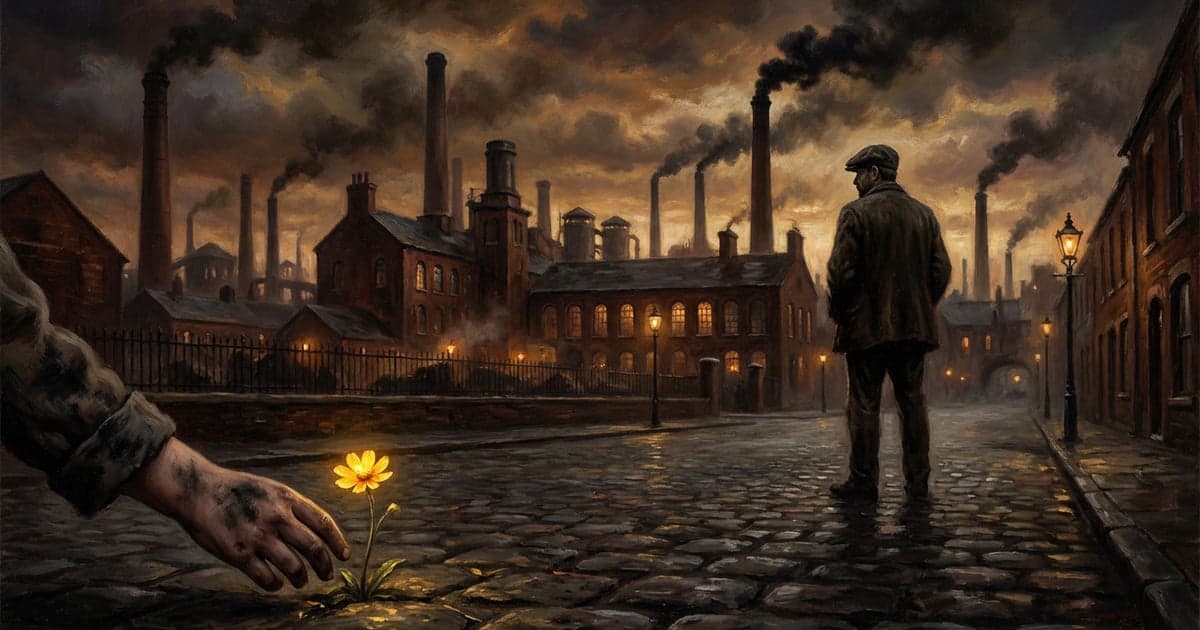
A convict stands dripping in a London sitting-room and names himself as the maker of a gentleman. Pip, already dressed for a life Miss Havisham never funded, hears that his great expectations came from the marshes, not from Satis House, and the fortune he spent to stop being common was paid for by the man he once feared. Dickens published the book in 1861. The boy who wanted to become a gentleman was funded by the one person London would never call one.
Philip Pirrip is an orphan raised by his harsh sister and her husband Joe Gargery, the village blacksmith: kind, barely lettered, and so loyal that Pip will later treat that loyalty as an embarrassment. Estella, raised at Satis House to break men's hearts, calls him common and plants the shame that money cannot cure. Miss Havisham sits in a ruined wedding dress and uses both children as equipment for a revenge that froze on the day she was jilted. Abel Magwitch, the convict from the churchyard, works years in Australia to manufacture a gentleman as spite against the class that hunted him. Jaggers will not name a patron. Herbert Pocket teaches Pip table manners without charging for kindness. Biddy tells the truth Pip does not want. Compeyson is the gentleman-criminal who ruined Miss Havisham. Bentley Drummle is the brutal husband Estella chooses because ice recognises ice.
On the marshes a man in irons demands a file and food, and a terrified child steals both from Joe's house. At Satis House Estella mocks Pip's coarse hands and thick boots, and he goes home ashamed of the forge. Jaggers arrives at the Three Jolly Bargemen with news of a secret fortune and a condition: Pip must never inquire who pays. He leaves for London, stays at the Blue Boar instead of the forge when he visits, and wishes he could pay money to keep Joe away. Magwitch returns in the night and claims the work. Estella marries Drummle. Miss Havisham burns. Pip tries to get Magwitch down the river, holds the dying convict's hand in prison, falls ill, and wakes to Joe paying the debts and never mentioning the years of coldness. He goes home meaning to propose to Biddy and finds she has married Joe. Years later he meets Estella among the ruins of Satis House.
Dickens wrote the novel after the blacking factory, after fame, and after a marriage that was ending, and he made Pip's shame tighter and darker than the comic orphans of his earlier books. He never treats the fortune as a fairy gift, or the gentleman as a prize the poor boy has earned. The benefactor is a transported felon. The beloved has no heart because she was trained not to. The good man is the blacksmith Pip was ashamed to be seen with. The revised ending does not cancel what the climb cost. What remains is not a sermon against ambition. It is a picture of what happens when a boy confuses polish with worth, and when the only way back is to sit with the people his new life taught him to hide.
The fortune arrives with six pressures already attached. When Ambition Becomes Shame is Estella's mockery at Satis House, the Blue Boar stays, and a wish he could pay money to keep Joe away. The Gentleman vs The Good Man sets Pip's rented polish against Joe's loyalty, which never once presents a bill. Expectations vs Reality is the false patron everyone assumes and the prize Estella was never going to be. Recognizing Toxic Mentors is Miss Havisham's revenge school, Jaggers's withheld name, and Magwitch's loving script that still manufactures a gentleman as spite. Breaking Free from Others' Expectations is refusing a life designed before Pip arrived: fortune conditions, a revenge plot, a debt he never asked to owe. Redemption Through Honest Reckoning is the river, the prison hand, and Joe's nursing, proof that the way back runs through the people the climb taught him to hide.
A file and a stolen pork pie leave the forge for a man in irons. Years later the same man names the fortune. Wide Reads records summaries, quotes, and audio for all fifty-nine chapters.
Seven-year-old Pip introduces himself in a graveyard where his parents and five brothers are buried....
The harsh reality of Pip's home life comes into sharp focus as he returns to face his sister Mrs. Jo...
On a rimy morning Pip crosses the marshes with stolen food and a file, his guilty conscience turning...
Christmas morning arrives with Pip expecting every knock on the door to be the police coming to arre...
Soldiers arrive at the Gargery house seeking help to repair broken handcuffs for hunting escaped con...
Pip is legally cleared when the convict confesses to the theft, but he cannot bring himself to tell ...
Education, or rather, the lack of it, takes centre stage as Pip struggles through his basic lessons ...
The mysterious world of Miss Havisham awaits as Pip visits the decaying Satis House estate for the f...
Home from Miss Havisham's house, Pip carries the burden of his newfound shame and makes a choice tha...
At the village pub, an unexpected encounter brings the convict back into Pip's life in a mysterious ...
Back at Satis House, the twisted dynamics of Miss Havisham's household become clearer as Pip encount...
Consumed with guilt and terror after his fight with the pale young gentleman in Miss Havisham's yard...
Approaching his fourteenth birthday means Pip must finally become Joe's apprentice, formalizing his ...
Bound as Joe's apprentice, Pip settles into forge work that should feel like a man's future but inst...
An evening at the village pub with Joe turns into tragedy when news arrives that someone has broken ...
Life continues with changed rhythms after Mrs. Joe's injury, as Biddy takes over the household manag...
Years pass in this manner, with Pip working in the forge and nursing his private discontent. He's no...
The transformation from apprentice to gentleman begins with a whirlwind of preparations and painful ...
The final days before departing for London reveal the complex emotions surrounding upward mobility a...
Published 1861
Charles Dickens (1812-1870) was born in Portsmouth and raised in a household that fell apart when his father was jailed for debt. At twelve he worked in a blacking factory, pasting labels on bottles, and the shame of being seen there by someone he knew never left him. He told almost no one, not even his children. The rest of his life was speed, fame, and a public that could not get enough of the orphans he kept inventing.
Great Expectations appeared in 1860 and 1861, first in his magazine All the Year Round, when he was already the most famous novelist in England and privately undoing a marriage. He had written comic poverty before. This time he made the climb itself the wound: a boy who gets the polish he wanted and loses the people who loved him without it.
Dickens's gift was turning private humiliation into a plot the whole country could recognise. He died at fifty-eight and left a book that still finds readers who have been ashamed of a kitchen, a relative, or a job they once needed. The hero is not rescued by becoming a gentleman. He is changed by finally sitting with the man who paid for that costume, and with the blacksmith he had learned to hide.
Charles Dickens speaks to the exact moment a new postcode, a promotion, or a diploma makes an old kitchen look like something to hide: the parent whose visit you schedule around who might see, the accent you have started editing, the friend from before who somehow counts as an embarrassment now. He wrote before anyone called it class anxiety and mapped its whole machinery anyway, down to the exact moment gratitude curdles into shame.
Plot, characters, and themes — plus audio, source text, and patterns you can use after class
Two ways in
Chapter by chapter, with audio. The meaning arrives because you experienced it — not because someone listed bullet points.
Start with this.
The actual words the author wrote, alongside every summary. Use the guide, then step into the source.
Then step into the source.
Either way, the door opens inward.
— and most of all, Why does this matter?
Purchase the complete book to access all chapters and support classic literature
Available in paperback, hardcover, and e-book formats
Free to read • No account required

Weekly insights from the classics. Amplify Your Mind.
We focus on public domain classics because these timeless works belong to everyone. No paywalls, no restrictions—just wisdom that has stood the test of centuries, freely accessible to all readers.
Public domain books have shaped humanity's understanding of love, justice, ambition, and the human condition. By amplifying these works, we help preserve and share literature that truly belongs to the world.
© 2026 Wide Reads™. All Rights Reserved.
Intelligence Amplifier™ and Wide Reads™ are proprietary trademarks of Arvin Lioanag.
Copyright Protection: All original content, analyses, discussion questions, pedagogical frameworks, and methodology are protected by U.S. and international copyright law. Unauthorized reproduction, distribution, web scraping, or use for AI training is strictly prohibited. See our Copyright Notice for details.
Disclaimer: The information provided on this website is for general informational and educational purposes only and does not constitute professional, legal, financial, or technical advice. While we strive to ensure accuracy and relevance, we make no warranties regarding completeness, reliability, or suitability. Any reliance on such information is at your own risk. We are not liable for any losses or damages arising from use of this site. By using this site, you agree to these terms.
Deep dives
Name the false patron, the ungiveable Estella, and the story Pip wanted that other people were using.
Do you want to be a gentleman, to spite her or to gain her over?
Read Miss Havisham's revenge school, Jaggers's withheld name, and Magwitch's loving script as guidance that serves the guide.
I had never thought of being ashamed of my hands before; but I began to consider them a very indifferent pair.
Trending search questions mapped to the six lessons in this novel: what readers actually ask Google about Pip's secret benefactor, Miss Havisham's revenge plan, Joe's loyalty, and how the novel ends.
A convict grabs Pip in a churchyard and terrifies him into stealing a file and food, and years later a lawyer arrives with a secret fortune on one condition: Pip must never ask who is paying. Pip assumes it is Miss Havisham, the jilted woman raising Estella at Satis House to break men's hearts, and moves to London ashamed of Joe, the blacksmith who raised him. The convict returns to claim the fortune as his own work, and Pip has to decide who actually earned his loyalty.
It is Abel Magwitch, the convict from the churchyard, not Miss Havisham as Pip and everyone else assumes for most of the novel. Magwitch made his fortune in Australia after being transported, and funds Pip's rise into a gentleman as spite against the class that hunted and exiled him. He climbs Pip's London stairs in the dark to claim the work himself, and the reveal forces Pip to rebuild his whole idea of who he owes.
Explore Expectations vs RealityEstella mocks Pip's coarse hands and thick boots at Satis House, and he goes home ashamed of the forge for the first time in his life. That shame grows into a habit: he stays at the Blue Boar instead of Joe's house when he visits, and wishes he could pay money to keep Joe away from his London friends. Dickens never treats this as a small embarrassment. It is the cost of confusing polish with worth.
Explore When Ambition Becomes ShameMiss Havisham lets Pip believe what serves her project: she raised Estella at Satis House to break men's hearts as payback for her own jilting, and Pip's mistaken gratitude is free material for that revenge, not a debt she ever intends to acknowledge or pay. Jaggers, who actually manages the fortune, will not name the real source either, which leaves Pip free to keep guessing wrong for years.
Explore Recognizing Toxic MentorsPip fails to get Magwitch out of England, sits with the dying convict in prison instead of hiding from him, then falls ill and wakes to find Joe has quietly paid his debts without ever mentioning the years of coldness. He goes home meaning to propose to Biddy and finds she has just married Joe. Years later, among the ruins of Satis House, he meets Estella again, both of them finally past the fortune and the mask.
Explore Redemption Through Honest ReckoningSix lessons run through the novel: naming the difference between the story you were told to want and the reality actually in front of you; setting a gentleman's costume against a good man's habit of never invoicing his kindness; recognising when a mentor is serving their own revenge or profit instead of your good; breaking free of a life that other people designed for you before you had a say; finding redemption through honest reckoning rather than a clean escape from consequence; and catching the moment ambition curdles into shame for the very people who raised you.
What makes him indispensable is that he refused to let the fortune be a fairy gift. Dickens wrote Great Expectations after the blacking factory shame he never told his own children about, after the fame, after a marriage that was ending, and he made sure the money funding Pip's polish came from a convict, not a lady in a wedding dress. The people readers expect to be rewarded, Miss Havisham, Estella, are not; the person who is right about everything, Joe, never once gets to say so.
The novel still works because the trade it describes has never gone out of style: polish for belonging, distance for status, silence for safety. Every reader who has ever lowered their voice around a parent's job or a childhood address is running Pip's exact arithmetic, usually without a convict arriving to correct it. Dickens's answer was never to refuse the climb. It was to make sure you can still sit down with the people it taught you to hide.