Master this chapter. Complete your experience
Purchase the complete book to access all chapters and support classic literature

As an Amazon Associate, we earn a small commission from qualifying purchases at no additional cost to you.
Available in paperback, hardcover, and e-book formats
Why This Matters
Connect literature to life
This chapter teaches how to recognize when shame about our background drives us to destructive deception.
Practice This Today
This week, notice when you feel tempted to embellish or hide parts of your story—pause and ask what you're really protecting, then choose honesty over performance.
Now let's explore the literary elements.
Key Quotes & Analysis
"If a dread of not being understood be hidden in the breasts of other young people to anything like the extent to which it used to be hidden in mine... it is the key to many reservations."
Context: Pip explains why he couldn't tell the truth about Miss Havisham's house
This reveals the universal fear of being misunderstood that drives so many of our choices. Pip's 'reservations' - his holding back - comes from knowing his family won't understand the complex emotions he's experiencing.
In Today's Words:
If other young people are as afraid of being misunderstood as I was, that explains why we keep so much to ourselves.
"Lies is lies. Howsoever they come, they didn't ought to come, and they come from the father of lies, and work round to the same."
Context: Joe's response when Pip confesses to lying about Miss Havisham's house
Joe's simple moral framework cuts through all of Pip's complicated justifications. His plain speaking represents honest values that don't bend based on circumstances or social pressure.
In Today's Words:
A lie is a lie, no matter why you tell it or where it comes from, and lies always lead to trouble.
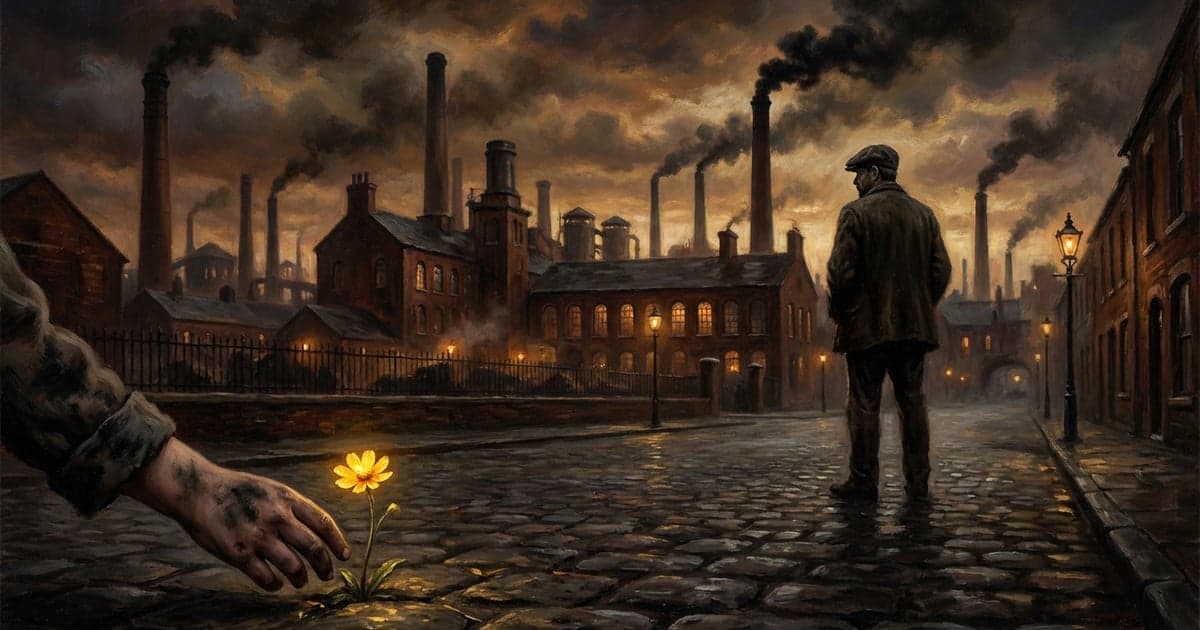
"I took the opportunity of being alone in the courtyard to look at my coarse hands and my common boots. My opinion of those accessories was not favorable."
Context: Pip examining himself after Estella's criticism
This moment captures how quickly external judgment can poison our self-perception. Things Pip never noticed before suddenly become sources of shame because someone else labeled them as inferior.
In Today's Words:
I looked down at my rough hands and cheap shoes. For the first time, I hated what I saw.
Thematic Threads
Shame
In This Chapter
Pip's lies stem from Estella making him feel common and inadequate, driving him to fabricate stories rather than admit his hurt
Development
Introduced here as the driving force behind Pip's transformation from honest boy to conflicted social climber
In Your Life:
You might recognize this when you exaggerate achievements or hide struggles to avoid feeling judged by others
Class Consciousness
In This Chapter
Pip becomes acutely aware of his 'thick boots and coarse hands' and how common Joe would seem to Estella
Development
Builds on earlier hints, now crystallizing into active shame about his working-class identity
In Your Life:
You might feel this when entering spaces where your background, education, or income feels inadequate
Truth vs. Performance
In This Chapter
Pip chooses elaborate lies over simple truth, becoming 'a reckless witness under torture' to maintain face
Development
Contrasts sharply with Joe's simple honesty established in earlier chapters
In Your Life:
You might face this choice between authentic vulnerability and protective performance in job interviews or social situations
Moral Corruption
In This Chapter
Pip's first major moral compromise, lying to family who trust him, marks the beginning of his ethical decline
Development
First step away from the moral clarity he showed in earlier chapters with the convict
In Your Life:
You might notice how small compromises in integrity can snowball when you're trying to fit into new social circles
Isolation
In This Chapter
Despite Joe's understanding, Pip feels increasingly alone with his new awareness of class differences
Development
Beginning of the emotional distance that will grow between Pip and his loving home
In Your Life:
You might experience this loneliness when personal growth or new experiences create distance from family or old friends
You now have the context. Time to form your own thoughts.
Discussion Questions
- 1
Why does Pip lie about his visit to Miss Havisham's house instead of just saying little or nothing?
analysis • surface - 2
What does Pip's choice to lie reveal about how shame affects our decision-making when we feel exposed or inadequate?
analysis • medium - 3
Where do you see this same pattern today - people lying or exaggerating when they feel 'less than' or judged?
application • medium - 4
Joe says 'you can't become uncommon by going crooked.' What would it look like to handle feelings of inadequacy with honesty instead of lies?
application • deep - 5
Dickens writes that single days can forge chains that bind us for life. How do moments of shame or inadequacy shape the stories we tell ourselves about who we are?
reflection • deep
Critical Thinking Exercise
Map Your Shame Triggers
Think of a recent time you felt the urge to embellish, exaggerate, or lie to avoid looking inadequate. Write down what triggered that feeling and trace the pattern: What made you feel 'less than'? What story did shame tell you about what would happen if people saw the truth? What did you actually do or say?
Consider:
- •Notice the gap between the actual threat and what shame made it feel like
- •Consider how the other person might have actually responded to honesty
- •Think about what you were really trying to protect - your competence, your worth, or your image?
Journaling Prompt
Write about a time when someone's honesty about their limitations or mistakes actually made you respect them more. What does this tell you about the stories shame tells us?
Coming Up Next...
Chapter 10: The Stranger with the File
Determined to escape his 'common' status, Pip hatches a plan to extract every bit of knowledge from Biddy, the local girl who helps at the evening school. His quest for self-improvement is about to begin in earnest.