
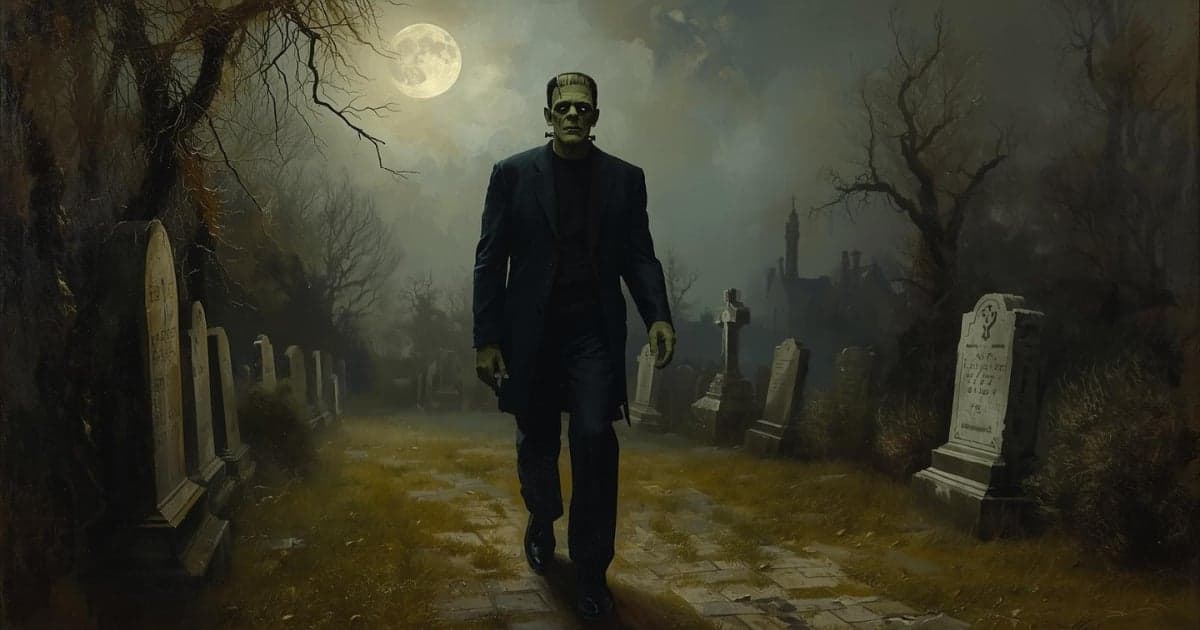
Victor's talent is assembly. His failure is occupancy. He can steal parts, deny sleep, and talk about light. He cannot sit in the room once the work looks back. Shelley is exact about the sequence. The being has not yet harmed anyone. The hand at the curtain is a claim, not a weapon. The maker names that claim a catastrophe and leaves. Responsibility, in this novel, is not the ethics of whether life should be made. It is the ethics of remaining after it has been.
Every later scene is a cheaper substitute for that first remaining. A hearing on the ice. A bargain that requires exile. A second body begun in secret and then torn up in front of the first. Victor keeps offering process: listen, wait, I will decide. The creature keeps asking for a form of life that includes another set of eyes. Neither is a technical problem. Both are questions about whether a maker will consent to be related to what he made.
That is why Walton matters as more than a frame. He is the next man who might leave a crew in ice for a purpose that will bless him. Victor's dying speech is the closest he comes to duty, and it is still directed at a stranger, not at the person who learned language in a hovel. If you have ever shipped a product, hired a person, or started a child into a world you did not plan to inhabit with them, you already know the pattern. The work is not the invention. The work is not leaving when the invention becomes a face.
The Central Lesson
Creator responsibility is not the question of whether you were brilliant enough to make the thing. It is whether you will remain once the thing can look back. Shelley shows a man who can bestow animation and cannot endure a face, then spends the rest of the book offering hearings, bargains, and warnings in place of a room. The hand at the curtain was the first test. Everything after it is a more expensive way of failing the same test. If your work requires someone else to live with what you will not stay for, you have not created. You have fled, and called the flight a catastrophe.
Applying This to Your Life
Stay for the Morning After
Before you launch, hire, or promise a life, write the first week after success. Who feeds the thing. Who names it. Who is in the room when it reaches for you. If you cannot picture remaining, you are planning a flight and calling it a project.
Do Not Substitute Process for Presence
A review meeting, a later decision, a contract that requires the other person to vanish: these can feel like responsibility. Ask whether the person who needed you got a home or a tribunal. Listening without occupancy is still a kind of leaving.
Finish the Promise in Sight of the Person
If you must revoke something you began, do not do it as a private cleanup. Name the cost to the one who waited. Victor's tearing of the female is what happens when fear gets to unmake a debt without a sentence. Fear is allowed. Erasure without witness is not.
Other lessons in this book
More life-skill deep dives from the same classic.
Recognizing Dangerous Ambition
Name the two sleepless years in the workshop when progress felt holy and no one else was allowed in.
6 chapters·Explore AnalysisUnderstanding Isolation's Effects
Follow the hovel, the glacier, and the Arctic sled, each a room where no one has to answer.
6 chapters·Explore AnalysisSeeing How Rejection Creates Monsters
Watch the De Laceys beat the creature after the blind father listened, and see how cruelty finishes a face.
6 chapters·Explore AnalysisBreaking Cycles of Revenge
See William, Clerval, and Elizabeth become one chase that only ends when both sides are gone.
6 chapters·Explore AnalysisTaking Responsibility for Harm
Speak before Justine hangs, instead of letting silence do the damage Victor will not own.
6 chapters·Explore Analysis
Continue exploring
Explore this theme
The same lessons in other books
See how other books teach the same life skills.

The Essays of Montaigne
Choosing Real FriendshipHear essay 27 answer La Boétie: because it was he, because it was I.
The Idiot
Maintaining Goodness Without NaivetySit with Myshkin on the train in chapter 1: honesty with no angle, and a city that can only call it idiocy.
Jude the Obscure
When Desire Becomes a TrapTrack the pig, the dimple, the false pregnancy, and the second marriage arranged over gin.
Where the lesson lives in the book
A Species That Will Bless You
Victor names the work as light poured into a dark world. A new species will thank him. He does not write a plan for hunger, language, or a name. The cell at the top of the house is already a refusal of witnesses. Creation, in this room, is a speech about himself.
Key Insight:
Maker-talk often arrives dressed as gift. Listen for the missing second sentence: who stays after the thing can look back. If the fantasy is only blessing, you are not designing care. You are designing applause.
“A new species would bless me as its creator and source;”
The Hand Stretched Out
The work succeeds. The being holds up the bed-curtain and reaches, seemingly to detain him. Victor cannot endure the face and rushes out. Nothing violent has happened yet except life. The first duty of a maker is not genius. It is not leaving.
Key Insight:
Abandonment is often timed to the first moment the work becomes a person. While it was a project, you could love it. Once it can claim you, you call the claim a catastrophe. That rename is the crime.
“Unable to endure the aspect of the being I had created, I rushed out of the room”
Listen, Then Keep Your Distance
On the glacier the creature asks to be heard before he is judged. Victor's first word is Devil. He has had years to invent a relationship and has invented none. Hearing the tale is not the same as remaining. Attention without a home is still a kind of flight.
Key Insight:
Creators often offer process in place of presence: a meeting, a hearing, a later decision. The being who needed a room gets a tribunal. Listening can be another way of not staying.
“Listen to my tale; when you have heard that, abandon or commiserate me, as you shall judge that I deserve.”
A Bargain Instead of a Home
The creature asks for a companion of the same defects, then exile. Victor consents if Europe is left behind. The deal is not parenting. It is containment. He will manufacture a second life in order not to live with the first.
Key Insight:
When you will not stay, you start outsourcing care to conditions. A contract that requires the other person to disappear is not responsibility. It is a cleaner form of the original flight.
“You must create a female for me with whom I can live in the interchange of those sympathies necessary for my being.”
Torn Up in Front of the One Who Waited
On the Orkney table Victor looks at the unfinished female and thinks of what a second being might do. He tears the work apart while the first one watches from the window. The promise was the last form of remaining he had offered. He revokes it in pieces.
Key Insight:
Destroying what you started, in sight of the person you started it for, is not caution. It is a second abandonment with an audience. Fear of the future is allowed. Using that fear to unmake a debt is not.
“I thought with a sensation of madness on my promise of creating another like to him, and trembling with passion, tore to pieces the thing on which I was engaged.”
The Warning He Gives Too Late
Dying on Walton's ship, Victor tells another ambitious man to seek tranquillity and avoid the hunger that distinguished him. He still cannot stay with what he made. He can only narrate. The creature weeps over the body and leaves. The last remaining is done by the one who was never kept.
Key Insight:
Advice to the next maker is not the same as having remained. If your wisdom only arrives as a story after the people who needed you are gone, you have not learned responsibility. You have learned speech.
“Seek happiness in tranquillity and avoid ambition, even if it be only the apparently innocent one of distinguishing yourself in science and discoveries.”