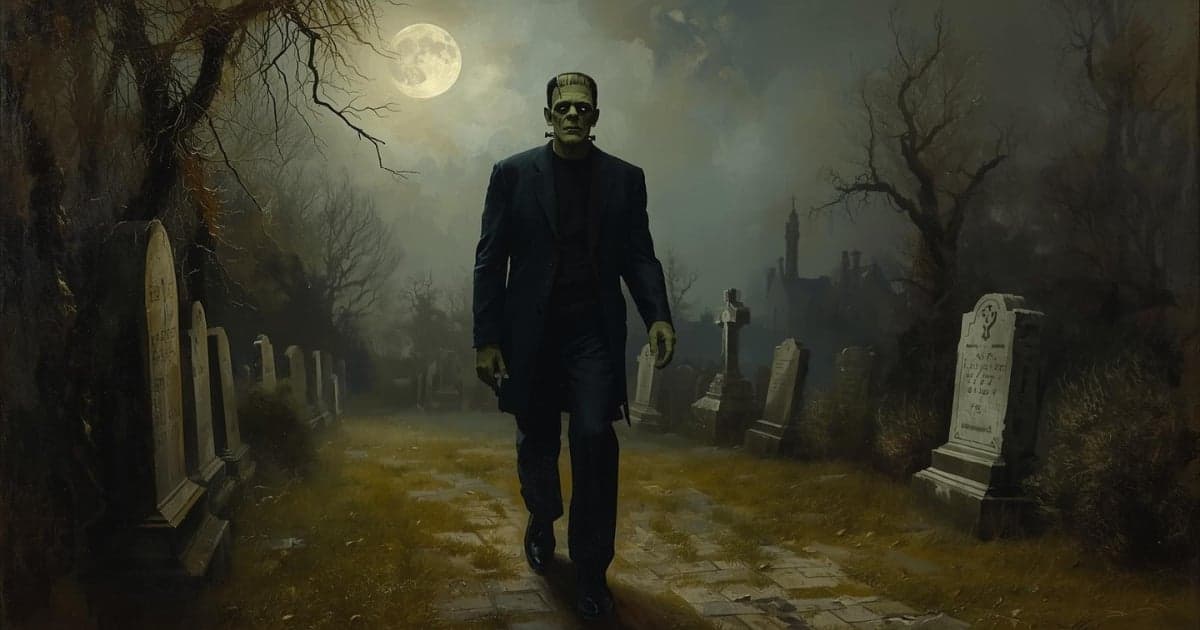
Chapter 21
The Creature Demands a Mate
The being finished speaking and fixed his looks upon me in the expectation of a reply. But I was bewildered, perplexed, and unable to arrange my ideas sufficiently to understand the full extent of his proposition. He continued, “You must create a female for me with whom I can live in the interchange of those sympathies necessary for my being. This you alone can do, and I demand it of you as a right which you must not refuse to concede.” The latter part of his tale had kindled anew in me the anger that had died away while he…
Public-domain chapter text, formatted for reading.
Master this chapter. Complete your experience
Purchase the complete book to access all chapters and support classic literature
Available in paperback, hardcover, and e-book formats
Now let's explore the literary elements.
Key Quotes & Analysis
"You must create a female for me with whom I can live in the interchange of those sympathies necessary for my being."
Context: The creature states his demand after finishing his tale
He frames companionship as a right owed by creation, not a favor. The request shifts Victor from judge to debtor.
In Today's Words:
You must make a female companion for me so I can share the sympathies necessary to my being. The creature states it as a right, not a request, and Victor hears both justice and blackmail in the same sentence. He is no longer asking permission; he is naming the condition under which he will stop hunting the people Victor loves.
"I am malicious because I am miserable. Am I not shunned and hated by all mankind?"
Context: The creature answers Victor's refusal with moral argument
One of the novel's central claims: cruelty follows rejection. He asks why he should pity humanity when humanity shows him none.
In Today's Words:
I hurt people because I am miserable and the whole world shuns me. The creature asks why he should pity mankind when his maker would destroy him without a trial. It is the novel's most quoted moral argument, and it forces Victor to see cruelty as a consequence of abandonment rather than innate evil alone.
"I consent to your demand, on your solemn oath to quit Europe for ever, and every other place in the neighbourhood of man, as soon as I shall deliver into your hands a female who will accompany you in your exile."
Context: Victor agrees after weighing justice, threat, and responsibility
The bargain is struck under pressure and partial sympathy. Victor hopes exile will contain the danger he is about to duplicate.
In Today's Words:
I consent to your demand if you swear to leave Europe forever once I deliver a female to accompany you in exile. Victor bargains under pressure, hoping distance will contain the danger he is about to duplicate. The oath feels like a release, but it also commits him to a second creation he already dreads.
"If I have no ties and no affections, hatred and vice must be my portion; the love of another will destroy the cause of my crimes, and I shall become a thing of whose existence everyone will be ignorant."
Context: The creature argues that companionship could end his violence
He links ethics to attachment: without love, vice is inevitable. Victor must decide whether that theory justifies the risk of a second creation.
In Today's Words:
If I have no ties and no affections, hatred and vice must be my portion, but love might end the crimes you fear. The creature links ethics to attachment, and Victor must decide whether that theory justifies the risk. A companion could civilize him, or double the threat he already cannot control.
Thematic Threads
Responsibility
In This Chapter
Victor faces the full weight of abandoning his creation, who eloquently demands accountability for his suffering
Development
Evolved from Victor's initial flight from responsibility to direct confrontation with consequences
In Your Life:
You might see this when avoiding difficult conversations or neglecting relationships until they reach a crisis point
Social Rejection
In This Chapter
The creature's story reveals how complete social isolation corrupted his naturally good impulses
Development
Introduced here through the creature's perspective on his treatment by humanity
In Your Life:
You might recognize this in how workplace exclusion or family rejection can make people bitter and reactive
Class
In This Chapter
The creature is rejected not for his actions but for his appearance—judged instantly as unworthy of human society
Development
New angle showing how physical appearance determines social acceptance
In Your Life:
You might experience this when people make assumptions about your worth based on how you look or where you're from
Identity
In This Chapter
The creature struggles with self-understanding, learning about humanity while being excluded from it
Development
Introduced here as the creature grapples with what he is and where he belongs
In Your Life:
You might feel this when caught between different worlds—not quite fitting into any group completely
Human Relationships
In This Chapter
The creature's demand for a companion reveals how fundamental connection is to psychological health
Development
New perspective showing how relationship needs drive desperate behavior
In Your Life:
You might see this in how isolation makes people act in increasingly extreme ways to get attention or connection
You now have the context. Time to form your own thoughts.
Discussion Questions
This is not a test. Five prompts guide you through the chapter, from how it opens to how it closes, so you notice context and rhythm rather than facts to memorize. Sit with each question in your own words. When you see "One way to read it," treat it as a starting point, not the only answer.
- 1
What does the creature demand after finishing his story?
analysis • surfaceOne way to read it
Victor must create a female companion—another being as hideous as he is who will not reject him.
- 2
How does the creature argue that misery made him malicious?
analysis • mediumOne way to read it
He was benevolent until universal hatred isolated him. Sympathy from an equal, he claims, would drain his evil passions.
- 3
What promise does the creature make if Victor complies?
application • mediumOne way to read it
He and his mate will vanish to South America and never trouble humanity again.
- 4
Why is Victor torn instead of refusing outright?
application • deepOne way to read it
Creator's duty, guilt for abandonment, and fear of more murders collide. The demand feels monstrous yet logically linked to his original sin.
- 5
When have you faced a choice where every option seemed to create new harm?
reflection • deepOne way to read it
The mate bargain forces Victor to repeat creation or accept bloodshed—a dilemma born from his first refusal to care.
Critical Thinking Exercise
Map Your Abandoned Responsibilities
Think about something you started or someone you took responsibility for, then abandoned or neglected. Write down what you created or took on, why you stepped back, and what consequences followed. Then consider: Is this responsibility still demanding your attention in some way? What would facing it directly look like now?
Consider:
- •Abandoned responsibilities don't disappear - they often grow into bigger problems
- •Sometimes stepping back was necessary for your wellbeing, but acknowledgment is still needed
- •The goal isn't guilt but recognition of patterns and potential solutions
Journaling Prompt
Write about a time when someone abandoned a responsibility to you. How did it affect you, and what would repair look like now?
Coming Up Next...
Chapter 22: Delayed Promise—Journey to Create the Mate
Victor returns home and begins the horrifying work of creating a second creature, but doubts plague him with every stitch. What if he's making an even worse mistake?