
Lessons
Lessons from Frankenstein
Six lessons from this classic work, traced chapter by chapter.
0:00 / 0:00
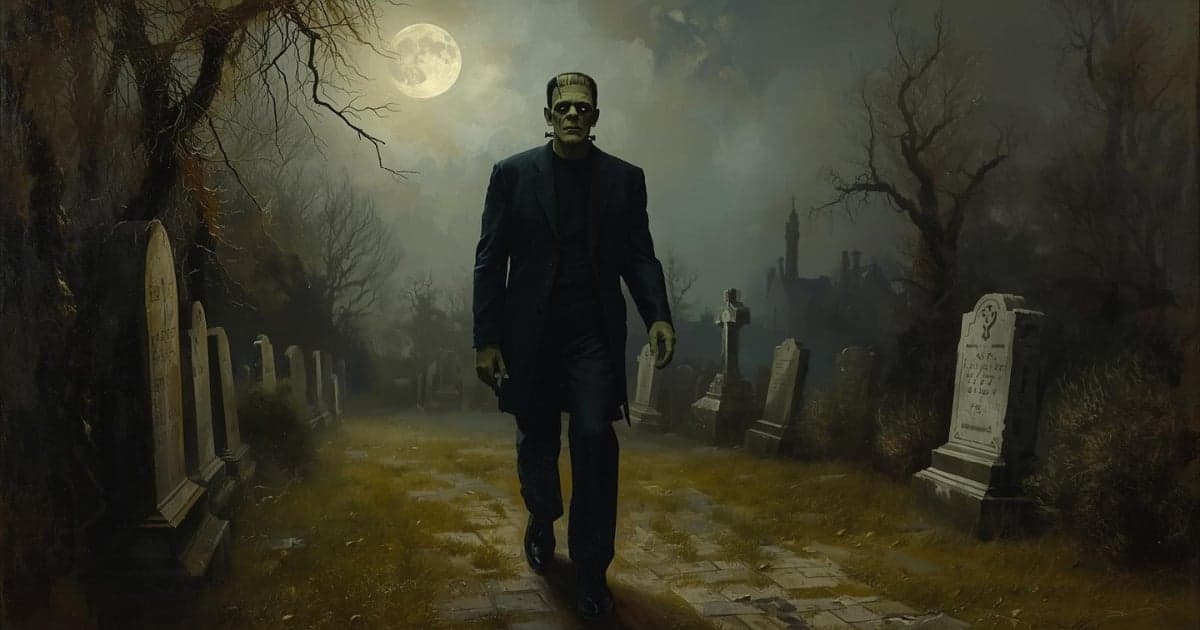
A yellow eye opens on a dreary November night in Ingolstadt, and the man who assembled the body is already gone. Victor Frankenstein has spent two years stealing parts, denying sleep, and calling the work holy. The moment the creature breathes, he runs. Shelley published the book in 1818. The monster everyone remembers is not the one with yellow eyes. It is the student who would not stay.
Continue the summary
Victor is a privileged student: brilliant, secretive, and so sure that making life will make him a god that he never plans for the morning after. The creature wakes with no name, no language, and a face the world will not forgive. Captain Walton, locked in Arctic ice, writes home about glory while a dying stranger on his deck tries to warn him off the same hunger. Elizabeth Lavenza waits in Geneva with a love Victor keeps postponing. Henry Clerval brings warmth Victor cannot use. Justine Moritz, the family's servant, will hang for a crime she did not commit. A father cannot get the truth out of his son. A little brother is murdered in the woods. A blind cottager is the only person kind enough to listen before sight ruins it.
Victor flees the workshop and spends months in fever while the creature learns hunger, cold, and why every human who sees him screams. Hidden in a hovel beside the De Lacey cottage, he teaches himself speech, fire, and Paradise Lost, then offers friendship to the blind father and is beaten for it. He finds Victor's journal, learns who made him, and kills William in the woods. Justine is tried and executed while Victor stays silent. On the Mer de Glace the creature demands a companion. Victor agrees, then destroys the female on the Orkney table. Clerval is murdered. Elizabeth is murdered on her wedding night. Alphonse dies of the shock. Victor chases the creature to the ice, tells Walton the whole story, and dies. The creature comes aboard, weeps over the body, and vanishes toward the pole.
Shelley wrote the book at eighteen, after a ghost-story night with Byron and Percy on Lake Geneva, and refused to make it a simple warning label. The novel never treats the creation as a trick you should skip. Ambition fails. Secrecy fails. Even pity, when it arrives too late and without a home, fails. What remains is not a debate about whether science is allowed. It is a picture of what happens when a maker will not stay in the room with what he made, and when a person who needed care is taught, by every face he meets, that violence is the only language anyone answers.
The first pressure is two sleepless years that felt holy until a yellow eye opened and Victor left the room. That flight is the creator's first refusal: the being has not yet done anything but live, and the maker is already gone. Walton is already writing home about the same hunger from a ship locked in ice. Every face after that finishes what the workshop began. The creature learns speech from Paradise Lost, reads Victor's journal, and finds a maker who already fled. The De Laceys, the village, and the woods teach him that cruelty answers a face, and Justine hangs while Victor stays silent. Isolation is the method and the cost: the hovel, the glacier, the Orkney table where he destroys the female, the Arctic sled where no one has to answer. William, Clerval, Elizabeth on her wedding night, then a chase that has no finish except two deaths that look like one.
On the Mer de Glace the creature asks for a companion and is answered, later, on an Orkney table. He weeps over Victor on Walton's deck and vanishes toward the pole. The ice breaks and Walton turns for home, carrying the only full account of a maker who would not stay. Wide Reads supplies summaries, quotes, and audio for all twenty-eight chapters.
Why this matters
People still arrive at this novel the moment a project outgrows the plan for what comes after it: the launch nobody staffed for year two, the hire nobody mentored, the child raised by people too exhausted to stay curious about who they became. Shelley does not offer a mad-scientist warning label. She offers a study of what a maker owes the thing once it can look back and ask for something. This guide keeps that argument tied to the workshop, the cottage, and the Orkney table.
Prestige deep dive
A Psychological Reading of Frankenstein
Frankenstein follows a maker who wants a new species to bless him, then flees the moment the work looks back, and a being who learns from that refusal how to answer it with ruin.
- A New Species Will Bless Him
- The Yellow Eye Ends the Dream
- The Hovel Teaches a Self the Maker Never Planned
Theme breakdowns
Explore the lessons
Frankenstein is a case about a maker who will not stay in the room with what he made: two sleepless years in an Ingolstadt workshop end the moment a yellow eye opens, a hovel beside the De Lacey cottage teaches a nameless creature to speak from a stolen journal and a blind man's kindness before the family beats him for it, an Orkney table holds a promised companion Victor tears apart while the first creation watches through the window, and a wedding night turns the whole bargain into a corpse before the chase that follows has any real finish.
Each card traces a pattern through named chapters — summaries, quotes, and key insights tied to the scenes that prove it. Start with the featured lessons, then open the deep dives below.
Deep dives
Chapter-by-chapter breakdowns
Recognizing Dangerous Ambition
Name the two sleepless years in the workshop when progress felt holy and no one else was allowed in.
Taking Responsibility for Harm
Speak before Justine hangs, instead of letting silence do the damage Victor will not own.
Continue Exploring
Guides, life skills, and the full library.More ways to read Frankenstein: guides, life skills, and the wider library.