Wide Reads
Literature MattersLife IndexEducators
Sign in
Where to Begin

The Monster Awakens — Frankenstein

Frankenstein - The Monster Awakens

Mary Shelley

Frankenstein

The Monster Awakens

Home›Books›Frankenstein›Chapter 9: The Monster Awakens
Previous
9 of 28
Next

Analysis by the Wide Reads editorial team·Reviewed against the source text·Updated December 1, 2025

Summary

The Monster Awakens

Frankenstein by Mary Shelley

0:000:00
Listen to Next Chapter

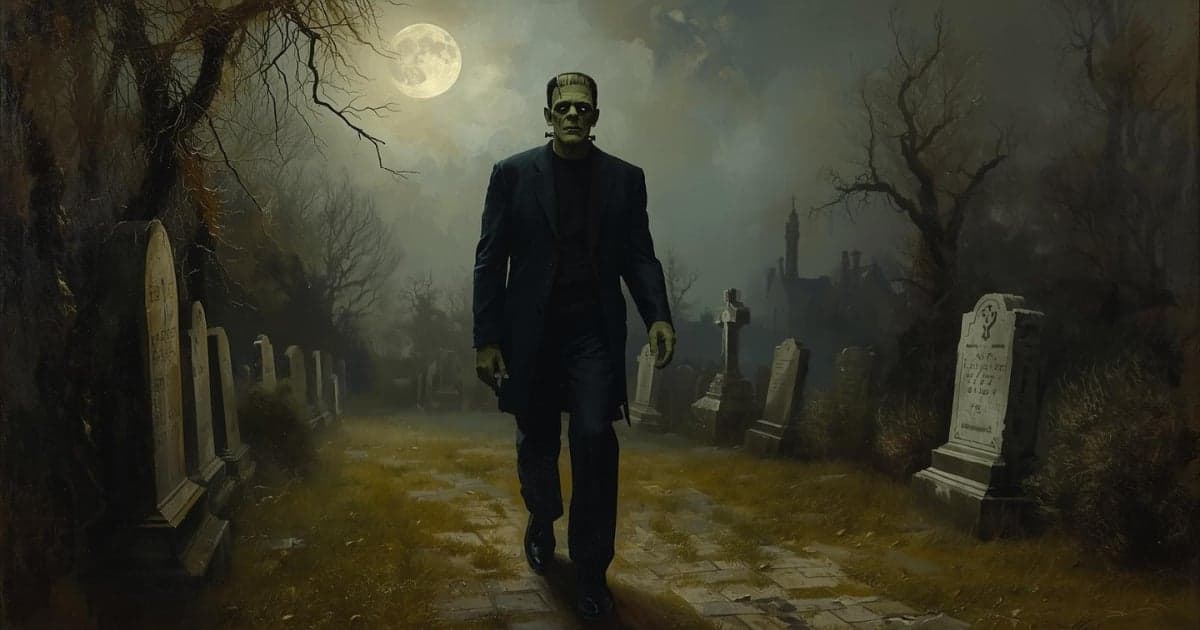
On a dreary November night, Victor finally succeeds in bringing his creature to life. The moment the creature's dull yellow eye opens, Victor's triumph transforms instantly into horror. The eight-foot being he spent months assembling is hideous, yellow skin barely covering muscles and arteries, watery eyes, black lips. Victor calls his own achievement a 'catastrophe' and his creation a 'wretch.' Unable to endure looking at what he's made, Victor flees his laboratory and spends the night pacing his bedroom in terror. When he finally collapses into fevered sleep, he dreams of kissing Elizabeth only to have her transform into his dead mother's corpse covered in grave-worms.

He wakes to find the creature standing over his bed, reaching out to him. Victor runs screaming from the apartment and spends the rest of the night hiding in a courtyard, terrified. By morning, still too afraid to return home, Victor wanders the rainy streets in a state of shock. Then, by pure chance, he encounters Henry Clerval arriving from Geneva. Henry's familiar face brings Victor momentary relief, the first human connection he's felt in months.

But when they return to Victor's apartment, he's terrified the creature might still be there. To his relief, the room is empty, the creature has vanished. Victor's relief triggers a complete breakdown: he becomes manic, talking incoherently, jumping over furniture, until he collapses into a violent fever that lasts for months. Henry nurses him through it all, never learning what caused Victor's breakdown. This chapter reveals the full horror of Victor's irresponsibility: he created a living, conscious being and immediately abandoned it in disgust, leaving a newborn consciousness alone in a world that will fear and hate it.

In this chapter: Terms Characters Key Quotes Themes Modern Story

Why This Matters

Connect literature to life

Skill: Recognizing Responsibility Avoidance

Creating something does not end your obligations when reality disappoints you. Victor animates the creature, then flees the moment it reaches toward him. Before you launch a project or role that affects others, ask who gets hurt if it goes wrong and whether you will stay present to fix it.

Coming Up in Chapter 10

Victor tries to return to normal life, but you can't outrun what you've created. A letter from home brings news that will force him to confront the wider world beyond his obsessions.

Share it with friends

PreviousPrevious ChapterNextNext Chapter
Original text
2,355 wordscomplete

Chapter 09

The Monster Awakens

It was on a dreary night of November that I beheld the accomplishment of my toils. With an anxiety that almost amounted to agony, I collected the instruments of life around me, that I might infuse a spark of being into the lifeless thing that lay at my feet. It was already one in the morning; the rain pattered dismally against the panes, and my candle was nearly burnt out, when, by the glimmer of the half-extinguished light, I saw the dull yellow eye of the creature open; it breathed hard, and a convulsive motion agitated its limbs. How can…

Public-domain chapter text, formatted for reading.

Master this chapter. Complete your experience

Purchase the complete book to access all chapters and support classic literature

Buy at Powell'sBuy on Amazon

Available in paperback, hardcover, and e-book formats

Now let's explore the literary elements.

Key Quotes & Analysis

"It was on a dreary night of November that I beheld the accomplishment of my toils."

— Victor Frankenstein

Context: The famous opening line of the creature's animation

One of literature's most famous opening lines. The word 'dreary' immediately signals this isn't a triumphant moment. Victor frames his success as something ominous, revealing he already knows this is catastrophe, not achievement.

In Today's Words:

It was a miserable November night when I finally finished what I had been working on for nearly two years, alone in the rain, with my candle dying and my whole future about to change in an instant. The atmosphere already tells you this is not a celebration; dread arrives before the creature even moves.

"How can I describe my emotions at this catastrophe, or how delineate the wretch whom with such infinite pains and care I had endeavoured to form?"

— Victor Frankenstein

Context: Victor's immediate reaction upon seeing his creation come to life

He calls his life's work a 'catastrophe' and his creation a 'wretch' within seconds of success. This reveals how completely unprepared Victor was for the reality of what he was doing. All those months of work, and he never once considered what would happen when it actually worked.

In Today's Words:

How can I even explain how horrified I was, or describe the disgusting thing I had spent so much time and effort creating when triumph turned to revulsion the moment its eye opened? Victor names it catastrophe within seconds, which proves he never imagined success as responsibility, only as personal glory that would validate his obsession.

"Unable to endure the aspect of the being I had created, I rushed out of the room."

— Victor Frankenstein

Context: Victor's abandonment of the creature moments after it awakens

This is the original sin of the novel—the moment Victor abandons his newborn creation. 'Unable to endure' shows he's acting on revulsion rather than reason. A responsible creator would stay and deal with the consequences. Victor runs.

In Today's Words:

I could not stand to look at what I had made, so I ran out of the room instead of staying with the being whose first conscious act was to reach toward me. Abandonment becomes the creature's first lesson about the world, and Victor's disgust matters less than his refusal to stay present for what he created.

"I beheld the wretch—the miserable monster whom I had created. He held up the curtain of the bed; and his eyes, if eyes they may be called, were fixed on me... one hand was stretched out, seemingly to detain me, but I escaped."

— Victor Frankenstein

Context: The creature reaching out to Victor, who flees in terror

This scene is heartbreaking when read carefully. The creature is reaching out—possibly for help, connection, or understanding. Victor interprets it as threat and runs. The creature's first experience of consciousness is rejection and abandonment by the only being who should have cared for it.

In Today's Words:

I saw the horrible monster I had made standing by my bed with one hand stretched out toward me, and I ran away rather than answering the plea of the only creature I was responsible for. That reaching hand is the moral center of the chapter: need met with horror, and the fallout will follow both of them forever.

Thematic Threads

Abandonment

In This Chapter

Victor creates life then immediately flees, leaving a conscious being alone and confused

Development

The central act that creates all future tragedy

In Your Life:

You might recognize this when you start something important then bail when it gets difficult

Fantasy vs Reality

In This Chapter

Victor imagined beautiful creation worshipping him; reality is ugly being reaching out for help

Development

The moment where Victor's delusions crash into consequences

In Your Life:

You might pursue something for the fantasy version while being unprepared for the actual reality

Revulsion as Rejection

In This Chapter

Victor's physical disgust at the creature's appearance justifies (in his mind) complete abandonment

Development

Shows how we use aesthetic judgments to avoid moral responsibilities

In Your Life:

You might reject people or situations based on surface judgments while avoiding deeper obligations

Friendship as Salvation

In This Chapter

Clerval's arrival saves Victor from complete breakdown, showing the power of genuine human connection

Development

Contrasts isolation's destruction with connection's healing power

In Your Life:

You might be saved from your worst self by someone who shows up with simple presence and care

Physical Manifestation of Guilt

In This Chapter

Victor's fever, nightmares, and manic behavior reveal his subconscious knows what he's done is wrong

Development

Body and mind rebel against Victor's conscious rationalizations

In Your Life:

Your body often shows the cost of your choices before your mind admits the guilt

You now have the context. Time to form your own thoughts.

Discussion Questions

This is not a test. Five prompts guide you through the chapter, from how it opens to how it closes, so you notice context and rhythm rather than facts to memorize. Sit with each question in your own words. When you see "One way to read it," treat it as a starting point, not the only answer.

  1. 1

    What is Victor's immediate reaction when the creature's eye opens?

    ▶One way to read it

    Triumph becomes horror. He calls the achievement a catastrophe and flees, unable to endure what he made.

    analysis • surface
  2. 2

    What does Victor's dream of Elizabeth turning into his mother's corpse suggest?

    ▶One way to read it

    Creation and death are fused in his psyche. The kiss of love becomes grave-worms—the life he sought corrupts everything tender.

    analysis • medium
  3. 3

    Why does Victor abandon the creature instead of taking responsibility?

    ▶One way to read it

    Disgust overrides duty. He runs from the laboratory and hides in the courtyard, treating his creation as a nightmare to escape.

    application • medium
  4. 4

    How does this night mark the moment creator becomes abandoner?

    ▶One way to read it

    The creature reaches out; Victor screams and leaves. Every tragedy that follows grows from this refusal of obligation.

    application • deep
  5. 5

    When have you seen someone reject the consequences of something they worked hard to achieve?

    ▶One way to read it

    Victor wanted glory without guardianship—the novel's central moral fracture happens in this November laboratory.

    reflection • deep

Critical Thinking Exercise

10 minutes

Reality-Check Your Goals

Think of something you're currently working toward or really want to achieve. Write down not just the moment of success, but what the day-to-day reality would actually look like six months after you get it. Include the boring parts, the problems you'd need to solve, and the responsibilities that would come with it.

Consider:

  • •What would you need to give up or sacrifice to maintain this achievement?
  • •What skills or emotional capacity would you need to develop that you don't currently have?
  • •Who else would be affected by your success, and what would they need from you?

Journaling Prompt

Write about a time when you got something you thought you wanted but weren't prepared for the reality of having it. What did that teach you about the difference between fantasy and readiness?

Coming Up Next...

Chapter 10: Elizabeth's Letter and the Poison of Science

Victor tries to return to normal life, but you can't outrun what you've created. A letter from home brings news that will force him to confront the wider world beyond his obsessions.

Continue to Chapter 10
Previous
The Discovery and the Workshop of Filthy Creation
Contents
Next
Elizabeth's Letter and the Poison of Science
Keep exploring

Continue Exploring

Study guides, teaching tools, themes, and the full library.More ways to read Frankenstein: study guides, teaching tools, and the wider library.

  • Frankenstein Study Guide
  • Teaching Resources
  • Essential Life Index
  • Browse by Theme
  • All Books

Life-skill deep dives in Frankenstein

  • Breaking Cycles of RevengeSee how Victor and the creature mirror each other in a revenge cycle that destroys both, and what Shelley shows about stopping mutual destruction.
  • Cost of IsolationExplore cost of isolation through Frankenstein by Mary Shelley. Life lessons from classic literature applied to modern challenges.
  • Dangerous AmbitionLearn to identify when healthy ambition transforms into destructive obsession through Victor Frankenstein\
  • Taking ResponsibilityExplore how Frankenstein teaches the critical lesson of taking responsibility for what you create—from products to relationships.
  • Understanding RejectionLearn how systematic rejection transforms innocent beings into dangerous threats through the creature\
Identity & Self-DiscoveryMoral Dilemmas & EthicsPower & Corruption

You Might Also Like

The Picture of Dorian Gray cover

The Picture of Dorian Gray

Oscar Wilde

Explores identity & self

The Strange Case of Dr Jekyll and Mr Hyde cover

The Strange Case of Dr Jekyll and Mr Hyde

Robert Louis Stevenson

Explores identity & self

Jude the Obscure cover

Jude the Obscure

Thomas Hardy

Explores identity & self

The Scarlet Letter cover

The Scarlet Letter

Nathaniel Hawthorne

Explores identity & self

Browse all 106+ books

Share This Chapter

Know someone who'd enjoy this? Spread the wisdom!

TwitterFacebookLinkedInEmail

Go further with Prestige

Unlock study guides and downloads, early access, and exclusive content — and support free access for everyone.

Subscribe to PrestigeCreate free account
Intelligence Amplifier
Intelligence Amplifier™Powering Wide Reads

Exploring human-AI collaboration through books, essays, and philosophical dialogues. Classic literature transformed into navigational maps for modern life.

2025 Books

→ The Amplified Human Spirit→ The Alarming Rise of Stupidity Amplified→ San Francisco: The AI Capital of the World
Visit intelligenceamplifier.org
hello@widereads.com

WideReads Originals

→ You Are Not Lost→ The Last Chapter First→ The Lit of Love→ Wealth and Poverty→ Wisdom for the Wounded
Arvintech
arvintechAmplify your Mind
Visit at arvintech.com

Navigate

  • Home
  • Library
  • Essential Life Index
  • How It Works
  • Subscribe
  • Account
  • About
  • Contact
  • Authors
  • Suggest a Book
  • Landings

Made For You

  • Trending
  • Students
  • Educators
  • Families
  • Readers
  • Literary Analysis
  • Finding Purpose
  • Letting Go
  • Recovering from a Breakup
  • Corruption
  • Gaslighting in the Classics

Newsletter

Weekly insights from the classics. Amplify Your Mind.

Legal

  • Privacy Policy
  • Terms of Service
  • Editorial Standards
  • Cookie Policy
  • Accessibility

Why Public Domain?

We focus on public domain classics because these timeless works belong to everyone. No paywalls, no restrictions—just wisdom that has stood the test of centuries, freely accessible to all readers.

Public domain books have shaped humanity's understanding of love, justice, ambition, and the human condition. By amplifying these works, we help preserve and share literature that truly belongs to the world.

A Pilgrimage

Powell's City of Books

Portland, Oregon

If you ever find yourself in Portland, walk to the corner of Burnside and 10th. The building takes up an entire city block. Inside is over a million books, new and used on the same shelf, organized by color-coded rooms with names like the Rose Room and the Pearl Room. You can lose an afternoon. You can lose a weekend. You will find a book you have been looking for your whole life, and three you did not know existed.

It is a pilgrimage. We cannot find a bookstore like it anywhere on earth. If you read the classics, and you ever get the chance, go. It belongs on every reader's bucket list.

Visit powells.com

We are not in any way affiliated with Powell's. We are just a very big fan.

© 2026 Wide Reads™. All Rights Reserved.

Intelligence Amplifier™ and Wide Reads™ are proprietary trademarks of Arvin Lioanag.

Copyright Protection: All original content, analyses, discussion questions, pedagogical frameworks, and methodology are protected by U.S. and international copyright law. Unauthorized reproduction, distribution, web scraping, or use for AI training is strictly prohibited. See our Copyright Notice for details.

Disclaimer: The information provided on this website is for general informational and educational purposes only and does not constitute professional, legal, financial, or technical advice. While we strive to ensure accuracy and relevance, we make no warranties regarding completeness, reliability, or suitability. Any reliance on such information is at your own risk. We are not liable for any losses or damages arising from use of this site. By using this site, you agree to these terms.