
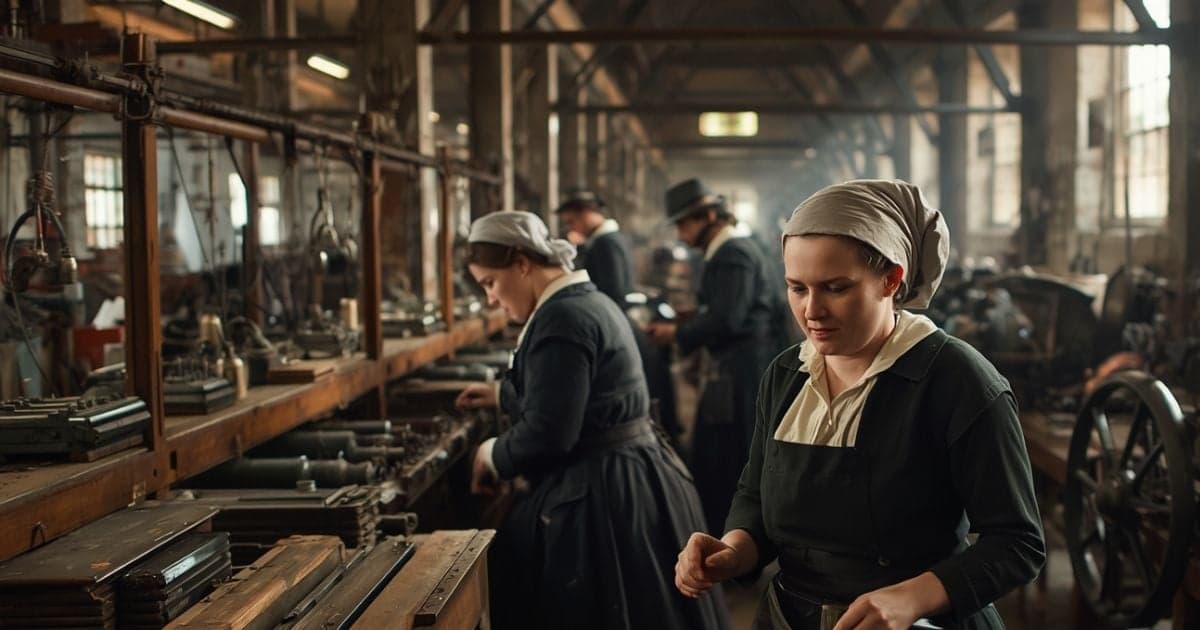
Tracing Primitive Accumulation
The Parable of Thrift and the History of Force
Political economy tells original sin as a children's story: some saved, some were lazy, and that is why the land looks like this. Marx calls the story insipid childishness. In actual history, conquest, enslavement, robbery, murder, briefly force, play the great part. Primitive accumulation is the name for divorcing the producer from the means of production. The parable is what you get after the force has finished.
England supplies the pictures. Flemish wool raises prices. Arable land becomes sheep-walks. Deer-forests and the people cannot co-exist. The newly landless are then chastised as vagabonds. Edward VI's statute feeds the refuser on refuse meat. The free worker is trained by the whip and the bread-and-water ration into a person who will sign. These idyllic proceedings, Marx says of the colonial and fiscal sequel, are the chief momenta.
The colony strips the last costume. Mr. Peel has capital and no one to fetch water, because dependence has not yet been manufactured. Wakefield admits it must be created by artificial means. If the exit remains, the wage will not stick. Tracing primitive accumulation is following that sequence: parable, sheep-walk, statute, mill, then a theory that calls the remaining contract a choice.
The Central Lesson
Primitive accumulation is not a preface you can skip. It is original sin for economists, sheep-walks that cannot co-exist with people, vagabonds chastised into workers, idyllic colonial proceedings, and Mr. Peel with no one to fetch water until dependence is manufactured. The labor market that looks like a free contract was built by divorcing producers from the means of life, then explaining the remainder as choice. Follow the force, then the parable, in that order.
Applying This to Your Life
Mistrust the Thrift Parable
When a present inequality is explained as saving versus laziness, check the original-sin chapter. Marx's test is whether force played the great part first. If the story needs saints and sinners more than land and law, it is doing the work of the idyll.
Follow What Cannot Co-Exist with People
Deer-forests and the people cannot co-exist. Ask what modern enclosure is crowding out a livelihood: a buyout, a patent, a closed well, a town priced for visitors. If people become available for hire in the same motion the land changes use, you are watching the sheep-walk again.
Ask Whether the Exit Was Priced Away
Wakefield's rule is to create dependence by artificial means. If a contract only holds because housing, debt, or a licence makes leaving impossible, the freedom is the remainder after the exit was removed. Name the missing alternative before you call the signature a choice.
Other lessons in this book
More life-skill deep dives from the same classic.
Analyzing Class Interests
Read opposing pressures between workers and owners as structural, not personal, including when decent people still produce harsh outcomes.
4 chapters·Explore AnalysisReading the Working Day
Treat hours, overtime, and speed-ups as a fight over who keeps the value produced in that time, not as a schedule you were given.
4 chapters·Explore AnalysisRecognizing Alienation
Identify when work separates you from the product, the process, and other workers, even when the pay packet arrives on time.
4 chapters·Explore AnalysisSeeing Labor Behind Commodities
Recognise the human work hidden behind every product you buy, from the coat on the rack to the wage that looks like a full day's pay.
4 chapters·Explore AnalysisUnderstanding Surplus Value
See how profit comes from the gap between what labour-power produces and what it costs to hire, and why that gap returns as more capital.
5 chapters·Explore Analysis
Continue exploring
The same lessons in other books
See how other books teach the same life skills.
North and South
Acting on Conscience When It Costs YouWatch Hale leave the church, Margaret lie at the station for Frederick, and Thornton refuse a speculation that would save him.North and South
Navigating Class and Economic PowerTrace Milton from imported Irish hands and Boucher's brook to the inheritance that buys a partnership, not a husband.
Paradise Lost
When Pride Sounds Like PrincipleHear Satan on the burning lake and at Eden's edge: wounded dignity reframed as liberty, and a no that is only a refusal to be second.
Where the lesson lives in the book
Original Sin for Economists
Primitive accumulation plays in Political Economy about the same part as original sin. Such insipid childishness is preached daily in defence of property: thrifty savers, lazy poor. In actual history, conquest, enslavement, robbery, murder, briefly force, play the great part. The historical process is divorcing the producer from the means of production. The parable is the cover.
Key Insight:
A labor market that looks voluntary in the present was prepared by a past that was not. Ask what was taken before the contract was offered. The idyll is the tell.
“In actual history it is notorious that conquest, enslavement, robbery, murder, briefly force, play the great part”
Sheep-Walks and Deer-Forests
The rapid rise of the Flemish wool manufactures raises the price of wool in England. Transformation of arable land into sheep-walks is the cry. Deer-forests and the people cannot co-exist. The field becomes a private asset. The person becomes available for hire. Improvement is the word. Absence of people is the result.
Key Insight:
When common ground becomes a park or a pasture for someone else's profit, a class with nothing to sell but time is being manufactured in the same motion. Follow the land, not the sermon about thrift.
“Deer-forests and the people cannot co-exist”
Chastised for Becoming Vagabonds
The fathers of the present working class were chastised for their enforced transformation into vagabonds and paupers. A statute of Edward VI ordains what happens if anyone refuses to work. The master shall feed his slave on bread and water, weak broth and such refuse meat as he thinks fit. The free worker is produced by punishments for vagrancy as much as by factory gates.
Key Insight:
Wage labour did not emerge from free choice alone. It required dispossession first, then discipline for the newly landless, then the appearance of a voluntary contract.
“The fathers of the present working class were chastised for their enforced transformation into vagabonds and paupers”
These Idyllic Proceedings
The genesis of the industrial capitalist did not proceed in such a gradual way as that of the farmer. These idyllic proceedings, colonial plunder, slavery, public debt, are the chief momenta of primitive accumulation. If turbulence and strife will bring a profit, it will freely encourage both. The mill is late. The statute and the ship were early.
Key Insight:
The factory looks like a beginning. In Marx's sequence it is a destination: the place that receives a class and a pile created somewhere else, by force that later textbooks call thrift.
“These idyllic proceedings are the chief momenta of primitive accumulation”
Dependence Created by Artificial Means
Mr. Peel is left without a servant to make his bed or fetch him water. Wakefield discovers that capital is a social relation, not a cargo. This dependence must be created by artificial means. Price the land high enough that workers cannot escape into independence. The colony is the experiment that proves the secret: if the exit remains, the wage will not stick.
Key Insight:
If people have a real alternative, they do not choose the wage. The system that calls itself natural has to keep removing the exits, then explain the remaining contract as freedom.
“this dependence must be created by artificial means”